-
 Quantum Computing Could Threaten Blockchain Security, EU Watchdogs Warn24 September 2026
 -
Block Bits Capital Founder Found Guilty in $1 Million Crypto Fraud Case25 August 2026
-
Term Finance Reports Estimated $8.5 Million Loss Following Governance Exploit24 August 2026
-
BitBox Patches Security Flaws That Could Expose Wallets to Malicious Firmware18 August 2026
-
Bonzo Lend Hit by $9 Million Oracle Exploit on Hedera Network13 July 2026
- Home
- Cryptocurrency
- Cryptocurrency News
- Ethereum Researcher Cautions AI Could Threaten Crypto Wallet Security
Ethereum Researcher Cautions AI Could Threaten Crypto Wallet Security
Justin Drake proposed gradually moving large crypto holdings to addresses whose public keys have never been exposed.
Written by Rahul Dhingra, Edited by Rohan Pal | Updated: 8 October 2026 17:39 IST
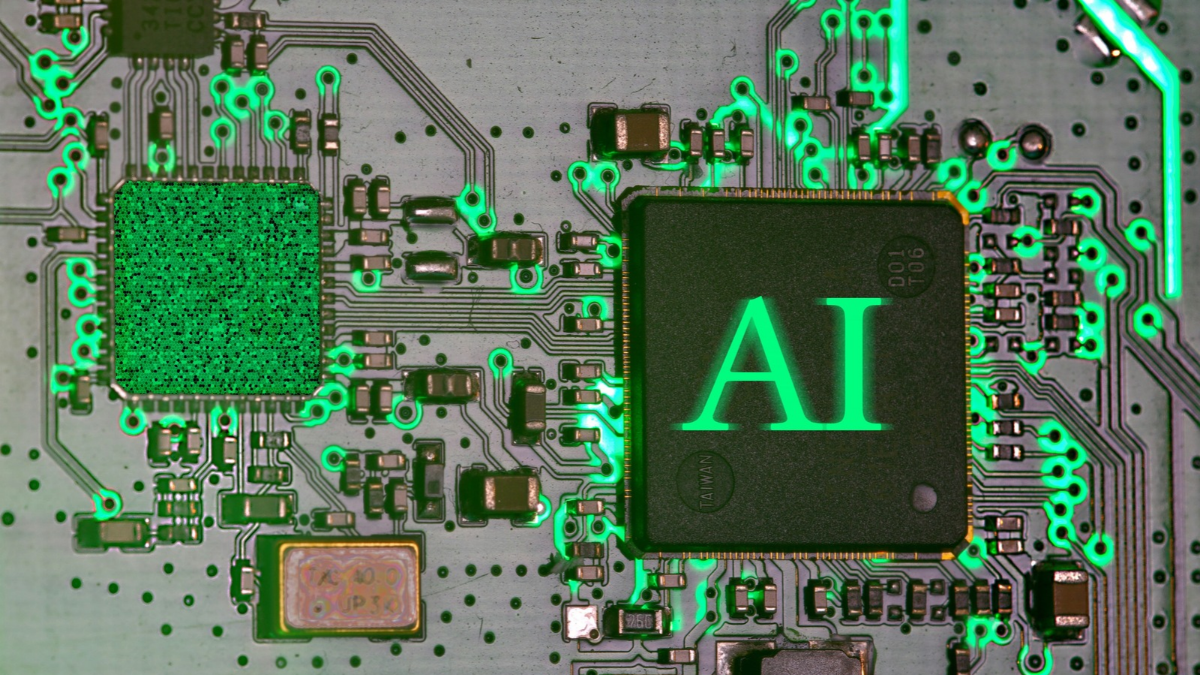
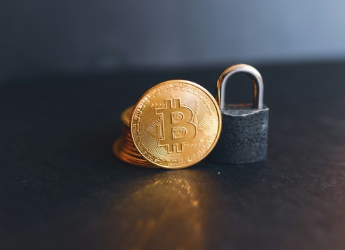
Photo Credit: Unsplash/Immo Wegmann
Fresh Ethereum addresses can keep their public keys hidden until they sign transactions.
Click Here to Add Gadgets360 As A Trusted Source

Advertisement
Justin Drake, an Ethereum Foundation researcher, has asked crypto holders to be ready for the possibility of an AI-enabled cracking of the Elliptic Curve Digital Signature Algorithm (ECDSA), stating on October 7 that a worst-case scenario is possible “in months, not years” before quantum computers become a threat. In an October 7 post on X, Drake called on the blockchain industry to start thinking about “bunker mode,” which is a term that he coined. The idea is based on a slow transfer of funds to new addresses, where the public keys have never been exposed, starting with large wallets.
Vitalik Buterin Urges Caution Without Calling for Immediate Fund Transfers
This warning of Drake is still relevant as a risk scenario, but is definitely not proof that ECDSA can be broken. In Drake's definition of the extreme case, he describes the possibility of an attack when a private key is revealed from a public key within one week using the existing hardware. The large GPU clusters might be used for this purpose. However, no attack of this kind has yet been developed.
Today I call upon the blockchain industry to calmly begin planning for "bunker mode". My personal recommendation is to set in motion a controlled mass migration of assets to fresh addresses, i.e. addresses whose pubkeys remain hidden behind a hash. Holders, starting with large and sophisticated ones, should consider moving the bulk of their funds to addresses that have never signed a transaction. And when they do sign one, they should also move remaining funds to a new address (possibly generated from the same seed phrase). Don't rush. While I believe there is cause for action a rushed migration would do more harm than good. Don't panic either. Moving assets to protected addresses is a simple, preventative step which does not require new cryptography or new wallets. IMO it is now reasonable to brace for the possibility that ECDSA breaks before qday, in the worst case in months not years. By "break" I mean fast private key recovery (e.g. in one week) on available hardware (e.g. a large GPU cluster). Recent days have been humbling for human mathematical intuition. Long-held, unquestioned hypotheses have fallen. This includes the n log(n) bound for integer multiplication and the 3SUM conjecture. In hindsight, May's unexpected disproof of the Erdős unit distance conjecture was our warning shot. Yesterday's OpenAI drop made it clear that mathematical superintelligence is upon us. They say there are weeks where decades happen. We are about to live through weeks where centuries of mathematical progress happen. Could our magic 64-byte ECDSA signatures be too good to be true? Was it just security through obscurity all this time? Elliptic curves feel especially vulnerable to superintelligence. Curves carry rich structure, with room for fancy tricks like Schoof, Frobenius, pairings. (By contrast, hashes are designed to minimise algebraic structure.) Separately, as Ewin Tang can attest, an efficient quantum algorithm sometimes foreshadows an efficient classical one. We should be open to the possibility of a classical counterpart to Shor that breaks elliptic curves and RSA at once. Also noteworthy is the striking under-representation of cryptographic breakthroughs among the 722 mathematical results OpenAI published. I've witnessed first-hand the US government censoring academic quantum cryptanalysis results. Backroom interventionism is my base case. I urge large, sophisticated actors to lead by example. Project11's "risq list" (bitcoin-risq-list.projecteleven[.]com) is a great tracker of exposed BTC pubkeys. Binance, Bitbank, Robinhood, Bitfinex, and Tether have an opportunity to harden their cold storage. Next month I'll address institutions in London in a live Q&A (forum.ethereuminstitutional[.]org/london-2026). Again, please do not rush. Wallets holding under 50 BTC enjoy partial cover from "Satoshi's shield", i.e. his 20K exposed addresses that hold 50 BTC each. Load-bearing signers like oracles and L2 security councils should consider rotating ECDSA pubkeys with every signed message and/or multi-signing with a hash-based schemes like SPHINCS. Exiting bunker mode safely will require post-AI cryptography. My inclination is to go all-in on hash-based cryptography and avoid structured mathematical assumptions entirely, whether from curves, lattices, or isogenies. A single battle-tested hash (e.g. from the SHA or BLAKE families) yields plausible post-AI security. The Ethereum roadmap on strawmap[.]org fully embraces hash-based cryptography with end-to-end formal verification as a response to the quantum threat. Those timelines must now be revisited and accelerated in light of mathematical superintelligence. I'll be pushing for maximum defensive acceleration.
— Justin Drake (@drakefjustin) October 7, 2026
The ECDSA algorithm is used to authenticate transactions originating from standard Ethereum addresses. This protocol serves an important purpose for Bitcoin wallet security. The private key creates a digital signature, whereas the public key allows for its verification without knowing the private key.
The official Ethereum post-quantum document indicates that a regular Ethereum address that is just receiving transactions and has never made a transaction would not have exposed its public key to the chain. However, after signing a transaction by this account, the public key will be able to be derived from the signature, which may enable future techniques to derive the private key from it.
Ethereum co-founder Vitalik Buterin has commented on this warning by promoting more caution about AI-assisted math without suggesting immediate movement of funds.
Buterin mentioned that he “does not recommend anyone scramble” to move funds into new wallets now. He explained that developers need to be careful about these advances in math and avoid relying on cryptographic algorithms that could appear to be weaker than anticipated.
But his concerns do not end there. Buterin stated that the security provided by lattice-based cryptography might come under stress because of some AI-assisted mathematical breakthroughs within the next two years. However, he did not say that any of the lattice-based systems have been cracked. He prefers hash-based schemes where possible and uses more conservative parameter sets for lattices.
Earlier this year, research by Google said that quantum computers may require far less computational power than previously estimated to break encryption. The study suggests that cryptographic systems could be more vulnerable than earlier projections indicated. This has raised fresh concerns across the crypto industry, as advances in quantum computing may accelerate the timeline for potential attacks on widely used encryption standards and challenge the long-term security of blockchain-based systems globally.
Comments
Get your daily dose of tech news, reviews, and insights, in under 80 characters on Gadgets 360 Turbo. Connect with fellow tech lovers on our Forum. Follow us on X, Facebook, WhatsApp, Threads and Google News for instant updates. Catch all the action on our YouTube channel.
Related Stories



Advertisement
Follow Us




-
![[Sponsored]: CP PLUS CarKam CP-F89B: 4K Dashcam With Rear Camera, GPS & Emergency Recording](https://www.gadgets360.com/static/desktop/images/spacer.png)
04:37
[Sponsored]: CP PLUS CarKam CP-F89B: 4K Dashcam With Rear Camera, GPS & Emergency Recording -
04:23
[Partner Content] Your Phone Can Do WAY More Than You Think | OPPO ColorOS 16 -
01:59
Samsung Galaxy Z Fold8 Ultra: Unfold the Ultra Night -
03:24
Apple Pay Launches In India: Supported Devices, Cards And Payments Explained -
00:21
[Sponsored] Samsung Galaxy Z Fold8, Fold8 Ultra
-
Amazon Great Indian Festival Sale 2026: ₹40 हजार वाले फोन पर जबरदस्त छूट
-
Amazon Great Indian Festival: ₹51 हजार सस्ता मिल रहा Samsung फ्लैगशिप फोन
-
Flipkart Big Billion Days Sale 2026: iPhone 15 पर बंपर डील!
-
Flipkart Big Billion Days Sale 2026 हुई शुरू, Plus और Black मेंबर्स के लिए स्मार्टफोन से इलेक्ट्रॉनिक तक 80% ड
-
Vivo ने लॉन्च किया 10,200mAh बैटरी वाला नया फोन, 50MP कैमरा, Dimensity 7300e चिप!
Advertisement
Popular on Gadgets
- Samsung Galaxy S26 Ultra
- Motorola Razr Fold
- ChatGPT
- OPPO Find N6
- Mobiles Under Rs. 40,000
- Vivo X300 Ultra
- Asus Zenbook S14
- iQOO 15
- Vivo X300 Pro
- Lenovo Yoga Slim 7i Aura Edition
- iQOO 15R
- Vivo X Fold 5
- Sony PlayStation 5
- HP OmniPad 12
- OnePlus Nord CE 6 Lite
- OnePlus Pad 4
- OPPO F33 Pro 5G
- Cryptocurrency
- HP OmniBook Ultra 14 (2026)
- iPhone 17
- Eureka Forbes AP 355 Room Air Purifier
- Latest Mobile Phones
- Compare Phones
Latest Gadgets
- Vivo Y32 (2026)
- Infinix Smart 20 HD
- Vivo V80
- Vivo S2 FE
- Vivo Y600K Turbo
- Realme P4s Lite
- Vivo S60t
- OPPO F35 5G
- Lenovo ThinkBook 14x
- Dell 14 Plus 2-in-1 (AMD Ryzen AI 7 350, 2025)
- Samsung Galaxy Tab S12+
- Samsung Galaxy Tab S12 Ultra
- Amazfit T-Rex Dual Solar
- OPPO Watch S2
- Toshiba 65-Inch 4K Ultra HD Smart Mini LED QLED TV (65Z670SP)
- Haier M70 Mini LED 65-inch
- Acer Predator Atlas 8
- Asus ROG Ally
- Blue Star 1.5 Ton 5 Star Inverter Split AC (IE518ZNURS)
- Blue Star 2 Ton 3 Star Inverter Window AC (WIE324L)

- About Us
- Sitemaps
- Feedback
- Archives
- Contact Us
- RSS
- Advertise
- Career
- Privacy Policy
- Ethics
- Editorial Policy
- Terms & Conditions
- Complaint Redressal
Download Our Apps
Available in Hindi
© Copyright Red Pixels Ventures Limited 2026. All rights reserved.