- Home
- Glance
This Day, That Year: What Happened on September 24
This Day, That Year: What Happened on September 24
By Gadgets 360 Staff | Updated: 22 September 2023 16:00 IST
Click Here to Add Gadgets360 As A Trusted Source


Advertisement
India's Chandrayaan-1 finds water molecules on Moon
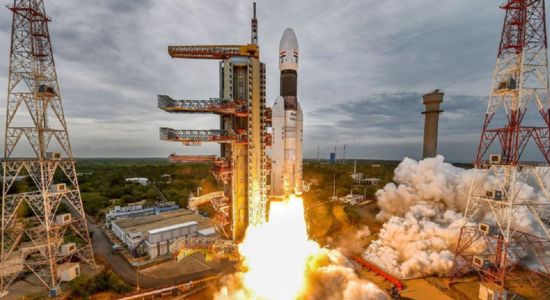
On September 24, 2009, India's Chandrayaan-1 spacecraft achieved a groundbreaking milestone in lunar exploration by confirming the presence of water molecules on the Moon's surface. This monumental discovery not only reshaped our understanding of Earth's celestial neighbor but also positioned India as a significant player in space research.
Equipped with advanced instruments, Chandrayaan-1 embarked on a mission to unravel the mysteries of the Moon. Among its suite of scientific instruments was the Moon Impact Probe (MIP), a device designed to descend to the lunar surface and conduct experiments. MIP's findings astonished the scientific community and the world at large - it detected the unmistakable signature of water molecules in the form of hydroxyl ions.
This revelation challenged long-held assumptions about the Moon's arid and desolate nature. It suggested that water, albeit in minuscule quantities, was present on the lunar surface, opening new avenues for scientific inquiry and future lunar exploration missions.
The discovery had far-reaching implications. Water is a precious resource, essential for sustaining life and supporting human space exploration endeavors. Its presence on the Moon, even in trace amounts, hinted at the possibility of utilizing lunar resources for future manned missions or as a stepping stone for deeper space exploration.
Chandrayaan-1's achievement was a testament to India's growing prowess in space technology and its commitment to pushing the boundaries of scientific knowledge. It garnered international acclaim and solidified India's reputation as a formidable contender in the global space race.
Since this watershed moment, India's space agency, the Indian Space Research Organization (ISRO), has continued to blaze trails in space exploration. The success of Chandrayaan-1 paved the way for subsequent lunar missions, including Chandrayaan-2, which furthered our understanding of Earth's enigmatic satellite.
India's Mangalyaan successfully entered Mars orbit in first attempt
On September 24, 2014, India's Mars Orbiter Mission (MOM), also known as Mangalyaan, successfully entered the orbit of Mars in its first attempt. This made India the fourth space agency to achieve Mars orbit, after Roscosmos, NASA, and the European Space Agency. It also made India the first Asian nation to reach the Martian orbit and the first nation in the world to do so on its maiden attempt.
Mangalyaan was launched on November 5, 2013, from the Satish Dhawan Space Center in Sriharikota, India. It took off on a Polar Satellite Launch Vehicle (PSLV-C25) and spent 300 days in transit to Mars. On September 24, 2014, Mangalyaan fired its main engine for 24 minutes to slow down and enter Martian orbit. It was a complex maneuver, and the success of the mission was a testament to the skills and expertise of ISRO scientists.
Mangalyaan was a low-cost mission, costing only about $74 million. This made it one of the most affordable interplanetary missions ever undertaken. The mission was also designed to be a technology demonstrator, to prove that India could successfully design, launch, and operate an interplanetary spacecraft.
Mangalyaan carried five scientific instruments, which have been used to study the Martian atmosphere, surface, and composition. The mission has made a number of important discoveries, including the detection of methane in the Martian atmosphere. Methane is a potential biosignature, and its presence on Mars raises the possibility that life could exist on the planet.
Mangalyaan was originally planned to operate for six months, but it has far exceeded its lifespan. As of September 2023, Mangalyaan is still in orbit around Mars and continues to send back valuable scientific data. The mission has been a resounding success for ISRO and has cemented India's place as a leading spacefaring nation.
Comments
Catch the latest from the Consumer Electronics Show on Gadgets 360, at our CES 2026 hub.


Advertisement
Follow Us




-
07:38
Redmi Pad 2 Pro Review | Worth Buying or not? | Best Tablet in Budget? -
08:02
Top OxygenOS 16 Features You Must Know: Don't Miss These OnePlus Features On Your Phone! -
10:42
[Partner Content] OPPO Find X9 Two Week Experience: Here's Why It Stands Out -
04:38
Realme Watch 5 Review: Watch This Before You Buy The Latest Realme Smartwatch -
07:03
Vivo X300 Pro Review | Best Camera Phone You Can Buy For 2026
Advertisement
Popular on Gadgets
- Samsung Galaxy Unpacked 2025
- ChatGPT
- Redmi Note 14 Pro+
- iPhone 16
- Apple Vision Pro
- Oneplus 12
- OnePlus Nord CE 3 Lite 5G
- iPhone 13
- Xiaomi 14 Pro
- Oppo Find N3
- Tecno Spark Go (2023)
- Realme V30
- Best Phones Under 25000
- Samsung Galaxy S24 Series
- Cryptocurrency
- iQoo 12
- Samsung Galaxy S24 Ultra
- Giottus
- Samsung Galaxy Z Flip 5
- Apple 'Scary Fast'
- Housefull 5
- GoPro Hero 12 Black Review
- Invincible Season 2
- JioGlass
- HD Ready TV
- Laptop Under 50000
- Smartwatch Under 10000
- Latest Mobile Phones
- Compare Phones
Latest Gadgets
- Tecno Spark Go 3
- iQOO Z11 Turbo
- OPPO A6c
- Samsung Galaxy A07 5G
- Vivo Y500i
- OnePlus Turbo 6V
- OnePlus Turbo 6
- Itel Zeno 20 Max
- Lenovo Yoga Slim 7x (2025)
- Lenovo Yoga Slim 7a
- Lenovo Idea Tab Plus
- Realme Pad 3
- Garmin Quatix 8 Pro
- NoiseFit Pro 6R
- Haier H5E Series
- Acerpure Nitro Z Series 100-inch QLED TV
- Asus ROG Ally
- Nintendo Switch Lite
- Haier 1.6 Ton 5 Star Inverter Split AC (HSU19G-MZAID5BN-INV)
- Haier 1.6 Ton 5 Star Inverter Split AC (HSU19G-MZAIM5BN-INV)

- About Us
- Sitemaps
- Feedback
- Archives
- Contact Us
- RSS
- Advertise
- Career
- Privacy Policy
- Ethics
- Editorial Policy
- Terms & Conditions
- Complaint Redressal
Download Our Apps
Available in Hindi
© Copyright Red Pixels Ventures Limited 2026. All rights reserved.