
-
 Google Play Store Adds Vibe-Coded Apps, AI App Comparisons and Personalised Game Discovery14 October 2026
 -
Google Pay Flex Credit Card Gets New Rewards: More Stars on UPI Spending, Google One Benefits14 October 2026
-
Google Gemini 4 Argon Launched Globally for Developers and Enterprises13 October 2026
-
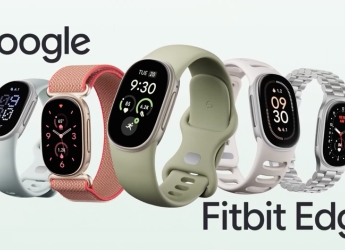
Google Launches Fitbit Edge With AMOLED Screen, Built-In GPS and Health Coach Features: Price, Specifications13 October 2026
-
Google Fitbit Edge Set to Launch Today: Expected Price, Specifications12 October 2026
After ChatGPT Translate, Google Releases Multiple Open-Source Translation Models
Google has released three variants of its TranslateGemma AI models.
Written by Akash Dutta, Edited by Ketan Pratap | Updated: 16 January 2026 18:15 IST

Photo Credit: Google
Google’s TranslateGemma can be downloaded from Hugging Face and Kaggle
Click Here to Add Gadgets360 As A Trusted Source

Advertisement
Google's aggressive artificial intelligence (AI) push has not slowed down in 2026. The company has already announced a partnership with Apple, released new shopping tools and a protocol, introduced Personal Intelligence in Gemini and added the chatbot to its Trends website. Now, the company has shifted its focus towards the open community with the release of TranslateGemma models. These multilingual AI models are designed to support translation between a large number of languages across text and image (input only) modalities.
TranslateGemma Models Released
In a blog post, the Mountain View-based tech giant released three different variants of the TranslateGemma AI models. These models are available to download on Google's Hugging Face listing and Kaggle's website. Additionally, developers and enterprises can also access them via Vertex AI, the company's cloud-based AI hub. These models are available with a permissive licence allowing both academic and commercial use cases.
TranslateGemma is available in 4B, 12B, and 27B sizes (where 4B refers to four billion parameters). The smallest model is said to be optimised for mobile and edge deployment, and the 12B variant is designed for consumer laptops. The largest 27B model offers maximum fidelity and can be run locally on a single Nvidia H100 GPU or TPU.
Built on Gemma 3 models, the researchers used supervised fine-tuning (SFT) with a diverse dataset. The post claims that this allowed the models to achieve broad language coverage even in low-resource (where data is scarce) languages. These models were further refined using reinforcement learning (RL), which refined the translation quality.
The company claimed that the 12B TranslateGemma model outperforms Gemma 3 27B on the World Machine Translation 2024 (WMT24++) benchmark. Google claims that with this performance, developers will be able to achieve the same quality as Gemma 3 while using less than half the parameters of the baseline model.
Google's latest translation-focused AI models are claimed to be trained and evaluated on 55 language pairs across Spanish, French, Chinese, Hindi, and more. The company also claimed that it has trained the model on nearly 500 additional language pairs. Notably, apart from direct text translation, the model also accepts images as input and can detect and translate text within the images.
Comments
Get your daily dose of tech news, reviews, and insights, in under 80 characters on Gadgets 360 Turbo. Connect with fellow tech lovers on our Forum. Follow us on X, Facebook, WhatsApp, Threads and Google News for instant updates. Catch all the action on our YouTube channel.
Related Stories



Advertisement
Follow Us




-
![[Sponsored] LG NANO 4K UHD AI TV NU885: Gemini Search, Dolby Atmos & 5 Years of Updates](https://www.gadgets360.com/static/desktop/images/spacer.png)
04:17
[Sponsored] LG NANO 4K UHD AI TV NU885: Gemini Search, Dolby Atmos & 5 Years of Updates -
00:57
[Sponsored] Samsung Galaxy Z Fold8 My Fan Cam in Action: Find the Moment, Then Share It -
01:41
[Sponsored] What Do You Need To Know Before Your Next Run? | Samsung Galaxy Watch Ultra2 -
01:32
[Sponsored] Big Day Tomorrow? Prep Today | Samsung Galaxy Watch Ultra2 -
04:37
[Sponsored]: CP PLUS CarKam CP-F89B: 4K Dashcam With Rear Camera, GPS & Emergency Recording
-
Dell Pro Essential 14, Essential 15 लॉन्च, सिक्योरिटी के लिए गजब फीचर्स
-
Flipkart Big Billion Days Sale: ₹15 हजार में स्टूडेंट के लिए बेस्ट लैपटॉप
-
Amazon Great Indian Festival Sale: 10 हजार से सस्ते मिल रहे ये स्मार्टफोन
-
Amazon Great Indian Festival Sale 2026: ₹35 हजार में OnePlus का 8000mAh बैटरी, Snapdragon चिप वाला फोन
-
₹13 हजार सस्ती कीमत में मिल रहा iPhone 17 Pro, जानें पूरा ऑफर
Advertisement
Popular on Gadgets
- Samsung Galaxy S26 Ultra
- Motorola Razr Fold
- ChatGPT
- OPPO Find N6
- Mobiles Under Rs. 40,000
- Vivo X300 Ultra
- Asus Zenbook S14
- iQOO 15
- Vivo X300 Pro
- Lenovo Yoga Slim 7i Aura Edition
- iQOO 15R
- Vivo X Fold 5
- Sony PlayStation 5
- HP OmniPad 12
- OnePlus Nord CE 6 Lite
- OnePlus Pad 4
- OPPO F33 Pro 5G
- Cryptocurrency
- HP OmniBook Ultra 14 (2026)
- iPhone 17
- Eureka Forbes AP 355 Room Air Purifier
- Latest Mobile Phones
- Compare Phones
Latest Gadgets
- Vivo Y600s Pro
- Vivo Y32 (2026)
- Infinix Smart 20 HD
- Vivo V80
- Vivo S2 FE
- Vivo Y600K Turbo
- Realme P4s Lite
- Vivo S60t
- HP ZBook Ultra G3a
- Dell Pro Rugged 14
- Amazon Alexa Tablet 8
- Amazon Alexa Tablet 11
- Amazfit T-Rex Dual Solar
- OPPO Watch S2
- Toshiba 65-Inch 4K Ultra HD Smart Mini LED QLED TV (65Z670SP)
- Haier M70 Mini LED 65-inch
- Acer Predator Atlas 8
- Asus ROG Ally
- Blue Star 1.5 Ton 5 Star Inverter Split AC (IE518ZNURS)
- Blue Star 2 Ton 3 Star Inverter Window AC (WIE324L)

- About Us
- Sitemaps
- Feedback
- Archives
- Contact Us
- RSS
- Advertise
- Career
- Privacy Policy
- Ethics
- Editorial Policy
- Terms & Conditions
- Complaint Redressal
Download Our Apps
Available in Hindi
© Copyright Red Pixels Ventures Limited 2026. All rights reserved.