-
 Everything Apple Launched in March: iPhone 17e, MacBook Neo, AirPods Max 2 and More23 March 2026
 -
iPhone 17e, MacBook Neo, iPad Air, Refreshed MacBook Pro and MacBook Air Models Go on Sale in India: Price, Availability11 March 2026
-
Apple's MacBook Pro With M5 Pro, M5 Max Chips Said to Launch Soon; Various Mac Models Expected in 20269 February 2026
-
Apple Reportedly Developing 2 Different Prototypes for Second Generation Studio Display17 March 2025
-
Apple Studio Display 2 With Mini-LED Screen Said to Be in Development; Could Arrive by 202617 February 2025
- Home
- Laptops
- Laptops News
- Apple Studio Display, Studio Display XDR With 27 Inch 5K Displays Launched in India: Price, Features
Apple Studio Display, Studio Display XDR With 27-Inch 5K Displays Launched in India: Price, Features
Both displays include a 12-megapixel Centre Stage camera with Desk View support that keeps users centred during video calls.
Written by Sucharita Ganguly, Edited by David Delima | Updated: 4 March 2026 11:13 IST
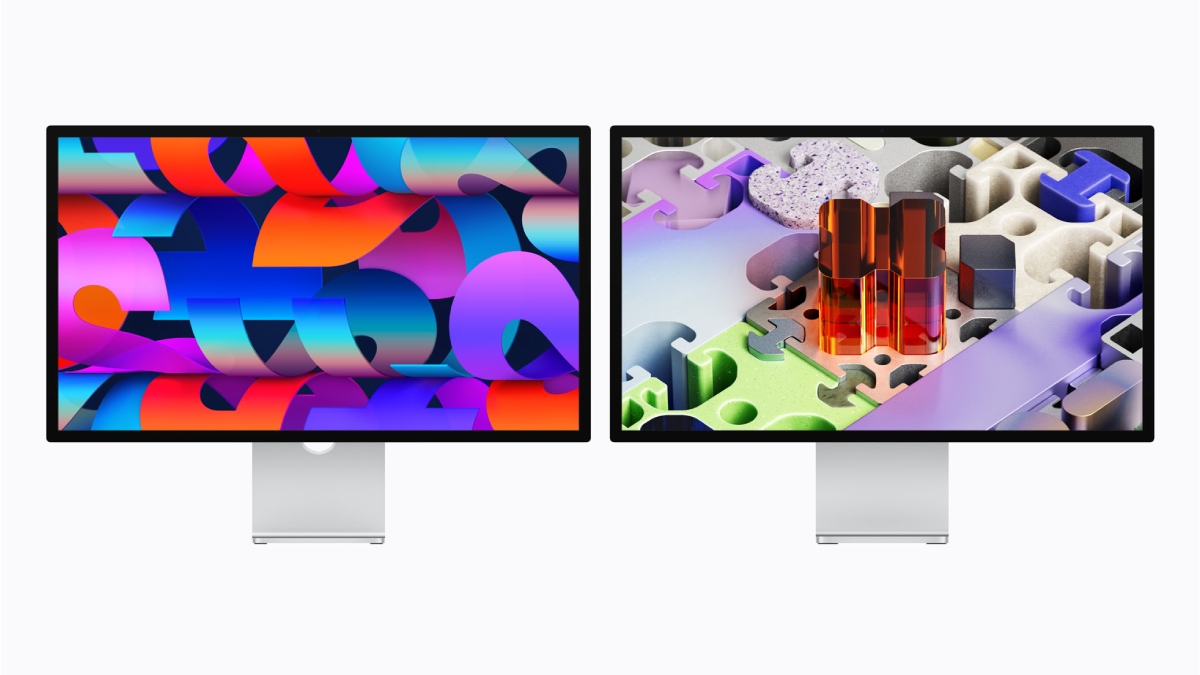
Photo Credit: Apple
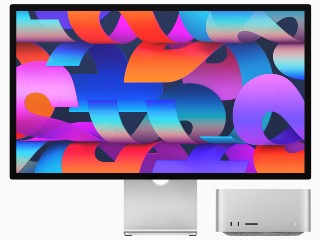
Apple Studio Display and Studio Display XDR are offered with tilt- and height-adjustable stands
Click Here to Add Gadgets360 As A Trusted Source

Advertisement
Apple unveiled the new Studio Display and the Studio Display XDR alongside the latest MacBook Air and MacBook Pro models powered by the M5 series chips on Tuesday. The new monitors are said to target both general users and professionals, offering a 27-inch 5K Retina panel and an advanced 5K Retina XDR panel with mini-LED backlighting. Key highlights include up to 2,000 nits peak HDR brightness, a 120Hz refresh rate with Adaptive Sync, Thunderbolt 5 connectivity, and a 12-megapixel Centre Stage camera with Desk View support.
Apple Studio Display, Studio Display XDR Price in India, Availability
Apple Studio Display price in India starts at Rs. 1,89,900 for the standard glass version with a tilt-adjustable stand or the VESA mount adapter option. The nano-texture glass version is priced at Rs. 2,29,900, while the tilt- and height-adjustable stand configuration costs Rs. 2,39,900. The monitor is also available for eligible education customers starting at Rs. 1,77,900.
Meanwhile, the price of the Apple Studio Display XDR in the country begins at Rs. 3,99,900 for the standard glass version with a tilt- and height-adjustable stand, while the nano-texture glass option is priced at Rs. 4,39,900. The education price starts at Rs. 3,87,900.
Customers can pre-order the new Studio Display and Studio Display XDR starting at 7:45pm IST on March 4 via the Apple India e-store and the Apple Store app. The displays will ship to customers and will be available in select Apple Store locations and Apple Authorised Resellers starting March 11.
Apple is also offering accessories for the displays. The Magic Keyboard with Touch ID and Numeric Keypad is priced at Rs. 19,500, the Magic Trackpad costs Rs. 14,500, and the Magic Mouse starts at Rs. 9,500 in black and white colour options.
Apple Studio Display, Studio Display XDR Features, Specifications
Apple's Studio Display features a 27-inch 5K (5120x2880 pixels) Retina display with a 60Hz refresh rate, a 218ppi, and over 14 million pixels. The panel delivers up to 600 nits of brightness and supports up to 1 billion colours, along with the P3 wide colour gamut and True Tone technology.
The Apple Studio Display XDR also features a 27-inch 5K (5120x2880 pixels) Retina XDR panel with 218ppi, a 120Hz refresh rate with Adaptive Sync, support for up to 1 billion colours, and P3 and Adobe RGB wide colour gamuts. It uses a mini-LED backlight with 2,304 dimming zones and supports up to 1,000 nits SDR brightness and 2,000 nits peak HDR brightness.
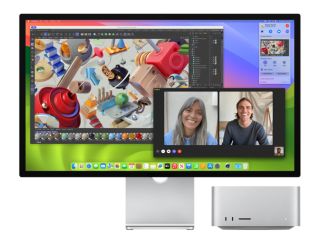
Both displays include a 12-megapixel Centre Stage camera with Desk View support that keeps users centred during video calls while also showing a top-down view of the desk. The displays include a studio-quality three-microphone array with directional beamforming and a high signal-to-noise ratio. They also feature a high-fidelity six-speaker system with force-cancelling woofers, wide stereo sound, and support for Spatial Audio when playing Dolby Atmos content. Apple says the woofers deliver up to 30 percent deeper bass than the previous generation. The displays also support the “Hey Siri” voice command.
The Apple Studio Display and Studio Display XDR are compatible with Apple Silicon Mac computers running macOS Tahoe 26.3.1 or later, including MacBook Pro (2021 and later), MacBook Air (2020 and later), Mac Studio, Mac mini, Mac Pro, and the 24-inch iMac (2021 and later). They also support compatible iPad models running iPadOS 26.3.1 or later. Macs with M1, M1 Pro, M1 Max, M1 Ultra, M2, and M3 chips support the Studio Display XDR at up to 60Hz, while newer models support the full 120Hz refresh rate. The M5-powered iPad Pro supports 120Hz output, while other compatible iPads support up to 60Hz.
For connectivity, both Apple Studio Display and Studio Display XDR displays include two Thunderbolt 5 ports with data transfer speeds up to 120Gbps and two USB-C ports with speeds up to 10Gbps. One Thunderbolt 5 port acts as an upstream port for connecting to a host device, while the second acts as a downstream port for connecting high-speed accessories or daisy-chaining displays.
Apple says that the USB Type-C ports on the Studio Display models can be used for connecting peripherals, storage devices, or networking accessories. The displays can function as a Thunderbolt hub and support daisy-chaining multiple displays. Apple says up to four Studio Display units can be connected, for nearly 60 million of combined pixels.
The in-box Thunderbolt 5 Pro cable is claimed to provide up to 96W charging on the Studio Display, enough to fast-charge a 14-inch MacBook Pro. Using the same cable, the Studio Display XDR is said to support up to 140W charging, which can fast-charge a 16-inch MacBook Pro.
The Apple Studio Display and Studio Display XDR are offered with tilt- and height-adjustable stands supporting -5-degree to +25-degree tilt and up to 105mm height adjustment, and both displays can be configured with a 100 x 100mm VESA mount adapter that supports landscape and portrait orientation. Meanwhile, the Studio Display additionally has a tilt-adjustable stand option,
The Studio Display measures 478.5mm x 622.7mm x 168mm and weighs 6.31kg with the tilt-adjustable stand, up to 583.2 x 622.7 x 206.6mm and 7.65kg with the tilt- and height-adjustable stand, and 362.3 x 622.7 x 30.6mm and 5.50kg with the VESA mount adapter.
The Studio Display XDR measures up to 583.2 x 622.7 x 213.7mm and weighs 8.48kg with the tilt- and height-adjustable stand, while the VESA mount adapter version measures 362.3 x 622.7 x 30.6mm and weighs 6.30kg.
Comments
Get your daily dose of tech news, reviews, and insights, in under 80 characters on Gadgets 360 Turbo. Connect with fellow tech lovers on our Forum. Follow us on X, Facebook, WhatsApp, Threads and Google News for instant updates. Catch all the action on our YouTube channel.
Further reading:
Apple Studio Display, Apple Studio Display XDR, Apple Studio Display Price in India, Apple Studio Display XDR Price in India, Apple Studio Display India Launch, Apple Studio Display XDR India Launch, Apple Studio Display Features, Apple Studio Display XDR Features, Apple
Related Stories


Apple Studio Display, Studio Display XDR With 27-Inch 5K Displays Launched in India: Price, Features


Advertisement
Follow Us




-
04:17
[Sponsored] LG NANO 4K UHD AI TV NU885: Gemini Search, Dolby Atmos & 5 Years of Updates -
00:57
[Sponsored] Samsung Galaxy Z Fold8 My Fan Cam in Action: Find the Moment, Then Share It -
01:41
[Sponsored] What Do You Need To Know Before Your Next Run? | Samsung Galaxy Watch Ultra2 -
01:32
[Sponsored] Big Day Tomorrow? Prep Today | Samsung Galaxy Watch Ultra2 -
04:37
[Sponsored]: CP PLUS CarKam CP-F89B: 4K Dashcam With Rear Camera, GPS & Emergency Recording
-
आ गई हवा में उड़ने वाली Tesla Roadster कार, आखिर सच हुआ फिल्मों वाला कमाल
-
रोबोट ने की लड़की से छेड़छाड़, पीछे से पकड़ा और किए गंदे इशारे, जानें
-
PS5 कहां मिलेगा सस्ता, Flipkart या Amazon, जानें सबकुछ
-
Samsung Galaxy F70 5G भारत में लॉन्च, 50MP तीन कैमरा, 5000mAh बैटरी वाला बजट फोन!
-
Poco X8s में मिलेगी 12GB रैम, Snapdragon 7 Gen 4 चिप!
Advertisement
Popular on Gadgets
- Samsung Galaxy S26 Ultra
- Motorola Razr Fold
- ChatGPT
- OPPO Find N6
- Mobiles Under Rs. 40,000
- Vivo X300 Ultra
- Asus Zenbook S14
- iQOO 15
- Vivo X300 Pro
- Lenovo Yoga Slim 7i Aura Edition
- iQOO 15R
- Vivo X Fold 5
- Sony PlayStation 5
- HP OmniPad 12
- OnePlus Nord CE 6 Lite
- OnePlus Pad 4
- OPPO F33 Pro 5G
- Cryptocurrency
- HP OmniBook Ultra 14 (2026)
- iPhone 17
- Eureka Forbes AP 355 Room Air Purifier
- Latest Mobile Phones
- Compare Phones
Latest Gadgets
- Tecno Spark 50S 5G
- Vivo Y600s Pro
- Vivo Y32 (2026)
- Infinix Smart 20 HD
- Vivo V80
- Vivo S2 FE
- Vivo Y600K Turbo
- Realme P4s Lite
- HP ZBook Ultra G3a
- Dell Pro Rugged 14
- Amazon Alexa Tablet 8
- Amazon Alexa Tablet 11
- Amazfit T-Rex Dual Solar
- OPPO Watch S2
- Toshiba 65-Inch 4K Ultra HD Smart Mini LED QLED TV (65Z670SP)
- Haier M70 Mini LED 65-inch
- Acer Predator Atlas 8
- Asus ROG Ally
- Blue Star 1.5 Ton 5 Star Inverter Split AC (IE518ZNURS)
- Blue Star 2 Ton 3 Star Inverter Window AC (WIE324L)

- About Us
- Sitemaps
- Feedback
- Archives
- Contact Us
- RSS
- Advertise
- Career
- Privacy Policy
- Ethics
- Editorial Policy
- Terms & Conditions
- Complaint Redressal
Download Our Apps
Available in Hindi
© Copyright Red Pixels Ventures Limited 2026. All rights reserved.