-
 Amazon Great Republic Day Sale: Top Deals on Smartphones Under Rs. 30,00016 January 2026
 -
Amazon Great Republic Day Sale: Best Deals on OnePlus 15, OnePlus 15R and Other Phones From the Brand16 January 2026
-
Amazon Great Republic Day Sale 2026: Top 10 Deals on Smartphones Like iPhone 17 Pro Max, OnePlus 15 and More14 January 2026
-
Insta360 Link 2 Pro, Link 2C Pro Launched With 4K AI Cameras, Gimbal Tracking and Dual-Mic Audio: Price, Features14 January 2026
-
Best of CES 2026: Gadgets That Stole the Show from LG, Motorola, Samsung, and More9 January 2026
- Home
- Laptops
- Laptops News
- CES 2026: New AMD Ryzen 7 Unveiled Alongside Ryzen AI 400 Series, Halo Developer Platform
CES 2026: New AMD Ryzen 7 Unveiled Alongside Ryzen AI 400 Series, Halo Developer Platform
AMD unveils new Ryzen AI 400 Series, Ryzen 7 9850X3D and Ryzen AI Halo developer platform at CES 2026.
Written by Akash Dutta, Edited by Rohan Pal | Updated: 6 January 2026 15:02 IST
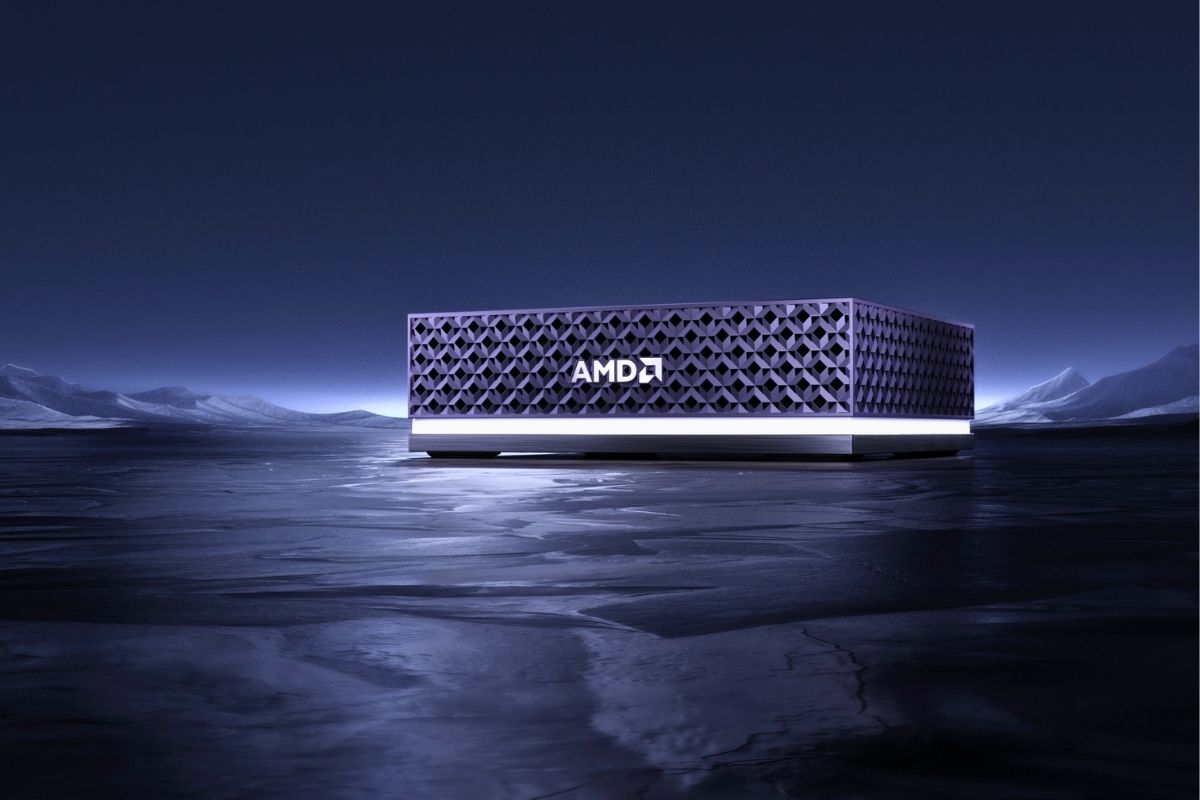
Photo Credit: AMD
AMD also announced new entrants to the Ryzen AI Max+ series portfolio
Click Here to Add Gadgets360 As A Trusted Source

Advertisement
At the Consumer Electronics Show (CES) 2026, AMD expanded its artificial intelligence (AI)-focused portfolio. The Santa Clara, California-based chipmaker introduced several new processors for AI workloads, gaming, and developer-focused tasks. Among the newly unveiled products, the highlights are a new Ryzen 7 gaming CPU, the Ryzen AI 400 and Ryzen AI Pro 400 series processors, and the Ryzen AI Halo mini-PC for developers. The new chipsets can handle more complex as well as larger volumes of on-device AI performance. Additionally, the AMD ROCm 7.2 software update for Windows and Linux was also announced.
AMD Ryzen 7 9850X3D Desktop Processor
AMD introduced the new Ryzen 7 9850X3D desktop processor targeting gamers. Calling it the “fastest gaming processor in the Ryzen 9000X3D lineup,” the company revealed that the gaming CPU will be available via original equipment manufacturers (OEMs), system integrators (SI), and retail partners, starting in the first quarter of 2026.
The Ryzen 7 9850X3D is built on Zen 5 architecture, featuring second-generation AMD 3D V-Cache technology. It also comes with a boost frequency of up to 5.6GHz and 104MB of total cache. The company claims the new CPU allows for smooth gameplay and multitasking across AAA gaming titles, streaming, and background applications. AMD also claims the new Ryzen 7 CPU offers up to 27 percent better gaming performance compared to the Intel Core Ultra 9 285K.
AMD Ryzen AI 400, AI Pro 400 Series
The chipmaker's AI tech stack witnessed an expansion with the Ryzen AI 400 series and Ryzen AI Pro 400 series chipsets. These are aimed at consumer and commercial Copilot+ PC-branded AI PCs. Both processors are built on the company's Zen 5 CPU architecture and powered by second-generation AMD XDNA 2 neural processing units (NPUs). These chips are designed to deliver up to 60 trillion operations per second (TOPS) of AI compute for tasks such as local model inference and AI-powered Windows experiences.
Both chipsets also feature 12 high-performance CPU cores and integrated AMD Radeon 800M series graphics. The company says the processors support faster memory speeds, multi-day battery life, and compute for AI workloads across a wide range of systems and form factors.
The Ryzen AI Pro 400 series is aimed at the company's enterprise customers. It is said to be built for modern IT environments and delivers higher performance without compromising security. It uses AMD Pro technologies for multilayered security, unified manageability, and long-term platform stability.
AMD said systems powered by Ryzen AI 400 and Ryzen AI Pro 400 series processors will be available via major OEMs, such as Acer, Asus, Dell, HP, Gigabyte, and Lenovo, starting Q1 2026. Desktops powered by the Ryzen AI 400 series will be launched in the second quarter of the year.
AMD also announced Ryzen AI Max+ processors, intended for premium ultra-thin notebooks, small form-factor desktops and workstation-class systems. These chips combine high-performance AI compute with integrated desktop-class graphics, enabling more demanding workloads like content creation, 3D modelling and immersive gaming without offloading computation to external devices or the cloud.
Ryzen AI Halo Developer Platform
The chipmaker also introduced Ryzen AI Halo, a compact AI developer platform designed to accelerate on-device AI development workflows and local model execution. It is essentially an AMD-branded mini-PC which enables developers to build, test, and deploy AI models and applications.
Out of the box, the AMD Ryzen AI Halo features up to 128GB of unified memory, up to 60TFLOPS of AMD RDNA 3.5 graphics performance, and support for both Windows and Linux. It is also optimised for the latest ROCm software. It comes with pre-installed support for leading open-source models such as GPT-OSS, FLUX.2 and SDXL, along with tooling that simplifies experimentation and iteration. It will be available in Q2 2026.
In addition to hardware announcements, AMD revealed ROCm 7.2 software support for both Windows and Linux, extending its open compute ecosystem to cover the new Ryzen AI 400 Series processors. The update includes integration with popular AI development tools such as ComfyUI and an AI bundle in AMD Software: Adrenalin Edition, which the company said will help developers and end users deploy and run AI workloads more seamlessly.
Comments
Get your daily dose of tech news, reviews, and insights, in under 80 characters on Gadgets 360 Turbo. Connect with fellow tech lovers on our Forum. Follow us on X, Facebook, WhatsApp, Threads and Google News for instant updates. Catch all the action on our YouTube channel.
Related Stories




Advertisement
Follow Us




-
![[Sponsored]: CP PLUS CarKam CP-F89B: 4K Dashcam With Rear Camera, GPS & Emergency Recording](https://www.gadgets360.com/static/desktop/images/spacer.png)
04:37
[Sponsored]: CP PLUS CarKam CP-F89B: 4K Dashcam With Rear Camera, GPS & Emergency Recording -
04:23
[Partner Content] Your Phone Can Do WAY More Than You Think | OPPO ColorOS 16 -
01:59
Samsung Galaxy Z Fold8 Ultra: Unfold the Ultra Night -
03:24
Apple Pay Launches In India: Supported Devices, Cards And Payments Explained -
00:21
[Sponsored] Samsung Galaxy Z Fold8, Fold8 Ultra
-
Primebook 3 Max की सेल शुरू, स्टूडेंट्स के लिए ₹36 हजार में नया लैपटॉप
-
Flipkart Big Billion Days Sale 2026: Vivo के इन 5 स्मार्टफोन्स पर Deals
-
Lenovo Watch Fit 3 स्मार्टवॉच लॉन्च, 2.5D कर्व्ड ग्लास, 9 दिन बैटरी
-
Vivo ने लॉन्च किया 9,020mAh बैटरी वाला फोन, Snapdragon चिप और 12GB RAM के साथ आया Y600K Turbo
-
iPhone 17, 16, 15 पर बंपर डील, Amazon-Flipkart सेल में खूब मिलेंगे सस्ते
Advertisement
Popular on Gadgets
- Samsung Galaxy S26 Ultra
- Motorola Razr Fold
- ChatGPT
- OPPO Find N6
- Mobiles Under Rs. 40,000
- Vivo X300 Ultra
- Asus Zenbook S14
- iQOO 15
- Vivo X300 Pro
- Lenovo Yoga Slim 7i Aura Edition
- iQOO 15R
- Vivo X Fold 5
- Sony PlayStation 5
- HP OmniPad 12
- OnePlus Nord CE 6 Lite
- OnePlus Pad 4
- OPPO F33 Pro 5G
- Cryptocurrency
- HP OmniBook Ultra 14 (2026)
- iPhone 17
- Eureka Forbes AP 355 Room Air Purifier
- Latest Mobile Phones
- Compare Phones
Latest Gadgets
- Vivo Y600K Turbo
- Realme P4s Lite
- Vivo S60t
- OPPO F35 5G
- OPPO F35 Pro 5G
- Samsung Galaxy F08
- Samsung Galaxy M08
- OPPO K15x
- Dell 14 Plus 2-in-1 (AMD Ryzen AI 7 350, 2025)
- Microsoft Surface Laptop, 13-inch (2nd Edition)
- Samsung Galaxy Tab S12+
- Samsung Galaxy Tab S12 Ultra
- Amazfit T-Rex Dual Solar
- OPPO Watch S2
- Toshiba 65-Inch 4K Ultra HD Smart Mini LED QLED TV (65Z670SP)
- Haier M70 Mini LED 65-inch
- Acer Predator Atlas 8
- Asus ROG Ally
- Blue Star 1.5 Ton 5 Star Inverter Split AC (IE518ZNURS)
- Blue Star 2 Ton 3 Star Inverter Window AC (WIE324L)

- About Us
- Sitemaps
- Feedback
- Archives
- Contact Us
- RSS
- Advertise
- Career
- Privacy Policy
- Ethics
- Editorial Policy
- Terms & Conditions
- Complaint Redressal
Download Our Apps
Available in Hindi
© Copyright Red Pixels Ventures Limited 2026. All rights reserved.