-
 Major Smartphone Brands Cut 2027 Shipment Targets Amid Rising Memory Prices: Report26 November 2026
-
US Smartphone Shipments Fall in Q3 2026 as Apple Hits 57 Percent Share, Samsung 25 Percent: Counterpoint20 November 2026
-
Nothing Becomes India's Fastest-Growing Brand Amid Smartphone Market Slowdown in Q2 2026: Counterpoint17 July 2026
-
Samsung Retains Top Spot as Global Phone Shipments Declined in Q2 2026, iPhone Shipments Grew 4 Percent: Omdia14 July 2026
-
Apple Led Market as Global Smartphone Shipments Rose 2.3 Percent YoY in Q4 2025 Despite Growing Memory Shortage: IDC14 January 2026
- Home
- Mobiles
- Mobiles News
- Apple, Samsung to Outperform Chinese Rivals as Smartphone Market Slows: Counterpoint
Apple, Samsung to Outperform Chinese Rivals as Smartphone Market Slows: Counterpoint
Apple and Samsung are expected to remain the world's leading smartphone vendors by shipments through 2027.
Written by Sucharita Ganguly | Updated: 27 November 2026 10:13 IST
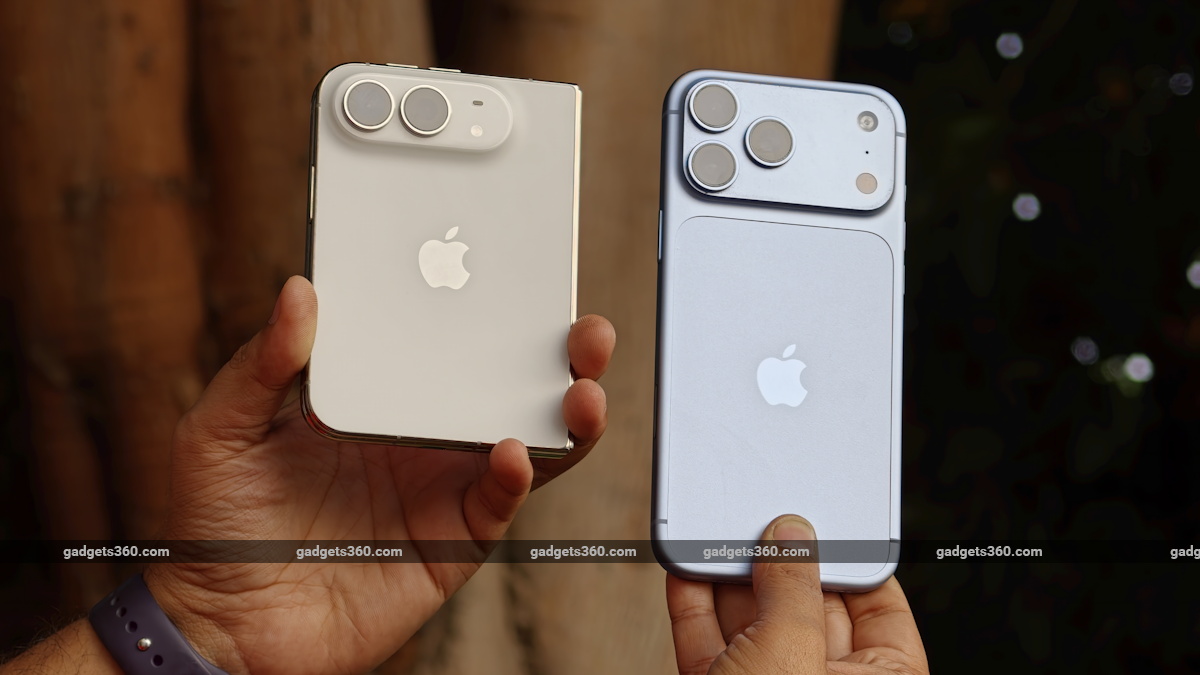
Apple shipments could decline 4 percent in 2027
Click Here to Add Gadgets360 As A Trusted Source

Advertisement
Global smartphone shipments are set to decline again in 2027 as memory shortages and rising component costs continue to put pressure on manufacturers, according to a recent market research report. Budget phones are likely to take the biggest hit, with brands raising prices and dropping less profitable models. Apple and Samsung are expected to hold up better than their Chinese rivals, but that won't be enough to prevent another year of falling shipments. The market is not expected to recover until 2028, and even then, shipments may not return to 2025 levels.
Global Smartphone Shipments to Fall Further in 2027
According to Counterpoint Research's latest Smartphone Market Outlook Tracker, global smartphone shipments are forecast to decline 13.9 percent year-on-year in 2026, before falling another 6 percent in 2027. The report links the downturn to a shortage of mobile memory, as suppliers prioritise demand from AI and server applications. This is driving up procurement costs for phone makers and making it harder for them to maintain affordable prices.
Several manufacturers have responded by increasing retail prices, reducing memory configurations or discontinuing models that are no longer profitable. Phones priced below $200 (roughly Rs. 18,500) are likely to be particularly affected. The report also points to production cuts among some major ODM and EMS suppliers, following reduced orders from Android manufacturers. Memory supply is expected to remain tight through 2027, with further increases in LPDDR prices adding to manufacturers' costs.
Higher prices could lead consumers to hold on to their existing phones for longer or consider refurbished models. Although demand for premium smartphones has remained relatively stable, it has not been enough to offset weaker sales in the mass-market segment.
Apple is forecast to remain the world's largest smartphone vendor by shipments in 2026 and 2027, with its shipments expected to decline 1 percent and 4 percent, respectively. The report attributes its relative resilience to its premium positioning, financing options, customer loyalty and priority access to suppliers.
Samsung's shipments are projected to fall 1 percent in 2026 and 3 percent in 2027. Its broad product portfolio, component capabilities and established relationships with retailers and operators could help it manage supply constraints. However, stronger demand for premium phones and foldables may not be enough to offset weaker sales of its Galaxy A series.
Chinese smartphone makers face greater pressure, particularly those with a strong presence in affordable segments and emerging markets. The report suggests that some manufacturers may have to reduce their product portfolios or withdraw from less profitable markets. Huawei is expected to buck the trend in 2026, with shipments forecast to grow 12 percent, supported by its position in China, access to domestic components and progress in HiSilicon chip development. However, higher prices and supply constraints are expected to weigh on its shipments in 2027.
The market is forecast to return to growth in 2028, with global smartphone shipments expected to increase 6 percent as memory availability improves and component prices stabilise. Consumers who delayed replacing their phones during the downturn could also contribute to the recovery. Vivo, Honor, Oppo Group and Xiaomi are expected to record some of the strongest shipment growth among Chinese brands, while Apple and Samsung are also likely to recover at a more modest pace.
The rebound is unlikely to restore shipments to their 2025 levels. The report estimates that global shipments in 2028 will remain around 14 percent below the 2025 figure, with the market potentially taking until after 2030 to recover that ground. Longer replacement cycles and the growing use of refurbished phones could continue to weigh on demand for new devices.
Foldable phones, on-device AI features and AI agents could offer new ways for smartphone makers to differentiate their devices, but are unlikely to drive a significant increase in shipments in the near term. The wider availability of 6G smartphones towards the end of the decade could encourage more consumers to upgrade.
Comments
Get your daily dose of tech news, reviews, and insights, in under 80 characters on Gadgets 360 Turbo. Connect with fellow tech lovers on our Forum. Follow us on X, Facebook, WhatsApp, Threads and Google News for instant updates. Catch all the action on our YouTube channel.
Further reading:
Smartphone Shipments, Global Smartphone Market, Counterpoint Research, Apple, Samsung, Huawei, Vivo, Honor, Oppo, Xiaomi
Related Stories




Advertisement
Follow Us


-
 Best Anti-Dandruff Scalp Oils to Soothe Itchiness and Banish Dry Winter Flakes
-
Top Heavyweight Thermal Blackout Curtains to Keep Rooms Warm
-
Flipkart Black Friday Sale: Best Home & Living Deals to Upgrade Your Space for Less
-
Panasonic vs. Whirlpool Refrigerators: Which Brand Offers Better Cooling and Value in 2026?
-
Best Beauty Deals at the Flipkart Black Friday Sale: Top Bestsellers Worth Grabbing Now
-
Croma Black Friday Sale: iPhone 16 सिर्फ ₹45,490 में, 17 Pro Max भी सस्ता
-
मिलिट्री ग्रेड सेफ्टी, 6500mAh बैटरी वाला Vivo 5G फोन मात्र ₹15,874 में
-
Toyota Innova Hycross भारत की पहली फ्लेक्स हाइब्रिड इलेक्ट्रिक कार लॉन्च
-
होटल के कमरे में TV पर ढकना चाहिए तौलिया, फोन को दराज में रखकर सोना, रिटायर्ड कर्नल ने ऐसा क्यों कहा
Advertisement
Popular on Gadgets
- Samsung Galaxy S26 Ultra
- Motorola Razr Fold
- ChatGPT
- OPPO Find N6
- Mobiles Under Rs. 40,000
- Vivo X300 Ultra
- Asus Zenbook S14
- iQOO 15
- Vivo X300 Pro
- Lenovo Yoga Slim 7i Aura Edition
- iQOO 15R
- Vivo X Fold 5
- Sony PlayStation 5
- HP OmniPad 12
- OnePlus Nord CE 6 Lite
- OnePlus Pad 4
- OPPO F33 Pro 5G
- Cryptocurrency
- HP OmniBook Ultra 14 (2026)
- iPhone 17
- Eureka Forbes AP 355 Room Air Purifier
- Latest Mobile Phones
- Compare Phones
Latest Gadgets
- HMD Rise
- Redmi R80m 5G
- Redmi R80 5G
- Lava Smart 4 Pro
- Motorola Edge 70 Neo
- OPPO Reno 17 Pro (China)
- OPPO Reno 17 (China)
- Vivo Y6k
- HP OmniBook Ultra 16
- Dell XPS 16 Creator Edition
- OPPO Pad Air 6
- Infinix Xpad 30
- Honor Watch 6 Pro
- Xiaomi Watch S5 41mm
- Toshiba 65-Inch 4K Ultra HD Smart Mini LED QLED TV (65Z670SP)
- Haier M70 Mini LED 65-inch
- Acer Predator Atlas 8
- Asus ROG Ally
- Blue Star 1.5 Ton 5 Star Inverter Split AC (IE518ZNURS)
- Blue Star 2 Ton 3 Star Inverter Window AC (WIE324L)

- About Us
- Sitemaps
- Feedback
- Archives
- Contact Us
- RSS
- Advertise
- Career
- Privacy Policy
- Ethics
- Editorial Policy
- Terms & Conditions
- Complaint Redressal
Download Our Apps
Available in Hindi
© Copyright Red Pixels Ventures Limited 2026. All rights reserved.