-
 UK Watchdog Wants Google to Let Publishers Opt Out of AI Overviews2 February 2026
 -
Samsung Galaxy S26 Series Will Reportedly Support Google's Pixel-Exclusive Scam Detection Feature2 February 2026
-
YouTube Background Playback for Non-Premium Users Reportedly Blocked on Third-Party Browsers2 February 2026
-
Google Pixel Buds 2a Leaked Renders Suggest Two New Colour Options Are on the Way2 February 2026
-
How to Create Rules in Gmail: A Step-by-Step Guide1 February 2026
- Home
- Mobiles
- Mobiles News
- Google Disrupts Massive Proxy Network That Hijacked Millions of Smartphones, PCs for Cyberattacks
Google Disrupts Massive Proxy Network That Hijacked Millions of Smartphones, PCs for Cyberattacks
Google dismantles a large residential proxy network that secretly routed traffic through smartphones and PCs.
Written by Akash Dutta, Edited by Rohan Pal | Updated: 3 February 2026 10:23 IST

Photo Credit: Unsplash/Daniel Romero
Hackers can access the connected device’s home Internet and any unencrypted data
Click Here to Add Gadgets360 As A Trusted Source


Advertisement
Google Threat Intelligence Group (GTIG) and its partners announced the disruption of one of the world's largest proxy networks last week. The Mountain View-based tech giant said that it was able to successfully take down IPIDEA, one of the most notorious proxy networks that has been operating in the shadows for quite some time. The company said the residential proxy network secretly turned Android devices and Windows PCs into Internet proxies for bad actors, allowing them to route traffic via their home networks to mask the origin of malicious activity.
GTIG Takes Down Massive Proxy Network
In a blog post, the tech giant announced and detailed the disruption of the IPIDEA proxy network. For the unaware, a residential proxy network is an unauthorised and unethical service that routes Internet traffic through devices to disguise the true source of any activity. Instead of relying on commercial servers, these networks leverage compromised consumer devices to make connections appear to come from legitimate residential IP addresses.
Residential proxy networks are often used by attackers to mask malicious behaviour such as credential stuffing, content scraping, account takeovers and other forms of fraud. Because the traffic appears to come from everyday home or mobile IP addresses, it can be harder for security systems to distinguish legitimate users from illegitimate traffic. Google said it, along with its partners, identified the network, which used a variety of techniques to evade detection, including running hidden services on devices and obscuring command and control channels.
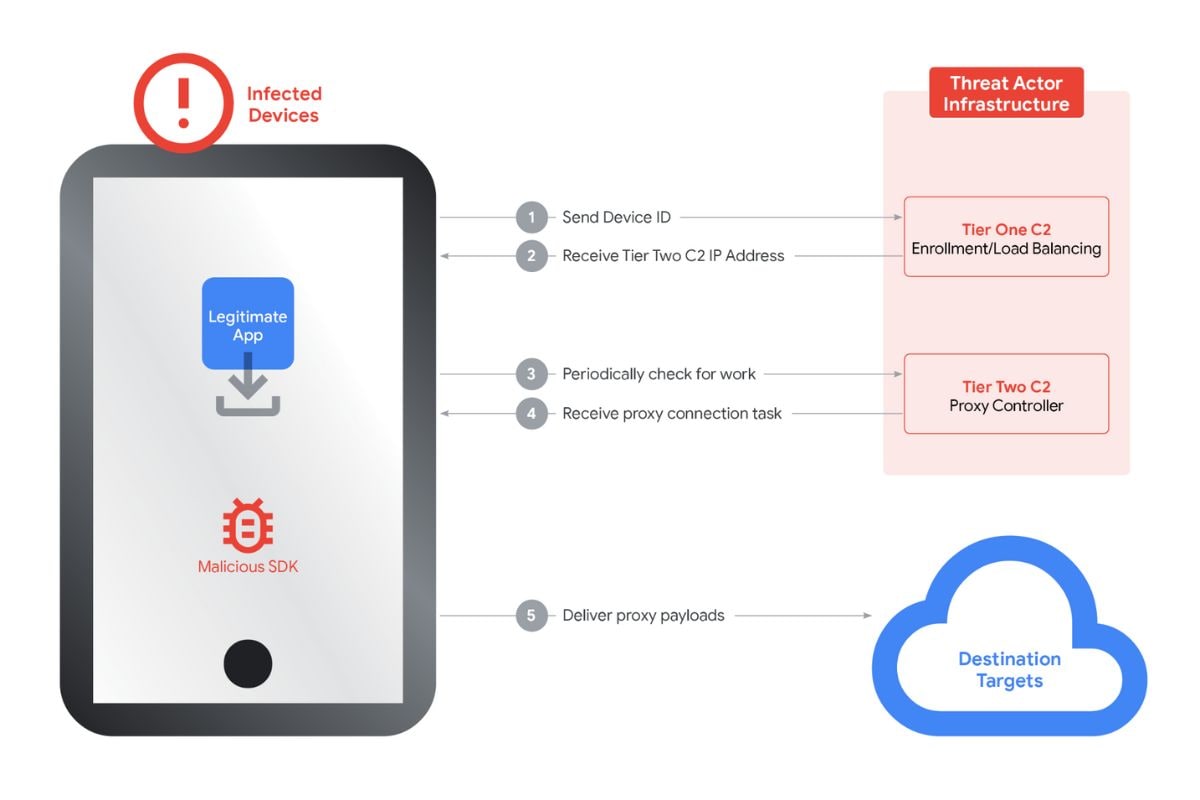
How residential proxy networks operate
Photo Credit: Google
The blog post highlighted that the operation spread through a collection of malicious Android apps and proxy software on Windows PCs. The apps were distributed outside of official app stores as well as through third-party platforms, and included mechanisms to persist in the background while continuing to relay traffic. Google said that the malware's proxy functionality was often invisible to users, and in many cases the network ran without any obvious drain on battery life or data usage that might have alerted device owners.
To dismantle the infrastructure, GTIG and partners identified the command and control servers that managed the network and took steps to disrupt their operation. This included working with infrastructure providers and domain registrars to shut down domains and servers used to issue commands to compromised devices and to receive and forward proxy traffic. Google also said it updated its detection signals so that future attempts to set up similar networks using the same tools and techniques can be identified more quickly.
“We encourage mobile platforms, ISPs, and other tech platforms to continue sharing intelligence and implementing best practices to identify illicit proxy networks and limit their harms,” the tech giant said.
Comments
Get your daily dose of tech news, reviews, and insights, in under 80 characters on Gadgets 360 Turbo. Connect with fellow tech lovers on our Forum. Follow us on X, Facebook, WhatsApp, Threads and Google News for instant updates. Catch all the action on our YouTube channel.
Related Stories





Google Disrupts Massive Proxy Network That Hijacked Millions of Smartphones, PCs for Cyberattacks


Advertisement
Follow Us




-
06:32
OnePlus 15R Review: Best Flagship Killer Of The Year? -
03:06
How To Delete Instagram Account | Step-By-Step Guide -
05:36
[Sponsored] Haier C90 OLED TV | Dolby Vision IQ, 144Hz OLED and Google TV in Action -
07:38
Redmi Pad 2 Pro Review | Worth Buying or not? | Best Tablet in Budget? -
08:02
Top OxygenOS 16 Features You Must Know: Don't Miss These OnePlus Features On Your Phone!
-
Apple कर रहा फोल्डेबल Flip iPhone पर काम, 2027 तक होगा लॉन्च, जानें सबकुछ
-
OnePlus 16 में होंगे दो 200MP कैमरे, 9000mAh की विशाल बैटरी!, हुआ खुलासा
-
Samsung Galaxy F70 सीरीज आज होगी पेश, युवाओं के लिए खास होगा कैमरा, जानें
-
नए Aadhaar ऐप में कैसे करें रजिस्ट्रेशन, ये है स्टेप बाय स्टेप प्रक्रिया
-
सस्ते होने वाले हैं स्मार्टफोन? जानें क्या कहता है निर्मला सीतारमण का 2026 बजट
Advertisement
Popular on Gadgets
- Samsung Galaxy Unpacked 2025
- ChatGPT
- Redmi Note 14 Pro+
- iPhone 16
- Apple Vision Pro
- Oneplus 12
- OnePlus Nord CE 3 Lite 5G
- iPhone 13
- Xiaomi 14 Pro
- Oppo Find N3
- Tecno Spark Go (2023)
- Realme V30
- Best Phones Under 25000
- Samsung Galaxy S24 Series
- Cryptocurrency
- iQoo 12
- Samsung Galaxy S24 Ultra
- Giottus
- Samsung Galaxy Z Flip 5
- Apple 'Scary Fast'
- Housefull 5
- GoPro Hero 12 Black Review
- Invincible Season 2
- JioGlass
- HD Ready TV
- Laptop Under 50000
- Smartwatch Under 10000
- Latest Mobile Phones
- Compare Phones
Latest Gadgets
- OPPO A6v 5G
- OPPO A6i+ 5G
- Realme 16 5G
- Redmi Turbo 5
- Redmi Turbo 5 Max
- Moto G77
- Moto G67
- Realme P4 Power 5G
- HP HyperX Omen 15
- Acer Chromebook 311 (2026)
- Lenovo Idea Tab Plus
- Realme Pad 3
- HMD Watch P1
- HMD Watch X1
- Haier H5E Series
- Acerpure Nitro Z Series 100-inch QLED TV
- Asus ROG Ally
- Nintendo Switch Lite
- Haier 1.6 Ton 5 Star Inverter Split AC (HSU19G-MZAID5BN-INV)
- Haier 1.6 Ton 5 Star Inverter Split AC (HSU19G-MZAIM5BN-INV)

- About Us
- Sitemaps
- Feedback
- Archives
- Contact Us
- RSS
- Advertise
- Career
- Privacy Policy
- Ethics
- Editorial Policy
- Terms & Conditions
- Complaint Redressal
Download Our Apps
Available in Hindi
© Copyright Red Pixels Ventures Limited 2026. All rights reserved.