-
 Apple’s 20th Anniversary iPhone Tipped to Feature All-Curved Display With Near Bezel-Less Design29 April 2026
 -
Apple Announces Monthly Payment Option for Annual Subscriptions on App Store29 April 2026
-
Apple Reportedly Developing New AI-Powered Photo Editing Tools for iPhone, iPad, and Mac29 April 2026
-
iPhone 17 Series Reportedly Affected By Issue That Prevents Booting When Batteries Are Drained28 April 2026
-
Apple Reportedly Plans to Launch Foldable iPhone, Touchscreen MacBook ‘Ultra’ This Year28 April 2026
- Home
- Mobiles
- Mobiles News
- Memory Component to Reportedly Account for 45 Percent Value of an iPhone Due to Supply Chain Issues
Memory Component to Reportedly Account for 45 Percent Value of an iPhone Due to Supply Chain Issues
Apple could absorb a portion of these increased costs rather than passing them entirely to consumers, as per the report.
Written by Shaurya Tomer, Edited by Ketan Pratap | Updated: 30 April 2026 09:02 IST
Click Here to Add Gadgets360 As A Trusted Source

Advertisement
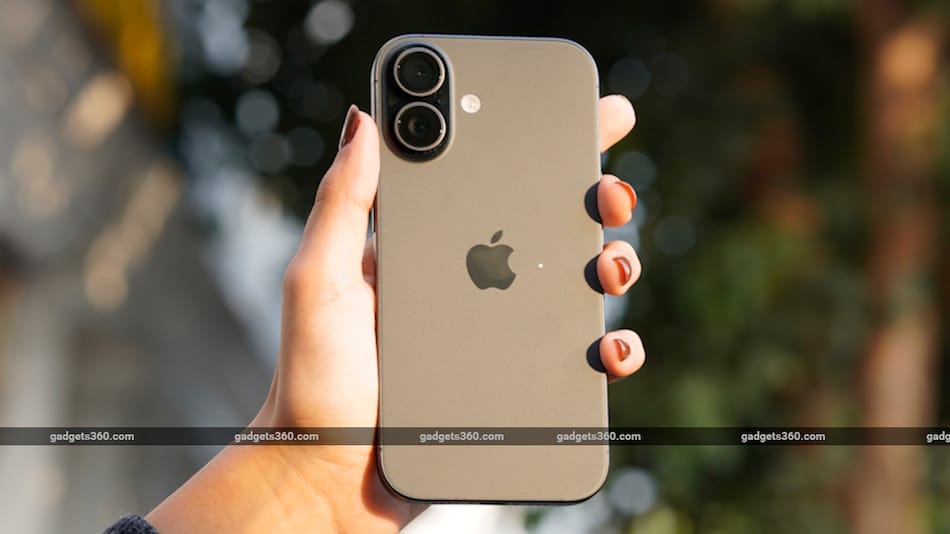
Apple is said to be heading into one of its most challenging supply chain phases. According to a report, global memory shortage threatens to increase the cost of future iPhones significantly. The primary culprit is likely to be the memory component, which, historically, accounted for a relatively small portion of smartphone manufacturing costs. However, it may reportedly account for nearly 45 percent of an iPhone's total value by 2027, as demand for AI data centres continues to rise.
Memory Crisis Could Reshape iPhone Pricing
According to a report, the ongoing memory crunch is fueled by soaring demand from AI infrastructure companies. It has reportedly pushed prices sharply higher. Traditionally, memory has accounted for roughly 10–15 percent of a smartphone's bill of materials (BoM), but analysts have warned that this figure could rise dramatically in the coming years.
Some companies may struggle to absorb the rising costs, which could potentially lead to consolidation in the industry. Apple, on the other hand, may choose a different strategy. Reports suggest the company could absorb a portion of these increased costs rather than passing them entirely to consumers. The company has already been aggressively securing memory supply, even at higher prices, indicating a willingness to adapt to the changing market.
The development comes at a pivotal moment for Apple's leadership. John Ternus is expected to take over as CEO later this year. Financial Times reports that the executive could inherit a complex set of challenges spanning supply chain diversification, pricing strategy, and geopolitical tensions.
The tech giant is said to be simultaneously working to reduce its reliance on China by expanding manufacturing in regions like India and the US. However, much of its supply chain, particularly for critical components like memory, reportedly remains heavily dependent on a small group of global suppliers.
The latest market research reportedly revealed that the global smartphone chip shipments declined by eight percent in Q1 2026, affected by constrained memory supply. On the other hand, Apple and Samsung's chip shipments continued to grow.
Comments
Get your daily dose of tech news, reviews, and insights, in under 80 characters on Gadgets 360 Turbo. Connect with fellow tech lovers on our Forum. Follow us on X, Facebook, WhatsApp, Threads and Google News for instant updates. Catch all the action on our YouTube channel.
Related Stories


Memory Component to Reportedly Account for 45 Percent Value of an iPhone Due to Supply Chain Issues


Advertisement
Follow Us




-
01:10
[Sponsored] Candlelight. Night vibes. Incredible video. This is low-light videography on Galaxy S26 Ultra -
01:11
[Sponsored] Who needs bulky gear when your phone shoots like this? -
04:49
Realme 16 Review: Air Design, 7000mAh, And More | Best Phone Under 35000 In 2026? -
05:05
Goboult Mustang Racer Smartwatch Review: Should You Get This Mustang Smartwatch? -
04:58
OnePlus Nord Buds 4 Pro Review: Specs, Sound Quality, ANC, and Battery Backup Tested
-
16 हजार रुपये सस्ता मिल रहा Vivo का फोल्डेबल स्मार्टफोन, ये है ऑफर
-
खो गया है आपका स्मार्टफोन तो फाइंड माय डिवाइस फीचर से ऐसे खोजें
-
50MP कैमरा, 6000mAh बैटरी के साथ Poco C81 Pro लॉन्च, जानें सबकुछ
-
13 हजार रुपये सस्ता मिल रहा 50MP सेल्फी कैमरा वाला Vivo स्मार्टफोन, देखें डील
-
Oppo F33 5G vs Realme 16 5G vs Vivo V60e: जानें कौन सा फोन है बेस्ट
Advertisement
Popular on Gadgets
- Samsung Galaxy Unpacked 2026
- iPhone 17 Pro Max
- ChatGPT
- iOS 26
- Laptop Under 50000
- Smartwatch Under 10000
- Apple Vision Pro
- Oneplus 12
- OnePlus Nord CE 3 Lite 5G
- iPhone 13
- Xiaomi 14 Pro
- Oppo Find N3
- Tecno Spark Go (2023)
- Realme V30
- Best Phones Under 25000
- Samsung Galaxy S24 Series
- Cryptocurrency
- iQoo 12
- Samsung Galaxy S24 Ultra
- Giottus
- Samsung Galaxy Z Flip 5
- Apple 'Scary Fast'
- Housefull 5
- GoPro Hero 12 Black Review
- Invincible Season 2
- JioGlass
- HD Ready TV
- Latest Mobile Phones
- Compare Phones
Latest Gadgets
- OnePlus Ace 6 Ultra
- Poco C81 Pro
- Vivo Y500s
- Vivo Y600 Pro
- Infinix GT 50 Pro
- Vivo Y6 5G
- Vivo Y05 5G
- Poco C81x
- Dell XPS 16
- Dell XPS 14
- Redmi Pad 2 9.7 4G
- Redmi Pad 2 9.7
- NoiseFit Diva Araya
- OPPO Watch X3 Mini
- Xiaomi TV S Mini LED 2026 (75-inch)
- Xiaomi TV S Mini LED 2026 (65-inch)
- Asus ROG Ally
- Nintendo Switch Lite
- Voltas 1 Ton 3 Star Inverter Split AC (183V Vectra Zenith Silver(4503752))
- Voltas 1 Ton 3 Star Inverter Split AC (123V Vertis Smart Elite Gold(4503704))

- About Us
- Sitemaps
- Feedback
- Archives
- Contact Us
- RSS
- Advertise
- Career
- Privacy Policy
- Ethics
- Editorial Policy
- Terms & Conditions
- Complaint Redressal
Download Our Apps
Available in Hindi
© Copyright Red Pixels Ventures Limited 2026. All rights reserved.