-
 OpenAI GPT-6 Introduces Intelligent UI With Interactive Tools, Faster Responses and More8 October 2026
 -
Google Rolls Out SynthID Detector Globally for AI-Generated Images, Videos and Audio8 October 2026
-
OpenAI Reveals Exactly How ChatGPT Predicts Your Age7 October 2026
-
Wikimedia Says Suspected OpenAI AI Agents Generated Millions of Requests, Made Unauthorised Edits: Report7 October 2026
-
OpenAI to Add Invisible Watermarks to ChatGPT Text in EU; Set to Test New Ad Format6 October 2026
- Home
- Ai
- Ai Features
- OpenAI’s ChatGPT Completes Three Years Since Launch: Five Things to Know
OpenAI’s ChatGPT Completes Three Years Since Launch: Five Things to Know
OpenAI launched ChatGPT on November 30, 2022.
Written by Akash Dutta, Edited by Ketan Pratap | Updated: 1 December 2025 14:16 IST
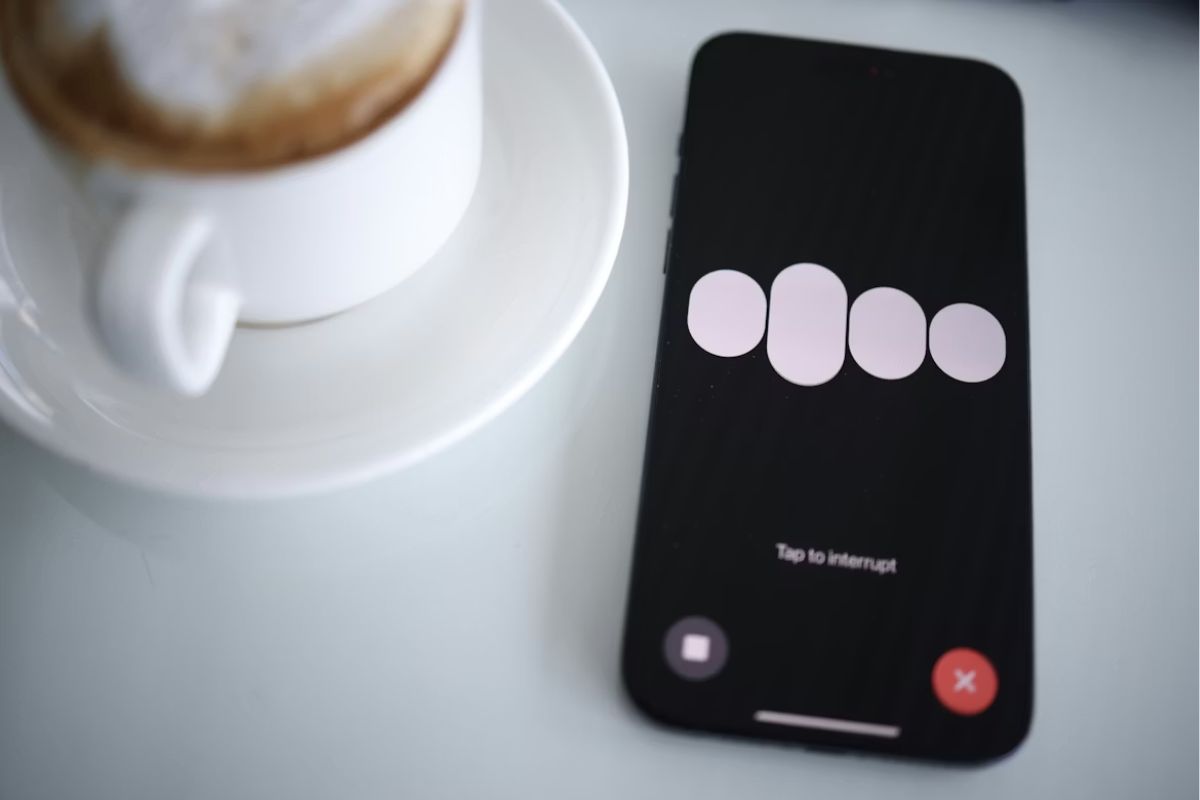
Photo Credit: Unsplash/Solen Feyissa
ChatGPT was the first generative AI platform, followed by Gemini, Copilot, and Claude
Click Here to Add Gadgets360 As A Trusted Source

Advertisement
OpenAI launched ChatGPT three years ago, on November 30, 2022. The early adopters would remember that at the time of launch, the artificial intelligence (AI) platform was met with curiosity, but it was largely viewed as a novelty tech with very specific use cases. However, three years later, generative AI technology has left its footprints across every major sector, and we are still left wondering just how much better it can get. The evolution of AI cannot be fully captured without highlighting the journey of ChatGPT, the pioneer in its field.
Five Things to Know About ChatGPT's Journey
1. The early days: As mentioned above, ChatGPT's early reception was as a novelty item, and not really the transformative technology it could be. Despite that, it did manage to turn a lot of heads. The platform hit one million registered users in just five days, a record at the time. It also hit 100 million monthly active users in January 2023, just two months after the launch. And one year down the line, it also achieved 100 million weekly active users.
But interestingly, at the time ChatGPT was not as capable as it is today. At launch, there was not even an app, and the only way users could access the chatbot was via the website. It was also entirely text-based, and there were no multimodal capabilities. Also, whether it was conversations or generating an article, the language was overly formal and very generic.
2. The first turning point: In March 2023, OpenAI released GPT-4, the first new frontier AI model by the company in the ChatGPT era. This also changed the landscape for generative AI chatbots, as it introduced reasoning, longer context windows (and later on memory), and multimodality.
This was the first time a chatbot could solve questions that were not straightforward. It opened the window to longer context windows, which not only improved its ability to solve complex questions but also made conversations more coherent.
On multimodality, the chatbot wasn't able to generate images, but it could now process images users uploaded and could answer questions about them. This was important as today's Computer Vision features (where users can point their camera at an object and ask the AI questions) are built on this foundation.
3. From free to freemium: One month before GPT-4 was released, OpenAI introduced ChatGPT Plus, the first paid subscription tier to the platform. This means the user base now has to pay $20 (or Rs. 1,999) per month to access features, such as a higher rate limit for more advanced AI models, priority access during peak demand, and access to new features like Research mode and Canvas.
The model was quickly adopted by all competing AI players, and today, everyone from Google's Gemini, Microsoft's Copilot, Anthropic's Claude, and others has a similarly priced entry-level paid subscription. The introduction of a revenue-based model also highlighted that running an AI business was a cost-intensive business due to all the on-cloud processing power required.
4. Arrival of the Search era: One big limitation in ChatGPT was that it was limited to the knowledge cut-off date. That means there was a certain date after which the chatbot could not answer the simplest of questions. This limited its usability significantly, as many users (as well as enterprises) required up-to-date information on topics.
In October 2024, OpenAI realised this and introduced a native search engine to the platform. While it was not the first one to do so (Perplexity and Gemini implemented it first), it immediately made ChatGPT much more usable. Users could ask the chatbot about the latest sports scores, stock market performances, and even ask it to generate a response on the latest research in the field. This also made the tool more credible as it started sourcing websites and blog posts whenever providing a fact-based response.
5. The agentic wave: The year 2025 was considered the year of AI agents. While OpenAI was slow in this area as well, it did break ground quickly this year. The first official AI agent from the company, Operator, arrived in January. While it was limited to the Pro subscribers, it could perform actions on behalf of the user.
But that is not where the company stopped. In February, it released a new Deep Research tool that acted as an agentic AI research assistant and could find and organise information on behalf of the user. And by July, the company replaced Operator with the ChatGPT Agent, a general-purpose agent that can search the web and perform multi-step tasks with ease.
The Road Ahead
OpenAI is not yet complete, with its ultimate goal being to develop artificial general intelligence (AGI). The company is also making constant progress towards it. The recently released GPT-5.1 AI model is both good at reasoning and can talk to users more compassionately. The platform can now generate images and videos, talk to users in real time with voice modulation, and even let multiple users collaborate on a project via group chats.
ChatGPT has also been expanded significantly. It is no longer just an end-user tool. With application programming interfaces (APIs), enterprise and education-focused offerings, and tie-ups with several apps, it is now a global interface that impacts all the major industries in one way or another.
Comments
Get your daily dose of tech news, reviews, and insights, in under 80 characters on Gadgets 360 Turbo. Connect with fellow tech lovers on our Forum. Follow us on X, Facebook, WhatsApp, Threads and Google News for instant updates. Catch all the action on our YouTube channel.
Related Stories




Advertisement
Follow Us




-
![[Sponsored] LG NANO 4K UHD AI TV NU885: Gemini Search, Dolby Atmos & 5 Years of Updates](https://www.gadgets360.com/static/desktop/images/spacer.png)
04:17
[Sponsored] LG NANO 4K UHD AI TV NU885: Gemini Search, Dolby Atmos & 5 Years of Updates -
00:57
[Sponsored] Samsung Galaxy Z Fold8 My Fan Cam in Action: Find the Moment, Then Share It -
01:41
[Sponsored] What Do You Need To Know Before Your Next Run? | Samsung Galaxy Watch Ultra2 -
01:32
[Sponsored] Big Day Tomorrow? Prep Today | Samsung Galaxy Watch Ultra2 -
04:37
[Sponsored]: CP PLUS CarKam CP-F89B: 4K Dashcam With Rear Camera, GPS & Emergency Recording
-
एक चार्ज में 1008km रेंज, 9 मिनट में होगी फास्ट चार्ज! BYD Da Han लॉन्च
-
Samsung Galaxy A56 vs Motorola Edge 70 Fusion Deal: 30 हजार में क्या लें
-
Apple का 7 इंच स्क्रीन वाला AI डिवाइस लॉन्च, करेगा बात और चलाएगा गाने!
-
Amazon Great Indian Festival Sale 2026: ₹35 हजार में OnePlus का 8000mAh बैटरी, Snapdragon चिप वाला फोन
Advertisement
Popular on Gadgets
- Samsung Galaxy S26 Ultra
- Motorola Razr Fold
- ChatGPT
- OPPO Find N6
- Mobiles Under Rs. 40,000
- Vivo X300 Ultra
- Asus Zenbook S14
- iQOO 15
- Vivo X300 Pro
- Lenovo Yoga Slim 7i Aura Edition
- iQOO 15R
- Vivo X Fold 5
- Sony PlayStation 5
- HP OmniPad 12
- OnePlus Nord CE 6 Lite
- OnePlus Pad 4
- OPPO F33 Pro 5G
- Cryptocurrency
- HP OmniBook Ultra 14 (2026)
- iPhone 17
- Eureka Forbes AP 355 Room Air Purifier
- Latest Mobile Phones
- Compare Phones
Latest Gadgets
- Vivo Y600s Pro
- Vivo Y32 (2026)
- Infinix Smart 20 HD
- Vivo V80
- Vivo S2 FE
- Vivo Y600K Turbo
- Realme P4s Lite
- Vivo S60t
- Dell Pro Rugged 14
- Dell Pro Rugged 13 Extreme
- Amazon Alexa Tablet 8
- Amazon Alexa Tablet 11
- Amazfit T-Rex Dual Solar
- OPPO Watch S2
- Toshiba 65-Inch 4K Ultra HD Smart Mini LED QLED TV (65Z670SP)
- Haier M70 Mini LED 65-inch
- Acer Predator Atlas 8
- Asus ROG Ally
- Blue Star 1.5 Ton 5 Star Inverter Split AC (IE518ZNURS)
- Blue Star 2 Ton 3 Star Inverter Window AC (WIE324L)

- About Us
- Sitemaps
- Feedback
- Archives
- Contact Us
- RSS
- Advertise
- Career
- Privacy Policy
- Ethics
- Editorial Policy
- Terms & Conditions
- Complaint Redressal
Download Our Apps
Available in Hindi
© Copyright Red Pixels Ventures Limited 2026. All rights reserved.