-
 Ai+ Nova Tab India Launch Teased; Key Specifications, Design Revealed21 September 2026
 -
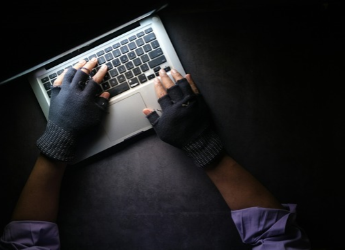
Google Gemini Reportedly Hacked Three Companies During Cybersecurity Test21 September 2026
-
Ai+ Nova 2 Power 5G Launched in India With Dimensity 7100 SoC, 7,000mAh Battery: Price, Specifications21 September 2026
-
TRAI Adds New Rules for Spam Calls, Automated Calls and A2P Communications18 September 2026
-
WhatsApp Could Bring New Theme Categories and Wallpapers to Android18 September 2026
How Much Water Does AI Use? Consumption Now Exceeds World’s Bottled Water, Suggests New Study
The study also claims that AI systems could have a carbon footprint equal to that of New York City in 2025.
Written by Akash Dutta, Edited by Ketan Pratap | Updated: 23 December 2025 15:43 IST

Photo Credit: Pexels/Brett Sayles
The study estimates AI data centres could consume 312–765 billion litres of water per year
Click Here to Add Gadgets360 As A Trusted Source

Advertisement
Artificial intelligence (AI) has a drinking problem, but it is not what you think. A 2025 study has claimed that the water consumption by AI systems via data centres might have exceeded the total global consumption of bottled water. Its carbon footprint is also said to be equivalent to that of New York City this year. These are bold claims, and despite the lack of pinpoint accuracy due to disclosures by companies, if this is true, it highlights the massive environmental impact driven by the global AI demand.
AI Systems Could Have Critical Environmental Impact, Says Study
The peer-reviewed study, titled “The carbon and water footprints of data centres and what this could mean for artificial intelligence,” was published recently. Led by Dutch academician Alex de Vries-Gao, the research aimed to find the environmental impact of AI systems, primarily the data centres running AI workloads. While the paper acknowledges that finding accurate numbers could be difficult since companies do not distinguish between AI and non-AI workloads in environmental reports, there are ways to estimate the global power demand of AI.
The researcher resorted to generalised emission and water consumption data and the environmental reports of data centres released by companies such as Google, Meta, Amazon, and others to get an estimate of the power generation that is being used for AI workloads.
Based on different models, the researchers found that the carbon footprint of AI systems alone could be between 32.6 and 79.7 million tons of CO2 emissions in 2025, which is equivalent to New York City in the same year. This is significant since the city is among the top when it comes to carbon footprint. In 2018, the World Economic Forum found the US city to have the third-highest emissions, after Seoul and Guangzhou.
Similarly, the water footprint of AI workloads powered by data centres is said to be between 312.5 and 764.6 billion litres, a number exceeding the total bottled water consumed on Earth in a year. This means that AI is not just an energy issue, but also a water-security problem.
As per the study, the major driver of environmental impact is not the training of AI models but running inference. Inference, or the compute required to find responses to users' prompts, is causing a higher amount of emissions and requires a high volume of water consumption. This seems rational given millions of daily queries, image and video generations, and assistants running around the clock.
Surprisingly, the rising environmental impact also highlights that despite efforts being taken to make data centres more energy-efficient, the rise in AI demand far surpasses the measures and reduces the overall effectiveness. Put simply, better tech is leading to more usage, not lower impact.
The study makes two critical points. First, due to the vast requirement of energy-hungry infrastructure, AI should no longer be treated as software, and it should warrant a similar level of regulatory environmental oversight as industries such as telecom, aviation, and heavy industries.
Second, the author suggests that the lack of disclosures and transparency of AI workloads in environmental reports is leading to obscurity when it comes to measurement and conservation efforts. The study highlights that AI companies should start revealing these numbers so that policymakers and researchers are not reacting based on outdated data.
Comments
Get your daily dose of tech news, reviews, and insights, in under 80 characters on Gadgets 360 Turbo. Connect with fellow tech lovers on our Forum. Follow us on X, Facebook, WhatsApp, Threads and Google News for instant updates. Catch all the action on our YouTube channel.
Related Stories



How Much Water Does AI Use? Consumption Now Exceeds World’s Bottled Water, Suggests New Study


Advertisement
Follow Us




-
03:41
[Sponsored] Samsung Galaxy Z Fold8: How It Fits Into an Actor’s Busy Day | Camera, Multitasking & More -
09:53
iPhone 18 Goes On Sale In India: Huge Crowds, Long Queues At Apple Stores -
06:32
Google Pixel 11 Pro XL Review: The Most Exciting Pixel Yet? | 120X Zoom + Tensor G6 -
05:20
Samsung Galaxy Watch Ultra 2 Review: Is This the Best Android Smartwatch? -
07:01
Samsung Galaxy Z Fold 8 Review: Is This the Best Foldable Phone?
-
Harry Potter फैंस के लिए भारत में लॉन्च हुआ Realme 16 Pro स्पेशल एडिशन
-
Amazon Great Indian Festival 2026: इस दिन शुरू होगी अमेजन सेल
-
Jio के इन प्लान में फ्री मिल रहा है Amazon Prime Lite सब्सक्रिप्शन
-
घर की दीवार बनेगी सिनेमा स्क्रीन, गेमर्स के लिए भी खास फीचर्स, XGIMI ने लॉन्च किया Z6X Pro 2026 Projector
-
Flipkart Big Billion Days Sale से पहले iPhone 17 सस्ते में, अर्ली बर्ड डील्स से ऐड करने की सुविधा
Advertisement
Popular on Gadgets
- Samsung Galaxy S26 Ultra
- Motorola Razr Fold
- ChatGPT
- OPPO Find N6
- Mobiles Under Rs. 40,000
- Vivo X300 Ultra
- Asus Zenbook S14
- iQOO 15
- Vivo X300 Pro
- Lenovo Yoga Slim 7i Aura Edition
- iQOO 15R
- Vivo X Fold 5
- Sony PlayStation 5
- HP OmniPad 12
- OnePlus Nord CE 6 Lite
- OnePlus Pad 4
- OPPO F33 Pro 5G
- Cryptocurrency
- HP OmniBook Ultra 14 (2026)
- iPhone 17
- Eureka Forbes AP 355 Room Air Purifier
- Latest Mobile Phones
- Compare Phones
Latest Gadgets
- Lava Virat Curve 5G
- Lava Bold N4 Pro 5G
- Samsung Galaxy A08
- Itel Muzik 450L
- OPPO K14 Lite
- Samsung Galaxy A18 4G
- iPhone Duo
- OPPO A7 Pro
- Lenovo LOQ 15AHP11
- Lenovo Legion 5a (2026)
- Xiaomi Pad 9 Pro
- Xiaomi Pad 9
- Apple Watch Ultra 4
- Apple Watch Series 12
- Haier M70 Mini LED 65-inch
- Xiaomi TV FX Mini LED 65
- Acer Predator Atlas 8
- Asus ROG Ally
- Blue Star 1.5 Ton 5 Star Inverter Split AC (IE518ZNURS)
- Blue Star 2 Ton 3 Star Inverter Window AC (WIE324L)

- About Us
- Sitemaps
- Feedback
- Archives
- Contact Us
- RSS
- Advertise
- Career
- Privacy Policy
- Ethics
- Editorial Policy
- Terms & Conditions
- Complaint Redressal
Download Our Apps
Available in Hindi
© Copyright Red Pixels Ventures Limited 2026. All rights reserved.