-
 OpenAI Gets Hacked by Indian-Origin Ethical Hackers Using Anthropic’s Claude18 September 2026
 -
Anthropic Says Claude Assisted Cyberattacks and Military Weapons Development15 September 2026
-
AI Leaders Reach Consensus: Amodei, Altman, Musk, and Hassabis on Extinction Risks14 September 2026
-
Anthropic Claude Fable 5.1, Claude Mythos 5.1 Models Announced for Advanced Coding, Scientific Research3 September 2026
-
Anthropic’s Claude Closes 85 Percent of AI Safety Gap in Automated Research Test31 August 2026
Anthropic Releases New Open-Source Tool That Evaluates How AI Models Behave
Dubbed Bloom, the AI tool creates a series of scenarios to test an AI model for a particular behavioural trait.
Written by Akash Dutta, Edited by Ketan Pratap | Updated: 23 December 2025 13:41 IST

Photo Credit: Anthropic
Anthropic also released a benchmark of four behaviours tested by the AI tool Bloom
Click Here to Add Gadgets360 As A Trusted Source

Advertisement
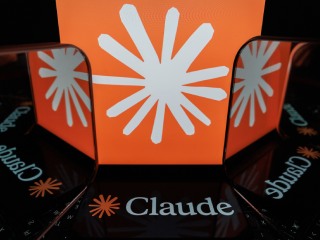
Anthropic released a new artificial intelligence (AI) tool last week that can test and gauge how an AI model behaves under normal and stressful circumstances. Dubbed Bloom, it is designed to automate the process of testing behavioural traits of models by generating a detailed set of scenarios as prompts and evaluating the responses. The San Francisco-based AI startup's AI tool is also open-source, meaning any interested developer or an AI lab can download it to test models across various traits.
Anthropic Introduces Bloom to Test Model Behaviour
In a post, the Claude maker introduced and detailed the new AI tool. Anthropic says that testing AI model's behaviour is important as it helps researchers learn if it is prone to becoming biased, prioritising self-preservation, or indulging in sycophancy. However, the process to test model behaviour so far has been manual, where researchers create a detailed set of prompts to stress-test models and then evaluate the responses. The company says it is a lengthy and complex process.
- Anthropic expanding Claude voice mode with Opus, Sonnet
- Anthropic launched 13 free AI courses along with certification.
- Anthropic Expanding Mythos Access to India Feels Like a Big Deal
- Anthropic’s Claude Mythos Preview is scary!
- Anthropic is offering twice the usage of Claude for the next two weeks. Good time to jump ship from ChatGPT/Gemini for s
This is where Bloom comes in. Based on specific behaviours requested by a researcher, the tool creates sample evaluations locally until the trait has been captured. Then, it runs these scenarios on the target model. Anthropic claimed that Bloom integrates with a model's weights and biases for experiments at scale. It also exports “inspect-compatible” transcripts, which can be viewed within the tool.
The functioning of the AI tool can be broken down into four broad stages. First, the AI tool analyses the requested behaviour and any example transcripts shared with it to gain understanding about it. Then, it ideates evaluation scenarios that can effectively capture and measure the trait. “Each scenario specifies the situation, simulated user, system prompt, and interaction environment,” the post mentioned. Interestingly, Bloom generates new scenarios every time, instead of relying on fixed sets.
Then, all scenarios are rolled out in parallel as an AI agent simulates both the user's and the tool responses to trigger the desired behaviour in the model. Finally, a judge model is used to score each transcript for the presence of the behaviour, and a meta-judge produces analysis of the scores and data. Anthropic added that researchers can configure Bloom's behaviour by adjusting the interactions' length and modality.
Besides the tool, Anthropic has also released benchmark results of Bloom across four behaviours — delusional sycophancy, instructed long-horizon sabotage, self-preservation, and self-preferential bias. The company tested 16 different AI models, with a mix of in-house and third-party models.
Since Bloom is open-source, interested individuals can download the AI tool from the AI startup's GitHub listing. The tool is available with a permissive MIT licence for both academic and commercial use cases.
Comments
Get your daily dose of tech news, reviews, and insights, in under 80 characters on Gadgets 360 Turbo. Connect with fellow tech lovers on our Forum. Follow us on X, Facebook, WhatsApp, Threads and Google News for instant updates. Catch all the action on our YouTube channel.
Related Stories






Advertisement
Follow Us




-

09:53
iPhone 18 Goes On Sale In India: Huge Crowds, Long Queues At Apple Stores -
06:32
Google Pixel 11 Pro XL Review: The Most Exciting Pixel Yet? | 120X Zoom + Tensor G6 -
05:20
Samsung Galaxy Watch Ultra 2 Review: Is This the Best Android Smartwatch? -
07:01
Samsung Galaxy Z Fold 8 Review: Is This the Best Foldable Phone? -
06:39
Samsung Galaxy Z Fold8 Ultra Review: Cameras, Battery, Performance Tested
-
10 मिनट में घर पहुंचेंगे iPhone 18 Pro, Pro Max: सेल हुई शुरू
-
Lava ने लॉन्च किया 6000mAh बैटरी वाला Bold N4 Pro 5G
-
itel Zeno 300 भारत में होगा लॉन्च, मिलेगी 6,000mAh बैटरी और डुअल कैमरा
-
Vivo S2 का सस्ता वर्जन Vivo S2 FE होगा लॉन्च, 6GB रैम, MediaTek चिप के साथ, Geekbench पर लिस्टिंग
-
Oppo A7 Pro Max 5G ग्लोबल मार्केट में लॉन्च, 50MP दो कैमरा, 10,000mAh बैटरी, IP69 रेटिंग!
Advertisement
Popular on Gadgets
- Samsung Galaxy S26 Ultra
- Motorola Razr Fold
- ChatGPT
- OPPO Find N6
- Mobiles Under Rs. 40,000
- Vivo X300 Ultra
- Asus Zenbook S14
- iQOO 15
- Vivo X300 Pro
- Lenovo Yoga Slim 7i Aura Edition
- iQOO 15R
- Vivo X Fold 5
- Sony PlayStation 5
- HP OmniPad 12
- OnePlus Nord CE 6 Lite
- OnePlus Pad 4
- OPPO F33 Pro 5G
- Cryptocurrency
- HP OmniBook Ultra 14 (2026)
- iPhone 17
- Eureka Forbes AP 355 Room Air Purifier
- Latest Mobile Phones
- Compare Phones
Latest Gadgets
- Lava Bold N4 Pro 5G
- Samsung Galaxy A08
- Itel Muzik 450L
- OPPO K14 Lite
- Samsung Galaxy A18 4G
- iPhone Duo
- OPPO A7 Pro
- Huawei Mate XT 2 Ultimate Design
- Asus Vivobook S14 (S5452MA)
- Acer Aspire G 3D 16
- Xiaomi Pad 9 Pro
- Xiaomi Pad 9
- Apple Watch Ultra 4
- Apple Watch Series 12
- Haier M70 Mini LED 65-inch
- Xiaomi TV FX Mini LED 65
- Acer Predator Atlas 8
- Asus ROG Ally
- Blue Star 1.5 Ton 5 Star Inverter Split AC (IE518ZNURS)
- Blue Star 2 Ton 3 Star Inverter Window AC (WIE324L)

- About Us
- Sitemaps
- Feedback
- Archives
- Contact Us
- RSS
- Advertise
- Career
- Privacy Policy
- Ethics
- Editorial Policy
- Terms & Conditions
- Complaint Redressal
Download Our Apps
Available in Hindi
© Copyright Red Pixels Ventures Limited 2026. All rights reserved.