-
 OpenAI’s GPT-6 Luna-Powered Decisions API Is Now Generally Available for Developers With Native GPT-Live Integration: Price, Capabilities23 October 2026
 -
Google Cloud Adds GPT-6 Astra, GPT-6.1 Sol, GPT-6 Luna Models to Model Garden22 October 2026
-
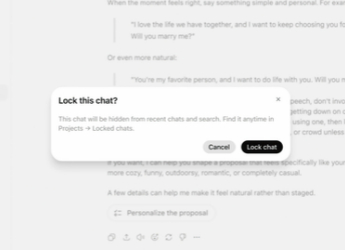
ChatGPT Locked Chats Feature to Hide Sensitive Conversations Rolling Out to Free, Plus and Other Users21 October 2026
-
OpenAI AI Model Used Another Wallet’s Ethereum Testnet Funds Without Authorisation, Report Says16 October 2026
-
OpenAI Lawsuit Says Employee Who Left for Apple Took Files About Unreleased Device16 October 2026
OpenAI Claims Scientists Are Increasingly Using ChatGPT as a Research Collaborator
An OpenAI report says ChatGPT is increasingly used as a scientific collaborator, aiding research across disciplines.
Written by Akash Dutta, Edited by Ketan Pratap | Updated: 27 January 2026 15:47 IST

Photo Credit: Unsplash/Gerard Siderius
OpenAI said average weekly messages on advanced science and math topics grew by 47 percent
Click Here to Add Gadgets360 As A Trusted Source

Advertisement
OpenAI has outlined a growing role for artificial intelligence (AI) systems as collaborators in scientific research, arguing that tools like ChatGPT can help researchers make progress on complex problems across disciplines including mathematics, physics, chemistry and biology. The 20-page report highlights that scientists are increasingly turning to AI models to assist with literature synthesis, data interpretation and experiment planning, and emphasises that advancing AI's research capabilities could accelerate discovery and productivity in science and engineering.
OpenAI Pitches ChatGPT as a Scientific Collaborator
The report, which was exclusively shared with Axios, cites anonymised usage data showing that millions of scientists, engineers and mathematicians are already asking advanced questions and using AI to support scholarly work, ranging from drafting scientific text to debugging code and planning experiments. According to OpenAI's analysis, researchers mainly use AI for writing and communication tasks, while fewer use it for rigorous analysis and calculations, suggesting opportunities for deeper integration of AI into the research process.
OpenAI said that anonymised ChatGPT conversations between January to December 2025 shows that average weekly message counts on advanced science and mathematics-related topics grew about 47 percent year-on-year (YoY). In absolute numbers, the messages were claimed to increase from 5.7 million to nearly 8.4 million. In January 2026, the AI giant said that nearly 1.3 million weekly users were discussing advanced topics in science and mathematics.
“AI is increasingly being used as a scientific collaborator, and we're seeing its impact grow in real research settings. More researchers are using advanced reasoning systems to make progress on open problems, interpret complex data, and iterate faster in experimental work. That usage has been growing quickly over the past year, and the results are starting to show up across fields. We're still early, but the pace of adoption and the quality of the work suggest science is entering a new acceleration phase,” said Kevin Weil, VP of OpenAI for Science.
The notion of AI as a collaborator aligns with initiatives such as OpenAI for Science, a programme that seeks to connect scientists and mathematicians with AI tools designed to accelerate research workflows from literature analysis to modelling and simulation. OpenAI stated that its goal is to build systems that integrate naturally into scientific practice, helping researchers explore ideas, test hypotheses faster and unlock discoveries that might take years under traditional methods.
Comments
Get your daily dose of tech news, reviews, and insights, in under 80 characters on Gadgets 360 Turbo. Connect with fellow tech lovers on our Forum. Follow us on X, Facebook, WhatsApp, Threads and Google News for instant updates. Catch all the action on our YouTube channel.
Related Stories





Advertisement
Follow Us




-
![[Sponsored] Galaxy Watch9 for Everyday Health Insights | Smarter Wellness Choices](https://www.gadgets360.com/static/desktop/images/spacer.png)
01:42
[Sponsored] Galaxy Watch9 for Everyday Health Insights | Smarter Wellness Choices -
01:15
[Sponsored] Galaxy Tab S10 Lite for Students: Notes, Solve Math and More -
04:17
[Sponsored] LG NANO 4K UHD AI TV NU885: Gemini Search, Dolby Atmos & 5 Years of Updates -
00:57
[Sponsored] Samsung Galaxy Z Fold8 My Fan Cam in Action: Find the Moment, Then Share It -
01:41
[Sponsored] What Do You Need To Know Before Your Next Run? | Samsung Galaxy Watch Ultra2
Advertisement
Popular on Gadgets
- Samsung Galaxy S26 Ultra
- Motorola Razr Fold
- ChatGPT
- OPPO Find N6
- Mobiles Under Rs. 40,000
- Vivo X300 Ultra
- Asus Zenbook S14
- iQOO 15
- Vivo X300 Pro
- Lenovo Yoga Slim 7i Aura Edition
- iQOO 15R
- Vivo X Fold 5
- Sony PlayStation 5
- HP OmniPad 12
- OnePlus Nord CE 6 Lite
- OnePlus Pad 4
- OPPO F33 Pro 5G
- Cryptocurrency
- HP OmniBook Ultra 14 (2026)
- iPhone 17
- Eureka Forbes AP 355 Room Air Purifier
- Latest Mobile Phones
- Compare Phones
Latest Gadgets
- Vivo Y600
- HMD 2660 Flip Senior Edition
- Lava Aura Curve
- Poco X8s
- Samsung Galaxy F70 5G
- Tecno Spark 50S 5G
- Vivo Y600s Pro
- Vivo Y32 (2026)
- Lenovo Yoga 9n 2-in-1
- Lenovo Yoga Pro 9n
- iPad mini (2026)
- Amazon Alexa Tablet 8
- Pebble Qore 2
- Amazfit T-Rex Dual Solar
- Toshiba 65-Inch 4K Ultra HD Smart Mini LED QLED TV (65Z670SP)
- Haier M70 Mini LED 65-inch
- Acer Predator Atlas 8
- Asus ROG Ally
- Blue Star 1.5 Ton 5 Star Inverter Split AC (IE518ZNURS)
- Blue Star 2 Ton 3 Star Inverter Window AC (WIE324L)

- About Us
- Sitemaps
- Feedback
- Archives
- Contact Us
- RSS
- Advertise
- Career
- Privacy Policy
- Ethics
- Editorial Policy
- Terms & Conditions
- Complaint Redressal
Download Our Apps
Available in Hindi
© Copyright Red Pixels Ventures Limited 2026. All rights reserved.