-
 Perplexity Takes On Claude Cowork With Personal Computer, an Agentic AI Platform for Mac Mini12 March 2026
 -
Perplexity Ordered to Stop Deploying Shopping AI Agents on Amazon: Report11 March 2026
-
Perplexity Computer Unveiled as Unified, Multi-Model AI Workflow Platform: Key Features, Availability26 February 2026
-
Samsung Galaxy S26 Series to Support 'Hey Plex' Hotword for Perplexity Voice Assistant23 February 2026
-
Perplexity’s New Feature Compares Answers From Three Different AI Models9 February 2026
Perplexity CEO Aravind Srinivas Says On-Device AI Can Disrupt the Data Centre Industry
Perplexity CEO says on-device AI could undercut centralised inference and challenge data centre dominance in the future.
Written by Akash Dutta, Edited by Rohan Pal | Updated: 2 January 2026 17:50 IST
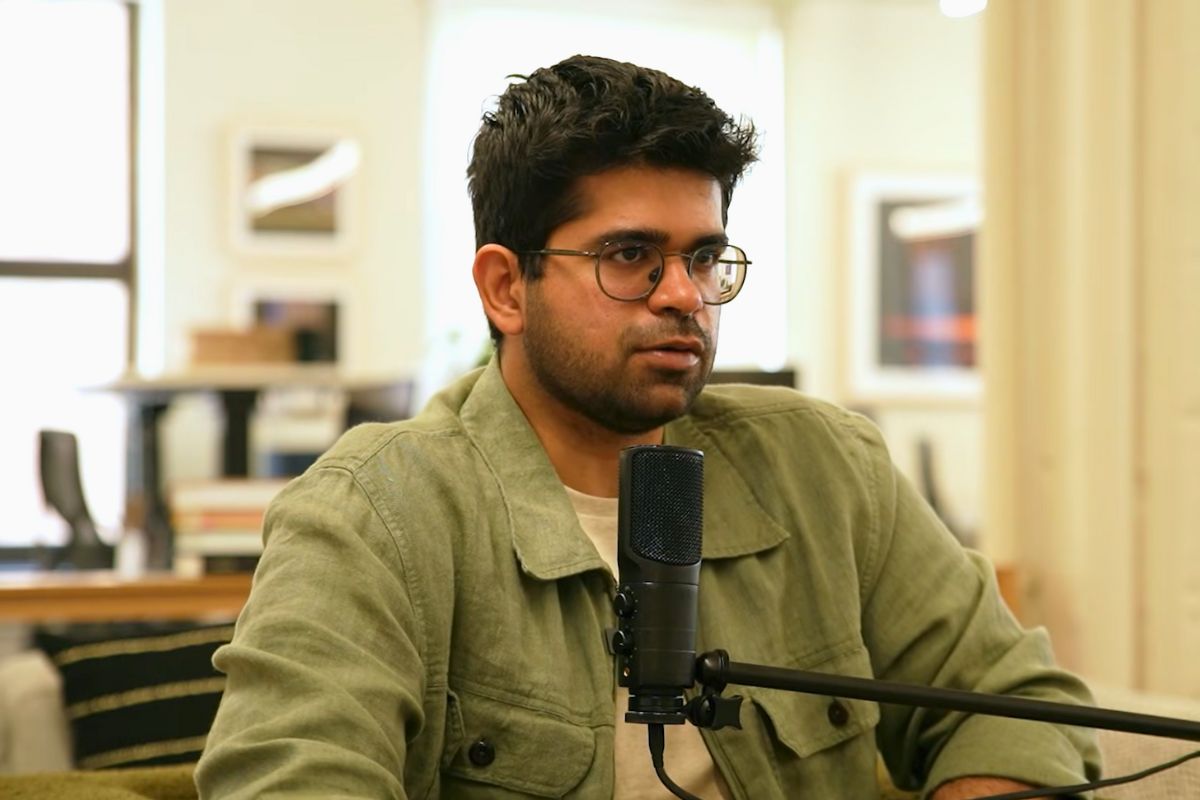
Photo Credit: YouTube/Prakhar Gupta
Aravind Srinivas said that AI is witnessing a paradigm shift from chatbots to agentic operations
Click Here to Add Gadgets360 As A Trusted Source


Advertisement
Perplexity CEO Aravind Srinivas highlighted a future where artificial intelligence (AI) shifts from centralised servers to local devices. During a podcast interview, he mentioned that the biggest threat to traditional data centres is if AI “can be packed locally on a chip that's running on the device” because that eliminates the need to run inference on it from data centres that power central servers. Srinivas also tackled other topics around the shift from chatbots to agents, the value of humans, and the future of the technology.
Perplexity CEO Believes Powerful On-Device Intelligence Will Bring the Next AI Revolution
During a podcast with YouTuber Prakhar Gupta, Srinivas opened up about his views on wide-ranging topics around AI. However, the highlight of the conversation was his views on data centres and locally run AI systems. “The biggest threat to a data centre is if the intelligence can be packed locally on a chip that's running on the device, and then there's no need to run inference on all of it on one centralised data centre,” he said.
The comment was made when he was asked by Gupta about a hardware upgrade that can bring a quantum leap to AI. Explaining his statement, the Perplexity CEO described a potential transition away from the prevailing model where most AI tasks are handled in large, specialised data centres. He suggested that if models were capable of on-device inference, the need for vast, centralised infrastructure could diminish. He said that such a shift would alter the economics of billions of dollars spent on data-centre buildouts worldwide and could lead to a more decentralised AI ecosystem.
Beyond infrastructure, Srinivas also touched on the difference between biological and artificial intelligence, noting that human brains are far more energy-efficient than large data centres when measured per watt. He described human intelligence as driven by intrinsic curiosity, the capacity to question assumptions and investigate the familiar in new ways, something he said existing AI systems do not naturally exhibit.
Srinivas also discussed how AI may influence the future of work and assistance. He suggested that ubiquitous, personalised AI could level the playing field between individuals and large institutions, much as smartphones have done by placing powerful tools in the hands of many people regardless of status. He noted that age is not a barrier to adopting AI tools but that a mindset of curiosity is critical to successful use.
Comments
Get your daily dose of tech news, reviews, and insights, in under 80 characters on Gadgets 360 Turbo. Connect with fellow tech lovers on our Forum. Follow us on X, Facebook, WhatsApp, Threads and Google News for instant updates. Catch all the action on our YouTube channel.
Related Stories



Advertisement
Follow Us




-
05:05
Goboult Mustang Racer Smartwatch Review: Should You Get This Mustang Smartwatch? -
04:58
OnePlus Nord Buds 4 Pro Review: Specs, Sound Quality, ANC, and Battery Backup Tested -
02:29
[Sponsored] Samsung Galaxy S26 Ultra First Look: AI Smartphone for Creators, Gaming & Productivity -
04:25
Vivo X200T Review - Full Camera, Gaming & Battery Test | Worth Buying? -
28:31
The Future of Productivity: Logitech's Anatoliy Polyanker On AI, Hybrid Work, And India's Tech Boom
-
200 मेगापिक्सल कैमरा, 7000mAh बैटरी के साथ Vivo V70 FE लॉन्च, जानें सबकुछ
-
Redmi Note 15 SE भारत में लेटेस्ट AI फीचर्स, 5800mAh बैटरी के साथ लॉन्च
-
5100mAh बैटरी, 50MP कैमरा वाला Pixel फोन हुआ 4700 रुपये सस्ता
-
Ola की इलेक्ट्रिक मोटरसाइकिल Roadster X+ पर भारी डिस्काउंट, प्राइस में हुई 60,000 रुपये की कमी
Advertisement
Popular on Gadgets
- Samsung Galaxy Unpacked 2026
- iPhone 17 Pro Max
- ChatGPT
- iOS 26
- Laptop Under 50000
- Smartwatch Under 10000
- Apple Vision Pro
- Oneplus 12
- OnePlus Nord CE 3 Lite 5G
- iPhone 13
- Xiaomi 14 Pro
- Oppo Find N3
- Tecno Spark Go (2023)
- Realme V30
- Best Phones Under 25000
- Samsung Galaxy S24 Series
- Cryptocurrency
- iQoo 12
- Samsung Galaxy S24 Ultra
- Giottus
- Samsung Galaxy Z Flip 5
- Apple 'Scary Fast'
- Housefull 5
- GoPro Hero 12 Black Review
- Invincible Season 2
- JioGlass
- HD Ready TV
- Latest Mobile Phones
- Compare Phones
Latest Gadgets
- Nord 6
- Honor X80i
- Honor Play 80 Pro
- Redmi Note 15 SE 5G
- Redmi A7 Pro
- OPPO K15 Pro
- OPPO K15 Pro+
- Lava Bold N2 Lite
- Xiaomi Book Pro 14
- MacBook Neo
- Vivo Pad 6 Pro
- Lenovo Legion Y700 Gen 5
- boAt Valour Watch 1R
- Xiaomi Watch S5
- Xiaomi QLED TV X Pro 75
- Haier H5E Series
- Asus ROG Ally
- Nintendo Switch Lite
- Haier 1.6 Ton 5 Star Inverter Split AC (HSU19G-MZAID5BN-INV)
- Haier 1.6 Ton 5 Star Inverter Split AC (HSU19G-MZAIM5BN-INV)

- About Us
- Sitemaps
- Feedback
- Archives
- Contact Us
- RSS
- Advertise
- Career
- Privacy Policy
- Ethics
- Editorial Policy
- Terms & Conditions
- Complaint Redressal
Download Our Apps
Available in Hindi
© Copyright Red Pixels Ventures Limited 2026. All rights reserved.