-
 Taylor Swift Once Threatened to Sue Microsoft Over Its 'Tay' Chatbot, Brad Smith Reveals12 September 2019
 -
Taylor Swift's Reputation, The Big Sick, and More – The Weekend Chill1 December 2017
-
OurMine Hacks Vevo, Dumps 3.12TB of Celebrity Data18 September 2017
-
Taylor Swift's New Music Video, Look What You Made Me Do, Makes Biggest YouTube Debut Ever30 August 2017
-
Taylor Swift's Music Is Returning to Spotify, Pandora, More9 June 2017
Taylor Swift Files to Trademark Voice, Image to Protect Her Likeness From AI Deepfakes: Report
Musician Taylor Swift has reportedly filed to trademark two audio clips and an image of herself.
Written by Akash Dutta, Edited by Ketan Pratap | Updated: 28 April 2026 15:41 IST

Photo Credit: Reuters
Trademarking a public figure’s voice has not yet been tested in court
Click Here to Add Gadgets360 As A Trusted Source

Advertisement
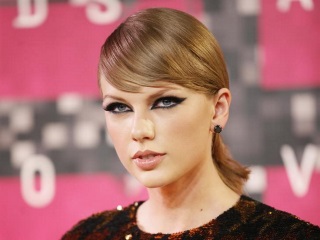
Musician Taylor Swift has reportedly filed to trademark her voice and image. As per reports, the move comes amid rising artificial intelligence (AI)-generated deepfakes that, in particular, have affected celebrities and public figures. The pop superstar is said to have filed applications to trademark two samples of her audio and an image of her performing on the stage during her Eras tour. The application is currently in the review period, and the US government body will have to decide if the audio sample qualifies for trademark.
Taylor Swift Moves to Trademark Her Likeness
According to Reuters, the pop superstar filed separate applications with the US Patent and Trademark Office (US PTO) on Friday via her TAS Rights Management, which has already filed more than 300 trademark applications in just the US. The filed applications are said to include two voice samples and one image.
In the first audio clip, Swift reportedly says, “Hey, it's Taylor Swift, and you can listen to my new album, ‘The Life of a Showgirl,' on demand on Amazon Music Unlimited. The second clip reportedly says, “Hey, it's Taylor. My brand new album ‘The Life of a Showgirl' is out on October 3, and you can click to presave it so you can listen to it on Spotify."
Finally, the image she has filed for trademark is said to be taken from the recent Eras Tour, where she can be seen holding a pink guitar with a black strap, wearing a multicoloured outfit and boots with silver accents. Trademark lawyer Josh Gerben said in a blog post that Swift likely went for a trademark, since copyright does not protect voice or likeness as it is not considered a "work of authorship" fixed in a tangible medium.
In the US, the “Right of Publicity” law offers some protection from unauthorised use of likeness; however, trademarks provide the strongest protection and cover a wider spectrum. Since AI learns from the audio clips and images, and can reproduce them in unique content, standard copyright protection is insufficient.
To give an example, Swift's song “The Fate of Ophelia” can be copyrighted, protecting her from unauthorised use of the music, lyrics, or the original composition. However, if the song is fed to a large language model (LLM), which then uses the voice itself to generate a completely new song, that will not be protected under either the copyright laws in the US or the Right of Publicity laws. But a trademark violation lawsuit can be filed in court for this. Notably, actor Matthew McConaughey successfully filed trademarks for his likeness, including his iconic dialogue from the movie Dazed and Confused, “Alright, alright, alright.”
However, since it is such a new territory, and voice trademarks are very rare, the lawyer highlighted that a strong case might be needed for the court to rule in favour of the defendant.
Comments
Get your daily dose of tech news, reviews, and insights, in under 80 characters on Gadgets 360 Turbo. Connect with fellow tech lovers on our Forum. Follow us on X, Facebook, WhatsApp, Threads and Google News for instant updates. Catch all the action on our YouTube channel.
Related Stories



Taylor Swift Files to Trademark Voice, Image to Protect Her Likeness From AI Deepfakes: Report


Advertisement
Follow Us




-
01:42
[Sponsored] Galaxy Watch9 for Everyday Health Insights | Smarter Wellness Choices -
01:15
[Sponsored] Galaxy Tab S10 Lite for Students: Notes, Solve Math and More -
04:17
[Sponsored] LG NANO 4K UHD AI TV NU885: Gemini Search, Dolby Atmos & 5 Years of Updates -
00:57
[Sponsored] Samsung Galaxy Z Fold8 My Fan Cam in Action: Find the Moment, Then Share It -
01:41
[Sponsored] What Do You Need To Know Before Your Next Run? | Samsung Galaxy Watch Ultra2
-
iPhone 16 Deal: ₹20 हजार सस्ता खरीदें iPhone 16, यहां मिल रहा है ऑफर
-
नया XGIMI 4K प्रोजेक्टर दीवार पर दिखाएगा IMAX स्टाइल में मूवी
-
Infinix GT 50 Pro 5G कल होगा भारत में लॉन्च, मिलेगी 6500mAh बैटरी!
-
Amazon Sale में ₹11 हजार सस्ता खरीदें Motorola का 50MP Sony कैमरा, 5500mAh बैटरी वाला 5G फोन!
-
इलेक्ट्रिक बाइक में पेट्रोल का कमाल! Chery की नई EREV मोटरसाइकिल चलते-चलते करेगी बैटरी चार्ज
Advertisement
Popular on Gadgets
- Samsung Galaxy S26 Ultra
- Motorola Razr Fold
- ChatGPT
- OPPO Find N6
- Mobiles Under Rs. 40,000
- Vivo X300 Ultra
- Asus Zenbook S14
- iQOO 15
- Vivo X300 Pro
- Lenovo Yoga Slim 7i Aura Edition
- iQOO 15R
- Vivo X Fold 5
- Sony PlayStation 5
- HP OmniPad 12
- OnePlus Nord CE 6 Lite
- OnePlus Pad 4
- OPPO F33 Pro 5G
- Cryptocurrency
- HP OmniBook Ultra 14 (2026)
- iPhone 17
- Eureka Forbes AP 355 Room Air Purifier
- Latest Mobile Phones
- Compare Phones
Latest Gadgets
- HMD 2660 Flip Senior Edition
- Lava Aura Curve
- Poco X8s
- Samsung Galaxy F70 5G
- Tecno Spark 50S 5G
- Vivo Y600s Pro
- Vivo Y32 (2026)
- Infinix Smart 20 HD
- Lenovo Yoga 9n 2-in-1
- Lenovo Yoga Pro 9n
- Amazon Alexa Tablet 8
- Amazon Alexa Tablet 11
- Pebble Qore 2
- Amazfit T-Rex Dual Solar
- Toshiba 65-Inch 4K Ultra HD Smart Mini LED QLED TV (65Z670SP)
- Haier M70 Mini LED 65-inch
- Acer Predator Atlas 8
- Asus ROG Ally
- Blue Star 1.5 Ton 5 Star Inverter Split AC (IE518ZNURS)
- Blue Star 2 Ton 3 Star Inverter Window AC (WIE324L)

- About Us
- Sitemaps
- Feedback
- Archives
- Contact Us
- RSS
- Advertise
- Career
- Privacy Policy
- Ethics
- Editorial Policy
- Terms & Conditions
- Complaint Redressal
Download Our Apps
Available in Hindi
© Copyright Red Pixels Ventures Limited 2026. All rights reserved.