

-
 Nothing Won't Launch a Flagship Model in 2026; Company to Focus on Nothing Phone 4a and Audio Products, Carl Pei Says29 January 2026
 -
Nothing Announces Phone 2a Community Edition Project, to Allow Users to Design a Special Edition Phone20 March 2024
-
Nothing Phone 2 Confirmed to Get Snapdragon 8+ Gen 1 SoC: All Details18 May 2023
- Home
- Mobiles
- Mobiles News
- Nothing CEO Carl Pei Predicts Smartphones May Not Get Major Discounts During Sales Due to Ongoing Chip Shortage
Nothing CEO Carl Pei Predicts Smartphones May Not Get Major Discounts During Sales Due to Ongoing Chip Shortage
Pei said major technology firms are reserving memory and semiconductor capacity for AI, limiting availability for smartphone manufacturers.
Written by Sucharita Ganguly, Edited by David Delima | Updated: 12 June 2026 16:37 IST
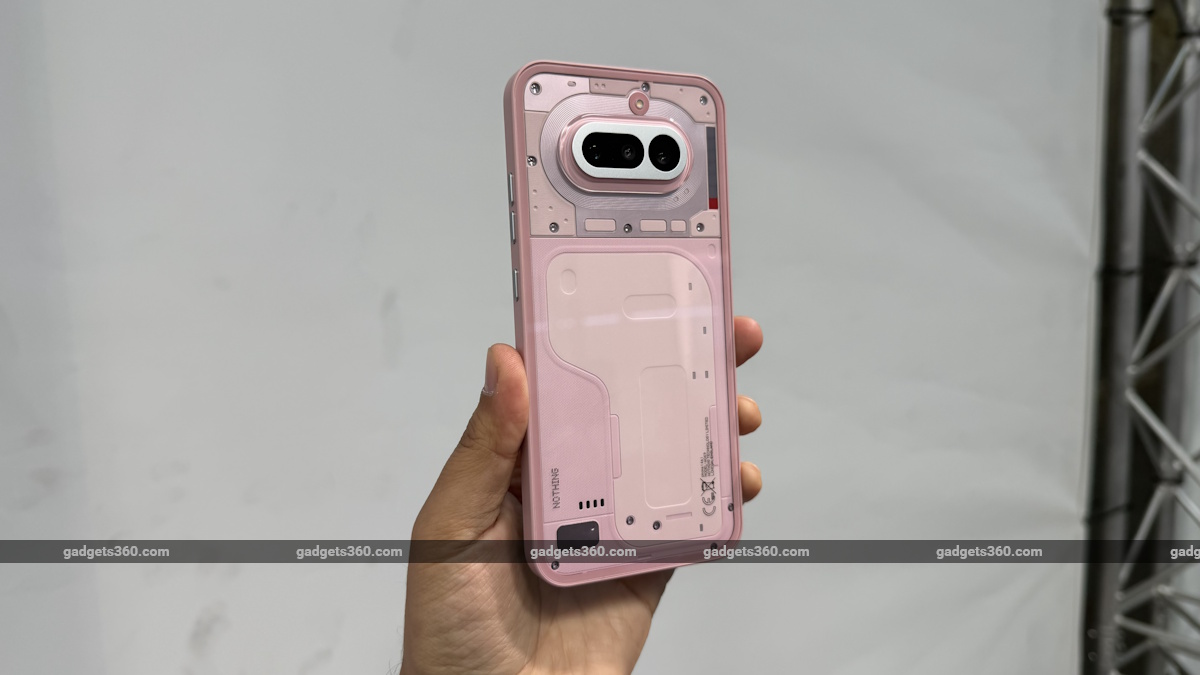
Pei says AI demand is driving up memory costs
Click Here to Add Gadgets360 As A Trusted Source

Advertisement
Nothing co-founder and CEO Carl Pei has warned that smartphone prices could continue rising through 2026 as memory costs serge amid growing demand from the artificial intelligence (AI) industry. The executive said the smartphone market is undergoing a major shift after years of benefiting from steadily declining component prices. According to Pei, manufacturers may soon face a choice between increasing prices and reducing specifications. He also suggested that consumers considering a smartphone upgrade could end up paying more if they postpone their purchase.
Nothing CEO Predicts Higher Smartphone Prices Amid Memory Shortage
In a series of posts on X, Pei said the smartphone industry has relied on a predictable trend for more than a decade, with memory and display costs generally falling over time. That allowed brands to improve hardware specifications without significantly raising prices. However, he believes that the model has now broken down due to sharp increases in memory costs.
He attributed the change to growing demand from AI data centres. According to the Nothing chief, major technology companies are securing memory and semiconductor production capacity years in advance to support AI workloads, reducing the supply available to smartphone manufacturers.
Memory is now the most expensive component in a smartphone. It's more expensive than the processor, more expensive than the display, and can account for more than 50% of the total hardware bill.
— Carl Pei (@getpeid) June 12, 2026
For Phone (4a), memory costs doubled between when we decided to build the device and… https://t.co/4dJdSDwd6T
Memory prices have already increased by as much as 300 percent in some cases and could continue rising as demand outpaces supply, he said. The executive argued that memory is becoming one of the most expensive smartphone components and could account for more than 50 percent of a device's hardware bill by the end of the year. He added that memory modules costing less than $20 (roughly Rs. 1,900) a year ago could exceed $100 (roughly Rs. 9,500) in premium smartphones by year-end.
The Nothing co-founder claimed memory now costs more than smartphone processors and displays. He cited the Nothing Phone 4a as an example, stating that memory costs doubled between the start of development and launch, then doubled again in the months that followed.
Rising component costs are forcing smartphone brands to make difficult decisions, according to the executive. Manufacturers may need to increase handset prices by 30 percent or more in some cases or reduce hardware specifications to maintain profitability. He also predicted that entry-level and mid-range smartphone segments could shrink by more than 20 percent as pricing pressure intensifies.
Nothing's own products are unlikely to be insulated from these market conditions. The company expects pricing increases across its smartphone portfolio, particularly for devices that will transition to UFS 3.1 storage in the first quarter of next year.
The broader impact could extend beyond pricing. The executive argued that rising component costs may reshape how smartphone brands compete, placing greater emphasis on software, design, and overall user experience rather than on hardware specifications alone.
Recent market activity already appears to reflect some of these pressures. According to Pei, certain smartphones introduced since February have launched at up to $100 (roughly Rs. 9,500) pricier than their predecessors. In India, he claimed some models priced above Rs. 30,000 have seen price increases of more than Rs. 7,000 compared with earlier generations.
He also noted that smartphone makers cannot simply stockpile memory to avoid future shortages because supply is allocated by manufacturers. Consumers who delay upgrading their devices could therefore face higher prices in the coming months if memory costs continue to rise. Pei added that upcoming sale periods may not offer the same level of discounts as in previous years.
The latest comments build on earlier warnings from Pei about memory shortages and rising component costs. His recent posts suggest that the impact is already affecting smartphone pricing, with the trend potentially accelerating over the next year.
- KEY SPECS
- NEWS
Display 6.78-inch
Processor Snapdragon 7s Gen 4
Front Camera 32-megapixel
Rear Camera 50-megapixel + 50-megapixel + 8-megapixel
RAM 6GB, 8GB, 12GB
Storage 128GB, 256GB
Battery Capacity 5400mAh
OS Android 16
Resolution 1,224x2,720 pixels
Comments
Get your daily dose of tech news, reviews, and insights, in under 80 characters on Gadgets 360 Turbo. Connect with fellow tech lovers on our Forum. Follow us on X, Facebook, WhatsApp, Threads and Google News for instant updates. Catch all the action on our YouTube channel.
Related Stories


Nothing CEO Carl Pei Predicts Smartphones May Not Get Major Discounts During Sales Due to Ongoing Chip Shortage


Advertisement
Follow Us




-
01:42
[Sponsored] Galaxy Watch9 for Everyday Health Insights | Smarter Wellness Choices -
01:15
[Sponsored] Galaxy Tab S10 Lite for Students: Notes, Solve Math and More -
04:17
[Sponsored] LG NANO 4K UHD AI TV NU885: Gemini Search, Dolby Atmos & 5 Years of Updates -
00:57
[Sponsored] Samsung Galaxy Z Fold8 My Fan Cam in Action: Find the Moment, Then Share It -
01:41
[Sponsored] What Do You Need To Know Before Your Next Run? | Samsung Galaxy Watch Ultra2
Advertisement
Popular on Gadgets
- Samsung Galaxy S26 Ultra
- Motorola Razr Fold
- ChatGPT
- OPPO Find N6
- Mobiles Under Rs. 40,000
- Vivo X300 Ultra
- Asus Zenbook S14
- iQOO 15
- Vivo X300 Pro
- Lenovo Yoga Slim 7i Aura Edition
- iQOO 15R
- Vivo X Fold 5
- Sony PlayStation 5
- HP OmniPad 12
- OnePlus Nord CE 6 Lite
- OnePlus Pad 4
- OPPO F33 Pro 5G
- Cryptocurrency
- HP OmniBook Ultra 14 (2026)
- iPhone 17
- Eureka Forbes AP 355 Room Air Purifier
- Latest Mobile Phones
- Compare Phones
Latest Gadgets
- Vivo Y600
- HMD 2660 Flip Senior Edition
- Lava Aura Curve
- Poco X8s
- Samsung Galaxy F70 5G
- Tecno Spark 50S 5G
- Vivo Y600s Pro
- Vivo Y32 (2026)
- Lenovo Yoga 9n 2-in-1
- Lenovo Yoga Pro 9n
- Amazon Alexa Tablet 8
- Amazon Alexa Tablet 11
- Pebble Qore 2
- Amazfit T-Rex Dual Solar
- Toshiba 65-Inch 4K Ultra HD Smart Mini LED QLED TV (65Z670SP)
- Haier M70 Mini LED 65-inch
- Acer Predator Atlas 8
- Asus ROG Ally
- Blue Star 1.5 Ton 5 Star Inverter Split AC (IE518ZNURS)
- Blue Star 2 Ton 3 Star Inverter Window AC (WIE324L)

- About Us
- Sitemaps
- Feedback
- Archives
- Contact Us
- RSS
- Advertise
- Career
- Privacy Policy
- Ethics
- Editorial Policy
- Terms & Conditions
- Complaint Redressal
Download Our Apps
Available in Hindi
© Copyright Red Pixels Ventures Limited 2026. All rights reserved.
-
 Apple Watch Series 12
Starts from ₹56,900
Apple Watch Series 12
Starts from ₹56,900
-
 Samsung Galaxy Watch Ultra 2
Starts from ₹62,479
Samsung Galaxy Watch Ultra 2
Starts from ₹62,479
-
 Samsung Galaxy Watch 9 (44mm, LTE)
Starts from ₹41,999
Samsung Galaxy Watch 9 (44mm, LTE)
Starts from ₹41,999
-
 Samsung Galaxy Watch 9 (40mm, LTE)
Starts from ₹38,999
Samsung Galaxy Watch 9 (40mm, LTE)
Starts from ₹38,999
-
 Samsung Galaxy Watch 9 (40mm)
Starts from ₹36,999
Samsung Galaxy Watch 9 (40mm)
Starts from ₹36,999
-
 Samsung Galaxy Watch 9 (44mm)
Starts from ₹40,999
Samsung Galaxy Watch 9 (44mm)
Starts from ₹40,999
-
 OnePlus Ace 7 and Ace 7 Pro Confirmed to Get BOE Displays With Native 165Hz Refresh Rate
-
 Vivo Y600 Launched With 10,000mAh Battery, 50-Megapixel Rear Camera: Price, Specifications
-
 Instagram App Now Lets You Watch Reels, Longer Videos and Live Shows on Apple TV
-
 iPhone Duo Owners Complain About Cracking Folding Display; iFixit Teardown Tries to Explain Why