-
 iPhone Duo Gets Facial Unlocking, Close-to-Lock Feature With iOS 27.3 Beta Update17 November 2026
-
Apple's iPhone Duo 2 to Bring Face ID, Action Button, Telephoto Camera: Mark Gurman16 November 2026
-
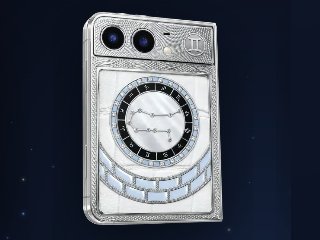
iPhone Duo Gets 12 Zodiac-Inspired Custom Designs From Luxury Brand Caviar6 November 2026
-
Xiaomi Tipped to be Developing a Wide-Screen Slab Phone Inspired by Xiaomi 18 Fold5 November 2026
-
Apple Reportedly Acknowledges iPhone Duo Inner Display Failures After Users Report Cracks27 October 2026
- Home
- Mobiles
- Mobiles Reviews
- iPhone Duo Review: Brilliant Hardware, Astronomical Price Tag
iPhone Duo Review: Brilliant Hardware, Astronomical Price Tag
The iPhone Duo has convinced me that a foldable iPhone has a future, but not that its first gen is worth Rs. 3 lakh.
Written by Ketan Pratap | Updated: 18 November 2026 23:45 IST
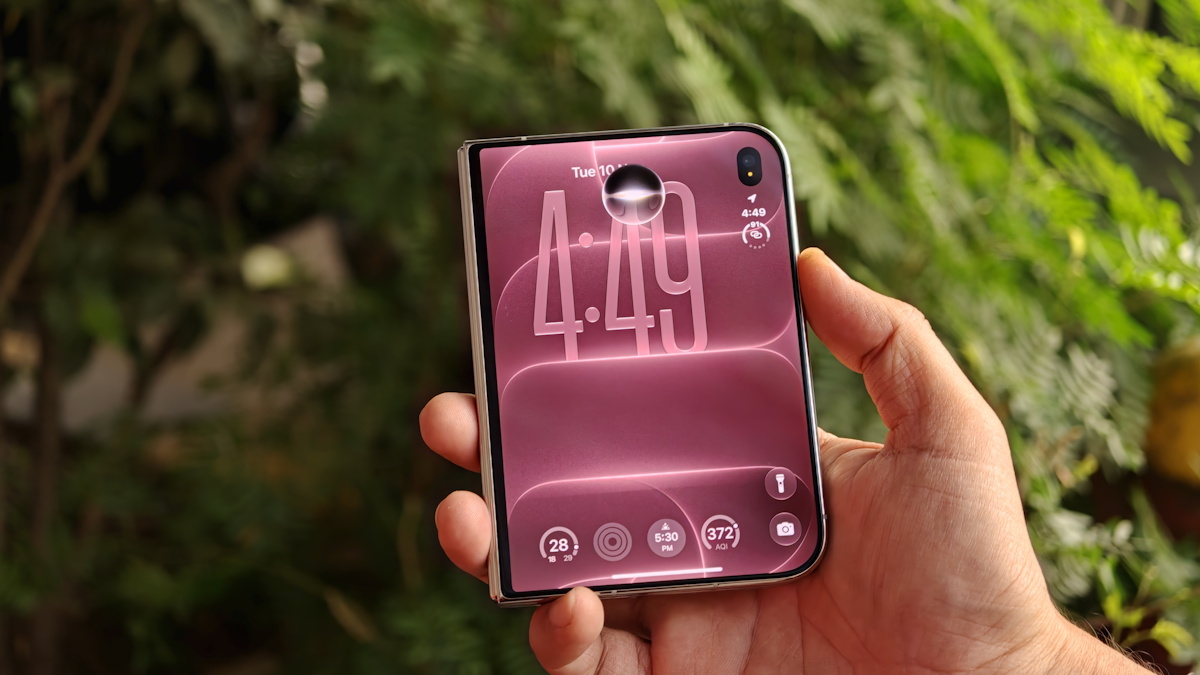
The 5.4-inch cover display is surprisingly practical and handles most everyday tasks
Click Here to Add Gadgets360 As A Trusted Source

Advertisement
In my nearly 15 years of covering consumer tech, I've watched Apple pull almost every evolutionary lever on the iPhone, from stretching 3.5-inch displays to 6.9 inches, trading the home button with Touch ID for Face ID, and swapping LCDs for OLED. Yet the basic glass slab design remained untouchable. Apple shaved millimetres, swapped titanium for aluminium, and added camera lenses, but the core never changed. Meanwhile, foldable rumours became an annual rite of passage: endless patents, supply chain leaks, and display prototypes. After a decade of hearing that "next year is the year," I'd tuned them out entirely.
2026 finally called Apple's bluff. Arriving half a decade after Samsung, Google, and Vivo began wrestling with hinges and creases, the iPhone Duo enters a market that has already moved past novelty. Apple is notoriously unbothered by being late, as long as it can redefine the category when it lands. With the Duo, the mandate wasn't just folding glass; it was forcing iOS to behave across a fluid canvas. But the second the company's new CEO John Ternus left the keynote stage, the conversation in India pivoted from engineering to price shock.
Starting at Rs. 2,99,900 for the 256GB model and scaling to an eye-watering Rs. 4,49,900 for 2TB, the iPhone Duo instantly became a currency unit of its own. Within hours, my social feed was flooded with breakdowns comparing a single phone to used hatchbacks, international vacations, and whole-house electronics upgrades. The memes were funny; the reality less so. At nearly Rs. 3 to 4.5 lakh, you aren't evaluating incremental silicon gains, brighter nits, or modest sensor upgrades. You're asking whether a phone can justify costing as much as a serious personal investment.
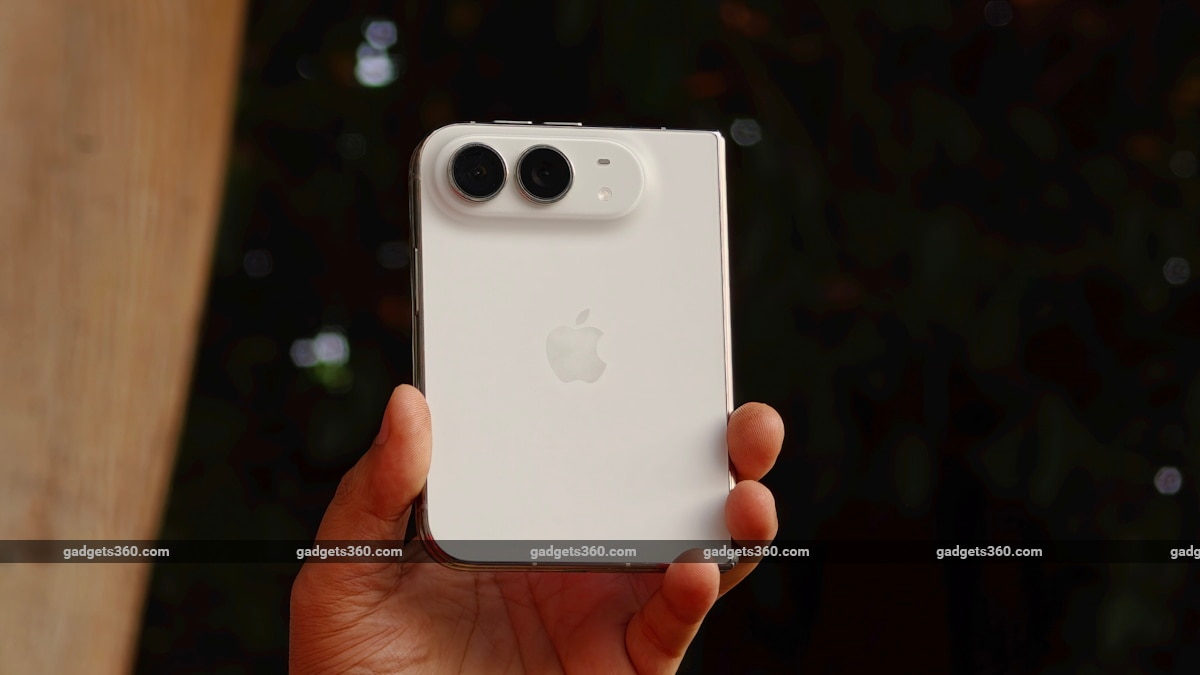
Apple's dual 48-megapixel cameras deliver impressive results, despite falling short of the versatility offered by the Pro models
That leaves no room for software quirks or hardware apologies. Having used the iPhone Duo as my daily driver for over two weeks, the biggest surprise wasn't the hinge or the crease; it was how easily it blended into my day. Unlike book-style foldables that bully you into unfolding them, the cover screen handles quick messages and calls with zero friction, while the inner display opens up when you need real workspace (I typed parts of this review draft directly on it). Yet, living with it reveals compromises that sting at this price tier: app scaling that still needs polish, the awkward muscle-memory tax of reverting from Face ID to Touch ID, and optical zoom hardware that lags behind both the 17 and 18 Pro Max. On crease visibility, Apple has smartly used a matte cover that does the job in most conditions, but as with all foldables, you can still feel the crease while using it.
Can Apple's boldest form-factor gamble in nearly a decade justify its stratospheric price, or are you paying early-adopter tax on a concept still finding its footing?
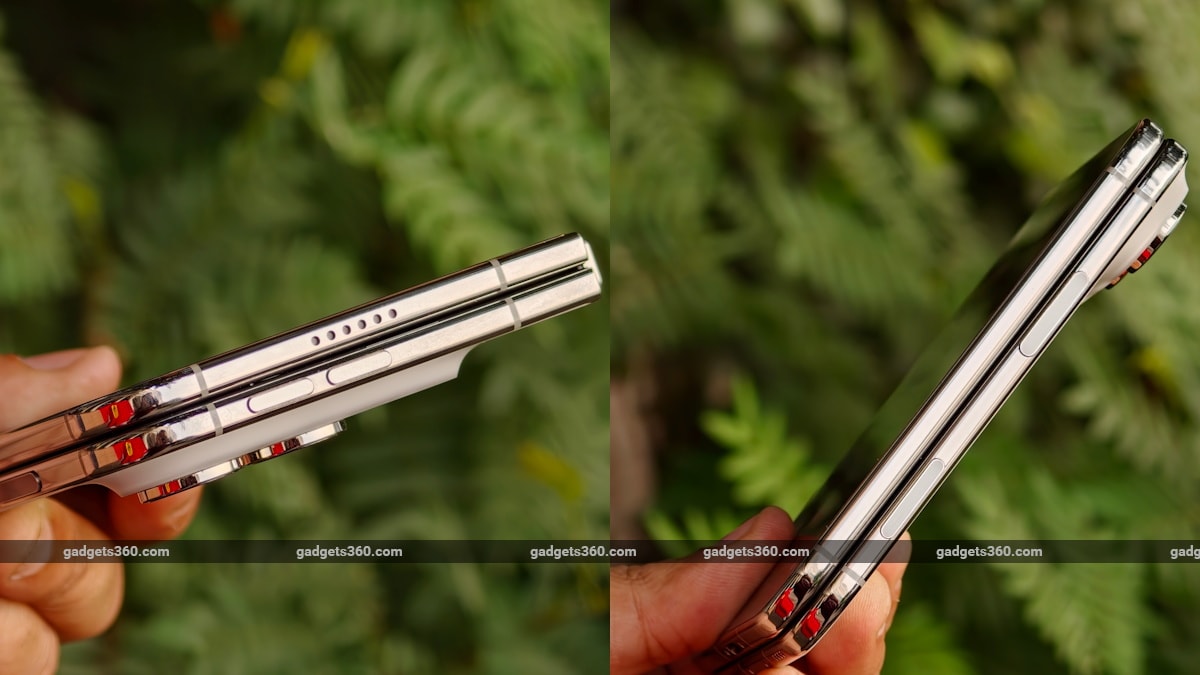
The polished titanium frame and sturdy hinge give confidence in everyday use, although the Duo weighs a substantial 254 grams
iPhone Duo Design: The Passport Form Factor Actually Works
- Titanium frame and hinge cover
- Ceramic Shield 2 at the front and Ceramic Shield back
- IP68 dust-tight and water-resistant
- 117.8x164.6x5.2mm (Unfolded)
- 117.8x84.1x11.3mm (Folded)
- 254 grams
Folded shut, the iPhone Duo looks less like a modern smartphone and more like a leather passport wallet. While slab flagships keep getting taller, narrower, and harder to balance in one hand, Apple went the opposite direction. At roughly 118mm tall and 84mm wide, it's significantly shorter and broader than a standard iPhone, squat enough to barely peek out of a trouser pocket, yet wide enough for everyday tasks without needing to unfold every time.
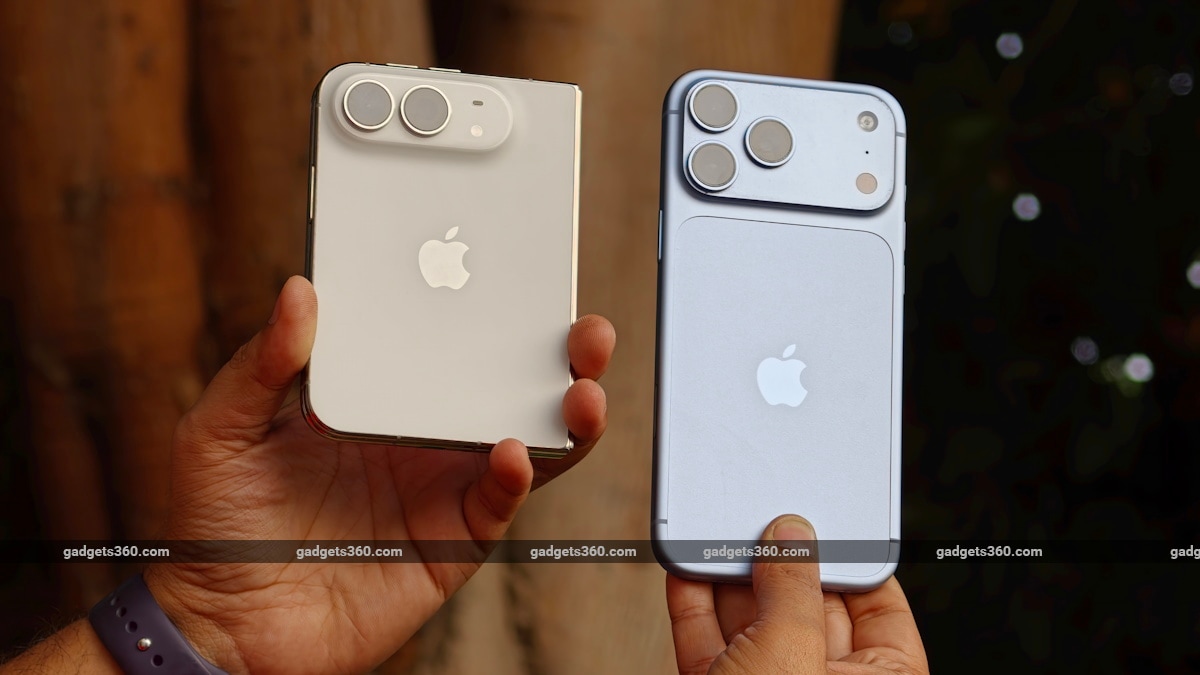
The Duo feels refreshingly different from conventional iPhones. The Duo compared side by side with the iPhone 18 Pro Max
Most book-style foldables treat the outer screen as an afterthought, either making it a cramped, remote-control sliver or an unwieldy brick. The Duo's 5.4-inch cover screen avoids both. On paper, 5.4 inches sounds tiny in an era of near-7-inch flagships, but the extra width completely changes how it feels to hold. The virtual keyboard actually has room to breathe. I wasn't constantly mistyping or fighting autocorrect on WhatsApp replies, and quick tasks like firing off a Slack message or booking a cab never pressured me to pry the phone open. You lose vertical feed space, sure, but for quick, triage-style interactions, it simply works.
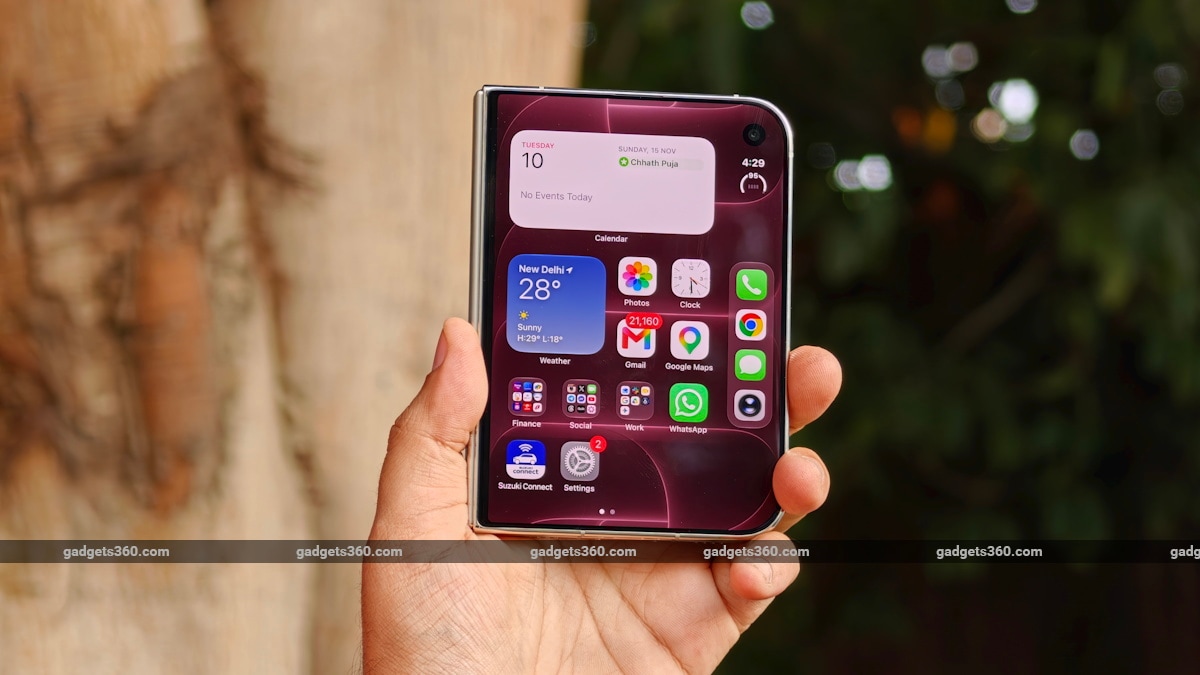
The wider keyboard makes typing comfortable, although the shorter screen means less content is visible at once, plus the bar on the right side
Unfolded, the Duo has a razor-sharp 5.2mm thickness, wrapped in a polished Grade 5 titanium chassis that feels as dense and luxurious as you'd expect. Folded, it stacks to 11.3mm and weighs in at 254 grams. It's heavier than an 18 Pro Max, and you definitely feel the heft when you're on the go, but the squat footprint distributes that weight evenly across your palm rather than feeling top-heavy. The hinge tension is dialled in tight; it holds angles confidently without sagging, letting you prop it in tent or laptop mode on a desk for video calls without hunting for a dock.
Having full IP68 water and dust resistance on a folding phone takes a massive psychological burden off carrying it around. But the single hardest adjustment wasn't the hinge, the thickness, or the weight; it was losing Face ID. After years of glance-and-unlock muscle memory, being demoted to a side-mounted Touch ID sensor feels distinctly archaic. The sensor embedded in the power button is fast and reliable, but having to target a button every time gets old fast. The only redemption? When the Duo sits flat on my desk, a quick thumb tap wakes it up without me having to crane my neck awkwardly over the screen. The good news is that iOS 27.3 beta has added a face unlock biometric option for Duo users. So the stable version could take a few weeks to reach users, but that's a perfect respite.
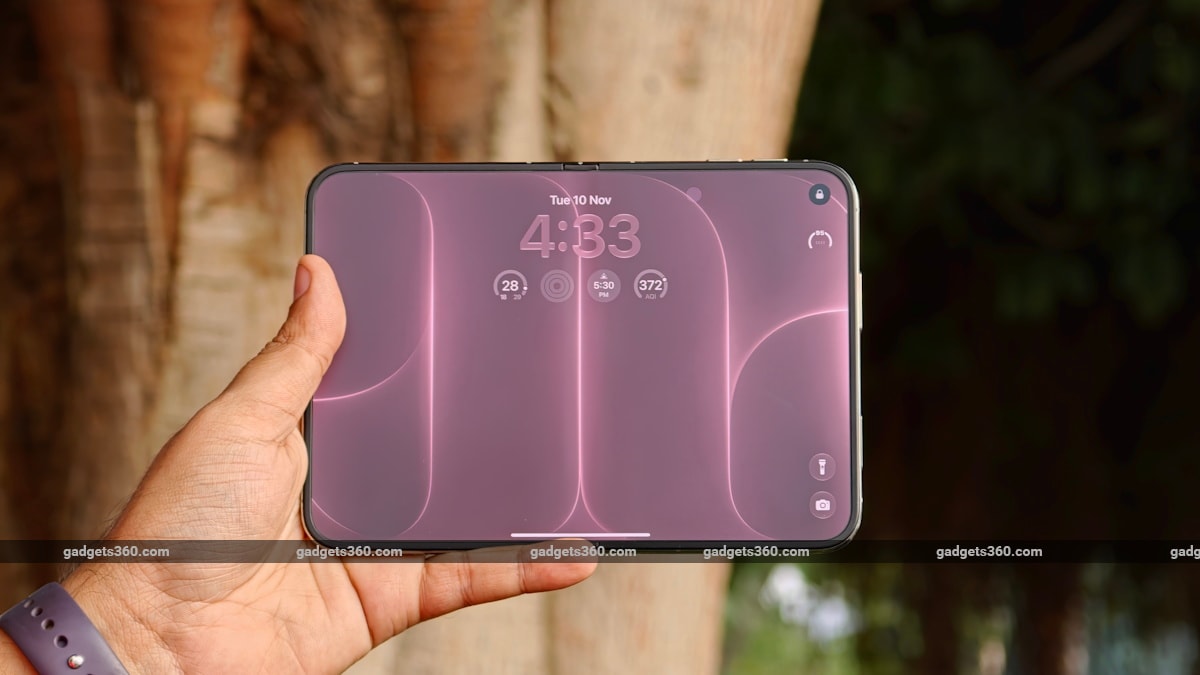
The 7.6-inch inner display makes reading, working on documents, and browsing considerably more enjoyable
Apple also ported over the dedicated Camera Control button on the lower frame, though finding comfortable purchase on a thicker, folded chassis takes a day or two of recalibration. Buyers in India should also note that the Duo is strictly eSIM-only. While provisioning on Airtel and Jio took just a couple of minutes, regular device-swappers will miss having a physical SIM tray.
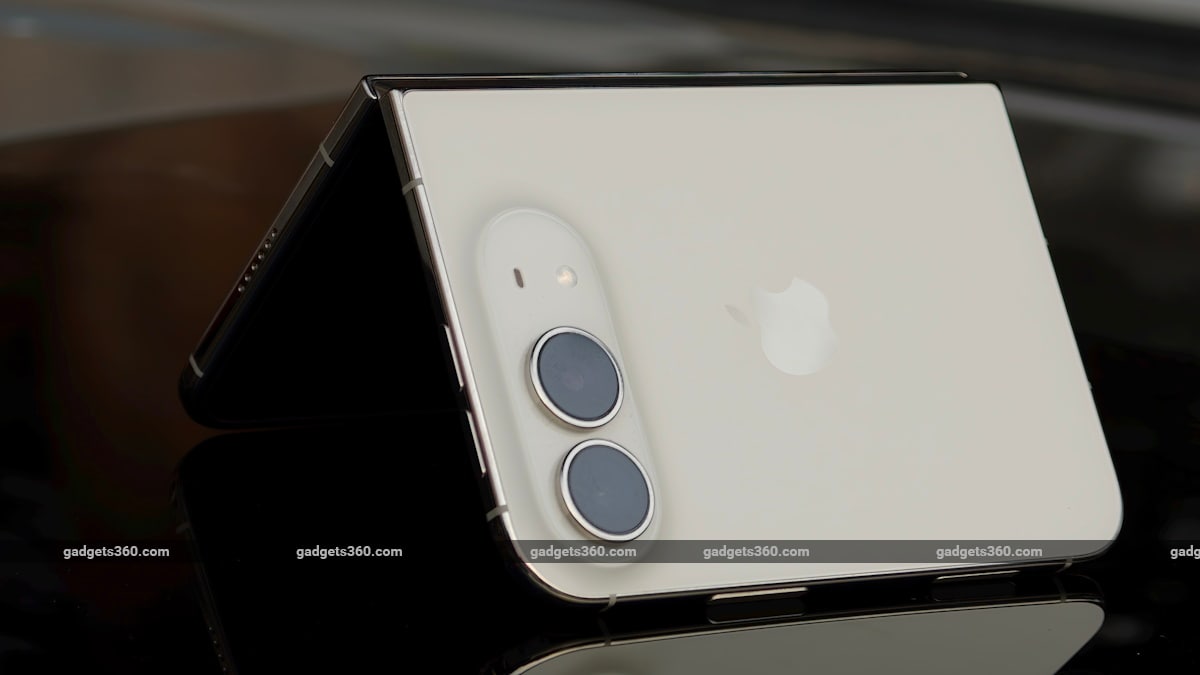
The flexible hinge makes hands-free viewing and video calls more convenient without needing a separate stand
Quirks aside, Apple got the core ergonomics right. The Duo doesn't feel like a gadget built merely to show off a flexible OLED panel. It treats the cover screen as a fully capable everyday phone and the inner canvas as a proper workspace, a balance that very few foldables before it have managed to strike.
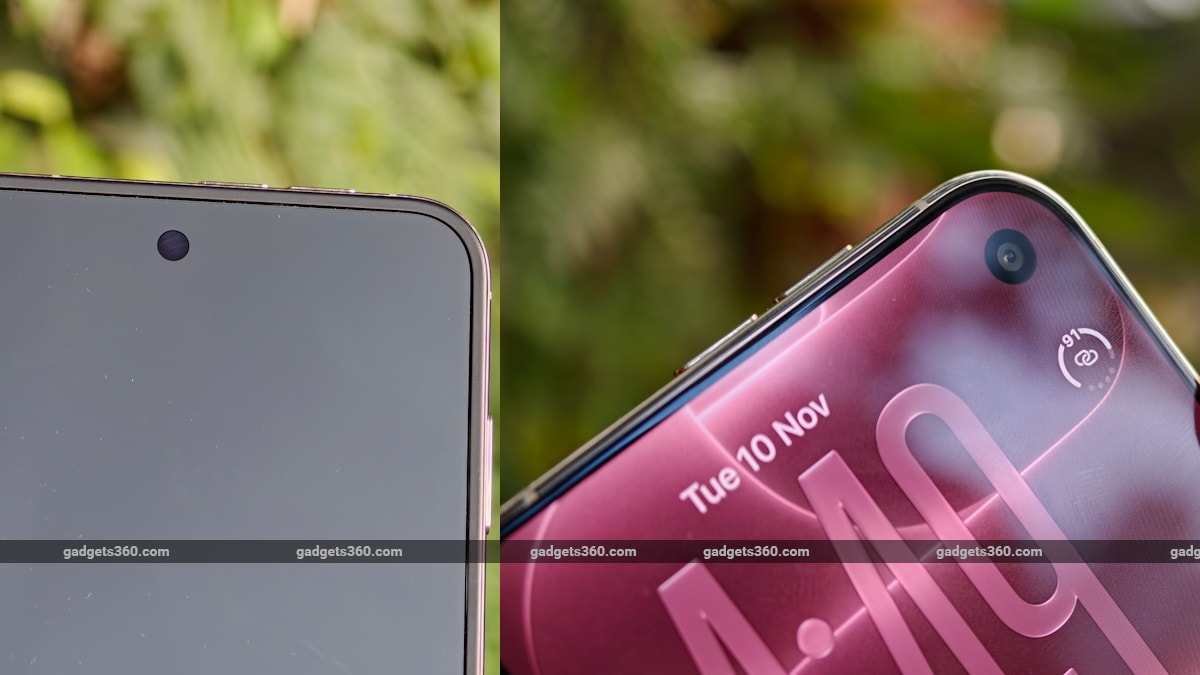
The under-display FaceTime camera is barely noticeable during regular use, giving the larger screen a cleaner appearance
iPhone Duo Display: A Matte Finish That Changes the Experience
- Outer display: 5.4-inch all-screen OLED display (1398x2034-pixels)
- Inner display: 7.6-inch OLED folding display (1878x2670-pixels) with nano-texture
- Dynamic Island and ProMotion tech with adaptive refresh rates up to 120Hz
- 3,000nits peak brightness
- Supports Apple Pencil
The display is the entire reason a foldable exists, and Apple's execution on the iPhone Duo does not disappoint. Apple has equipped it with two Super Retina XDR OLED panels: a 5.4-inch cover display and a much larger 7.6-inch foldable screen on the inside. Both support ProMotion with adaptive refresh rates of up to 120Hz, HDR, True Tone, and a claimed peak outdoor brightness of 3,000 nits.
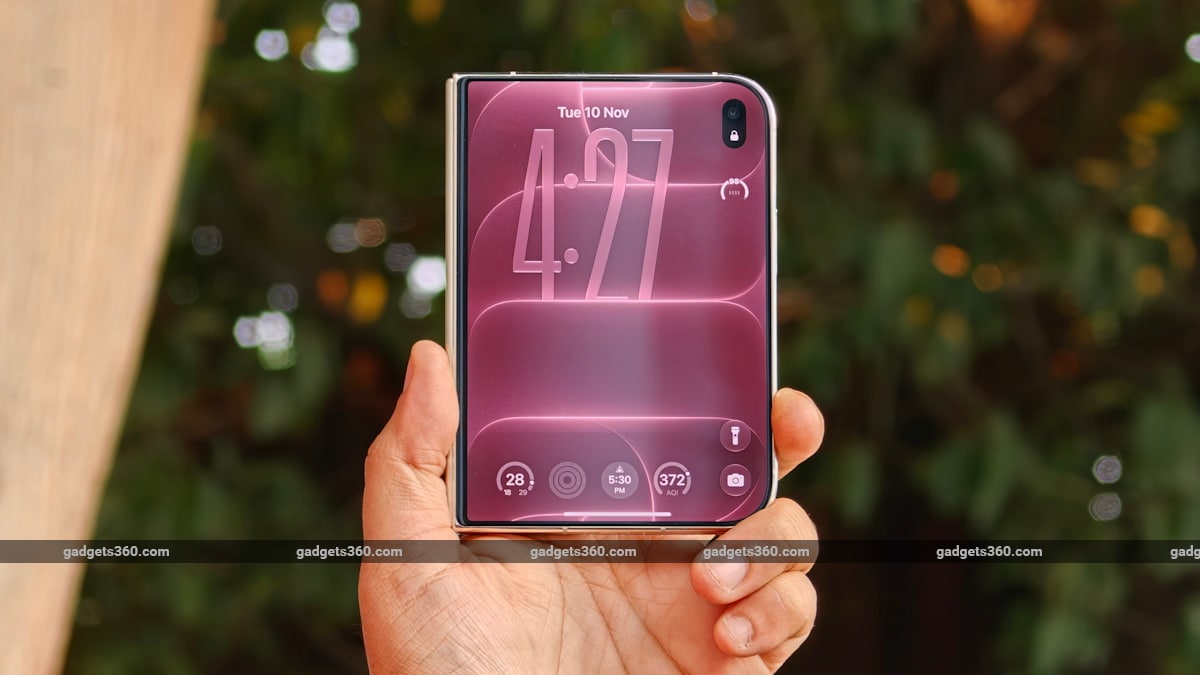
The 5.4-inch cover display is surprisingly practical and handles most everyday tasks without feeling cramped
The cover display is excellent for what it is designed to do. Text looks sharp, colours are vibrant, and the responsiveness is what you would expect from a premium iPhone. It never felt like a secondary display I was forced to use until I opened the phone. However, the real attraction is the inner screen.
Apple has opted for a nano-texture finish on the 7.6-inch folding display, giving it a matte appearance unlike the glossy OLED panels we are used to seeing on iPhones. Initially, I wasn't entirely convinced by this decision. I enjoy the deep blacks, contrast, and rich colours of Apple's conventional OLED screens, and the Duo's inner panel doesn't quite deliver the same visual punch. But after a few days, I began to understand the thinking behind it.
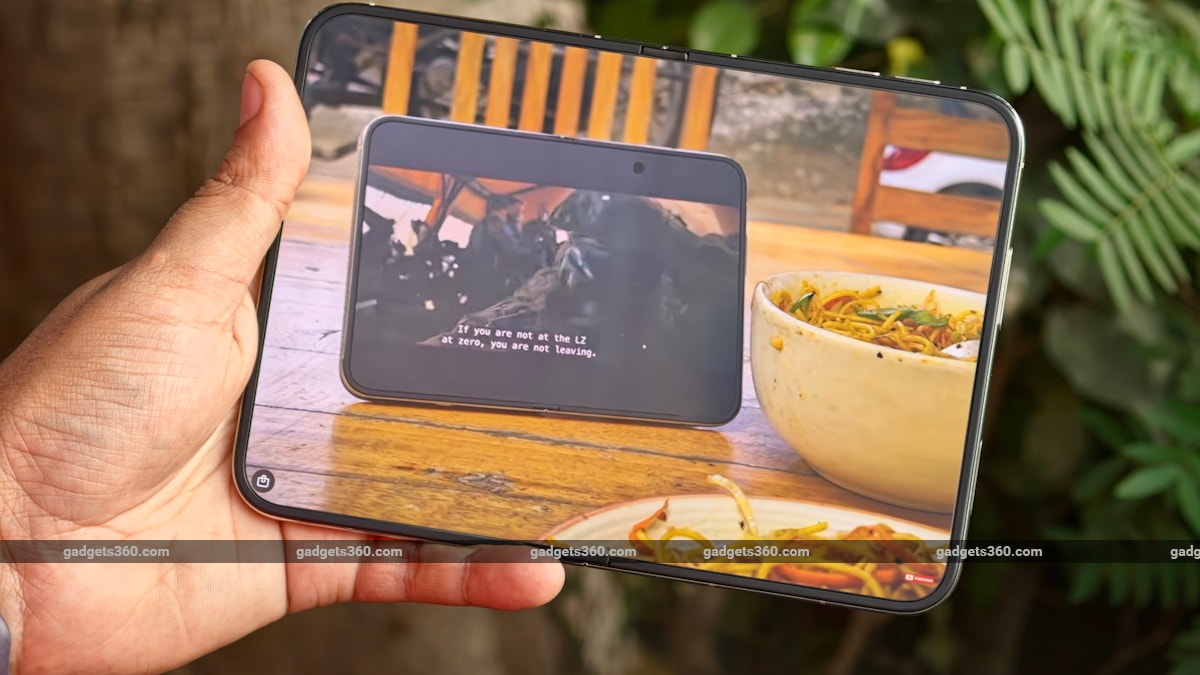
The Duo offers a more immersive multimedia experience, although widescreen videos don't always utilise the entire display
The nano-texture surface does an excellent job of reducing glare. Whether I was reading an article, working on a document, or browsing outdoors under bright sunlight, reflections were noticeably less distracting. This is particularly useful on a device meant to be used like a miniature tablet, where you are likely to spend more time looking at a larger surface.
Reading has been one of my favourite activities on the Duo. The matte finish makes longer sessions more comfortable for me, while the larger display keeps considerably more content visible at once. Articles, documents, and even PDF documents benefit from the extra space.
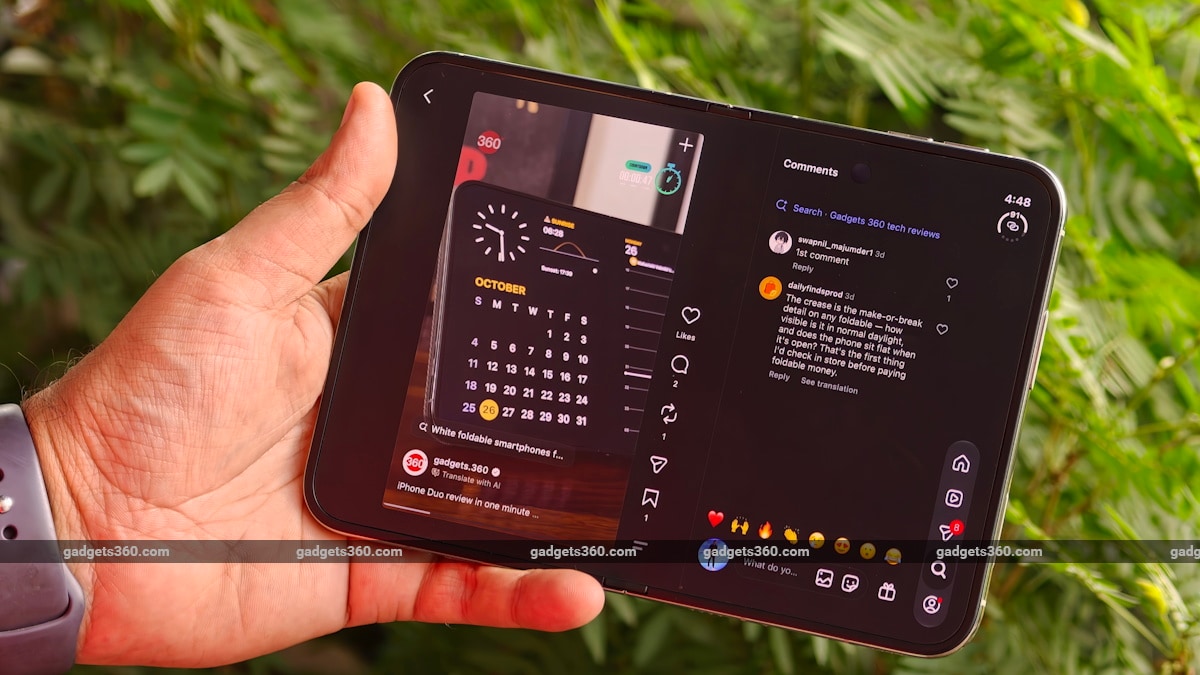
Some social media apps make good use of the larger display, offering a more convenient browsing experience. However, this is not consistent across apps
It also helps that the crease is difficult to notice during normal use. The under-display FaceTime camera virtually disappears when it is not being used, leaving an uninterrupted viewing area. This gives the Duo a cleaner appearance than foldables with a prominent camera cutout on their main display.
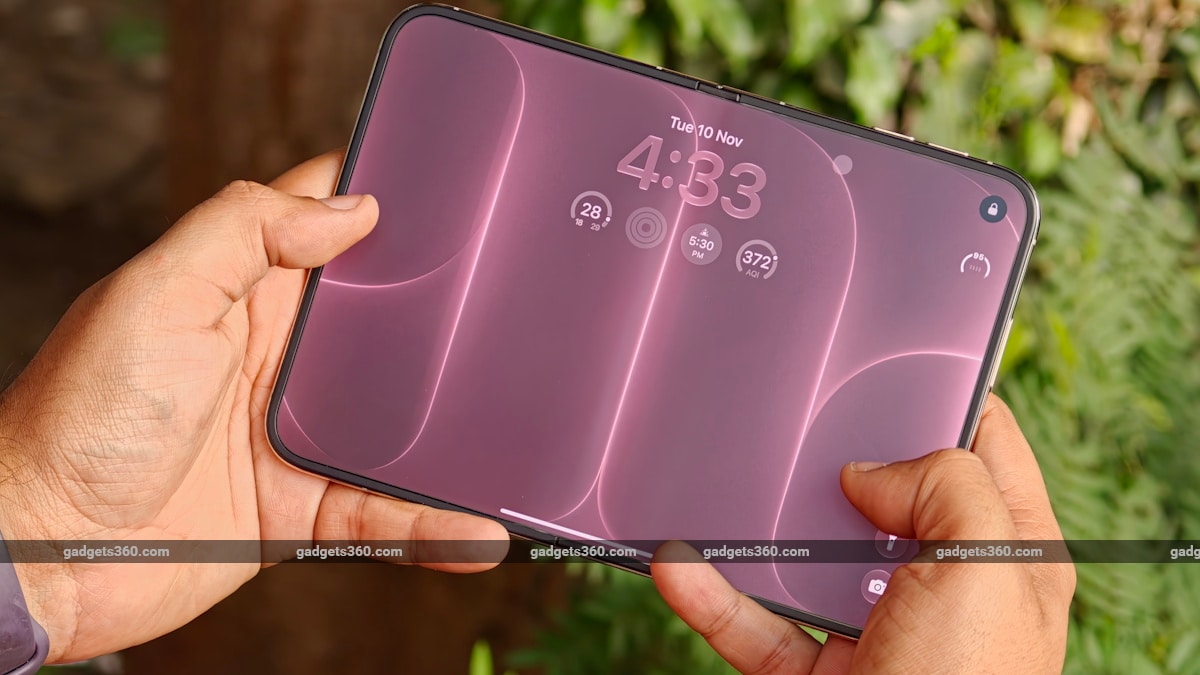
The nano-texture display significantly reduces glare, making longer reading sessions comfortable even outdoors
Streaming and gaming also benefit from the larger panel, although there are limitations. The squarer aspect ratio means widescreen videos don't necessarily fill the entire display. You still get a useful viewing area, but opening the Duo doesn't automatically make every video dramatically larger.
The matte finish is also a compromise. Movies with darker scenes and content that depends heavily on rich contrast can look more striking on the glossy screen of an iPhone 18 Pro Max. I occasionally missed that visual depth, particularly while watching videos. Still, for my daily use, the advantages outweigh that limitation. The Duo's display isn't just about having more inches. It changes how comfortable certain tasks become, particularly reading and working for longer periods.
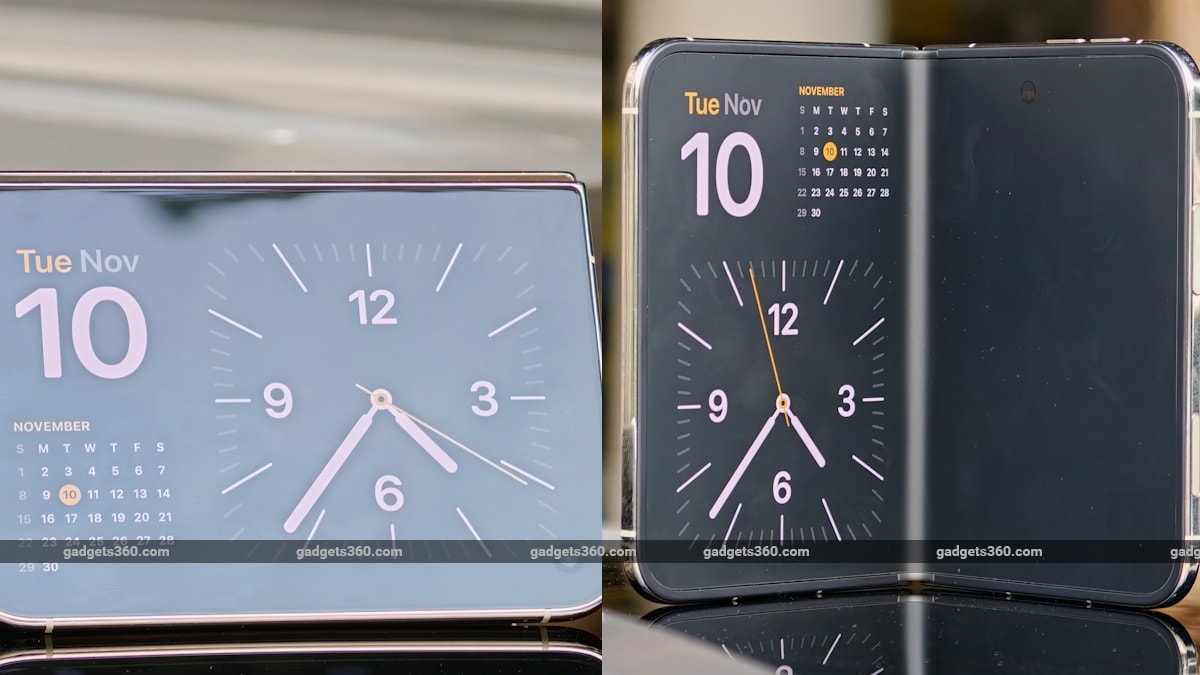
The crease is far less distracting during everyday use than it appears under certain lighting conditions
The best compliment I can give it is that I began unfolding the Duo whenever I wanted to concentrate, rather than simply because I had a folding phone.
iPhone Duo Performance and Software: Powerful Hardware, but iOS Needs More Work
- A20 Pro chip
- 6-core CPU and 7-core GPU with Neural Accelerators
- Apple Intelligence and Siri AI
- Supports e-SIM only
If two weeks with the iPhone Duo proved anything, it's that Apple's biggest hurdle isn't hardware; it's making iOS compatible with most apps I use every day and act consistently across two different aspect ratios.
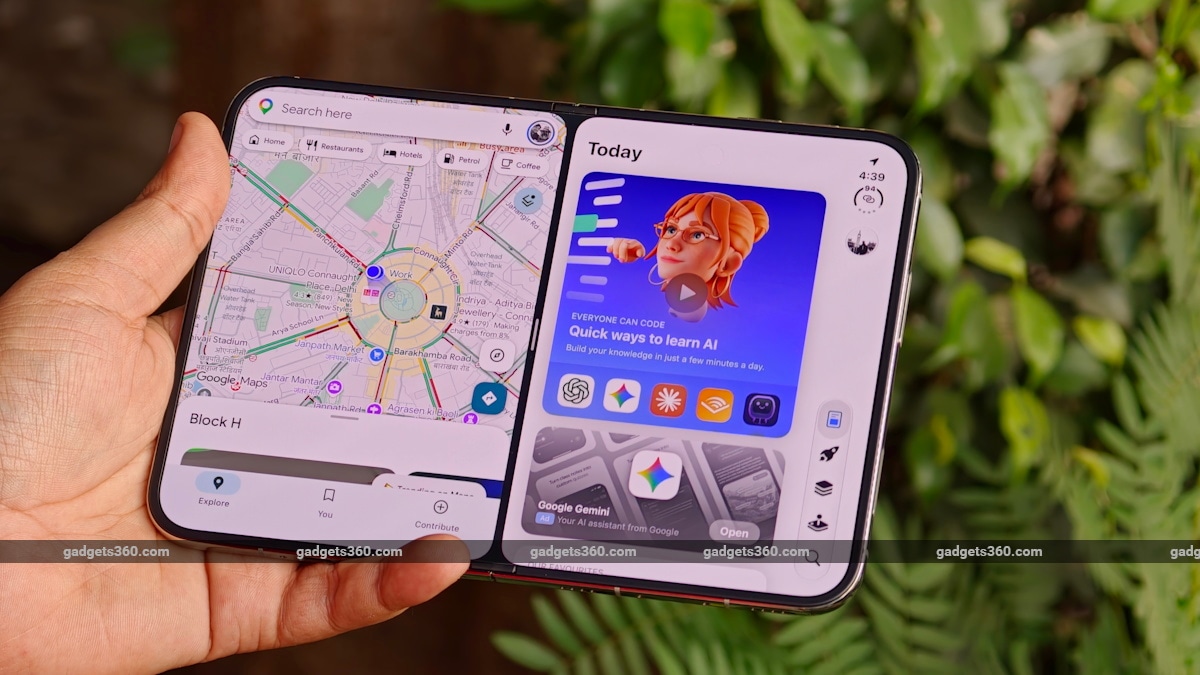
Split View is among the Duo's most useful features, making it easier to work across two applications simultaneously
Under the hood, the Duo packs the 3nm A20 Pro chip alongside Apple's first custom vapour chamber in a foldable. In daily use, it is exactly as snappy as you expect from a top-tier Pro iPhone: zero frame stutters, instant cold app boots, and seamless transitions. More crucially, the thermal management holds up under pressure. Whether pushing through extended sessions in Death Stranding, rendering 4K ProRes clips, or running Apple Maps navigation on a car dashboard for two hours, the chassis warms slightly around the hinge, but the vapour chamber keeps aggressive thermal throttling at bay.
The iPhone Duo supports eSIM only, so upgrading means permanently abandoning your physical SIM. I had to convert my primary physical SIM to test the phone, and while the process was straightforward, the network transition still took a few hours, which meant I had to live without calls or try any transactions that needed OTPs. But the real test for me will be switching back to a physical SIM from the current eSIM when I move to a regular bar phone. Call quality on the Duo is crystal clear, and I tested it on the Jio network; download speeds were also quite fast. The speakers on the Duo are decent but not as loud as the 18 Pro Max. The haptic motor is also excellent, giving tight input feedback.
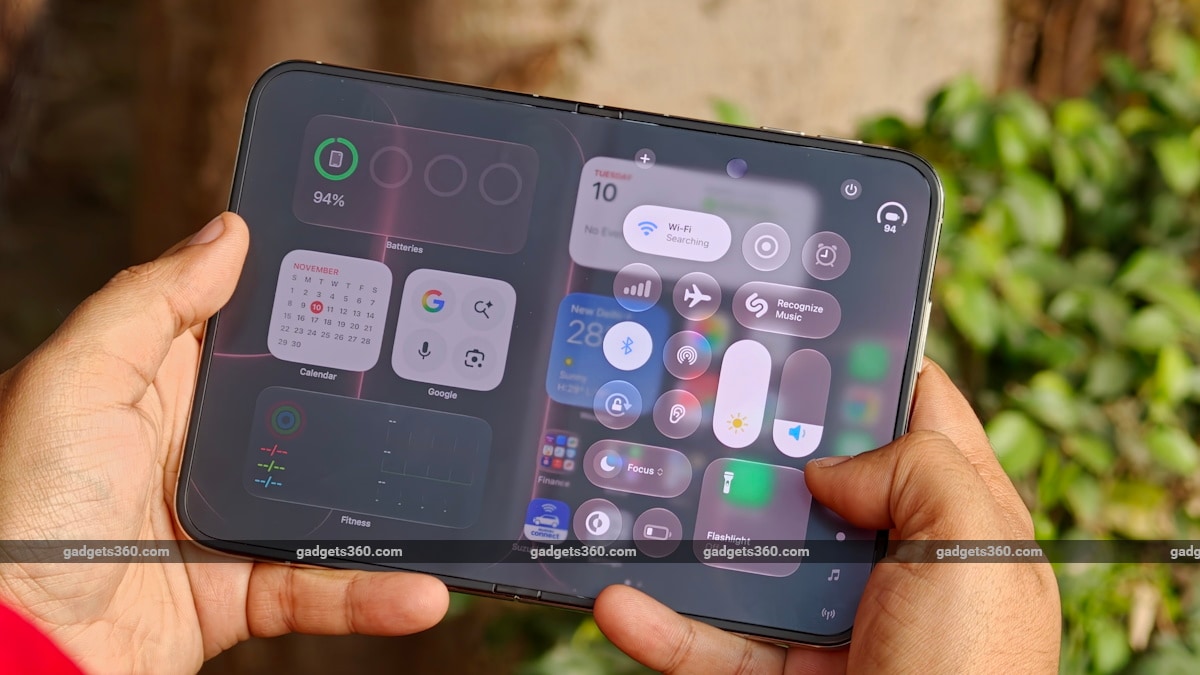
iOS 27 feels fast and responsive on the larger display, but parts of the interface still need refinement
The larger display obviously enhances the gaming experience, but the real draw is the everyday multitasking. iOS has been redesigned to fit the canvas, and the software continuity bridging the cover screen to the inner display is flawless. The fluid animation of unfolding the Duo never gets old, and it earns serious design brownie points. Apple's Split View lets you run two apps side by side simultaneously. You can save frequent combos, such as two Safari windows or Slack pinned next to Notes, directly to the home screen. Start reading an article on the cover display, flip the phone open, and the layout expands instantly without forcing you into a jarring new interface.
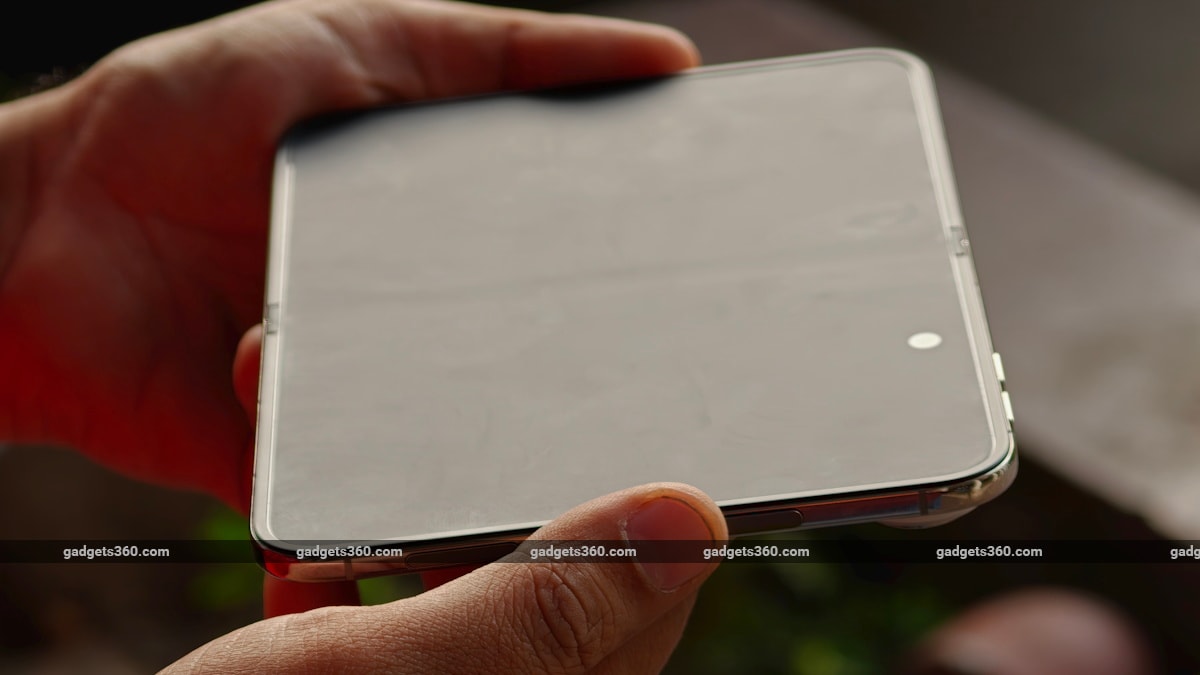
The matte screen keeps reflections under control, although it sacrifices some of the deeper blacks and contrast of glossy OLED panels
But that polished continuity hits a brick wall the moment third-party developers enter the equation. While Apple's native app suite adapts cleanly, third-party apps remain a gamble. Fire up Instagram, and you're met with aggressive pillarboxing. Similarly, X stretches a standard smartphone feed into an unreadable horizontal spread, while several everyday apps refuse to scale altogether. Switching between an app thoughtfully designed for the Duo and one that's been haphazardly blown up is frustrating.
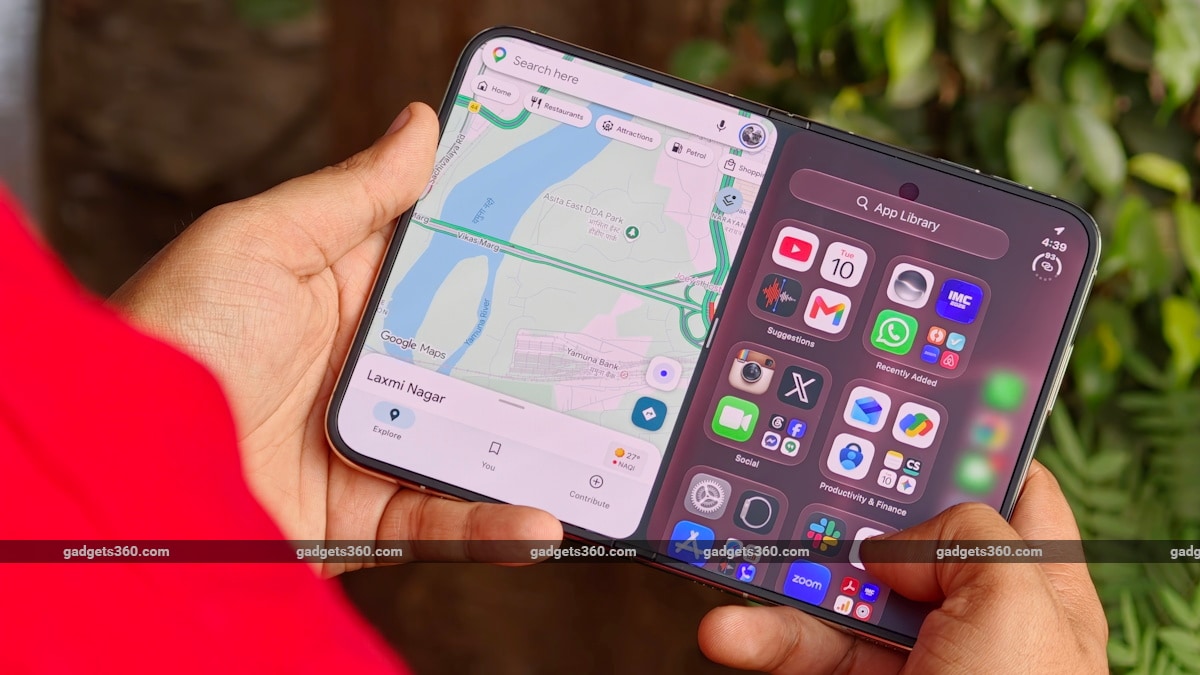
App optimisation remains inconsistent, and not every app makes good use of the additional screen space
Furthermore, Apple's approach to multitasking is surprisingly rigid. You are locked into a strict two-app split. There's no support for free-floating pop-up windows or the flexible triple-app grids offered by competing foldables. It's simple and foolproof, but it comes at the expense of power-users like me.
Apple Intelligence and iOS 27 features, like context-aware Siri, certainly benefit from the roomier canvas summaries and on-screen assistance that pop up without obscuring your active workspace. But no amount of AI utility can mask the early-adopter software tax. Apple will inevitably whip developers into line, and the company's support track record is encouraging. However, when a smartphone costs nearly Rs. 3 lakh, being told to "wait for software updates" is a tough pill to swallow. The A20 Pro hardware is built to last for years; iOS on a foldable is still very much finding its footing.
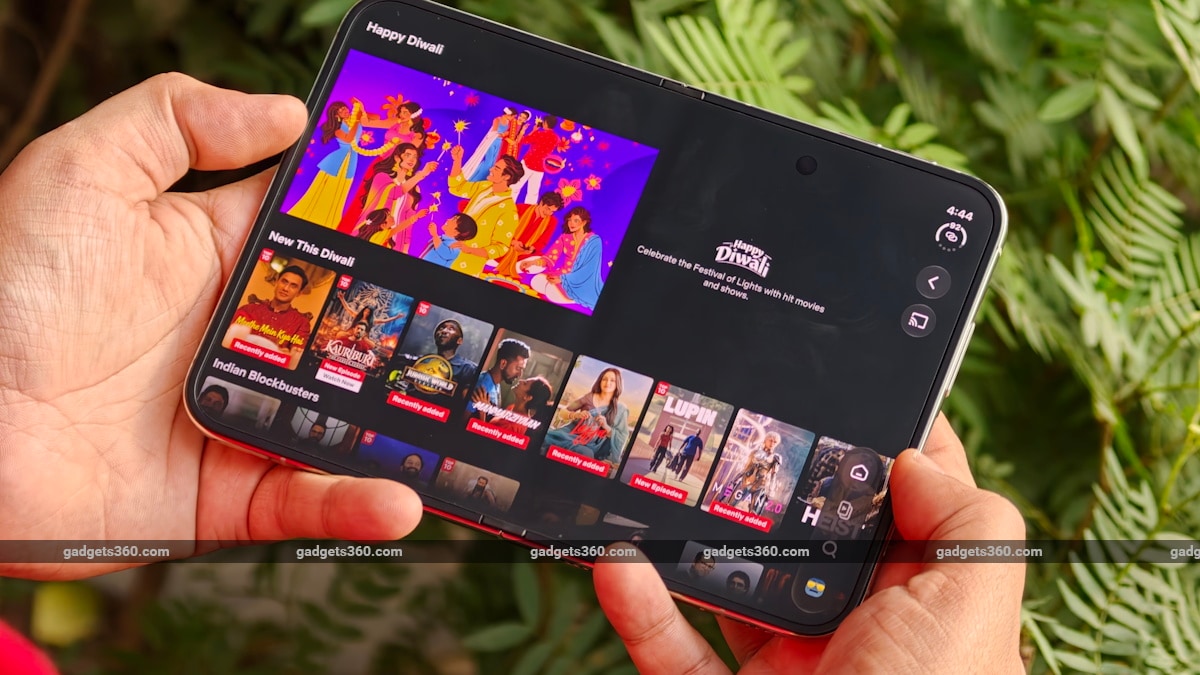
The larger display makes streaming more enjoyable
iPhone Duo Cameras: Excellent Everyday Results, With Some Compromises
- 48MP Fusion Main sensor
- 48MP Fusion Ultra Wide sensor
- Optical Zoom Options: .5x, 1x, 2x
- Other features: Smart Take, Duo Preview, and Kid Cue
- Video support: 4K Dolby Vision video recording up to 120fps (Main sensor) and up to 60fps (Ultra Wide)
- 12MP Center Stage front camera
Instead of going all out with the hardware as Apple usually does with its Pro models, the Duo relies on a dual-camera system—a notable omission given its price. It features a 48-megapixel Fusion Main camera and a 48-megapixel Fusion Ultra Wide camera. The main camera has an f/1.6 aperture and sensor-shift optical image stabilisation (OIS), while the ultrawide offers a 120-degree field of view and macro support. There is also a 2x optical-quality zoom option using the main sensor, but no dedicated telephoto camera, which is a big miss given the price tag. However, after spending considerable time taking photos with the phone, I can say Apple hasn't compromised nearly as much on image quality as the camera specs might suggest. What you lose here is primarily camera versatility, rather than the ability to capture a good photo.
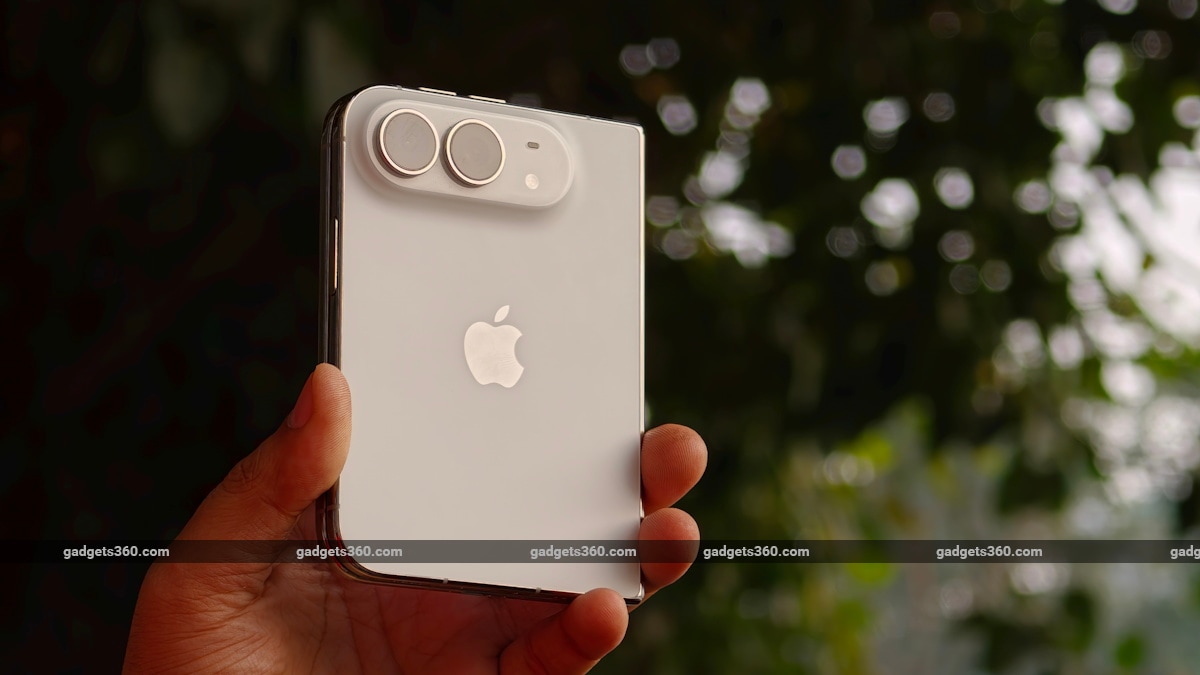
The main and ultrawide cameras capture rich colours, natural skin tones, and plenty of detail in everyday shots
I tested the Duo extensively during the Diwali festivities, which offered some rather challenging shooting conditions. Brightly lit stages, performers in LED-lit costumes, chandeliers, decorative lamps, and plenty of scenes with far-from-ideal lighting made for challenging shots. I also took several outdoor daylight photographs, including architectural shots, portraits, and scenes with moving subjects.
In standard daylight, the main camera delivers excellent results. Images have plenty of detail, colours look rich without appearing unnecessarily saturated, and the camera generally balances exposure well. In the samples featuring an intricately carved elephant sculpture, the finer patterns and textures on the structure are reproduced particularly well. Even the smaller decorative elements remain distinguishable, which indicates how much detail the sensor can resolve under favourable lighting.





iPhone Duo primary daylight camera samples (tap images to expand)
The same applies to photographs of the surrounding architecture. The patterns on the walls, stone textures, and foliage retain good definition, while the colours look natural. I also appreciate that Duo doesn't try to make every scene look dramatically more colourful than it actually is. The processing has a measured quality, which I generally prefer over photographs that look excessively sharpened or saturated.
Dynamic range is another strong point. In scenes where bright sunlight falls on parts of a building while other areas remain shaded, the Duo preserves a useful amount of information at both ends. Bright sections are usually controlled without leaving the darker portions completely underexposed. At times, the sky looks a little washed out, particularly in hazy daylight, but the overall exposure remains pleasing.


Camera samples taken using 2x lens on the Duo (tap images to expand)
The ultrawide camera is also useful for capturing architecture and larger scenes. It lets considerably more of the surroundings fit into a photograph without requiring you to move farther away. The difference becomes apparent in wider shots of architectural structures, where the entire setting can fit in a single frame. Detail is generally good, although the finest textures aren't always as convincing towards the edges of wide-angle compositions.

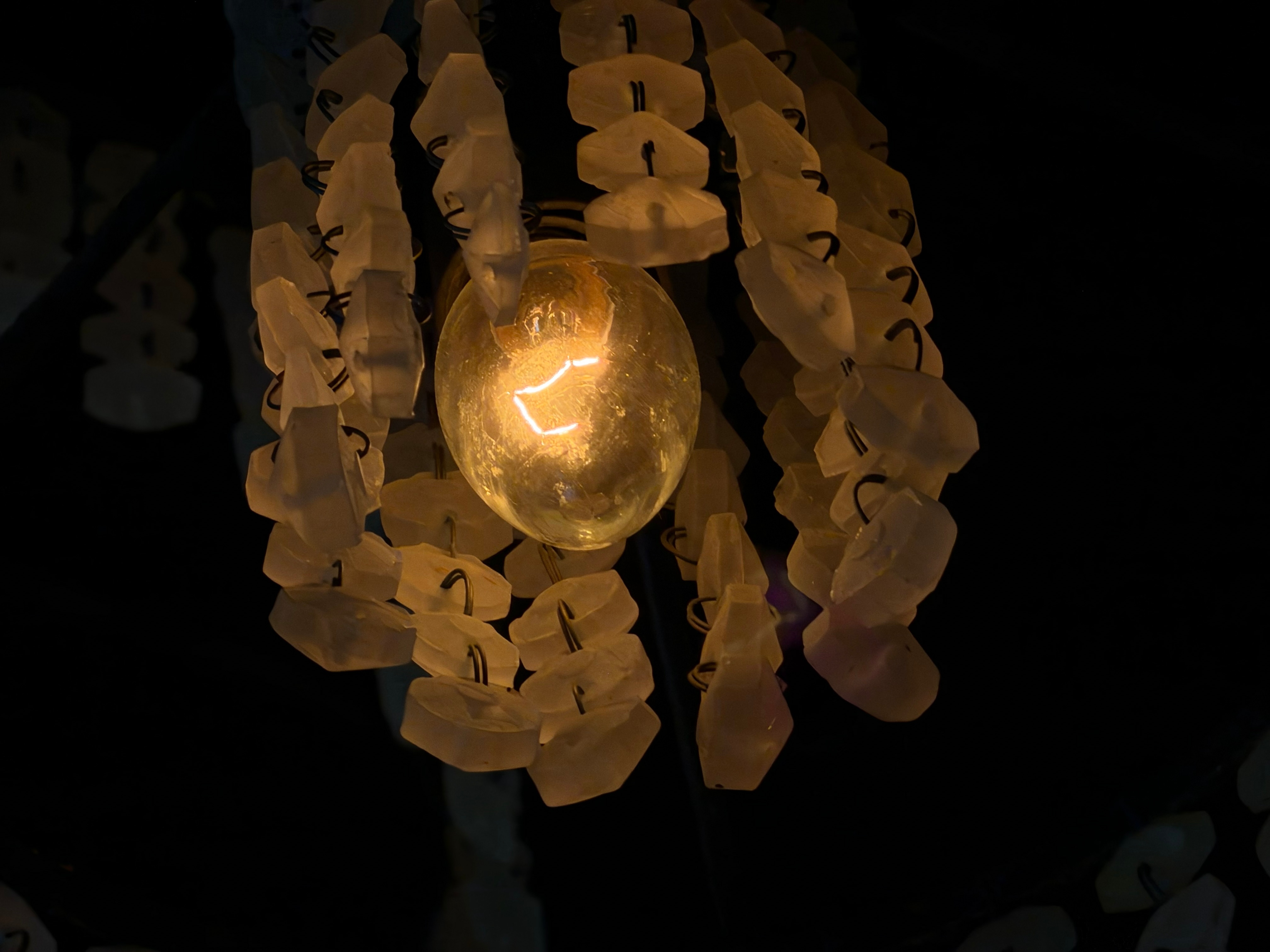
Low-light camera samples taken using 2x lens on the Duo (tap images to expand)
Portrait photography is another area where the Duo performs well. The samples show natural-looking skin tones, with a good balance between warmth and colour accuracy. Facial features, hair, and beard textures are reproduced with plenty of detail, without making the subject look artificially smooth. The portrait against a textured background shows this particularly well. The camera retains the subject's facial details while keeping the overall colour processing restrained.

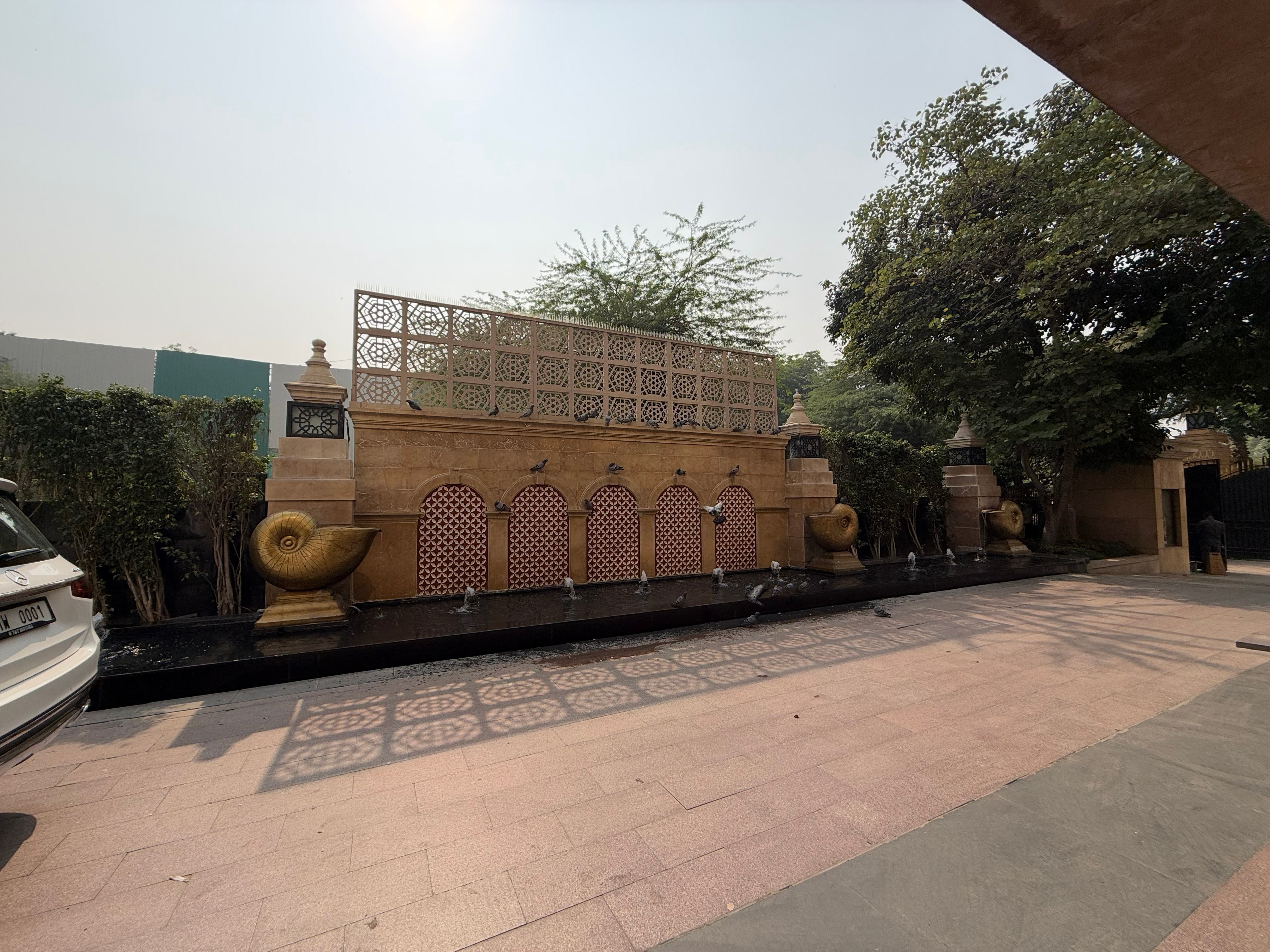

iPhone Duo ultrawide camera samples (tap images to expand)
The selfie sample also delivers a pleasing result. Skin tones remain natural, and there is enough facial detail for a good everyday photograph. The bright background is handled reasonably well, although some of the finer detail in the sky is lost. It is a familiar trade-off when shooting against strong backlighting, but the subject remains properly exposed. Because the inner-screen selfie camera is nothing to write home about, the Duo leans on the clever advantages of its folding design. You can bypass it entirely and use the superior rear cameras for selfies, with the cover display acting as a high-res viewfinder.
The real stress test was low-light photography. During the Diwali celebrations, the Duo handled difficult lighting conditions quite confidently. In scenes with warm decorative lights, hanging lamps, and candles, the camera generally preserves the atmosphere rather than aggressively brightening everything. The yellow and amber tones remain rich, while the surrounding darkness gives the photographs a natural sense of depth.
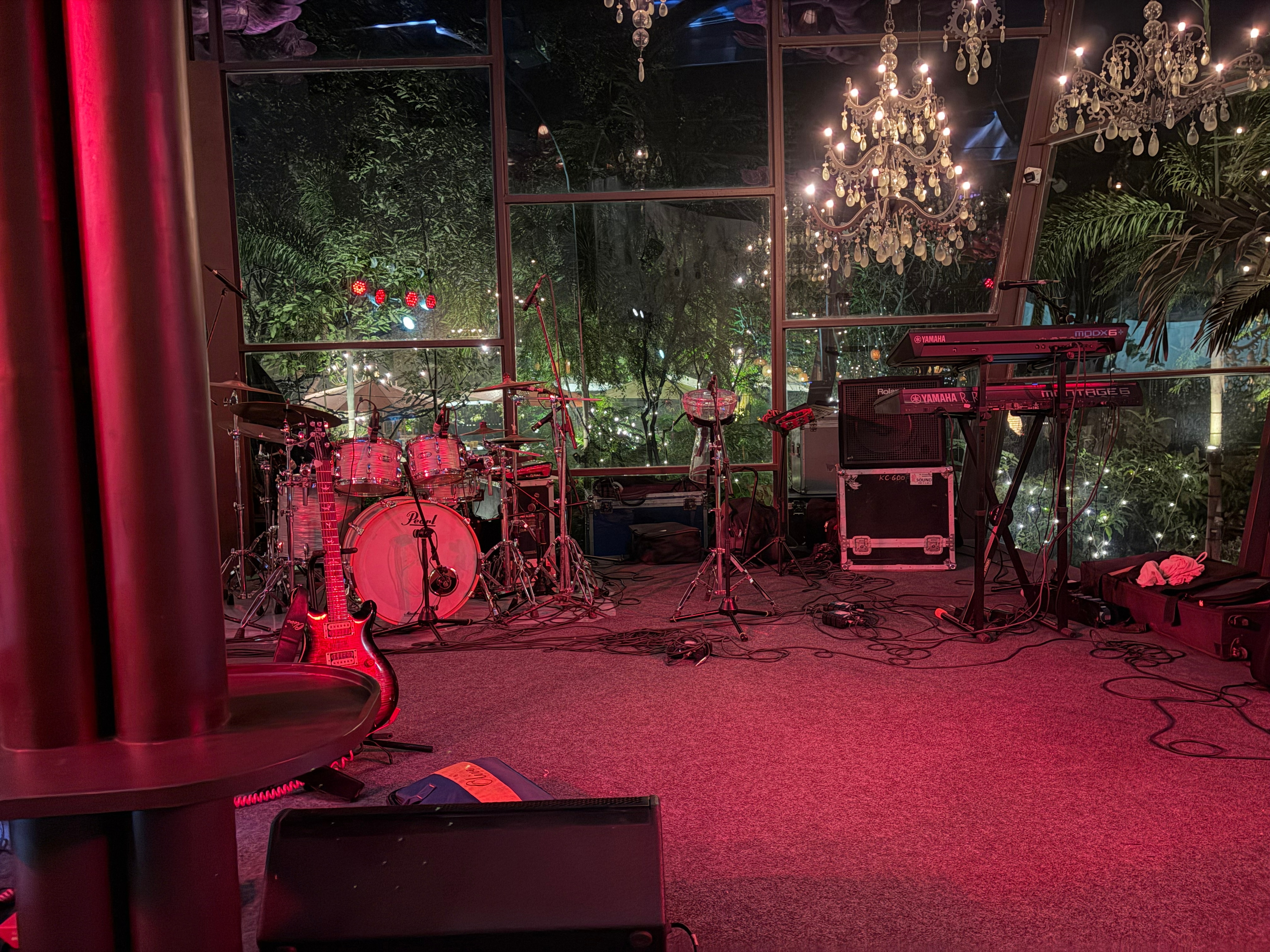

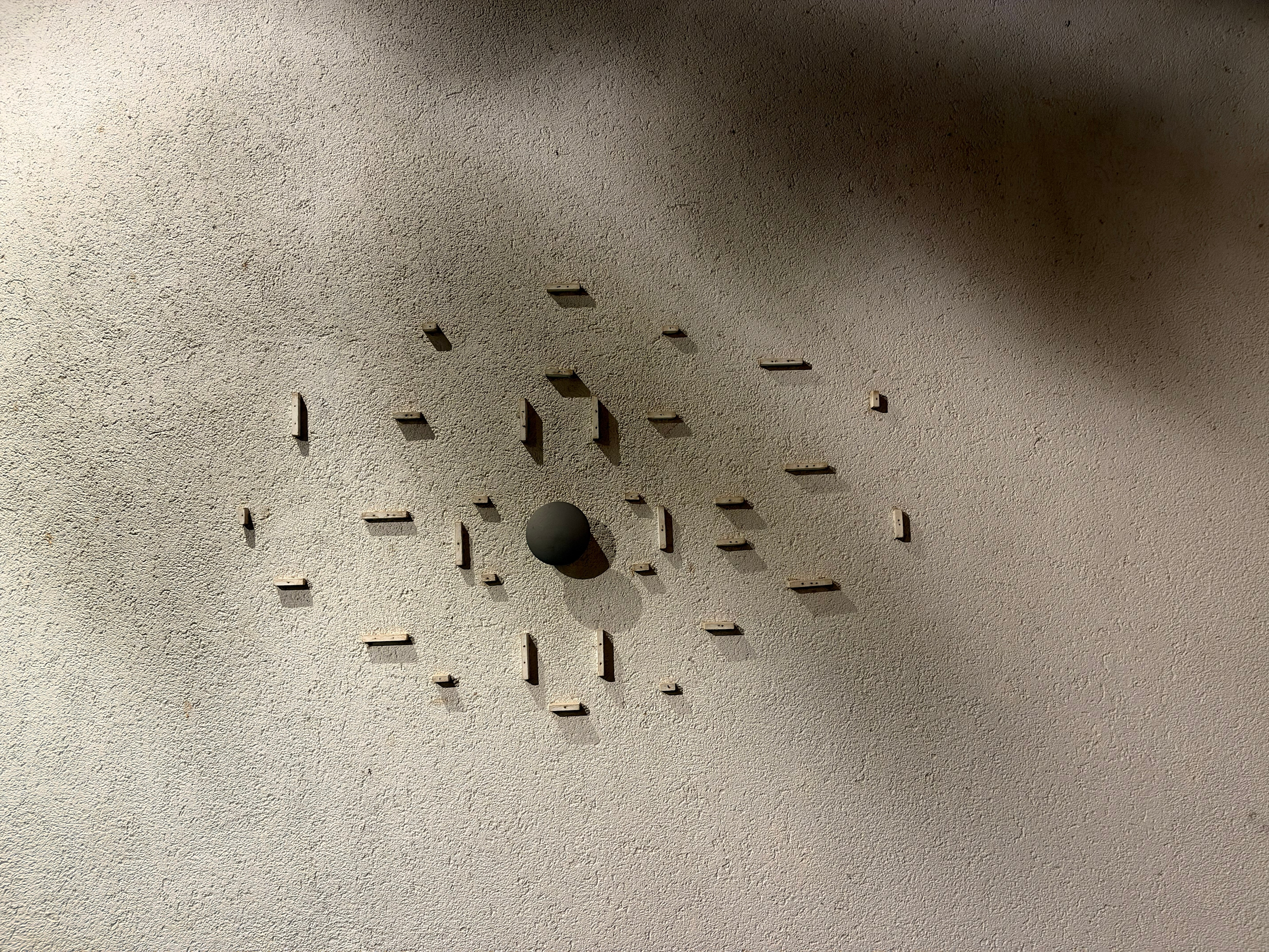
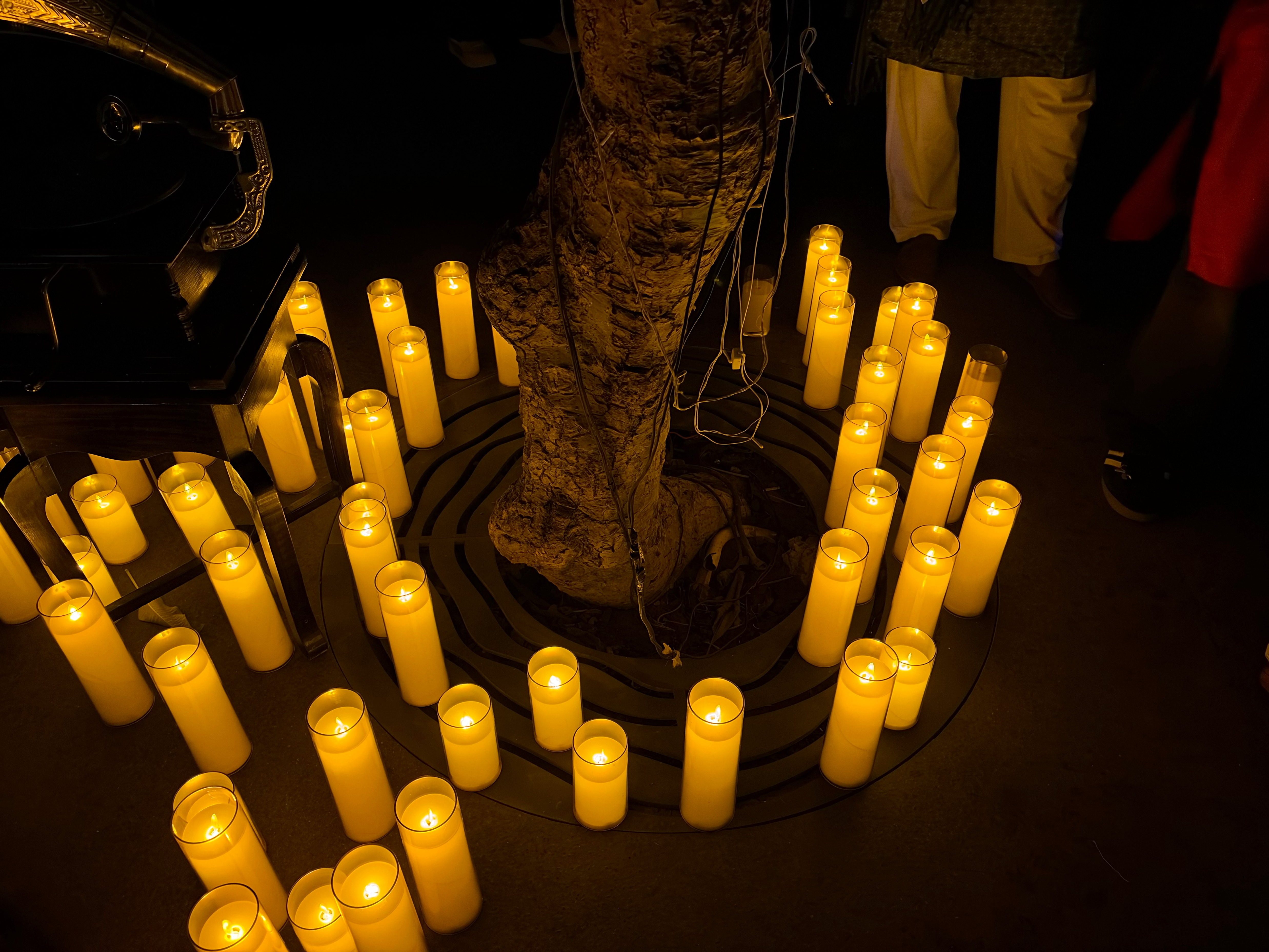
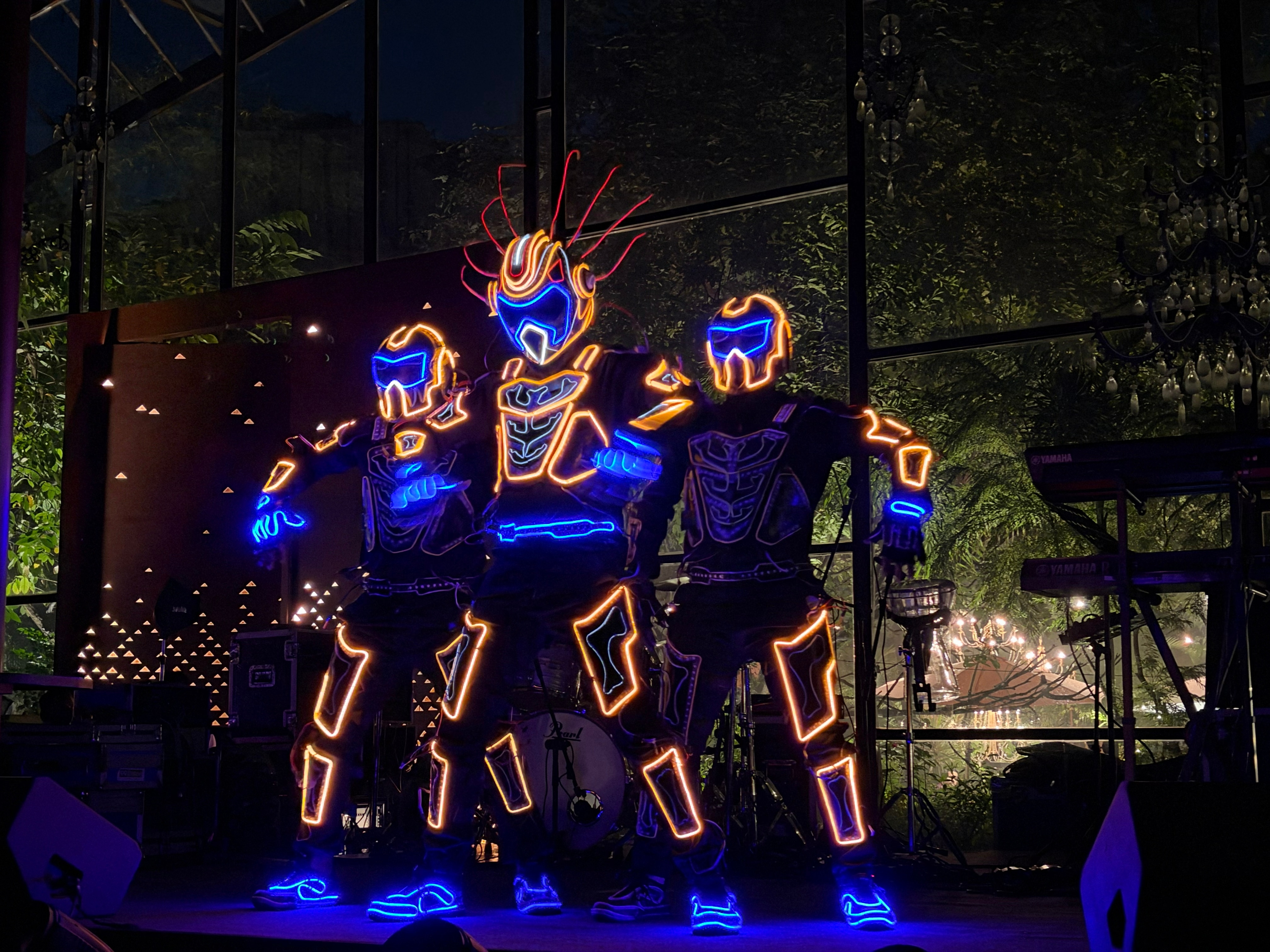
iPhone Duo low-light camera samples (tap images to expand)
This is especially noticeable in the candlelit photographs. The camera retains the warm glow of the individual lights without turning the entire scene excessively bright. The darker areas remain dark, which is important because artificially lifting every shadow would have changed the mood of the photographs.
The decorative lamps are another good example. Their woven textures and intricate patterns remain visible in several shots, even when the surrounding environment is poorly lit. The camera also controls the brighter bulbs reasonably well, although some highlights show visible blooming and occasionally lose detail.

Captured at 0.5x on the Duo (tap image to expand)

Captured at 1x on the Duo (tap image to expand)

Captured at 10x on the Duo (tap image to expand)
The biggest challenge came from photographing moving performers in illuminated costumes. Despite the difficult conditions, the Duo captured some impressive shots. In the better-exposed samples, even the outlines of the LED strips remain visible instead of merging into large patches of white light, preserving the separation between blue and orange LEDs. However, the camera isn't flawless: rapid movement under those changing stage lights often produced visible softness and motion blur.
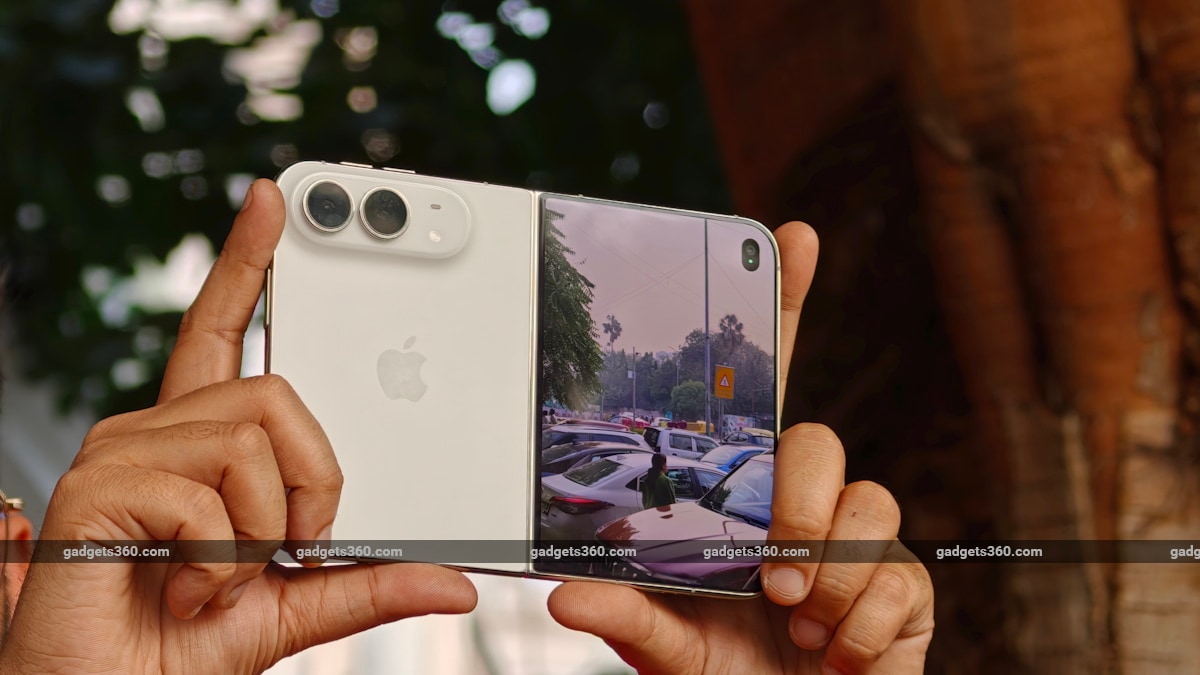
The cover display doubles as a camera viewfinder, making it easier to frame selfies using the more capable rear cameras
These are demanding conditions for any smartphone camera, but the results also show the limits of the Duo's low-light performance. Static scenes generally look cleaner and retain better detail than moving subjects. When lighting becomes particularly poor, noise reduction can smooth out finer textures, while some shadow areas lose definition. That said, I was pleased with how consistently the camera preserved the overall atmosphere of these scenes. The photographs still communicate the lighting, colours, and energy of the performances, which matters just as much as outright sharpness in many everyday situations.
Shooting Delhi's skyline through heavy November haze, the camera naturally retains the scene's muted colours and reduced contrast, rather than trying to remove the atmospheric effect artificially. There is only so much detail a camera can recover when visibility itself is poor, and I prefer this approach to excessive processing that makes the final image look unrealistic.
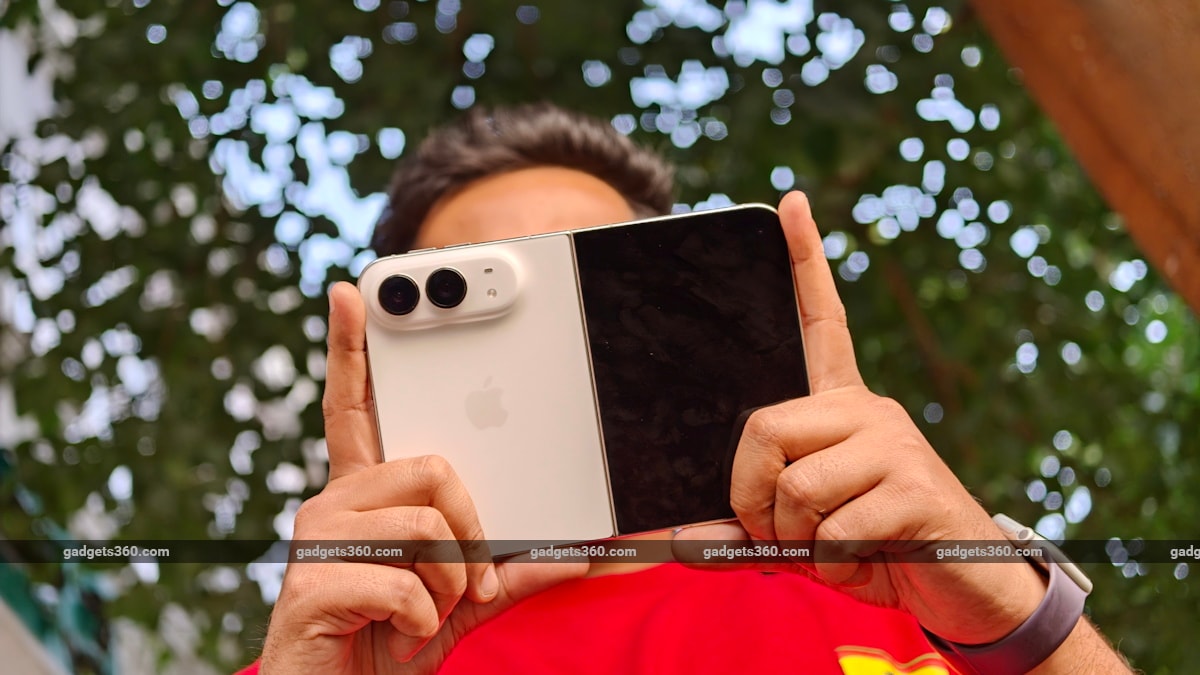
Using the rear cameras for selfies is one of the more practical advantages of the Duo's folding design
The biggest limitation is focal reach. Although the 2x sensor crop produces useful results, the absence of a dedicated telephoto camera becomes glaring. You don't get the flexibility of the iPhone 18 Pro Max when trying to compress a landscape or bring distant subjects closer without sacrificing detail. Given the Duo's price, this compromise is hard to ignore.
For video, the Duo supports up to 4K Dolby Vision recording at 120fps, along with Cinematic mode and Action mode. The foldable design also creates opportunities for hands-free recording, although the photographs discussed here were the primary basis for my camera assessment.
The main camera captures detailed images with rich but controlled colours, natural skin tones, and good dynamic range. Low-light performance is capable, particularly with stationary subjects and decorative lighting, while the ultrawide camera adds useful flexibility.
The iPhone Duo isn't the complete camera package you expect from Apple's most expensive device. The missing telephoto lens is a genuine limitation. But based on the photos from my testing, its reliable everyday performance and foldable shooting tricks make it a highly capable system, even if you are paying a premium for the hinge rather than the glass.
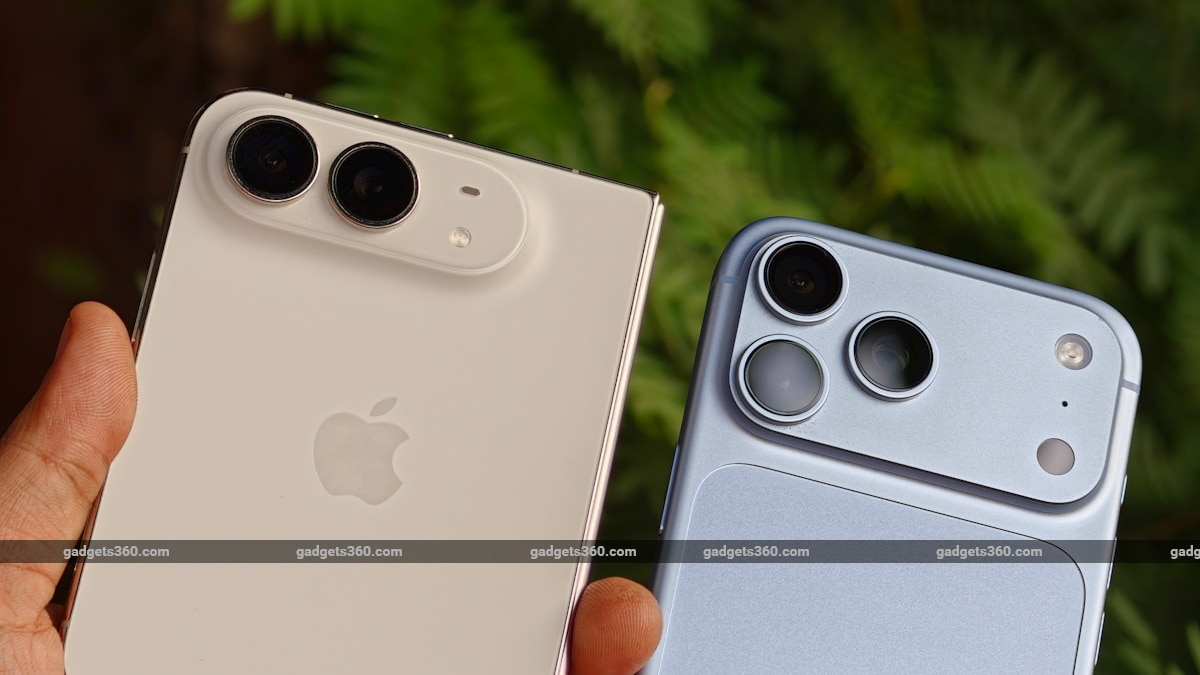
The lack of a dedicated telephoto camera is a disappointing omission on Apple's most expensive iPhone
iPhone Duo Battery: A Full Day Without Much Trouble
- 4883mAh battery
- Claimed all-day battery life
- Video playback support: Up to 31 hours when using the inner display and up to 44 hours when using the outer display
- Up to 50% charge in around 20 minutes with a 60W adapter
Battery life was one of the areas I was most interested in testing because the Duo effectively has two different ways to use. Naturally, battery consumption on the iPhone Duo fluctuates wildly depending on your habits. If you treat it like a traditional phone and lean heavily on the 5.4-inch cover screen, the drain is minimal. But the moment you unfold that 7.6-inch canvas for gaming or editing documents, the power draw spikes.
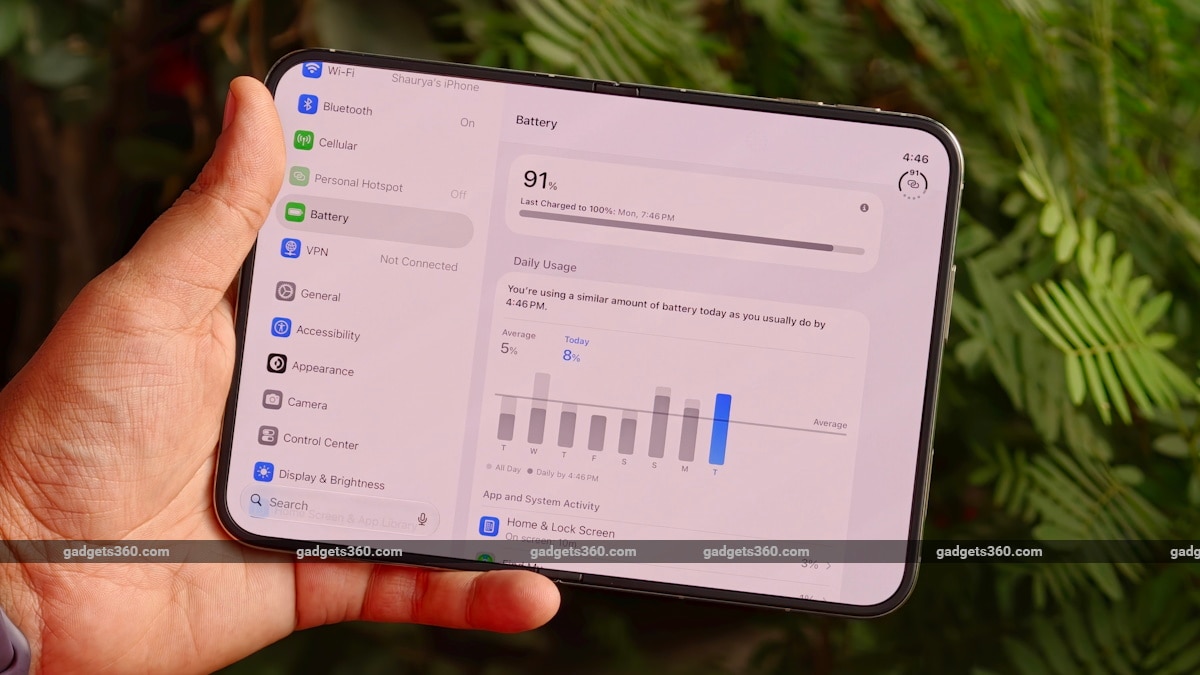
Battery life is surprisingly good, with the Duo delivering 6-7 hours of screen-on time during our testing
In my testing, the Duo comfortably lasted a full day with around six to seven hours of screen-on time. That usage included messaging, social media, Safari browsing, reading ebooks, and using YouTube streaming across both displays. On lighter days, it easily stretched to the next morning, an encouraging reality for a first-generation foldable pushing this many pixels. Unlike a conventional iPhone where battery drain is relatively predictable, your mileage here is strictly tied to how often you physically pop the hinge.
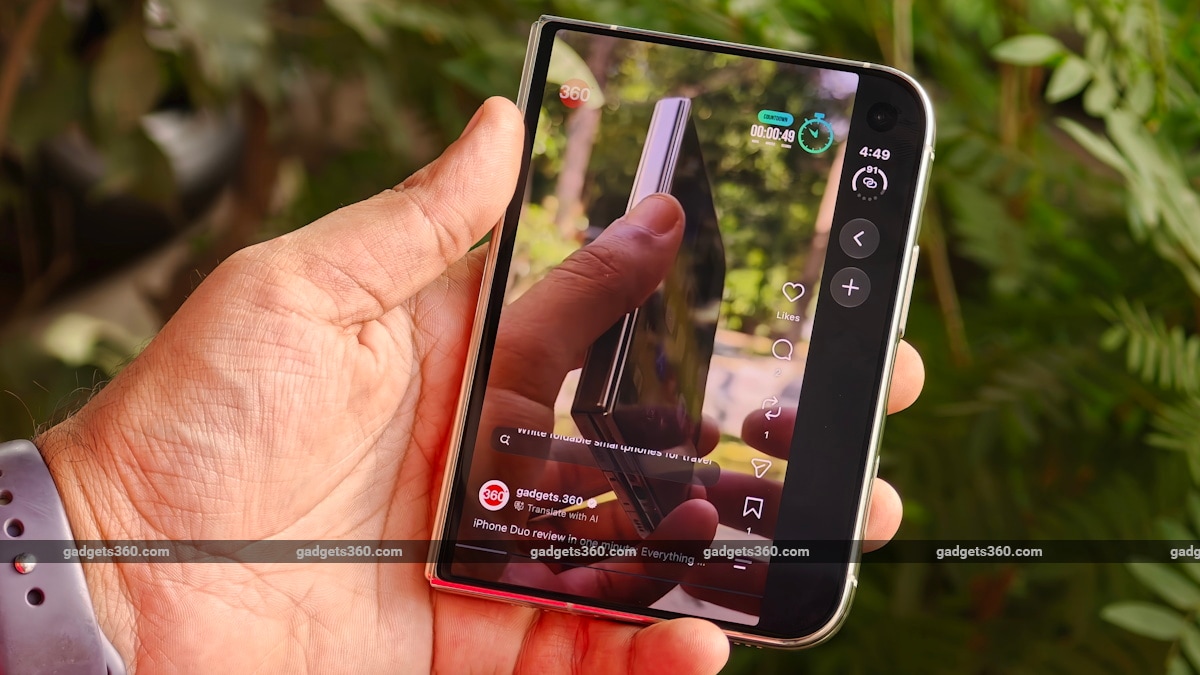
Not all apps are properly optimised for the Duo, and some interface layouts feel awkward even on the cover screen
When it does need a top-up, the Duo is surprisingly quick to recover. Plugged into a 60W-capable adapter, the split batteries jump from 0 to 50 percent in just 20 minutes, and a full charge takes about an hour. Those are highly respectable figures given the complex internal architecture. You also retain 25W MagSafe and Qi2 wireless charging, which works flawlessly through the thicker folded chassis.
If absolute battery endurance is a must-have for your next smartphone, the iPhone 18 Pro Max remains the undisputed battery king. But battery life on the Duo isn't the Achilles' heel I expected. It delivers enough reliable, all-day power to function as a primary smartphone without inducing charger anxiety—a massive win for Apple's first attempt at a folding chassis.
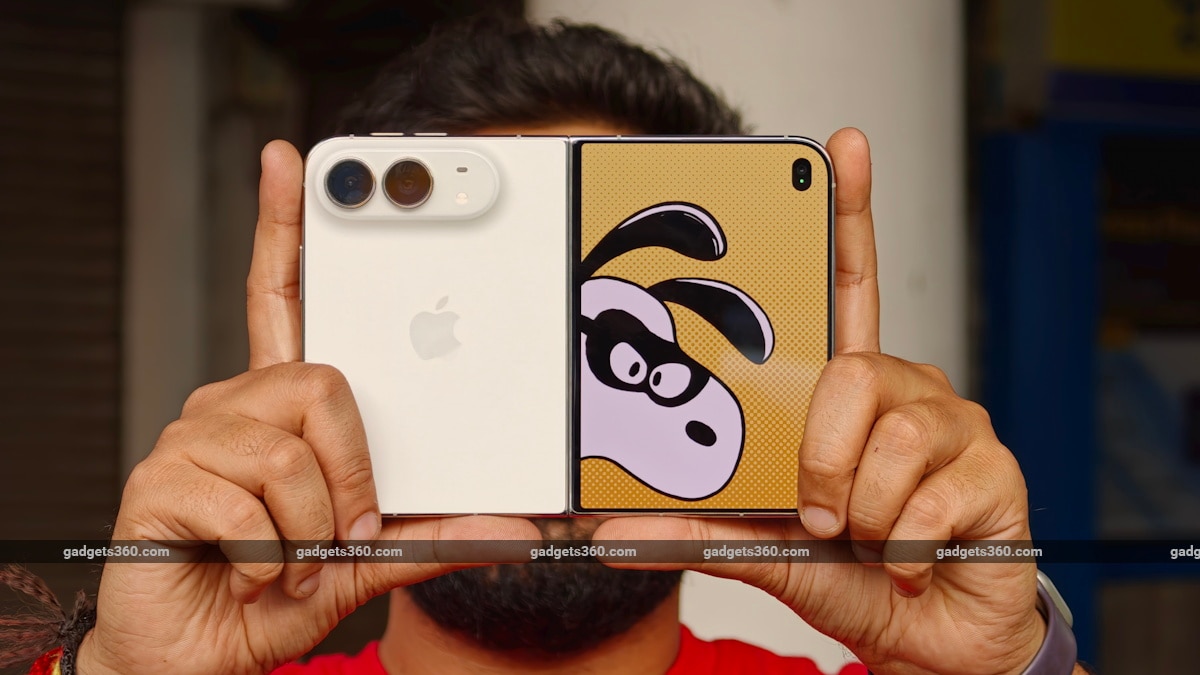
Kid Cue is a clever feature addition that uses the cover screen to help capture children's attention while taking photographs. I tested it with my 2.5-year-old daughter, and it kind of worked, though my wife wasn't a big fan of the feature for obvious reasons
iPhone Duo Verdict
After two weeks with the iPhone Duo, my takeaway is deeply opinionated, not because the hardware failed to impress, but because I genuinely enjoyed using it much more than I expected. Coming from years of conventional glass slabs, the Duo offers something refreshing. The passport-like design takes a few days to get used to, but it works remarkably well. Between the highly practical cover screen and the anti-glare inner display, the Duo consistently reminded me why a folding iPhone makes sense for deep work and reading on the matte display.
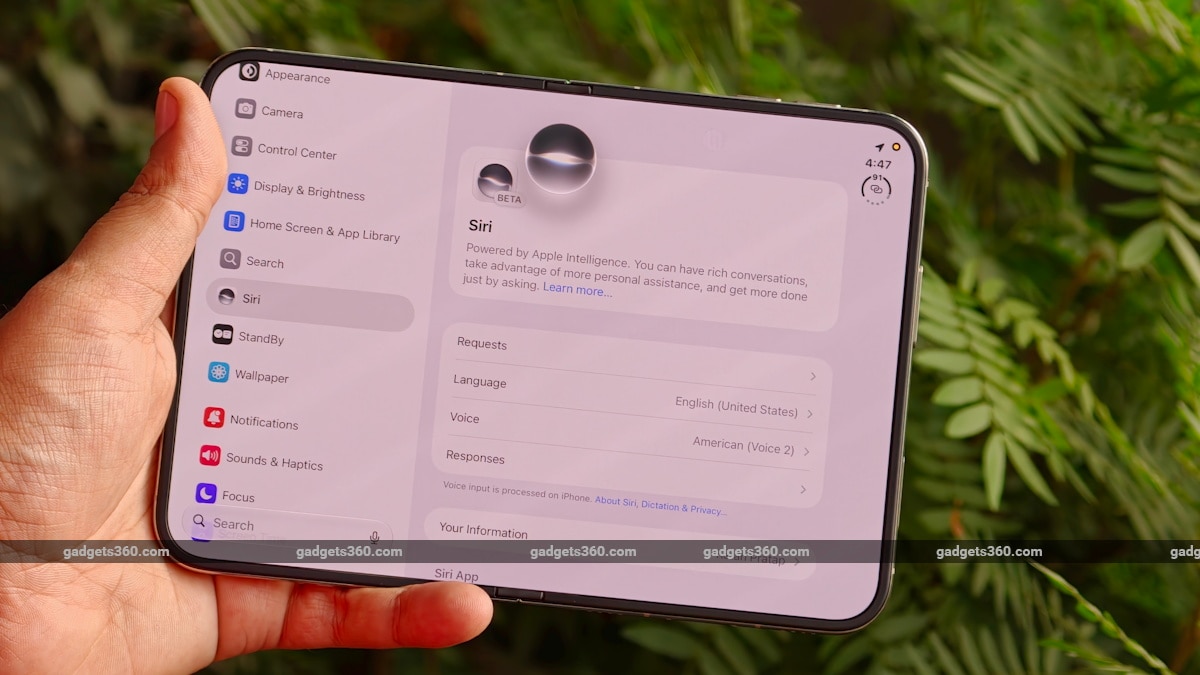
iOS 27 brings a fresh software experience to the Duo, although Apple's larger-screen optimisations still need work
Apple has also got several fundamentals right. Performance is excellent, battery life is reliable, and the hardware feels thoughtfully designed. The cameras, despite their relatively modest setup, have also impressed me. The photographs I captured during the review, particularly in challenging lighting conditions, showed that Apple hasn't sacrificed the everyday imaging experience simply to accommodate the folding design.
However, the illusion breaks when you hit the software limits. App optimisation remains wildly inconsistent, and Touch ID feels like a downgrade from Face ID. But that should change with the iOS 27.3 update.
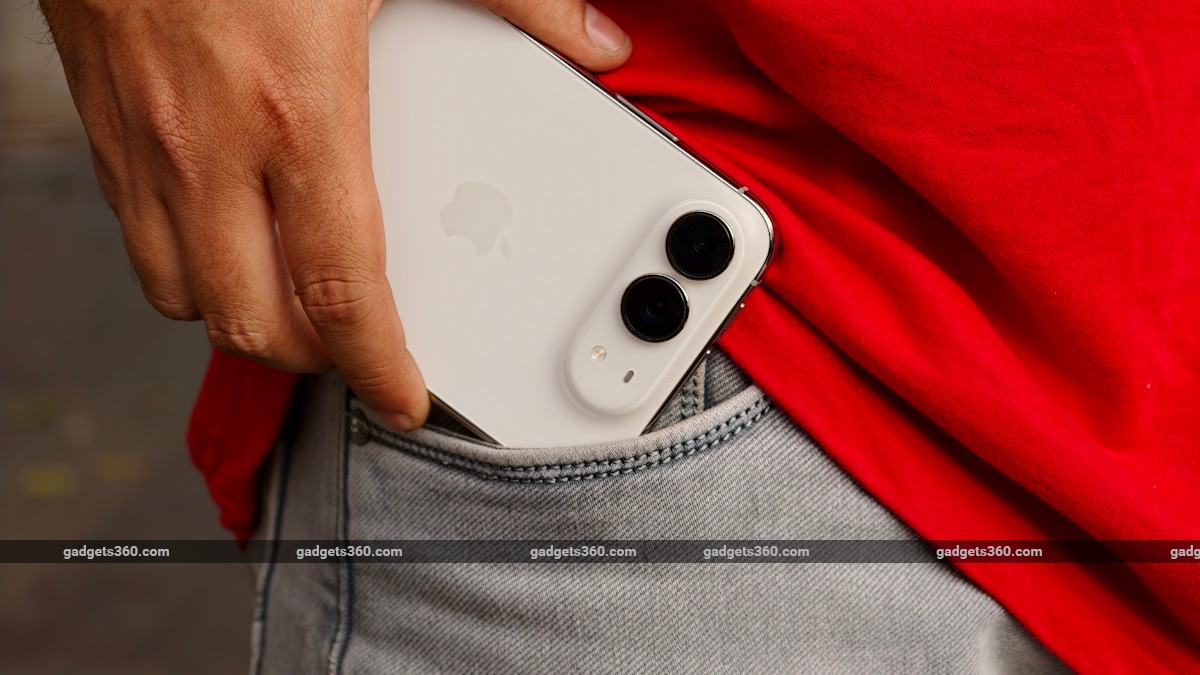
Despite its compact footprint, the Duo's 254-gram weight and 11.3mm folded thickness are hard to ignore
Furthermore, without a dedicated telephoto lens, the Duo cannot match the versatility of Apple's Pro Max models or premium Android flagships.
And then there is the inescapable Rs. 3 Lakh reality. At Rs. 2,99,900, the iPhone Duo is substantially more expensive than several established foldable smartphones available in India. Google's Pixel 11 Pro Fold (Review) starts at Rs. 1,86,999, while Samsung's Galaxy Z Fold 8 (Review) and Galaxy Z Fold 8 Ultra (Review) were launched at Rs. 1,79,999 and Rs. 1,99,999, respectively. Vivo's X Fold 6 is available at Rs. 2,19,999 for its 512GB variant. That puts the Duo roughly Rs. 80,000 to Rs. 1.2 lakh above these alternatives, depending on the model.
The competition also offers some compelling advantages. The Galaxy Z Fold 8 weighs considerably less than the Duo, while the Fold 8 Ultra provides a larger 8-inch inner display and a more ambitious productivity-oriented design. Samsung's longer experience with foldables is relevant when considering multitasking and software maturity. Google's Pixel 11 Pro Fold brings its own take on Android's larger-screen experience, along with a dedicated telephoto camera. Vivo's X Fold 6, meanwhile, combines an extensive ZEISS-branded camera system, including telephoto capabilities, with a large 6,900mAh battery and productivity-focused software.
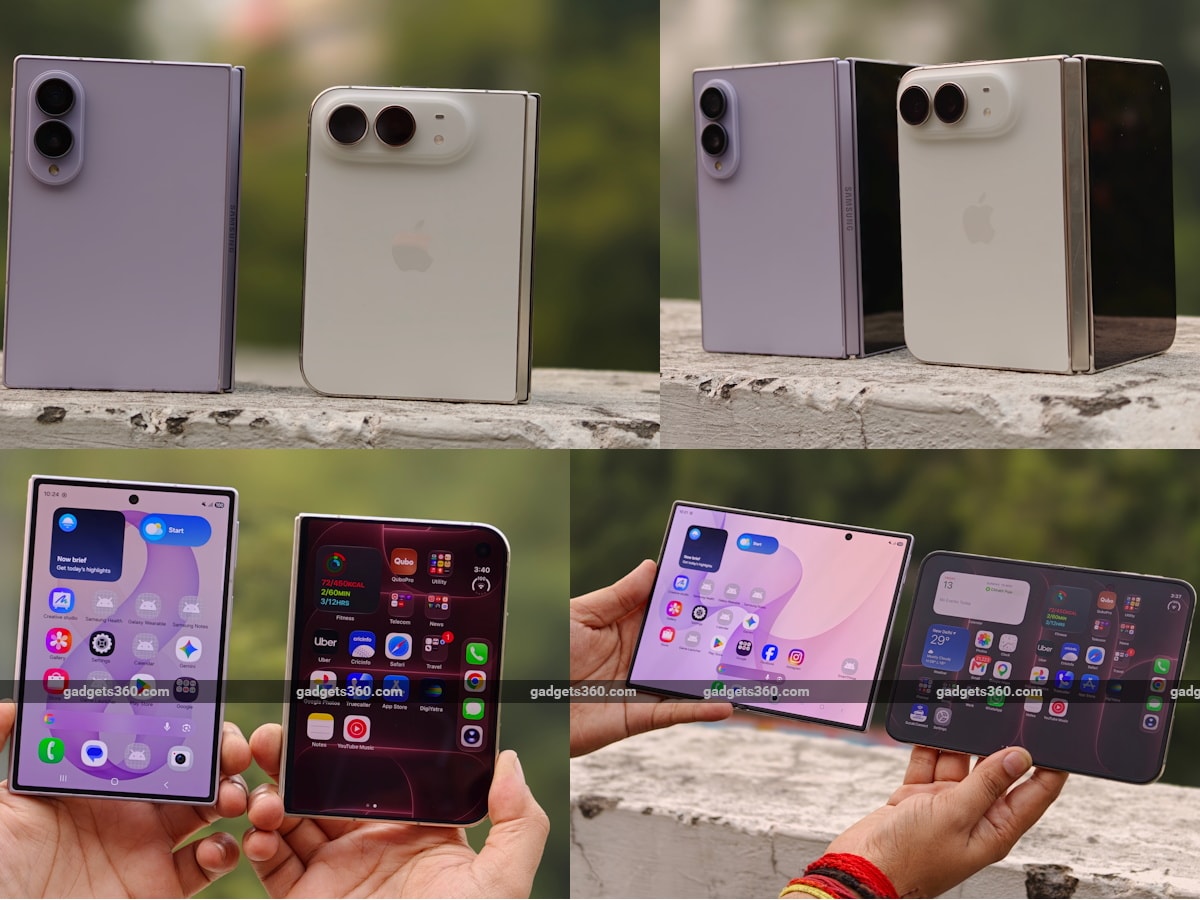
Samsung has the advantage of years of foldable experience, particularly when it comes to software flexibility and multitasking
These are meaningful alternatives, particularly when they cost significantly less than Apple's offering.
The Duo's only trump card against that Android lineup is ecosystem lock-in: it delivers a folding screen without forcing you to abandon iOS. For users deeply entrenched in the Apple ecosystem, that familiarity might justify a premium, but a Rs. 80,000 to 1.2 lakh (roughly) premium is incredibly hard to stomach.
The iPhone Duo is undeniably Apple's most exciting smartphone in a decade. It successfully proves there is life for the iPhone beyond the rectangular slab. But a first-generation product, no matter how brilliantly engineered, carries early-adopter compromises that are brutal at this price. The Duo is strictly for well-heeled Apple enthusiasts desperate for a folding screen. For everyone else, the iPhone 18 Pro Max remains the definitive, sensible flagship.
- REVIEW
- KEY SPECS
- NEWS
- Good
- Excellent foldable design with a practical cover display
- Impressive nano-texture inner display
- Top-notch performance and useful multitasking features
- Great everyday cameras
- Reliable all-day battery life despite dual-screen demands
- Bad
- Extremely expensive at Rs. 2,99,900
- Inconsistent app optimisation
- No dedicated telephoto camera
- E-SIM support only
- Matte display lacks the deep blacks of conventional OLED panels
Read detailed Apple iPhone Duo review
Display (Primary) 7.60-inch
Cover Display 5.40-inch
Processor Apple A20 Pro
Front Camera Unspecified
Rear Camera 48-megapixel + 48-megapixel
RAM 12GB
Storage 256GB, 512GB, 1TB, 2TB
OS iOS 27
Comments
Get your daily dose of tech news, reviews, and insights, in under 80 characters on Gadgets 360 Turbo. Connect with fellow tech lovers on our Forum. Follow us on X, Facebook, WhatsApp, Threads and Google News for instant updates. Catch all the action on our YouTube channel.
Further reading:
iPhone Duo
Related Stories


Advertisement
Follow Us


-
 Best NVIDIA GeForce Laptops for Gaming, Creators & AI
-
Paragon vs. Activa Geyser: Which Budget Water Heater Wins on Safety, Durability & Value?
-
Best 5 Star Refrigerators Under ₹20,000 for Electricity Savings From LG, Godrej, Etc
-
Pure, Crunchy & Nutrient-Packed: Top 5 Dry Fruit Brands in India You Can Trust
-
Stylish 3-Seater Sofa Sets Under ₹9,999: Upgrade Your Living Room for Less
Advertisement
Popular on Gadgets
- Samsung Galaxy S26 Ultra
- Motorola Razr Fold
- ChatGPT
- OPPO Find N6
- Mobiles Under Rs. 40,000
- Vivo X300 Ultra
- Asus Zenbook S14
- iQOO 15
- Vivo X300 Pro
- Lenovo Yoga Slim 7i Aura Edition
- iQOO 15R
- Vivo X Fold 5
- Sony PlayStation 5
- HP OmniPad 12
- OnePlus Nord CE 6 Lite
- OnePlus Pad 4
- OPPO F33 Pro 5G
- Cryptocurrency
- HP OmniBook Ultra 14 (2026)
- iPhone 17
- Eureka Forbes AP 355 Room Air Purifier
- Latest Mobile Phones
- Compare Phones
Latest Gadgets
- OPPO Reno 17 Pro (China)
- OPPO Reno 17 (China)
- Vivo Y6k
- Karbonn Rebel
- Karbonn Rebel Pro
- OnePlus Turbo 6Vs
- Redmi M100 Pro
- OnePlus Ace 7 Pro
- Dell 14S (2026)
- HP ProBook 4 G2iS 14
- OPPO Pad Air 6
- Infinix Xpad 30
- Xiaomi Watch S5 41mm
- OPPO Watch 5
- Toshiba 65-Inch 4K Ultra HD Smart Mini LED QLED TV (65Z670SP)
- Haier M70 Mini LED 65-inch
- Acer Predator Atlas 8
- Asus ROG Ally
- Blue Star 1.5 Ton 5 Star Inverter Split AC (IE518ZNURS)
- Blue Star 2 Ton 3 Star Inverter Window AC (WIE324L)

- About Us
- Sitemaps
- Feedback
- Archives
- Contact Us
- RSS
- Advertise
- Career
- Privacy Policy
- Ethics
- Editorial Policy
- Terms & Conditions
- Complaint Redressal
Download Our Apps
Available in Hindi
© Copyright Red Pixels Ventures Limited 2026. All rights reserved.