-
 Scientists Discover High-Density Rocky Planet in LHS 1903 System That Defies Conventional Formation Models18 February 2026
 -
Unique Inside-Out Planetary System Reveals Unexpected Rocky World on the Outer Edge13 February 2026
-
NASA’s TESS Captures First Images of Rare Interstellar Comet 3I/ATLAS29 January 2026
-
New ALMA Images Reveal Complex Rings Left Behind by Planet Formation28 January 2026
-
Astronomers Detect Rare Rogue Planet Drifting Alone 10,000 Light-Years from Earth7 January 2026
- Home
- Science
- Science News
- Kepler Data Reveals Earth Size Exoplanet on the Edge of Its Star’s Habitable Zone
Kepler Data Reveals Earth-Size Exoplanet on the Edge of Its Star’s Habitable Zone
A cold Earth-sized planet candidate discovered near a Sun-like star challenges ideas of habitability.
Written by Gadgets 360 Staff | Updated: 28 January 2026 14:40 IST
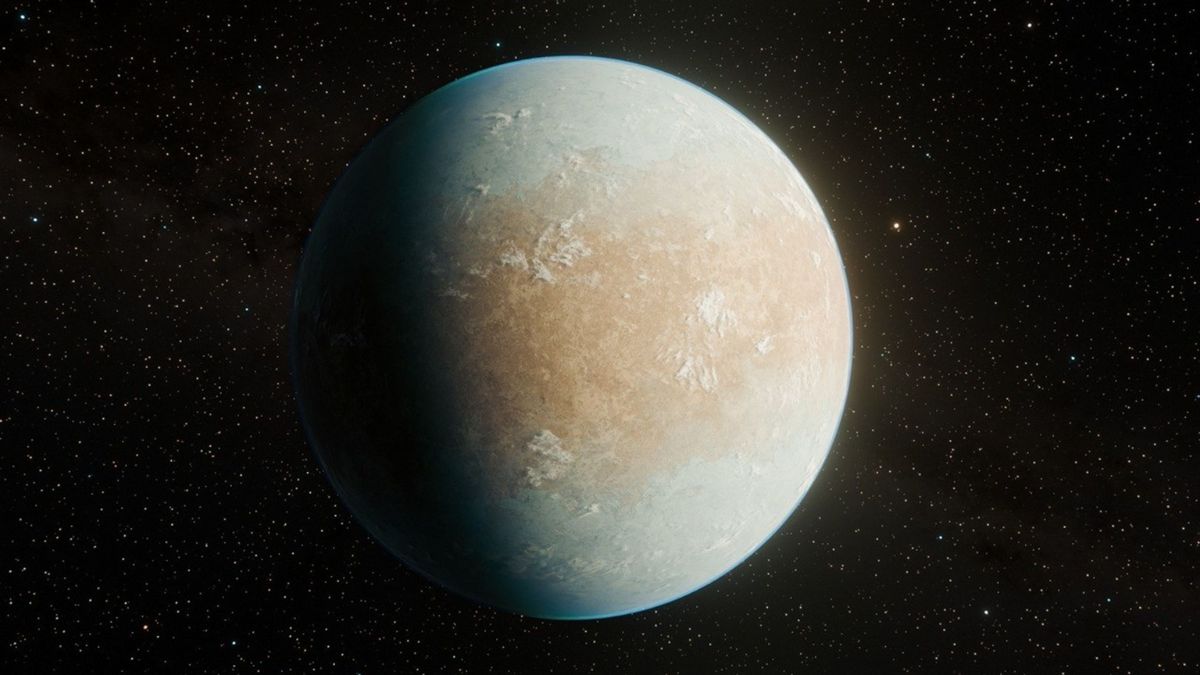
Photo Credit: NASA/JPL-Caltech/Keith Miller
Artist's view of a frozen Earth-sized planet orbiting a dim Sun-like star.
Click Here to Add Gadgets360 As A Trusted Source


Advertisement
Scientists analyzing old data from NASA's Kepler Space Telescope have discovered an Earth-size exoplanet candidate that looks similar to our own planet, but could be much colder. The planet, named HD 137010 b, is a rocky world that is just slightly larger than Earth and circles a sun-like star located about 146 light years from us. Its orbit could be just a year long, so it is on the outer edge of this star's habitable zone. But early estimates hint that the planet could even be colder than Mars, leaving open the question of whether it is capable of hosting life-friendly conditions.
Kepler Data Suggests Planet Receives Far Less Heat Than Earth
According to a report published in The Astrophysical Journal Letters, the planet was detected during the K2 mission of Kepler from a single transit event, in which the planet transitted for a short time in front of its host star. The star is cooler and dimmer than the Sun, so that the planet gets less than a third of the light and heat our Earth receives.
This limited energy could leave surface temperatures near minus 90 degrees Fahrenheit, colder than Mars on average. Even so, scientists note that temperature estimates depend heavily on the planet's atmosphere, which remains unknown. A thick, carbon dioxide–rich atmosphere could trap heat and soften these harsh conditions.
Rare Orbit Makes Planet Hard to Confirm, but Scientists Remain Hopeful
That planet's still a candidate after only one observed transit, though, since earthlike orbits are difficult to pin down. NASA's TESS mission or Europe's CHEOPS satellite may eventually be able to confirm that.
Researchers say the planet may lie in a wider habitable zone and remains one of the most promising cold Earth-sized candidates, despite possibly being frozen.
Comments
Get your daily dose of tech news, reviews, and insights, in under 80 characters on Gadgets 360 Turbo. Connect with fellow tech lovers on our Forum. Follow us on X, Facebook, WhatsApp, Threads and Google News for instant updates. Catch all the action on our YouTube channel.
Further reading:
Exoplanets, Kepler telescope, earth-like planets, Habitable Zone, Space Science, Astronomy
Related Stories






Advertisement
Follow Us




-
04:25
Vivo X200T Review - Full Camera, Gaming & Battery Test | Worth Buying? -
28:31
The Future of Productivity: Logitech's Anatoliy Polyanker On AI, Hybrid Work, And India's Tech Boom -
04:46
Infinix Note Edge 5G Review | Budget 5G Phone With Premium Features? -
04:54
Redmi Note 15 Review: Features, Specifications, Pros, Cons, And Everything Else -
04:38
Realme 16 Pro Review | Camera, Performance & Battery Test | Best Mid-Range Phone?
-
अब विदेशों में भी फ्री में आएंगे फोन पर SMS, Jio की खास सुविधा, जानें
-
Google ने बंद किया वो AI सर्च फीचर जो देता था हेल्थ की सलाह और जानकारी
-
Oppo A6s 5G भारत में लॉन्च: 6500mAh बैटरी, और कीमत Rs 20 हजार से कम!
-
Oppo Find X9s Pro में हो सकता है 200 मेगापिक्सल का प्राइमरी कैमरा, 3C से मिला सर्टिफिकेशन
-
Vivo T5x 5G vs Realme 14T 5G vs Motorola Edge 60 Fusion 5G: जानें कौन सा फोन है बेस्ट
Advertisement
Popular on Gadgets
- Samsung Galaxy Unpacked 2026
- iPhone 17 Pro Max
- ChatGPT
- iOS 26
- Laptop Under 50000
- Smartwatch Under 10000
- Apple Vision Pro
- Oneplus 12
- OnePlus Nord CE 3 Lite 5G
- iPhone 13
- Xiaomi 14 Pro
- Oppo Find N3
- Tecno Spark Go (2023)
- Realme V30
- Best Phones Under 25000
- Samsung Galaxy S24 Series
- Cryptocurrency
- iQoo 12
- Samsung Galaxy S24 Ultra
- Giottus
- Samsung Galaxy Z Flip 5
- Apple 'Scary Fast'
- Housefull 5
- GoPro Hero 12 Black Review
- Invincible Season 2
- JioGlass
- HD Ready TV
- Latest Mobile Phones
- Compare Phones
Latest Gadgets
- OPPO A6s 5G
- Poco X8 Pro 5G
- Poco X8 Pro Max 5G
- OPPO K14 5G
- OPPO Find N6
- Vivo T5x 5G
- Samsung Galaxy M17e 5G
- Lava Bold 2 5G
- MacBook Neo
- MacBook Pro 16-Inch (M5 Max, 2026)
- Tecno Megapad 2
- Apple iPad Air 13-Inch (2026) Wi-Fi + Cellular
- OPPO Watch X3
- Tecno Watch GT 1S
- Xiaomi QLED TV X Pro 75
- Haier H5E Series
- Asus ROG Ally
- Nintendo Switch Lite
- Haier 1.6 Ton 5 Star Inverter Split AC (HSU19G-MZAID5BN-INV)
- Haier 1.6 Ton 5 Star Inverter Split AC (HSU19G-MZAIM5BN-INV)

- About Us
- Sitemaps
- Feedback
- Archives
- Contact Us
- RSS
- Advertise
- Career
- Privacy Policy
- Ethics
- Editorial Policy
- Terms & Conditions
- Complaint Redressal
Download Our Apps
Available in Hindi
© Copyright Red Pixels Ventures Limited 2026. All rights reserved.