-
 Total Solar Eclipse Today: How to Watch Live Online, Timings, Safety Tips, and More12 August 2026
 -
JWST Watches HD 80606 bExoplanet Heat Up by 1,100 Degrees in Hours19 June 2026
-
Chandra Captures Sharpest-Ever X-Ray View of M87 Black Hole Jet18 June 2026
-
Astrophotographer Captures Giant Human-Shaped Solar Prominence8 June 2026
-
Blue Origin’s New Glenn Rocket Explodes During Pre-Launch Test in Florida29 May 2026
- Home
- Science
- Science News
- NASA Tests Nuclear Rocket Engine Designed for Faster Deep Space Missions
NASA Tests Nuclear Rocket Engine Designed for Faster Deep-Space Missions
NASA has completed over 100 cold-flow tests of a full-scale nuclear rocket reactor prototype, demonstrating stable hydrogen flow and control.
Written by Gadgets 360 Staff | Updated: 28 January 2026 15:41 IST
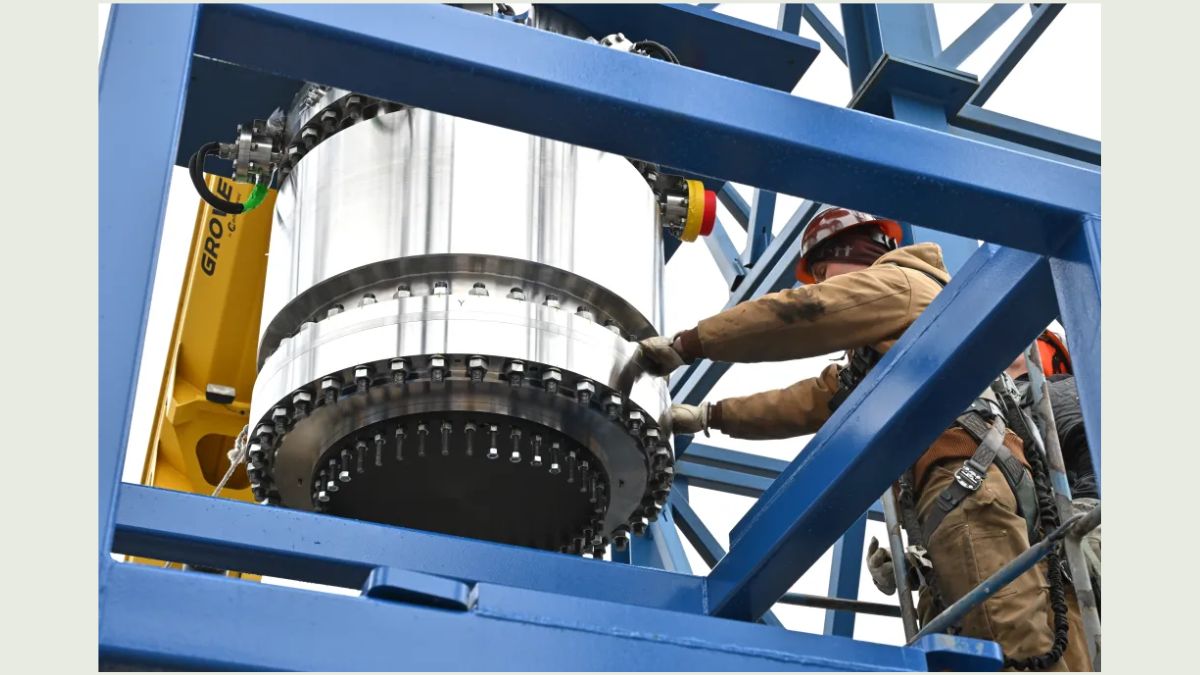
Photo Credit: NASA
Nuclear rockets provide advantages for deep-space exploration missions.
Click Here to Add Gadgets360 As A Trusted Source


Advertisement
Nuclear rockets use reactor-heated propellant to achieve far higher efficiency than chemical engines. NASA reported in Jan 2026 that it completed cold-flow tests of a full-scale reactor development unit – the first such tests since the 1960s. At Marshall Space Flight Center, engineers ran over 100 tests on a 44×72-inch non-nuclear reactor model built by BWX Technologies. The project is led by NASA's Space Nuclear Propulsion Office as part of the DRACO nuclear rocket program.
Reactor Test Campaign
According to NASA, engineers conducted more than 100 cold-flow tests at the Marshall Space Flight Center using a full-scale 44x72-inch reactor model, which they tested in 2025. The BWX Technologies-built non-nuclear prototype demonstrates hydrogen flow in a nuclear thermal rocket engine. The tests established the design's control systems and fluid dynamics through testing. Engineers confirmed that the reactor continued to operate safely without dangerous oscillations or pressure waves. The test results led to improvements in the reactor's instrumentation and control systems, which would be used in future flight engines.
Implications for Spaceflight
Nuclear rockets provide advantages for deep-space exploration missions. They decrease the time needed for space travel, which enables astronauts to spend less time exposed to dangerous space radiation. The NASA representative, Greg Stover, explained that these technologies provide "speed and endurance", which enables faster travel and increased mission capabilities. Spacecraft can carry larger payloads because of their improved efficiency, which also enables them to operate essential equipment needed for extended space missions.
NASA Administrator Bill Nelson stated that this technology will allow astronauts to travel between deep space areas with unprecedented speed, which demonstrates nuclear propulsion's importance for NASA's Artemis program and Moon-to-Mars mission objectives. NASA and DOE are funding reactor development and advanced fuels to establish in-space demonstration capabilities through their joint research efforts.
Comments
Get your daily dose of tech news, reviews, and insights, in under 80 characters on Gadgets 360 Turbo. Connect with fellow tech lovers on our Forum. Follow us on X, Facebook, WhatsApp, Threads and Google News for instant updates. Catch all the action on our YouTube channel.
Further reading:
NASA, Nuclear Thermal propulsion, DRACO, Space Nuclear Propulsion, Deep Space Exploration
Related Stories


Advertisement
Follow Us




-
01:42
[Sponsored] Galaxy Watch9 for Everyday Health Insights | Smarter Wellness Choices -
01:15
[Sponsored] Galaxy Tab S10 Lite for Students: Notes, Solve Math and More -
04:17
[Sponsored] LG NANO 4K UHD AI TV NU885: Gemini Search, Dolby Atmos & 5 Years of Updates -
00:57
[Sponsored] Samsung Galaxy Z Fold8 My Fan Cam in Action: Find the Moment, Then Share It -
01:41
[Sponsored] What Do You Need To Know Before Your Next Run? | Samsung Galaxy Watch Ultra2
-
Flipkart Big Bang Diwali Sale होगी 28 अक्टूबर से शुरू, iPhone 17 पर छूट
-
Tata Punch EV आई सबसे ज्यादा पसंद, 284% की ग्रोथ के साथ बनी नंबर 1 कार
-
Samsung Galaxy S25 FE 5G दिवाली सेल में ₹17 हजार से ज्यादा सस्ता
-
Redmi K100 में मिलेगा 'Snow Rock White' का नया कलर ऑप्शन
-
OnePlus Ace 7 सीरीज में मिलेगी 9,000mAh की बैटरी, अगले सप्ताह होगा लॉन्च
Advertisement
Popular on Gadgets
- Samsung Galaxy S26 Ultra
- Motorola Razr Fold
- ChatGPT
- OPPO Find N6
- Mobiles Under Rs. 40,000
- Vivo X300 Ultra
- Asus Zenbook S14
- iQOO 15
- Vivo X300 Pro
- Lenovo Yoga Slim 7i Aura Edition
- iQOO 15R
- Vivo X Fold 5
- Sony PlayStation 5
- HP OmniPad 12
- OnePlus Nord CE 6 Lite
- OnePlus Pad 4
- OPPO F33 Pro 5G
- Cryptocurrency
- HP OmniBook Ultra 14 (2026)
- iPhone 17
- Eureka Forbes AP 355 Room Air Purifier
- Latest Mobile Phones
- Compare Phones
Latest Gadgets
- Vivo Y600
- HMD 2660 Flip Senior Edition
- Lava Aura Curve
- Poco X8s
- Samsung Galaxy F70 5G
- Tecno Spark 50S 5G
- Vivo Y600s Pro
- Vivo Y32 (2026)
- Lenovo Yoga 9n 2-in-1
- Lenovo Yoga Pro 9n
- iPad mini (2026)
- Amazon Alexa Tablet 8
- Pebble Qore 2
- Amazfit T-Rex Dual Solar
- Toshiba 65-Inch 4K Ultra HD Smart Mini LED QLED TV (65Z670SP)
- Haier M70 Mini LED 65-inch
- Acer Predator Atlas 8
- Asus ROG Ally
- Blue Star 1.5 Ton 5 Star Inverter Split AC (IE518ZNURS)
- Blue Star 2 Ton 3 Star Inverter Window AC (WIE324L)

- About Us
- Sitemaps
- Feedback
- Archives
- Contact Us
- RSS
- Advertise
- Career
- Privacy Policy
- Ethics
- Editorial Policy
- Terms & Conditions
- Complaint Redressal
Download Our Apps
Available in Hindi
© Copyright Red Pixels Ventures Limited 2026. All rights reserved.