-
 Samsung to Reportedly Showcase Smart Glasses With Snapdragon AR1 Gen 1 Chip at Galaxy Unpacked22 July 2026
 -
Google Might Sell Over 2 Million Android XR-Powered Smart Glasses This Year: Report22 May 2026
-
Google I/O 2026: Google, Samsung Showcase Gemini-Powered Android XR Smart Glasses20 May 2026
-
Samsung Galaxy Glasses to Reportedly Feature Ray-Ban Meta-Like Design, Gemini Integration28 April 2026
-
Most Innovative and Unique Gadgets of 2025: Samsung Galaxy Z TriFold, iPhone Air and More26 December 2025
- Home
- Wearables
- Wearables News
- Samsung Reportedly Developing Display Equipped AI Glasses, Launch Slated for 2028
Samsung Reportedly Developing Display-Equipped AI Glasses, Launch Slated for 2028
Samsung has reportedly asked its display division to develop a microdisplay for AI glasses.
Written by Shaurya Tomer, Edited by Rohan Pal | Updated: 11 September 2026 12:00 IST
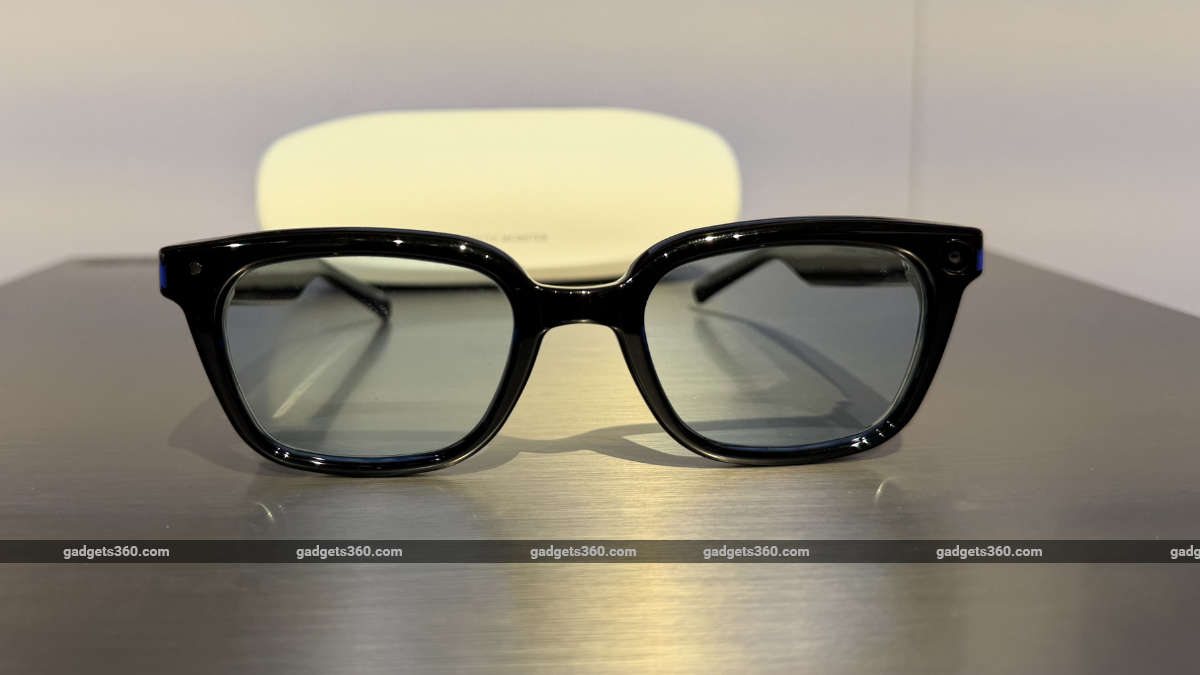
Samsung launched the Galaxy Glasses earlier this year
Click Here to Add Gadgets360 As A Trusted Source
Advertisement
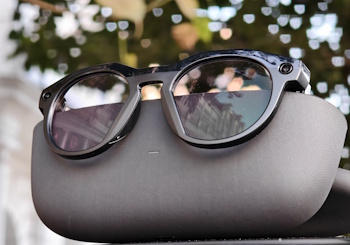
Samsung recently introduced its first Galaxy Glasses, developed with Google, Gentle Monster, and Warby Parker. A new report suggests that the South Korean tech conglomerate could be working on a more advanced version that adds visual information to the glasses. Samsung has reportedly asked its display division to develop a microdisplay for AI glasses. This could potentially enable features such as notifications, navigation cues, and text directly in the user's field of view.
Samsung's Display-Equipped AI Glasses
According to South Korean publication The Elec, Samsung Electronics asked Samsung Display last month to develop a microdisplay for a new pair of AI glasses. The company reportedly provided requirements covering the glasses' form factor, information display area, colour, and target price.
Samsung Display is reportedly evaluating OLEDoS (OLED on Silicon) and LEDoS (Light Emitting Diode on Silicon) technologies that could meet these requirements.
The reported glasses could use a microdisplay measuring less than 0.2 inches. An optical system is theorised to magnify the image produced by the tiny panel and direct it towards the user's eye. The company is reportedly focusing on displaying relatively simple information, including text, notifications, icons, and navigation arrows, similar to Meta's Ray-Ban Display.
It has reportedly not yet been decided whether the glasses will use a binocular display, which provides visual information to both eyes, or a monocular configuration with a display visible to only one eye.
Samsung is also said to be considering around 4-bit gradation for the display. A 4-bit colour channel, notably, represents 16 brightness levels, compared with 256 levels for an 8-bit channel. As per the report, white OLEDoS could be the more practical option for Samsung because of its advantages in manufacturing yield and cost.
Another major challenge that the tech giant reportedly faces is the field of view. Samsung is said to be asking for information to be displayed across the front portion of the lens, which would require an optical system capable of providing a relatively wide viewing angle while keeping the glasses compact.
The report claims Samsung could launch its display-equipped AI glasses in the second half of 2027 or the first half of 2028. The timeline is reportedly dependent on microdisplay development, manufacturing yields, and product validation.
Comments
Get your daily dose of tech news, reviews, and insights, in under 80 characters on Gadgets 360 Turbo. Connect with fellow tech lovers on our Forum. Follow us on X, Facebook, WhatsApp, Threads and Google News for instant updates. Catch all the action on our YouTube channel.
Further reading:
Samsung Smart Glasses, Samsung
Related Stories


Advertisement
Follow Us




-
![[Sponsored] Galaxy Watch9 for Everyday Health Insights | Smarter Wellness Choices](https://www.gadgets360.com/static/desktop/images/spacer.png)
01:42
[Sponsored] Galaxy Watch9 for Everyday Health Insights | Smarter Wellness Choices -
01:15
[Sponsored] Galaxy Tab S10 Lite for Students: Notes, Solve Math and More -
04:17
[Sponsored] LG NANO 4K UHD AI TV NU885: Gemini Search, Dolby Atmos & 5 Years of Updates -
00:57
[Sponsored] Samsung Galaxy Z Fold8 My Fan Cam in Action: Find the Moment, Then Share It -
01:41
[Sponsored] What Do You Need To Know Before Your Next Run? | Samsung Galaxy Watch Ultra2
Advertisement
Popular on Gadgets
- Samsung Galaxy S26 Ultra
- Motorola Razr Fold
- ChatGPT
- OPPO Find N6
- Mobiles Under Rs. 40,000
- Vivo X300 Ultra
- Asus Zenbook S14
- iQOO 15
- Vivo X300 Pro
- Lenovo Yoga Slim 7i Aura Edition
- iQOO 15R
- Vivo X Fold 5
- Sony PlayStation 5
- HP OmniPad 12
- OnePlus Nord CE 6 Lite
- OnePlus Pad 4
- OPPO F33 Pro 5G
- Cryptocurrency
- HP OmniBook Ultra 14 (2026)
- iPhone 17
- Eureka Forbes AP 355 Room Air Purifier
- Latest Mobile Phones
- Compare Phones
Latest Gadgets
- Vivo Y600
- HMD 2660 Flip Senior Edition
- Lava Aura Curve
- Poco X8s
- Samsung Galaxy F70 5G
- Tecno Spark 50S 5G
- Vivo Y600s Pro
- Vivo Y32 (2026)
- Lenovo Yoga 9n 2-in-1
- Lenovo Yoga Pro 9n
- Amazon Alexa Tablet 8
- Amazon Alexa Tablet 11
- Pebble Qore 2
- Amazfit T-Rex Dual Solar
- Toshiba 65-Inch 4K Ultra HD Smart Mini LED QLED TV (65Z670SP)
- Haier M70 Mini LED 65-inch
- Acer Predator Atlas 8
- Asus ROG Ally
- Blue Star 1.5 Ton 5 Star Inverter Split AC (IE518ZNURS)
- Blue Star 2 Ton 3 Star Inverter Window AC (WIE324L)

- About Us
- Sitemaps
- Feedback
- Archives
- Contact Us
- RSS
- Advertise
- Career
- Privacy Policy
- Ethics
- Editorial Policy
- Terms & Conditions
- Complaint Redressal
Download Our Apps
Available in Hindi
© Copyright Red Pixels Ventures Limited 2026. All rights reserved.