
- Home
- Ai
- Ai Features
- The AI Bubble Question: What Is It and Should You Be Worried About an Implosion?
The AI Bubble Question: What Is It and Should You Be Worried About an Implosion?
Soaring AI investment and valuations fuel talk of a bubble, even as industry leaders give contrasting opinions.
Written by Akash Dutta, Edited by Ketan Pratap | Updated: 22 December 2025 13:50 IST
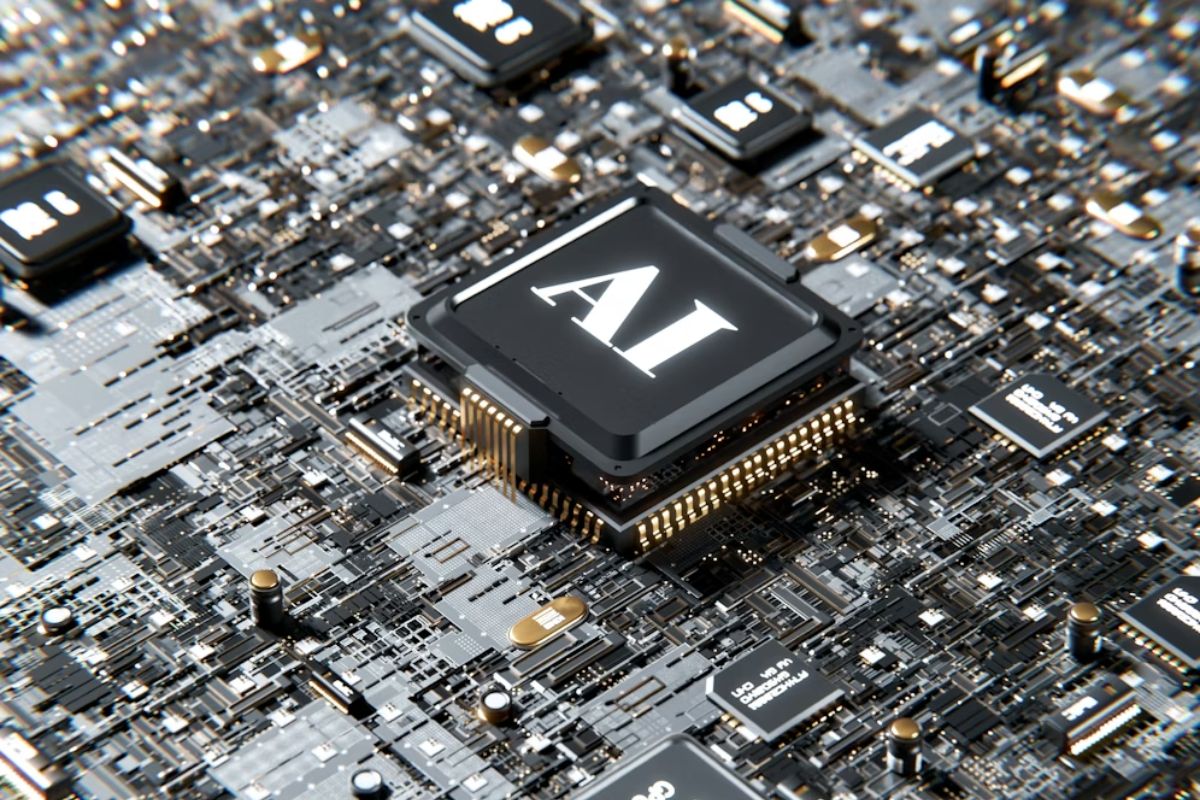
Photo Credit: Unsplash/Igor Omilaev
AI sector debates bubble risk as valuations and spending surge, with leaders offering divergent views
Click Here to Add Gadgets360 As A Trusted Source

Advertisement
Artificial intelligence (AI), just like any emerging technology, has polarised the market ever since its inception. In 2023, the talks were about whether it was a buzzword or had real applications. In 2024, concerns were raised about irresponsible development and expansion of a potentially dangerous tech. The industry has been able to alleviate some of these fears while solidifying its position in the market. However, throughout 2025, AI faced its harshest criticism yet — is it a bubble that is about to burst? The answer might be more nuanced than what the general discourse suggests.
What Is a Bubble?
A bubble has a transient existence, growing in size quickly and doomed to burst and disappear forever. In economics, it has a similar meaning, referring to innovation or market trends that have high potential and quickly gain investors' faith and wallets, only to eventually wipe out wealth from the market after the burst.

The high investment in the space results in the mushrooming of new companies that can raise a large amount of funds due to this investor excitement, often before they generate revenue or even have a product in the market.
This results in the existing players in the market raising more money to expand aggressively and retain their market share. The external funding keeps flowing in, and the industry inflates to an unimaginable size.
However, then comes the fall. All this money being poured in results in high valuations for the companies. But this valuation was reached purely on the basis of investors, not revenue generation. The investors begin to realise that due to the large number of companies operating in this space, many neither have a scalable product nor a large enough user base to ever generate enough revenue to have any return on investment (ROI).
The final nail in the coffin arrives as the investment money dries up while the companies find themselves in debt due to most of their expenses going towards expansion and scaling the product, not towards revenue generation efforts. Many companies begin shutting down in quick succession, disappearing with the investment money, creating a sizable hole in the market. As was the case with the dotcom bubble, if the hole is big enough, it can also trigger a global recession.
Why Is AI Being Called a Bubble?
If the naysayers are to be believed, AI has already reached a stage where it is not justifying the investor money being poured into it. The concerns have largely been driven by record spending on infrastructure, sky-high valuations, and rapidly expanding startup funding. Over the past 12 months, companies across the AI ecosystem have committed unprecedented capital to expand computing and model capacity. One of the most striking examples is OpenAI's planned $1.4 trillion (roughly Rs. 126 lakh crore) spend on compute and infrastructure over the next eight years, a figure far outstripping the company's current revenues, which are said to reach a little over $13 billion (roughly Rs. 1.16 lakh crore) in 2025.
Deals struck this year also illustrate this scale. Nvidia invested $100 billion (roughly Rs. 8.8 lakh crore) into OpenAI, building on its existing stake and creating what some analysts see as “circular financing” where chip vendors are also investors in the companies buying their products. Tech giants have also made massive commitments. Oracle agreed to a $300 billion (26.8 lakh crore) data centre deal with OpenAI, and discussions are underway for Amazon to invest more than $10 billion (roughly Rs. 89,555 crore) in the ChatGPT maker, potentially pushing its valuation above $500 billion (roughly Rs. 44.7 lakh crore).
Beyond individual companies, large joint ventures and infrastructure projects are underway. The Stargate Project, a multibillion-dollar collaboration involving OpenAI, Oracle and SoftBank, is building large AI datacenters with an initial commitment of about $100 billion (roughly Rs. 8.8 lakh crore), aiming for far more in the coming years.
Spending on infrastructure has also soared outside the AI developer ecosystem. According to Reuters, AI-related financing deals, particularly for data centres, surged to $125 billion (roughly Rs. 11.1 lakh crore) in 2025, up from $15 billion (roughly Rs. 1.34 lakh crore) in 2024, highlighting how much capital is chasing perceived future demand.
These commitments have coincided with equally striking valuations. Nvidia became the world's most valuable company in 2025, driven by demand for its AI chips, and briefly topped a market cap above $5 trillion (roughly Rs. 447 lakh crore). Investors are now asking whether such figures reflect real earnings potential or simply hype around future AI dominance.
AI Bubble: Room for Debate
It is easy to dismiss the rise of AI as a bubble based on these numbers. However, several experts and industry stalwarts believe that such an opinion is perhaps oversimplified. A Tech in Asia analysis describes the industry as a two-layered advancement, and it is important to distinguish between the two. The publication says there is a foundation layer to AI that comprises data centres, cloud servers, and other infrastructure for the technology, as well as the large language models themselves.
The second layer is the valuation or the economics of it all, which is defined by the investor enthusiasm and the external money being poured into the industry. In a conversation with Bloomberg, Jason Furman, economist and former US Chairman of the Council of Economic Advisers, said, “I'm more worried about the financial valuation bubble than I am a technological bubble.”
The implication here is that the technology, over the last three years, has proven itself to be transformative and a crucial commodity in both enterprise and consumer space. And there is enough evidence to point out that with further advancement, more critical applications will be built. But even in the worst-case scenario, the infrastructure will not depreciate, and it can always be repurposed for a proven existing tech stack.
The valuation game is where concerns rise, as we have explained above. OpenAI CEO Sam Altman himself has acknowledged bubble talk, noting that “when bubbles happen, smart people get overexcited about a kernel of truth.” This comment was aimed at the mushrooming AI startups, not the industry as a whole. But it caused some confusion among individuals.
Later, the company CFO, Sarah Friar, in an interview, provided clarification and told CNBC, “We still feel that the AI era is upon us, and we're leading the path. As we've come out of the gate, we're seeing, actually, acceleration in Plus and Pro subscriptions. That's a good sign; people are seeing a lot of value. And we're seeing a lot of momentum in the enterprise, great momentum with developers.”
Similar sentiments have been echoed by others. Bill Gates told CNBC that many AI companies are overvalued and only a fraction will succeed, urging investors to prepare for corrections. Google DeepMind's Demis Hassabis has also highlighted that many early-stage AI startups are raising tens of billions in valuation without substantial operations, predicting a likely market adjustment.
Bridgewater Associates' Greg Jensen went further, warning that Big Tech's reliance on external capital to fund AI expansion “is dangerous” and that there is a “reasonable probability” of finding an AI bubble as spending outpaces internal cash generation.
Should You Be Concerned?
If you are a retail or institutional investor who owns stocks or equity in an AI company, there are concerns about long-term benefits. Additionally, no one knows the right time to exit, as the numbers can double next week or fall to zero. With so much uncertainty, investment discipline and a long-term vision are important.
If you are a founder or a newly created AI startup, and you have raised massive funds before focusing on your product-market fit, the bubble might affect you. However, as long as you have a product in the market, a loyal user base, and a long-term vision to scale the product and expand the revenue streams, you might be safeguarded from any market crash in the future.
Tech professionals working in AI companies might also be at risk if the company they're working for fails at sustainable revenue generation. Individuals should tread carefully when joining a new AI startup, no matter the pay package and perks. However, those working in larger companies such as Amazon, Google, Meta, Nvidia, or even OpenAI should not be impacted.
Finally, end consumers really do not have anything to worry about, apart from possible price hikes on their AI subscriptions in the near future if the bubble bursts. As the market adjusts and the smaller players are removed from the scene, the remaining players will feel the pressure for profitability, and the easiest way for them to do that is by increasing the prices of their products and services. AI companies might be offering these for peanuts as market capture remains a priority, but individuals should be wary before they make any long-term commitments.
To conclude, the AI market valuation bubble is not a “if it will happen” question, but rather a “when will it happen and who will be impacted” question. The technology is here to stay, but some of the companies might not be.
Comments
Get your daily dose of tech news, reviews, and insights, in under 80 characters on Gadgets 360 Turbo. Connect with fellow tech lovers on our Forum. Follow us on X, Facebook, WhatsApp, Threads and Google News for instant updates. Catch all the action on our YouTube channel.


Advertisement
Follow Us




-

09:53
iPhone 18 Goes On Sale In India: Huge Crowds, Long Queues At Apple Stores -
06:32
Google Pixel 11 Pro XL Review: The Most Exciting Pixel Yet? | 120X Zoom + Tensor G6 -
05:20
Samsung Galaxy Watch Ultra 2 Review: Is This the Best Android Smartwatch? -
07:01
Samsung Galaxy Z Fold 8 Review: Is This the Best Foldable Phone? -
06:39
Samsung Galaxy Z Fold8 Ultra Review: Cameras, Battery, Performance Tested
-
10 मिनट में घर पहुंचेंगे iPhone 18 Pro, Pro Max: सेल हुई शुरू
-
Lava ने लॉन्च किया 6000mAh बैटरी वाला Bold N4 Pro 5G
-
itel Zeno 300 भारत में होगा लॉन्च, मिलेगी 6,000mAh बैटरी और डुअल कैमरा
-
Motorola Signature 27 होगा 22 सितंबर को पेश, 200MP दो कैमरा के साथ, टीजर जारी
-
Flipkart Big Billion Days सेल में Samsung Galaxy S25, S25 FE को ₹50,000 से कम में खरीदने का मौका!
Advertisement
Popular on Gadgets
- Samsung Galaxy S26 Ultra
- Motorola Razr Fold
- ChatGPT
- OPPO Find N6
- Mobiles Under Rs. 40,000
- Vivo X300 Ultra
- Asus Zenbook S14
- iQOO 15
- Vivo X300 Pro
- Lenovo Yoga Slim 7i Aura Edition
- iQOO 15R
- Vivo X Fold 5
- Sony PlayStation 5
- HP OmniPad 12
- OnePlus Nord CE 6 Lite
- OnePlus Pad 4
- OPPO F33 Pro 5G
- Cryptocurrency
- HP OmniBook Ultra 14 (2026)
- iPhone 17
- Eureka Forbes AP 355 Room Air Purifier
- Latest Mobile Phones
- Compare Phones
Latest Gadgets
- Lava Bold N4 Pro 5G
- Samsung Galaxy A08
- Itel Muzik 450L
- OPPO K14 Lite
- Samsung Galaxy A18 4G
- iPhone Duo
- OPPO A7 Pro
- Huawei Mate XT 2 Ultimate Design
- Asus Vivobook S14 (S5452MA)
- Acer Aspire G 3D 16
- Xiaomi Pad 9 Pro
- Xiaomi Pad 9
- Apple Watch Ultra 4
- Apple Watch Series 12
- Haier M70 Mini LED 65-inch
- Xiaomi TV FX Mini LED 65
- Acer Predator Atlas 8
- Asus ROG Ally
- Blue Star 1.5 Ton 5 Star Inverter Split AC (IE518ZNURS)
- Blue Star 2 Ton 3 Star Inverter Window AC (WIE324L)

- About Us
- Sitemaps
- Feedback
- Archives
- Contact Us
- RSS
- Advertise
- Career
- Privacy Policy
- Ethics
- Editorial Policy
- Terms & Conditions
- Complaint Redressal
Download Our Apps
Available in Hindi
© Copyright Red Pixels Ventures Limited 2026. All rights reserved.