-
 Xiaomi Book Pro 14, Xiaomi Watch S5 China Launch Date Announced; Key Features Teased16 March 2026
 -
Xiaomi YU7 Electric SUV Officially Goes on Sale in China: Price, Features27 June 2025
-
Xiaomi SU7 Ultra Coming to Gran Turismo 7 on PlayStation With a Future Update8 June 2025
-
Xiaomi YU7 EV With 253 KMPH Claimed Top Speed and 835 KM CLTC Range Launched: All Details23 May 2025
-
Xiaomi Officially Starts Selling Production-Ready SU7 Ultra: Price, Features3 March 2025
Xiaomi SU7 EV Refreshed With 902km CLTC Range, Nvidia Thor AGX-Powered Assisted Driving Features
Xiaomi leverages LiDAR, radar, cameras, and ultrasonic sensors for 360-degree perception on the new-generation SU7.
Written by Shaurya Tomer, Edited by David Delima | Updated: 20 March 2026 13:49 IST
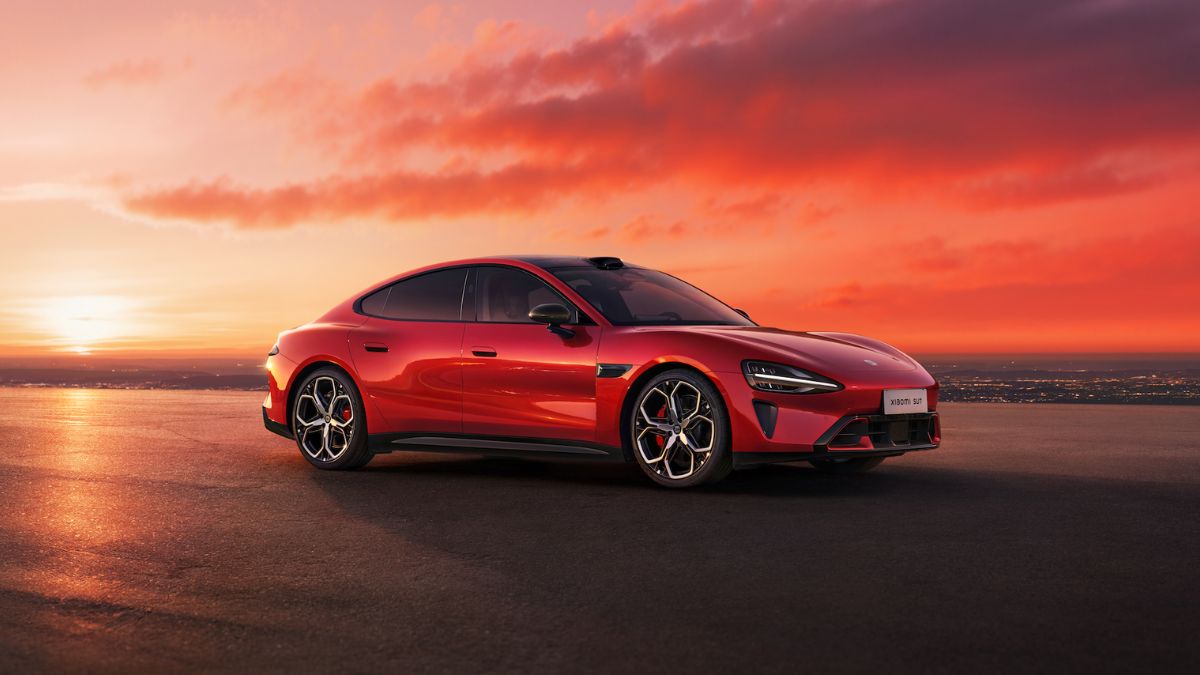
Photo Credit: Xiaomi
The EV is available in a range of new interior and exterior colour options
Click Here to Add Gadgets360 As A Trusted Source

Advertisement
Xiaomi on Thursday launched the new-generation Xiaomi SU7 series in China. The facelift of its popular electric vehicle (EV) brings upgrades across design, performance, connected-car tech, and safety. It gets a CTB (Cell-to-Body) battery, which is claimed to deliver a claimed range of up to 902km (CLTC). On the intelligence front, the Xiaomi SU7 is powered by a dual-chip setup, including the Snapdragon 8 Gen 3 for cabin computing and NVIDIA DRIVE AGX Thor for assisted driving.
Xiaomi SU7 Price, Availability
The new-generation Xiaomi SU7 is available in three trims — Standard, Pro, and Max, priced at CNY 219,900 (roughly Rs. 30 lakh), CNY 249,900 (roughly Rs. 34 lakh), and CNY 303,900 (roughly Rs. 41 lakh), respectively.
The EV is currently available for pre-orders via the Xiaomi EV app and WeChat Mini Program in China. The company has yet to announce plans for availability outside the country.
Xiaomi SU7 Design, Features
The new-generation Xiaomi SU7 builds upon the original model's luxury C-segment sedan proportions. It measures around 5 metres in length and has a 3-metre wheelbase. Signature design elements like water drop headlights and halo taillights have been carried over from the previous generation, while it also introduces a redesigned front grille with integrated radar for improved aerodynamics and sensing.
With SU7, Xiaomi has expanded the range of customisation options available, with nine exterior colour choices including Coastal Blue, Blazing Red, and Viridian Green. Inside, the cabin gets a significant overhaul with premium materials, new ambient lighting stretching over 3,600mm, and redesigned seats with features like ventilation, heating, and optional zero-gravity positioning for the front passenger.

Photo Credit: Xiaomi
Xiaomi's new EV also features an electric front boot with multiple opening methods, a redesigned symmetrical centre console, and a smart cabin experience powered by Xiaomi's ecosystem, including compatibility with its “Human × Car × Home” platform.
With the new-generation SU7, the company has introduced Xiaomi Smart Chassis 2.0. It is said to feature a double wishbone front suspension and five-link rear suspension setup, along with adaptive air suspension and continuous damper control. As per the company, the system can dynamically adjust ride height and stiffness based on driving conditions in real-time.
It also includes updated Wet Road AI Detection technology, which now includes an automatically enabled enhanced stability control mode. Xiaomi says it uses multi-source data from rain sensors, external temperature sensors, microphones, and cameras to analyse the environment in real-time and accurately judge road grip and prompt the driver to switch to Wet Mode, if necessary.
The Xiaomi SU7 is powered by a dual-chip setup. A Snapdragon 8 Gen 3 SoC is responsible for the in-cabin computing, while the Nvidia DRIVE AGX Thor in-vehicle computer powers the assisted driving features. It supports connectivity options such as Wi-Fi 7 and UWB, along with a revamped AI voice assistant with improved contextual understanding and multi-app control. The SU7 also makes Xiaomi HyperOS-powered Smart Cabin a standard across the lineup. As per the company, it has been upgraded to offer a rear remote control panel for controlling all six in-car screens.
There is a new XLA-assisted driving architecture, too. Xiaomi says it enables features such as voice-controlled driving actions, advanced parking capabilities, and improved real-time hazard detection. To achieve this, the system is claimed to use LiDAR, radar, cameras, and ultrasonic sensors for 360-degree perception.
Another new feature is the Owner Management Mode, accessible via the central display or Xiaomi EV app. Through this, SU7 owners can limit the power output across all drive modes while still enabling core functionalities.
Xiaomi SU7 Powertrain, Battery
All three Xiaomi SU7 variants are powered by Xiaomi's HyperEngine V6s Plus motor. Xiaomi claims a 0 to 100kmph acceleration time of as little as 3.08 seconds, while it can achieve a top speed of 265kmph.
The EV uses CTB (Cell-to-Body) battery integration technology and delivers a claimed range of up to 902km (CLTC) on the Pro variant. Meanwhile, the Standard and Max trims offer ranges of 720km and 835km, respectively. As per the company, there is fast charging support, too, which enables up to 670km of range with just 15 minutes of charge, while a 10–80 percent charge can be completed in about 12 minutes, with a peak charging rate of 5.2C.
On the safety front, the Xiaomi SU7 comes with nine airbags as standard. Its chassis has a high-strength body structure, built using 2,200 MPa steel. There is also an advanced battery protection system in place, designed to prevent fire or explosion even under extreme conditions.
Comments
Get your daily dose of tech news, reviews, and insights, in under 80 characters on Gadgets 360 Turbo. Connect with fellow tech lovers on our Forum. Follow us on X, Facebook, WhatsApp, Threads and Google News for instant updates. Catch all the action on our YouTube channel.
Further reading:
Xiaomi SU7, Xiaomi SU7 Facelift
Related Stories






Xiaomi SU7 EV Refreshed With 902km CLTC Range, Nvidia Thor AGX-Powered Assisted Driving Features


Advertisement
Follow Us




-
05:20
Samsung Galaxy Watch Ultra 2 Review: Is This the Best Android Smartwatch? -
07:01
Samsung Galaxy Z Fold 8 Review: Is This the Best Foldable Phone? -
06:39
Samsung Galaxy Z Fold8 Ultra Review: Cameras, Battery, Performance Tested -
04:33
[Sponsored] JBL Live 780NC: Great Sound, Perfect Comfort, Smart ANC & 80-Hour Battery -
12:04
[Partner Content] OPPO Reno16 Series Deep Dive: Built for Creators?
Advertisement
Popular on Gadgets
- Samsung Galaxy S26 Ultra
- Motorola Razr Fold
- ChatGPT
- OPPO Find N6
- Mobiles Under Rs. 40,000
- Vivo X300 Ultra
- Asus Zenbook S14
- iQOO 15
- Vivo X300 Pro
- Lenovo Yoga Slim 7i Aura Edition
- iQOO 15R
- Vivo X Fold 5
- Sony PlayStation 5
- HP OmniPad 12
- OnePlus Nord CE 6 Lite
- OnePlus Pad 4
- OPPO F33 Pro 5G
- Cryptocurrency
- HP OmniBook Ultra 14 (2026)
- iPhone 17
- Eureka Forbes AP 355 Room Air Purifier
- Latest Mobile Phones
- Compare Phones
Latest Gadgets
- Samsung Galaxy A08
- Itel Muzik 450L
- OPPO K14 Lite
- Samsung Galaxy A18 4G
- iPhone Duo
- OPPO A7 Pro
- Huawei Mate XT 2 Ultimate Design
- Realme 16 Pro Harry Potter Edition
- Asus Vivobook S14 (S5452MA)
- Acer Aspire G 3D 16
- Xiaomi Pad 9 Pro
- Xiaomi Pad 9
- Apple Watch Ultra 4
- Apple Watch Series 12
- Haier M70 Mini LED 65-inch
- Xiaomi TV FX Mini LED 65
- Acer Predator Atlas 8
- Asus ROG Ally
- Blue Star 1.5 Ton 5 Star Inverter Split AC (IE518ZNURS)
- Blue Star 2 Ton 3 Star Inverter Window AC (WIE324L)

- About Us
- Sitemaps
- Feedback
- Archives
- Contact Us
- RSS
- Advertise
- Career
- Privacy Policy
- Ethics
- Editorial Policy
- Terms & Conditions
- Complaint Redressal
Download Our Apps
Available in Hindi
© Copyright Red Pixels Ventures Limited 2026. All rights reserved.