-
 Amazon Great Freedom Sale 2026: Best Deals on Ink Tank and All-in-One Printers HP, Canon and More9 August 2026
 -
Amazon Prime Day Projector Deals 2026: Up to 70 Percent Off on Projectors From Lumio, Epson and More4 July 2026
-
Epson Expands EcoTank Portfolio in India With 15 New Printer Models17 June 2026
-
Best Colour Printers for Home Use in India From Top Brands Like HP, Canon, Epson and Brother16 March 2026
-
Best Colour Printers Under Rs 20,000 in India From Brands Like HP, Canon and More5 March 2026
- Home
- Laptops
- Laptops Features
- Laser Printer Market Will Come Down and Get Replaced by Ink Tank, Says Epson’s Sivakumar
Laser Printer Market Will Come Down and Get Replaced by Ink Tank, Says Epson’s Sivakumar
Epson, one of the world's biggest printer companies, has stopped making laser printers. And it is not bluffing about what comes next.
Written by Rohan Pal, Edited by Ketan Pratap | Updated: 23 June 2026 16:58 IST
Click Here to Add Gadgets360 As A Trusted Source

Advertisement
The Indian printing market is gaining strong momentum as multiple organisations, educational institutions, government bodies, home users, and more are now adopting the advanced printing technologies. However, the conversation about printers has always revolved around one simple metric: cost per page. Whether you are a parent buying a printer for your kids or an office manager, people tend to look for the most cost-effective options while purchasing a printer in India. This is where the real battle begins. On one hand, we have laser printers, which have been the preferred choice for offices. On the other hand, you have the new ink-tank printers that have actually changed the dynamics of the printer industry.
Epson, one of the biggest players in this segment, says the era of laser printers is coming to an end and will eventually be replaced by more cost-effective ink-tank or inkjet technologies. More importantly, the company recently sold more than one million printer in India in a single year (FY25), and over eight million Ink Tank printers since launch.
In a conversation with Gadgets360, Sivakumar Krishnamoorthy, Senior General Manager at Epson India, explains that the dynamics are changing as people are looking beyond printing costs and paying attention to factors like reliability, sustainability, and more.
The Shift That is Changing India's Printer Market
Laser printers might seem like a cheaper, faster option for printing. However, the toner cartridges used in them are expensive and exhaust quite quickly. Krishnamoorthy stated that the ink cartridge models dominated the home printer market before Epson introduced the ink tank printer.
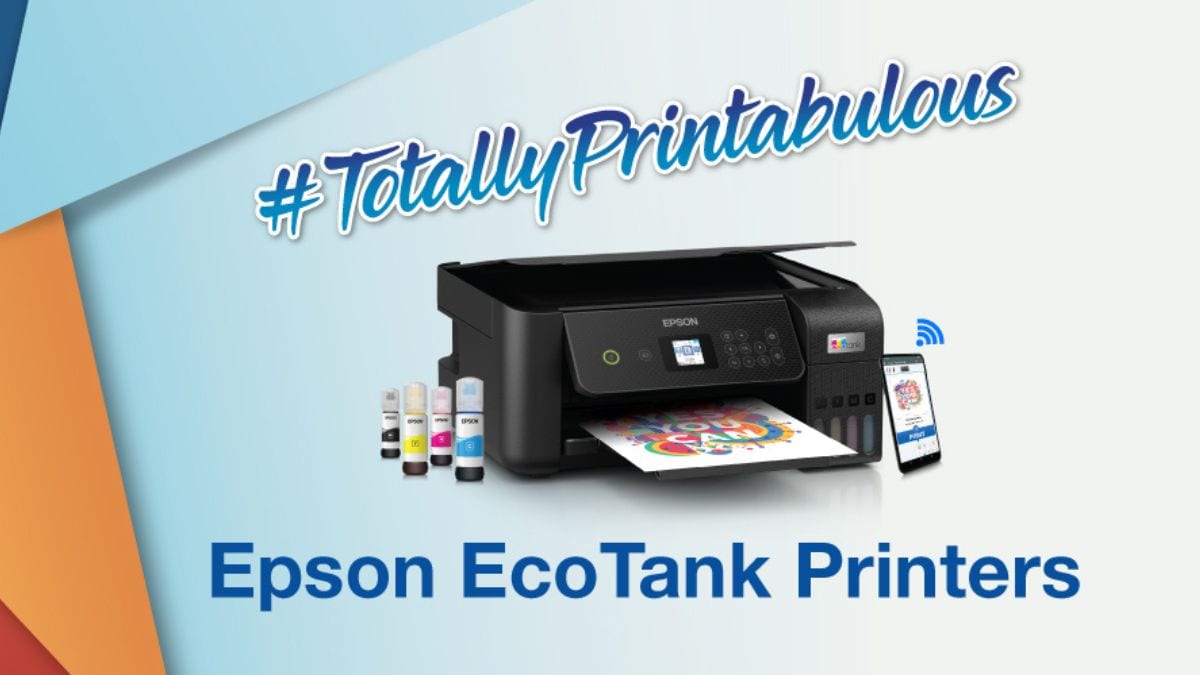
Photo Credit: Epson India
However, things shifted quickly once people started to realise that, in the long run, the ink tank printers made more sense. "Overall, the scenario is moving toward inkjet technology and high-yield ink tank printers, and the laser market will come down and get replaced by ink tanks," Krishnamoorthy told Gadgets360.
“We were able to address the customer pain point with a reliable technology, which has taken Epson much deeper into the market in the overall printing industry, for both home and office, with inkjet technology,” he explained.
However, he further explained that affordability alone wasn't enough to create a new segment in this market. This is where Epson printers came into the picture. “We use MicroPiezo printhead technology, which incorporates Heat-Free Technology, where no heat is required to eject a drop of ink," Krishnamoorthy said.
The company also believes that there is a transition going from laser to ink tank printers. The company says that office customers who previously preferred laser printers are now discovering modern ink tank printers that can deliver almost the same output at a lower operating cost. “If you look at ink tank versus ink cartridge, demand for ink cartridge models has dropped very drastically. All customers, whether at home or in the office, have realised that cost per print is very important and have moved from ink cartridge to ink tank,” he further added.
Sustainability Is Becoming the New Selling Point
While cost savings helped drive the first wave of adoption for printers, Epson believes sustainability will drive the next one. For years, people believed affordability was one of the major key selling points of laser printers. However, the situation has changed as “now customers look beyond just cost per print.”
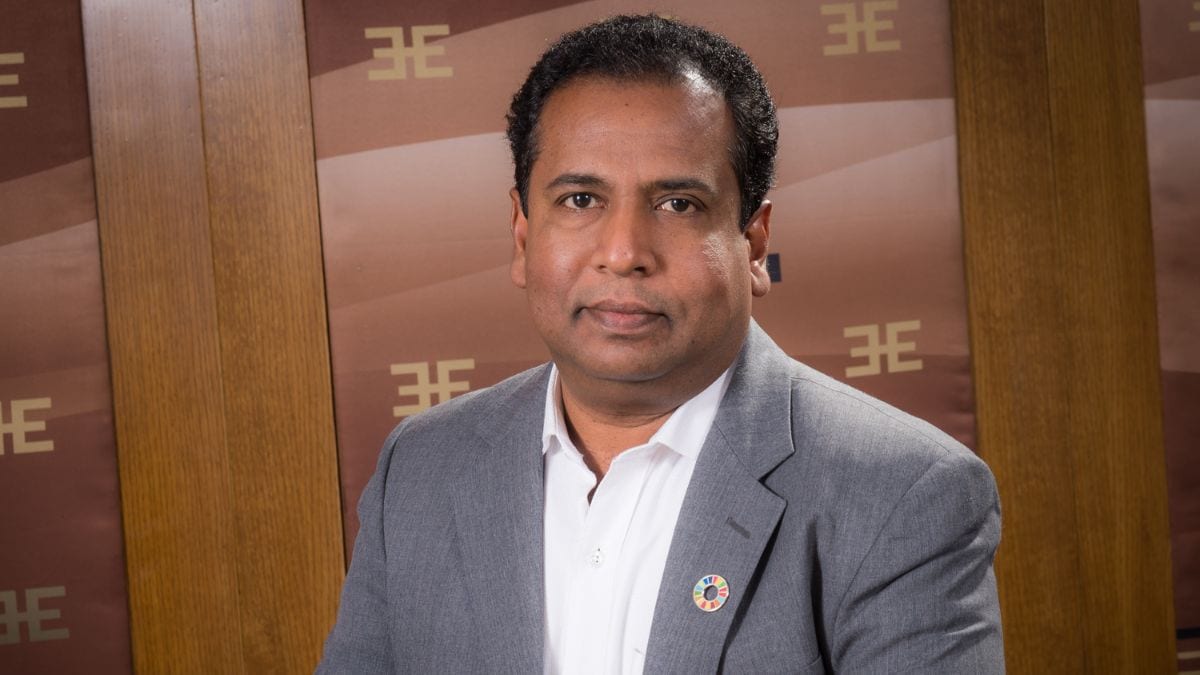
Sivakumar Krishnamoorthy, Senior General Manager at Epson India
He explains that the ink-tank printers from the brand are much more sustainable and energy-efficient than a typical laser printer. "Our ink tank printers consume less than 20 watts, while an equivalent laser printer of sub-20 ppm consumes over 300 watts,” Krishnamoorthy said. “Epson's ink tank printers are unique compared to the other major brands because we use MicroPiezo printhead technology, which is Heat-Free Technology. Customers are increasingly looking for more sustainable products, and that is catching up mainly from office customers. They have already achieved cost savings with ink tank printing, and now, by replacing a laser printer with an ink tank printer, they also save energy,” he further added.
How Epson is Building an Ink Tank Future
Epson announced in 2023 that it is exiting the laser printer business by 2026. However, the strategic move by the brand has helped it create a wide range of ink tanks and inkjet printers for customers and businesses. The range now extends from entry-level home printers to commercial-line inkjet systems capable of producing 100 pages per minute.
“The commercial segment requires high yield, high speed, and more reliable products, and we have a line of inkjet series for that. For small and medium business customers, we have the Replaceable Ink Pack System printers, the WorkForce series, in both A3 and A4. For light production, we have line inkjet printers. For small workgroup printing, we have ink tank printers with network connectivity, Wi-Fi, and duplex printing. For the home segment, we have everything from single-function printers to entry-level multifunction printers without Wi-Fi, then with Wi-Fi, and then with ADF and duplex,” he said.
Krishnamoorthy also reveals that a lot of MSMEs and entrepreneurs are now choosing colour ink tank printers over mono ink tank or laser printers. “They can print their letterheads and colour correspondence at a very affordable price. Overall, the scenario is moving towards inkjet technology and high-yield ink tank printers, and the laser market will come down and get replaced by ink tank,” he added.
The Home Printing Revival
Another area where the brand is witnessing a surge is home printing. The company says digital transformation has not reduced printing volumes. In many cases, it has increased them. “We can define home user patterns before COVID and after COVID. Before COVID, it was more about homework or tasks done manually. Question papers and homework were given out physically. Post-COVID, digital content increased dramatically. Homework is now given digitally, so each student or home user needs to take a printout, answer it, and submit it to school,” he said.
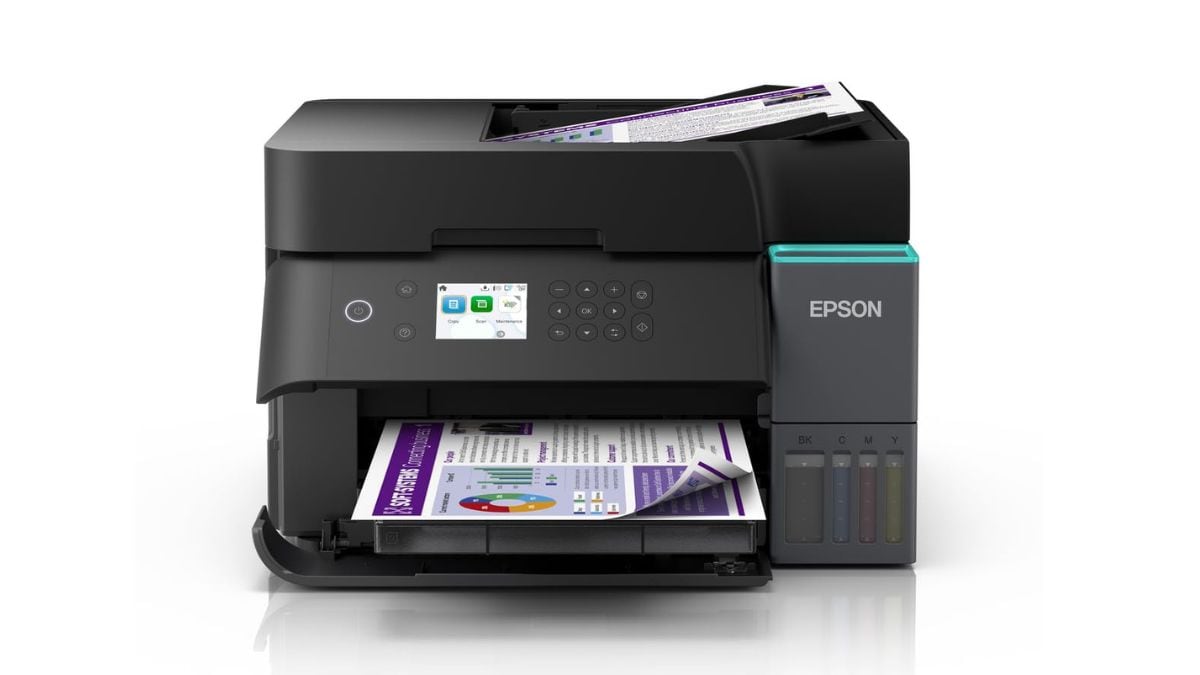
Photo Credit: Epson India
“Print volumes at home have increased post-COVID because of digital transformation. We also noticed that as digital content is increasing, not only on the education side but also in general reading habits, digital content is increasingly in colour. Home users who view any PDF or notes often prefer to take a printout for their comfort rather than reading off a screen every time. As digital content increases, we are also noticing a proportionate increase in print volume,” he added further.
Moreover, with quick commerce applications now delivering products to Indian homes in minutes, Epson is also looking to tap this avenue. The company says the trend is toward consumables in the printer segment rather than the main units. However, this situation will change over time. “There will be a lot of transactions happening on e-commerce for main unit sales as well. We are already engaged, but currently, what we are seeing is that the demand is higher for consumables than for main units. Even for main units, it is more skewed towards entry-level products,” he said.
Epson is Building its Product Lineup Based on Customer Feedback
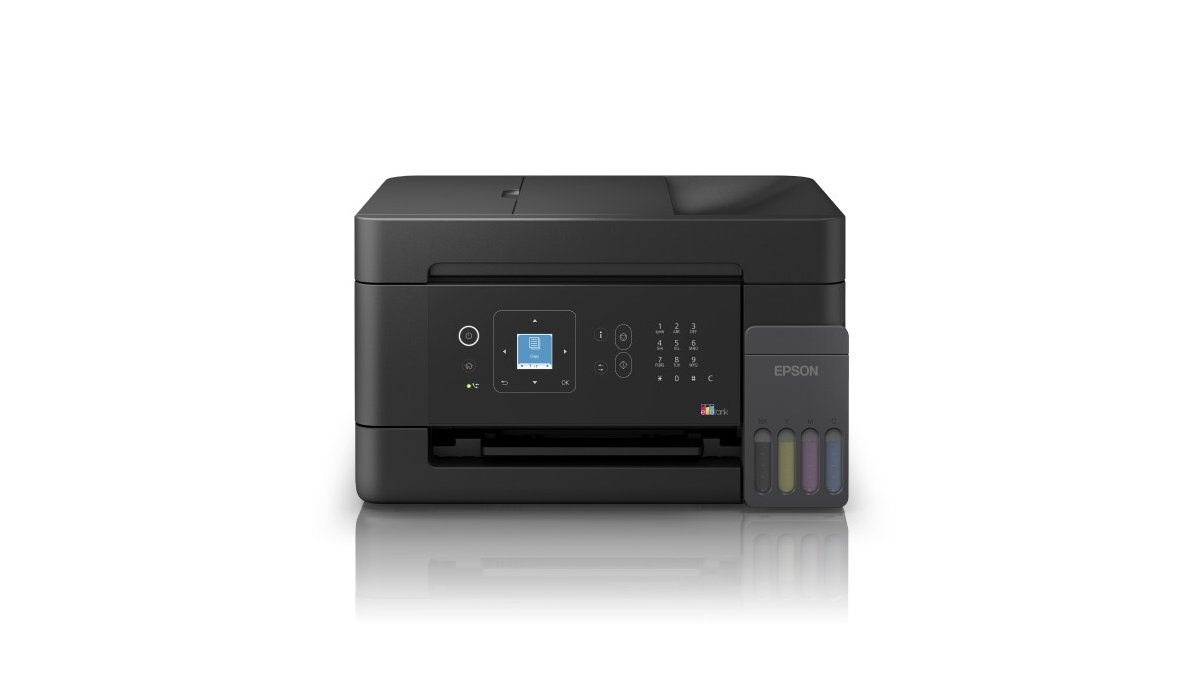
Epson says that it is in frequent touch with its customers and regularly takes feedback from them. The company says that based on this feedback, it modifies and adds more features, and then introduces them to the market. “If you look at the first generation of ink tank printers, the tanks were external. But our philosophy is to drive compact and stylish products, so in the second generation, we introduced integrated ink tank printers where the tank is inside the printer itself,” Krishnamoorthy explained.
The company recently introduced 15 new models for the EcoTank series, which are priced between Rs. 13,999 and Rs. 24,999, and are also developed based on consumer feedback. “When we talk about the recent 15 models, the feedback covers various areas like compactness, which we have maintained. We also improved speed — not a big difference, but a small improvement has been made. Yield has improved from 4,500 pages for black previously; the new model carries 4,700 pages. We are retaining the same ink bottle price, which means the cost per print has come down. The third area is warranty: the earlier model offered one year or 30,000 pages, but the new model offers one year or 50,000 pages, which directly reflects the reliability of the product,” he said.
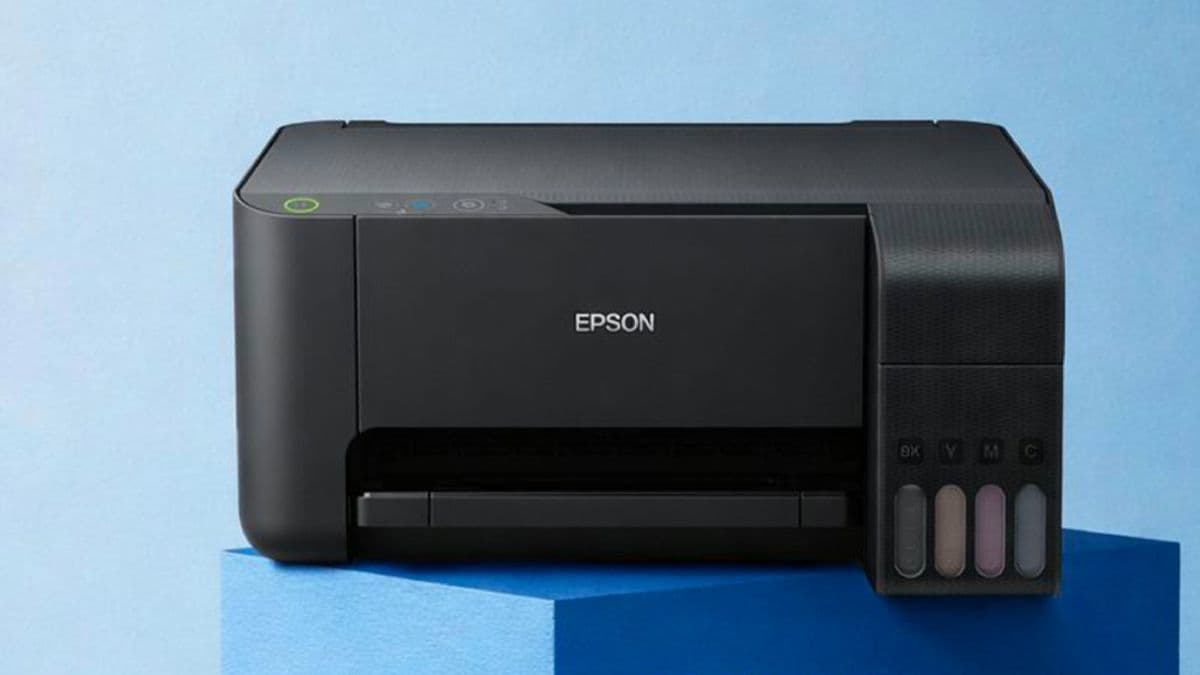
The company is also making it easier to replace the ink pad with the newer models, which makes it easier for customers to change at home. Earlier, customers had to take the printer to the nearest service centre to replace the ink pad or call a technician to come to their home. However, with the latest model, the company has introduced a new Maintenance Box. “In the new model, we have introduced a user-replaceable Maintenance Box. This is an advantage for high-volume print users, as they no longer need to visit a service centre. They can buy the Maintenance Box, just like an ink bottle, and replace it themselves, so productivity is maintained, and the customer can use the printer continuously,” he added.
This, coupled with other things like improving print speed, yield, warranty, ease of use, continuous usage, paper jam access, and improved plastic quality, has all been made possible with the continuous feedback from the customers.
Partners and Service Centres at Scale
Epson has been quietly building its infrastructure to expand into more cities across India and maintain its number one position. “We have 80-plus first-tier partners across India, and the average relationship with them spans more than 10 to 15 years. At the second-tier level, we have over 3,000 consistent retail outlets spread across India. Our distribution is wide, our reach is good, and our range covers the full spectrum from home to high-volume office printing. With this combination, we are able to maintain the number one position,” he added.
Coming to services, the company takes it quite seriously. "Our aim is to reach customers on the same day," says Krishnamoorthy. The brand currently has over 400 service centres across India, offering on-site support and free installation. The company is working on expanding its reach into smaller cities and towns where printer demand is growing fast. "We analyse service calls that come from more than 75 kilometres away. If the volume from a particular district or area is increasing, we ask our service partners to set up a satellite service centre or a small setup in that area," he concludes.
When Krishnamoorthy says, "The laser market will come down and get replaced by ink tank," he is not making a wish; he is describing a transition that is already happening.
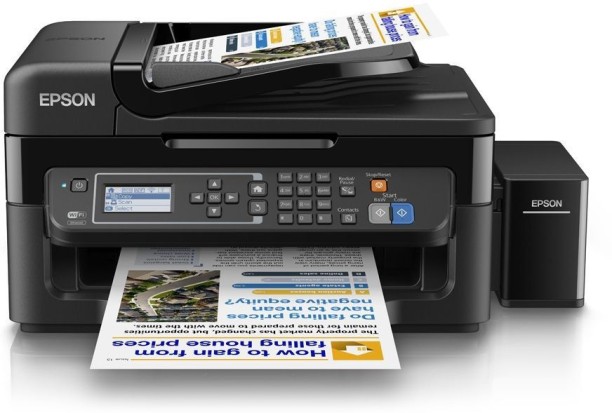
- KEY SPECS
Printing Method Inkjet
Printing Output Color
Connectivity Wireless, Ethernet, USB
Printer Type Multi Function
- KEY SPECS
Printing Method Inkjet
Functions Print, Copy, Scan
Print Speed 15 ppm
Printer Type Multi Function
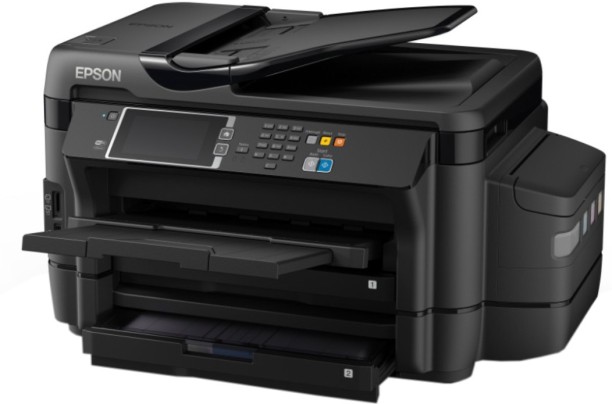
- KEY SPECS
Printing Method Ink Tank
Printing Output Color
Connectivity USB
Printer Type Multi Function
- KEY SPECS
Printing Method Ink Tank
Printing Output Color
Print Speed 23 ppm
Connectivity Wireless, USB
Printer Type Multi Function
Comments
Get your daily dose of tech news, reviews, and insights, in under 80 characters on Gadgets 360 Turbo. Connect with fellow tech lovers on our Forum. Follow us on X, Facebook, WhatsApp, Threads and Google News for instant updates. Catch all the action on our YouTube channel.
Further reading:
Epson, Epson color printer, Epson EcoTank, Epson EcoTank Series, Epson EcoTank Printers
Related Stories


Advertisement
Follow Us




-
![[Sponsored] Samsung Galaxy Z Fold8: How It Fits Into an Actor’s Busy Day | Camera, Multitasking & More](https://www.gadgets360.com/static/desktop/images/spacer.png)
03:41
[Sponsored] Samsung Galaxy Z Fold8: How It Fits Into an Actor’s Busy Day | Camera, Multitasking & More -
09:53
iPhone 18 Goes On Sale In India: Huge Crowds, Long Queues At Apple Stores -
06:32
Google Pixel 11 Pro XL Review: The Most Exciting Pixel Yet? | 120X Zoom + Tensor G6 -
05:20
Samsung Galaxy Watch Ultra 2 Review: Is This the Best Android Smartwatch? -
07:01
Samsung Galaxy Z Fold 8 Review: Is This the Best Foldable Phone?
Advertisement
Popular on Gadgets
- Samsung Galaxy S26 Ultra
- Motorola Razr Fold
- ChatGPT
- OPPO Find N6
- Mobiles Under Rs. 40,000
- Vivo X300 Ultra
- Asus Zenbook S14
- iQOO 15
- Vivo X300 Pro
- Lenovo Yoga Slim 7i Aura Edition
- iQOO 15R
- Vivo X Fold 5
- Sony PlayStation 5
- HP OmniPad 12
- OnePlus Nord CE 6 Lite
- OnePlus Pad 4
- OPPO F33 Pro 5G
- Cryptocurrency
- HP OmniBook Ultra 14 (2026)
- iPhone 17
- Eureka Forbes AP 355 Room Air Purifier
- Latest Mobile Phones
- Compare Phones
Latest Gadgets
- Ai+ Nova 2 Power 5G
- Lava Virat Curve 5G
- Lava Bold N4 Pro 5G
- Samsung Galaxy A08
- Itel Muzik 450L
- OPPO K14 Lite
- Samsung Galaxy A18 4G
- iPhone Duo
- Lenovo LOQ 15AHP11
- Lenovo Legion 5a (2026)
- Xiaomi Pad 9 Pro
- Xiaomi Pad 9
- Apple Watch Ultra 4
- Apple Watch Series 12
- Haier M70 Mini LED 65-inch
- Xiaomi TV FX Mini LED 65
- Acer Predator Atlas 8
- Asus ROG Ally
- Blue Star 1.5 Ton 5 Star Inverter Split AC (IE518ZNURS)
- Blue Star 2 Ton 3 Star Inverter Window AC (WIE324L)

- About Us
- Sitemaps
- Feedback
- Archives
- Contact Us
- RSS
- Advertise
- Career
- Privacy Policy
- Ethics
- Editorial Policy
- Terms & Conditions
- Complaint Redressal
Download Our Apps
Available in Hindi
© Copyright Red Pixels Ventures Limited 2026. All rights reserved.