
-
 Google Play Store Adds Vibe-Coded Apps, AI App Comparisons and Personalised Game Discovery14 October 2026
 -
Google Pay Flex Credit Card Gets New Rewards: More Stars on UPI Spending, Google One Benefits14 October 2026
-
Google Gemini 4 Argon Launched Globally for Developers and Enterprises13 October 2026
-
Google Launches Fitbit Edge With AMOLED Screen, Built-In GPS and Health Coach Features: Price, Specifications13 October 2026
-
Google Fitbit Edge Set to Launch Today: Expected Price, Specifications12 October 2026
- Home
- Mobiles
- Mobiles News
- Project Ara to Abandon Electropermanent Magnets After Drop Test Failure
Project Ara to Abandon Electropermanent Magnets After Drop Test Failure
By Ketan Pratap | Updated: 20 August 2015 12:02 IST
Click Here to Add Gadgets360 As A Trusted Source

Advertisement
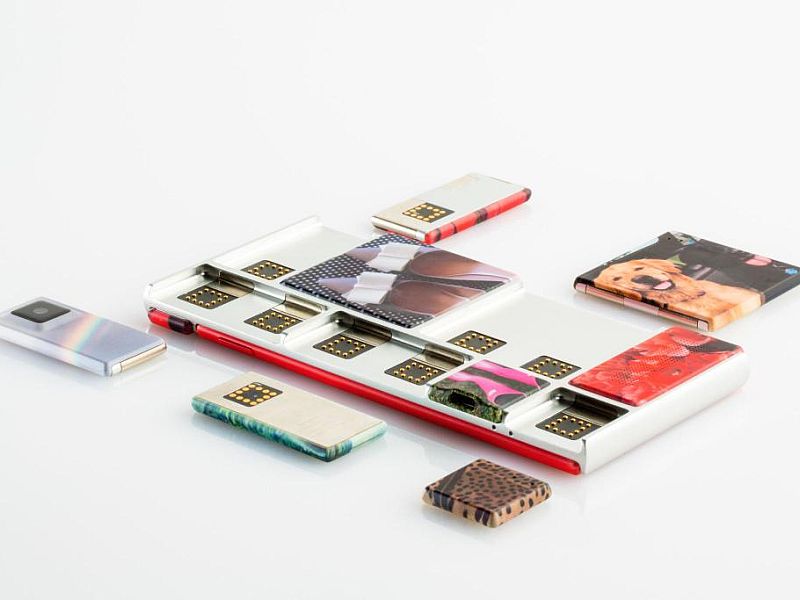
Google's anticipated Project Ara modular smartphone was recently delayed until 2016. The company however at the time hadn't revealed its reasons for delaying the project. Now, the Project Ara team in tweets has tried to explain the reason for the delay of the modular smartphone project. It said drop test failures caused it reconsider the use of the electropermanent magnets for holding the hardware modules together, as the smartphones broke apart into their component modules when dropped.
In the first tweet, Project Ara's Twitter handle said, "No more electropermanent magnets," accompanied by ProjectAra and FailedTheDropTest hashtags.
In another following tweet, it said, "We are testing a signature experience to attach/detach modules." The tweet confirms that the company is now testing an alternate option to attach and detach modules on the modular phone. While the company is yet to explain what does it mean by "signature experience."
The Project Ara team at the beginning of this year had announced it would launch the modular smartphones in Puerto Rico in 2015 as part of its pilot program. The team however recently confirmed that its phones would not launch until 2016, alongside announcing a "pilot market re-route" to a few locations in the US instead of Puerto Rico.
Announcing the news, the Project Ara team via its Twitter handle had in a series of tweets revealed that few locations in the US will see the Project Ara modular smartphone. The company had also cited "lots of iterations" in the works as a reason for delay.
To refresh, Google's concept for Project Ara is to enable consumers to design their own smartphones, and decide to add features as they need. The project hopes to kick-start an era of do-it-yourself smartphones and Google has been stressing that it's not targeting geeks. In January, Google had showcased its Spiral 2 modular smartphone prototype.
Comments
Get your daily dose of tech news, reviews, and insights, in under 80 characters on Gadgets 360 Turbo. Connect with fellow tech lovers on our Forum. Follow us on X, Facebook, WhatsApp, Threads and Google News for instant updates. Catch all the action on our YouTube channel.
Related Stories




Advertisement
Follow Us




-
![[Sponsored] LG NANO 4K UHD AI TV NU885: Gemini Search, Dolby Atmos & 5 Years of Updates](https://www.gadgets360.com/static/desktop/images/spacer.png)
04:17
[Sponsored] LG NANO 4K UHD AI TV NU885: Gemini Search, Dolby Atmos & 5 Years of Updates -
00:57
[Sponsored] Samsung Galaxy Z Fold8 My Fan Cam in Action: Find the Moment, Then Share It -
01:41
[Sponsored] What Do You Need To Know Before Your Next Run? | Samsung Galaxy Watch Ultra2 -
01:32
[Sponsored] Big Day Tomorrow? Prep Today | Samsung Galaxy Watch Ultra2 -
04:37
[Sponsored]: CP PLUS CarKam CP-F89B: 4K Dashcam With Rear Camera, GPS & Emergency Recording
-
Dell Pro Essential 14, Essential 15 लॉन्च, सिक्योरिटी के लिए गजब फीचर्स
-
Flipkart Big Billion Days Sale: ₹15 हजार में स्टूडेंट के लिए बेस्ट लैपटॉप
-
Amazon Great Indian Festival Sale: 10 हजार से सस्ते मिल रहे ये स्मार्टफोन
-
Redmi K100 में मिल सकता है Snapdragon 8 Elite चिपसेट, 10,000mAh बैटरी
-
Amazon Great Indian Festival Sale 2026: ₹35 हजार में OnePlus का 8000mAh बैटरी, Snapdragon चिप वाला फोन
Advertisement
Popular on Gadgets
- Samsung Galaxy S26 Ultra
- Motorola Razr Fold
- ChatGPT
- OPPO Find N6
- Mobiles Under Rs. 40,000
- Vivo X300 Ultra
- Asus Zenbook S14
- iQOO 15
- Vivo X300 Pro
- Lenovo Yoga Slim 7i Aura Edition
- iQOO 15R
- Vivo X Fold 5
- Sony PlayStation 5
- HP OmniPad 12
- OnePlus Nord CE 6 Lite
- OnePlus Pad 4
- OPPO F33 Pro 5G
- Cryptocurrency
- HP OmniBook Ultra 14 (2026)
- iPhone 17
- Eureka Forbes AP 355 Room Air Purifier
- Latest Mobile Phones
- Compare Phones
Latest Gadgets
- Vivo Y600s Pro
- Vivo Y32 (2026)
- Infinix Smart 20 HD
- Vivo V80
- Vivo S2 FE
- Vivo Y600K Turbo
- Realme P4s Lite
- Vivo S60t
- HP ZBook Ultra G3a
- Dell Pro Rugged 14
- Amazon Alexa Tablet 8
- Amazon Alexa Tablet 11
- Amazfit T-Rex Dual Solar
- OPPO Watch S2
- Toshiba 65-Inch 4K Ultra HD Smart Mini LED QLED TV (65Z670SP)
- Haier M70 Mini LED 65-inch
- Acer Predator Atlas 8
- Asus ROG Ally
- Blue Star 1.5 Ton 5 Star Inverter Split AC (IE518ZNURS)
- Blue Star 2 Ton 3 Star Inverter Window AC (WIE324L)

- About Us
- Sitemaps
- Feedback
- Archives
- Contact Us
- RSS
- Advertise
- Career
- Privacy Policy
- Ethics
- Editorial Policy
- Terms & Conditions
- Complaint Redressal
Download Our Apps
Available in Hindi
© Copyright Red Pixels Ventures Limited 2026. All rights reserved.