

-
 Samsung Galaxy Z Fold 9 to Mark the Return of Under-Display Camera, Tipster Claims2 November 2026
-
Samsung Galaxy Z Fold 8, Fold 8 Ultra Sales Grow in Europe as New Wide Models Are Considered29 October 2026
-
Samsung W27 Leaked Renders Show Foldable Phone From Multiple Angles Ahead of Launch28 October 2026
-
Best Smartphones with 1TB Storage in India (2026): iPhone Duo, Samsung Galaxy S26 Ultra and More25 October 2026
-
Samsung W27 Design Leaked With Royal Blue Finish, Gold Camera Module Ahead of China Launch23 October 2026
- Home
- Mobiles
- Mobiles News
- Samsung Shares Behind the Scenes Look at Galaxy Z Fold 8 Manufacturing and Testing
Samsung Shares Behind-the-Scenes Look at Galaxy Z Fold 8 Manufacturing and Testing
Samsung says eight generations of foldable development have helped it refine the balance on the Galaxy Z Fold 8.
Written by Shaurya Tomer, Edited by Ketan Pratap | Updated: 4 November 2026 09:53 IST
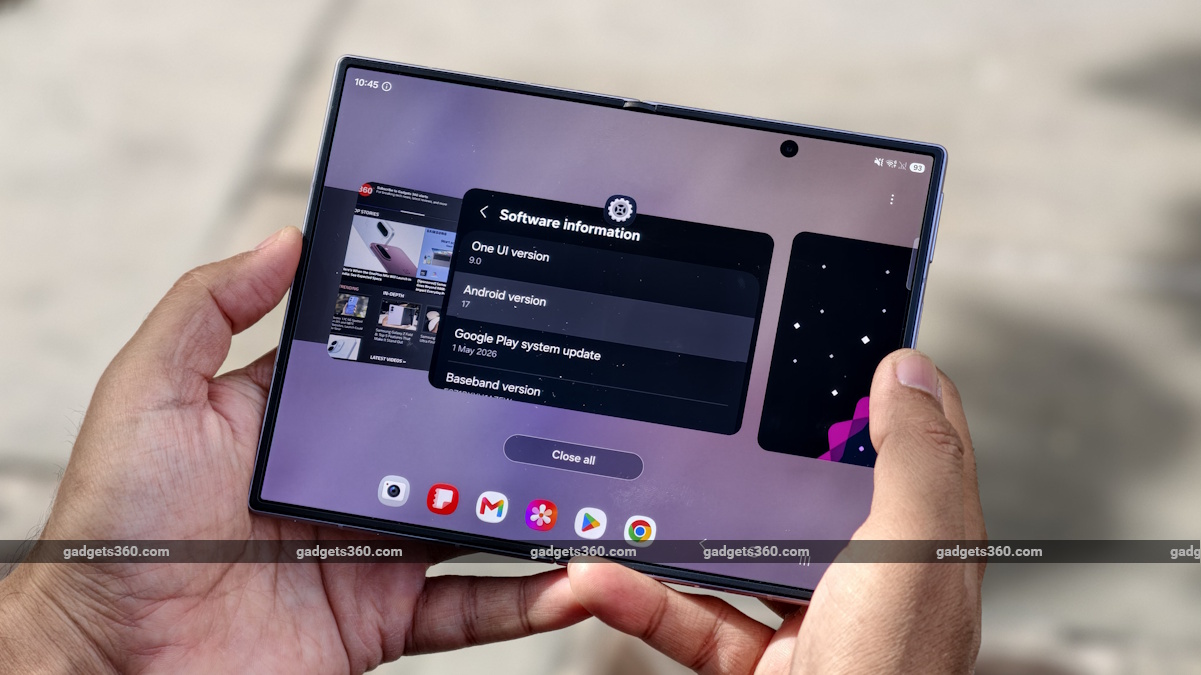
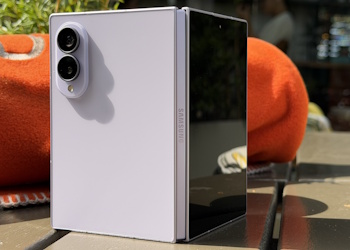
The Galaxy Z Fold 8 is the company's first wide-folding smartphone
Click Here to Add Gadgets360 As A Trusted Source

Advertisement
The Samsung Galaxy Z Fold 8 was launched earlier this year as the company's first wide-folding model. Following its debut, several handsets with similar form factors have made it to the market, including the Xiaomi 18 Fold and the iPhone Duo. The South Korean tech conglomerate has now offered a behind-the-scenes look at how it manufactures the Galaxy Z Fold 8. Samsung also revealed details of the quality checks carried out before the foldable reaches consumers.
Samsung Galaxy Z Fold 8 Manufacturing, Quality Assurance Process
According to Samsung, eight generations of foldable development have helped it refine the balance between portability, durability, display quality, battery performance, and long-term reliability. The company said that this experience also led it to revisit the handset's internal design, with approximately 270 components and more than 180 types of auxiliary parts optimised across the display, hinge, materials, and component layout.
- Samsung Galaxy Z Fold 8 leaked online
- Does Galaxy AI feel more useful when you use it on the Samsung Galaxy Z Fold 8’s bigger display?
- Does the Samsung Galaxy Z Fold 8’s low-reflection display help much under office lights?
- Does the Samsung Galaxy Z Fold 8 taskbar really make multitasking quicker?
- Has anyone started using drag and drop between apps on the Samsung Galaxy Z Fold 8 regularly?
The Galaxy Z Fold 8 tips the scales at 201g and measures 4.5mm when unfolded and 9.7mm when folded. As per the tech giant, achieving this thinner and lighter design required making changes across the device, instead of simply scaling down the size of individual components. Rather than using the strongest or most premium material throughout the handset, Samsung's approach involves selecting materials according to the mechanical role each part needs to perform.
One such example is Flex Titanium. According to Samsung, the material combines an ultra-thin titanium-alloy film with an enhanced titanium support plate around the folding display. The company claims this material combination provides the required strength, flexibility, and structural support, while also enabling a 10 percent thinner display module.
Similarly, Samsung has used Advanced Armor Aluminum for the frame, which is designed to provide rigidity and resistance to permanent deformation without adding unnecessary weight.
The reduced weight and saved space also make more room for the battery and thermal management system. According to Samsung, the Galaxy Z Fold 8 packs its first silicon-carbon anode, higher-performance graphite, and Independent Charging Architecture. The foldable's revised internal structure is said to support a larger battery and better thermal response, while maintaining sustained performance and thermal stability, despite its slim footprint.
In the second video, Samsung showcased its automated quality assurance process for foldable phones. According to the company, the Galaxy Z units undergo more than 100 reliability validation tests to assess their durability, display quality, and long-term operation. Samsung says that it enforces these checks to account for the different stresses a foldable experiences during everyday use. This includes repeated folding and unfolding, impact, pressure, and exposure to particles.
Samsung said that instead of assessing each component independently, it tests the device as a complete system. The company claims that its experience across eight generations has helped it identify these stress points and address them through coordinated design and testing. Its overall approach is aimed at making the Galaxy Z Fold 8 easier to carry and use without compromising the structural strength needed for repeated folding and long-term reliability.
- REVIEW
- KEY SPECS
- NEWS
- Good
- New passport-style form factor is very likeable
- Useful cover screen which is bright enough and the aspect ratio is great for social media
- 4:3 main display is excellent
- Lightweight and solid design
- IP48 rating
- Decent cameras
- Battery life is good enough
- Bad
- Expensive
- No telephoto sensor at this price
- Loudspeakers could have been better
- Still needs better app optimisation
Read detailed Samsung Galaxy Z Fold 8 review
Display (Primary) 7.60-inch
Cover Display 5.50-inch
Cover Resolution 1248x1972 pixels
Processor Snapdragon 8 Elite Gen 5
Front Camera 10-megapixel + 10-megapixel
Rear Camera 50-megapixel + 50-megapixel
RAM 12GB, 16GB
Storage 256GB, 512GB, 1TB
Battery Capacity 4800mAh
OS Android 17
Resolution 2448x1848 pixels
Comments
Get your daily dose of tech news, reviews, and insights, in under 80 characters on Gadgets 360 Turbo. Connect with fellow tech lovers on our Forum. Follow us on X, Facebook, WhatsApp, Threads and Google News for instant updates. Catch all the action on our YouTube channel.
Further reading:
Samsung Galaxy Z Fold 8, Samsung Galaxy Z Fold 8 Features, Samsung Galaxy Z Fold 8 Specifications, Samsung
Related Stories




Advertisement
Follow Us


-

00:54
Expectation vs Reality: Parents Said Notice Every Detail. She Added One | Galaxy S26 FE -
01:55
From Group Photos to Festive Nights | Samsung Galaxy A57 5G -
01:33
Galaxy Watch Ultra2 on the Trail: Tracking, Hydration & Elevation -
01:38
Galaxy Z Fold8 Captures the Funniest Diwali Moments | My Fan Cam -
01:37
Samsung Galaxy S26 Ultra Diwali Offer in India: ₹79,999 + World's First Privacy Display on Mobile
-
10000mAh बैटरी वाला Poco X8 Power 5G Flipkart सेल में मिल रहा ₹8500 सस्ता
-
OnePlus Nord CE6 Lite मिल रहा Amazon दिवाली सेल में सस्ता, जल्द खरीदें
-
HP ने लॉन्च किए OmniBook 5 14, ProBook 4 G2iS 14 लैपटॉप, जानें कीमत
-
Vivo V80 FE आ रहा 50MP के तीन कैमरा, 7000mAh बैटरी के साथ!
-
Karbonn Rebel Pro vs MIVI One 5G vs Vivo T5e: जानें कौन सा रहेगा बेस्ट
Advertisement
Popular on Gadgets
- Samsung Galaxy S26 Ultra
- Motorola Razr Fold
- ChatGPT
- OPPO Find N6
- Mobiles Under Rs. 40,000
- Vivo X300 Ultra
- Asus Zenbook S14
- iQOO 15
- Vivo X300 Pro
- Lenovo Yoga Slim 7i Aura Edition
- iQOO 15R
- Vivo X Fold 5
- Sony PlayStation 5
- HP OmniPad 12
- OnePlus Nord CE 6 Lite
- OnePlus Pad 4
- OPPO F33 Pro 5G
- Cryptocurrency
- HP OmniBook Ultra 14 (2026)
- iPhone 17
- Eureka Forbes AP 355 Room Air Purifier
- Latest Mobile Phones
- Compare Phones
Latest Gadgets
- Karbonn Rebel
- Karbonn Rebel Pro
- OnePlus Turbo 6Vs
- Redmi M100 Pro
- OnePlus Ace 7 Pro
- OnePlus Ace 7
- Samsung W27
- Huawei Pura 90 Plus
- Dell 14S (2026)
- HP ProBook 4 G2iS 14
- iPad mini (2026)
- Amazon Alexa Tablet 8
- Pebble Qore 2
- Amazfit T-Rex Dual Solar
- Toshiba 65-Inch 4K Ultra HD Smart Mini LED QLED TV (65Z670SP)
- Haier M70 Mini LED 65-inch
- Acer Predator Atlas 8
- Asus ROG Ally
- Blue Star 1.5 Ton 5 Star Inverter Split AC (IE518ZNURS)
- Blue Star 2 Ton 3 Star Inverter Window AC (WIE324L)

- About Us
- Sitemaps
- Feedback
- Archives
- Contact Us
- RSS
- Advertise
- Career
- Privacy Policy
- Ethics
- Editorial Policy
- Terms & Conditions
- Complaint Redressal
Download Our Apps
Available in Hindi
© Copyright Red Pixels Ventures Limited 2026. All rights reserved.