
-
 Lava Virat Curve vs Poco M8 Power vs Vivo T5 Lite: Price in India, Specifications and Features Compared26 September 2026
 -
Best Smartphones with AI Features Under Rs. 30,000 in India: OnePlus Nord CE 6, Motorola Edge 70 and More15 August 2026
-
Poco M8 Power vs OnePlus Nord CE 6 Lite vs Moto G77 Power: Price in India, Specifications and Features Compared6 August 2026
-
Poco M8 Power Launched in India With Snapdragon 4 Gen 4 Chip, 8,000mAh Battery: Price, Specifications4 August 2026
-
Poco M8 Power Camera Configuration, Colour Options, and More Details Confirmed Ahead of Launch3 August 2026
- Home
- Mobiles
- Mobiles Reviews
- Poco M8 Power Review: When 8,000mAh Battery Becomes the Whole Pitch
Poco M8 Power Review: When 8,000mAh Battery Becomes the Whole Pitch
The Poco M8 Power goes all-in on battery life with an enormous 8,000mAh cell, but it comes with a few catches. Here's our review.
Written by Shaurya Tomer, Edited by Ketan Pratap | Updated: 15 September 2026 14:04 IST
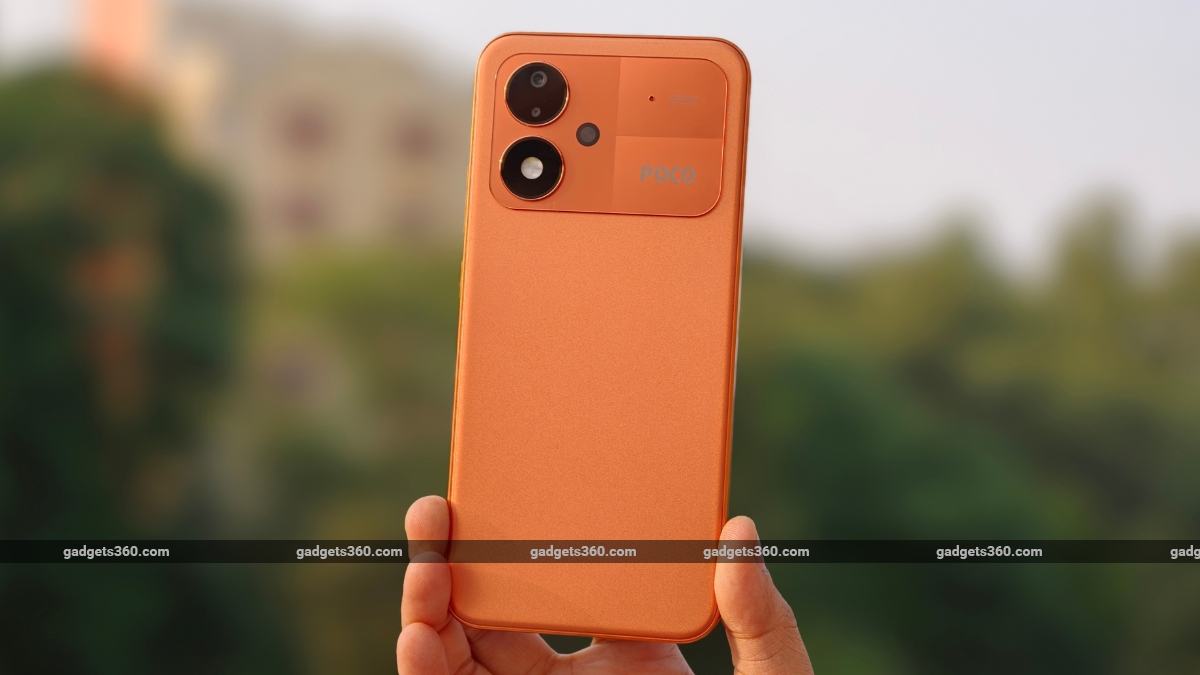
The price of the Poco M8 Power in India starts at Rs. 24,999
Click Here to Add Gadgets360 As A Trusted Source

Advertisement
Phone brands have adopted different trends at different times. There was a phase when curved displays were the rage, followed by a brief obsession with phones that made their design the talking point (transparent backs included). Pop-up cameras had their moment too. Lately, though, battery life has become the battleground, with brands cramming bigger and bigger cells into phones that were already perfectly capable of lasting a day. The Poco M8 Power is Xiaomi's sub-brand joining that particular race.
With the Poco M8 Power, priced at Rs. 24,999, the idea is fairly simple: give you a phone that can keep going for much longer, even if that means making a few compromises elsewhere. But does the trade-off actually make sense? Here's our review.
Poco M8 Power Design: Big and Heavy
- Dimensions - 169.7 x 79.1 x 8.4mm
- Weight - 225g
- Colours - Black, Green, and Blaze Orange
- Protection - IP65
The size is the first thing that stands out with the M8 Power. It packs a massive battery, and it has to go somewhere! The phone doesn't try to hide the fact that it is big, tipping the scales at 225g and coming in at 8.4mm. The rounded edges help, though. You will find the weight easier to manage once you get used to its phablet-sized form factor.
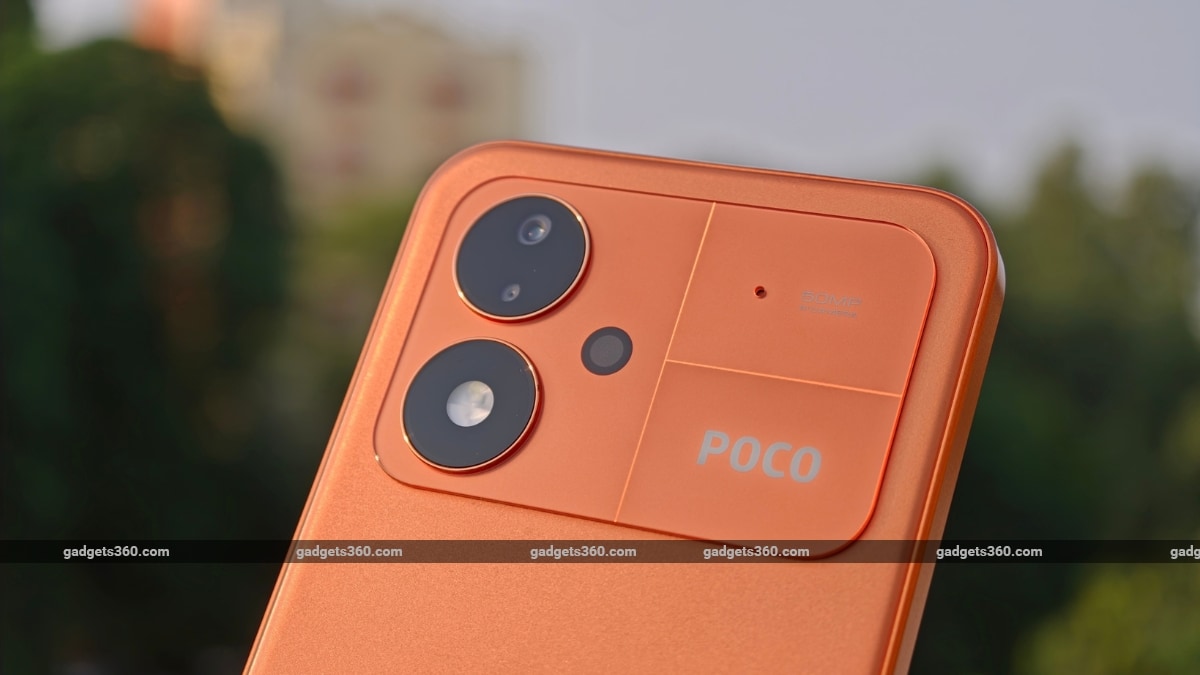
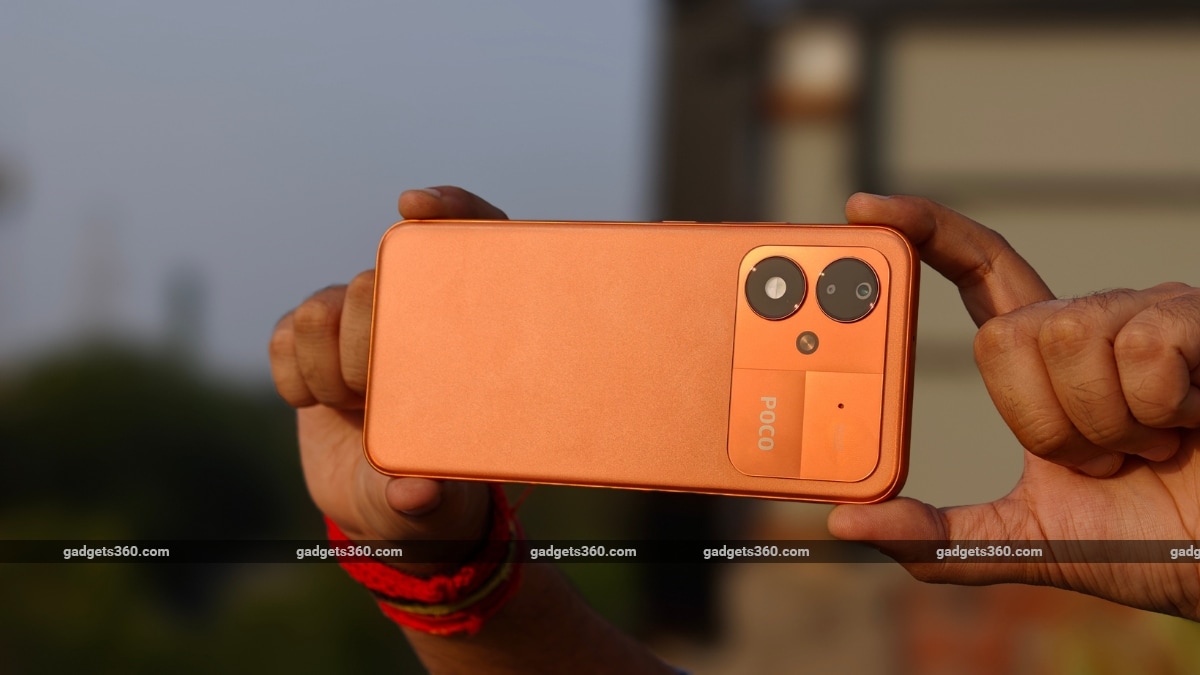
The flat frame and display give the M8 Power a pretty familiar look. Poco has used plastic for the rear, but it doesn't feel cheap or flimsy in the hand. I also like the matte finish here. It keeps the back looking relatively clean, and, more importantly, I didn't have to keep wiping away fingerprints after picking the phone up.
Perhaps the most interesting element on the rear panel is the camera module, which differs from other handsets under the Xiaomi sub-brand's umbrella. Meanwhile, the Blaze Orange colour stands out. A lot. I think it is easily the most attention-grabbing of the three. But if that is too loud for your taste, the Black and Green variants are much more understated.
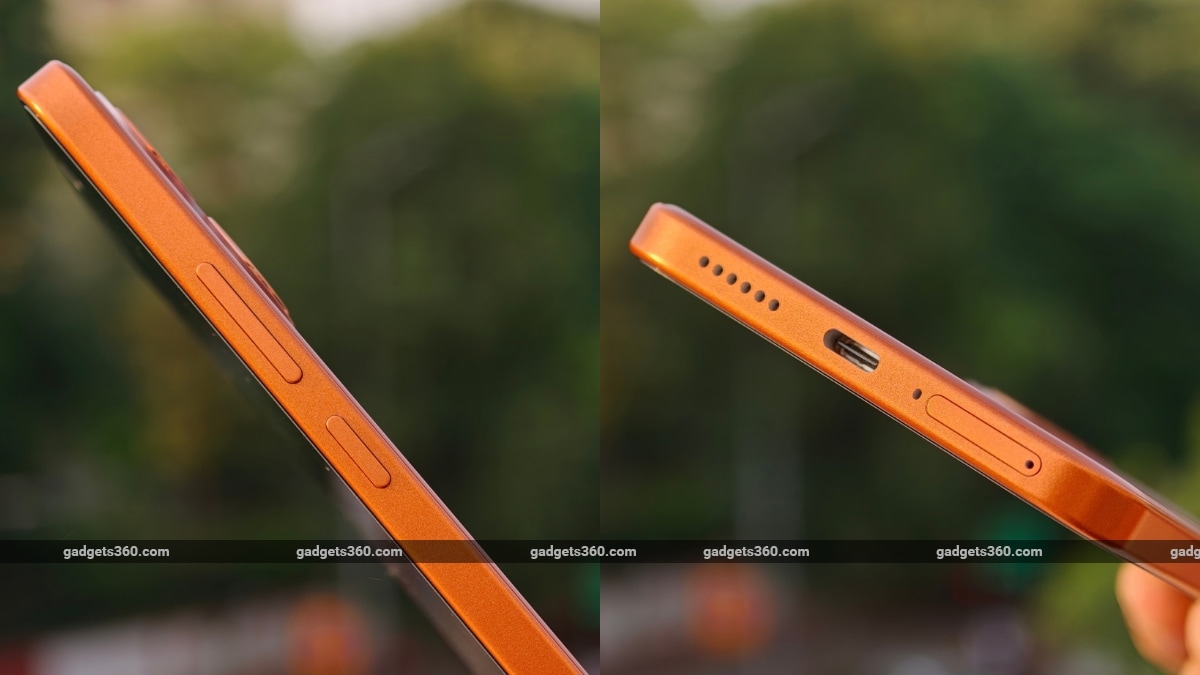
A super useful addition I'd like to highlight is the IR blaster at the top, which lets you control household appliances, such as a TV, when you cannot find your remote in the crevices of your sofa. Xiaomi has consistently stuck with it over the years, whereas competitors have hopped onto the trend and then dropped it for pastures new.
The Poco M8 Power gets an IP65 rating for dust and water resistance. While I certainly would have liked to see a higher rating at this price point, IP65 is still better than having no protection at all.
Poco M8 Power Display: Big Upgrades
- Size and resolution - 6.9-inch AMOLED, 1,080 x 2,396 pixels
- Refresh rate - 120Hz
- Protection - Gorilla Glass 7i
Even though the ‘Power' moniker suggests the battery is the biggest selling point of the M8 Power (and rightly so), the display gets the second-biggest upgrade. Poco has not taken the easy route of pairing a huge battery with a cheap LCD panel. Instead, it gets a 6.9-inch Full-HD+ AMOLED panel with a 120Hz refresh rate.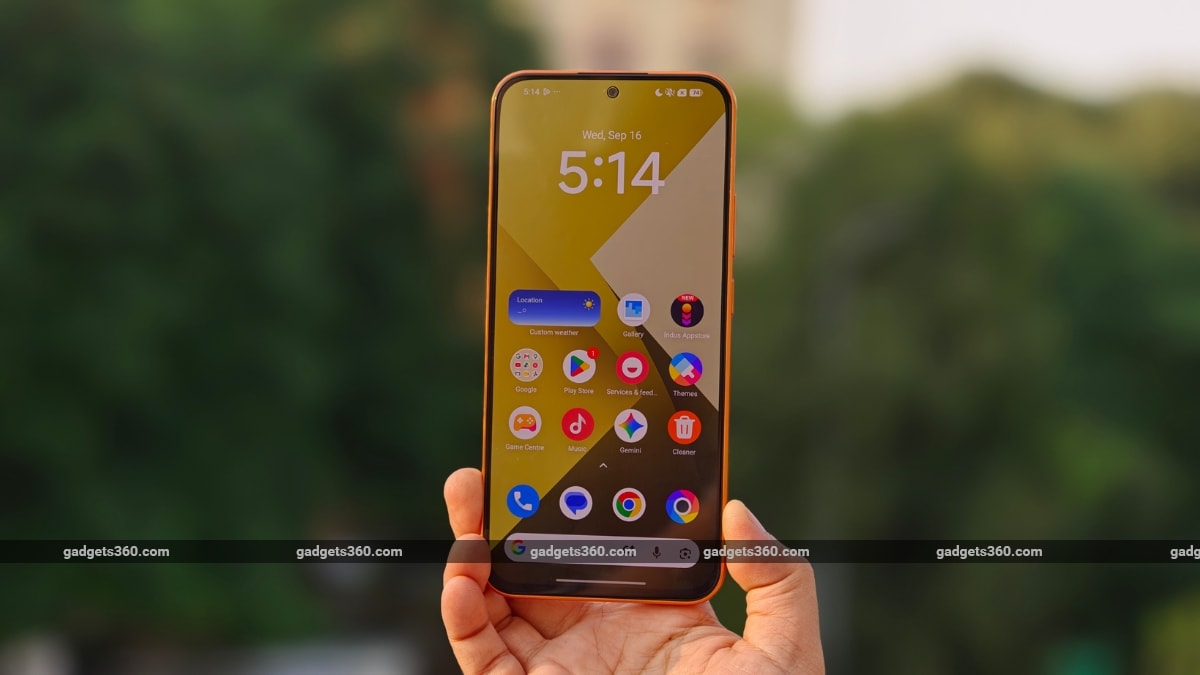
Coming from my relatively compact 6.3-inch daily driver, I enjoyed having all that space when watching films and shows. The phone itself is quite large, so you do pay for that extra screen real estate. The AMOLED panel is good, though. Blacks look deep, viewing angles are decent, and colours have enough punch without looking too exaggerated.
Poco claims up to 1,800 nits of peak brightness. In real-life usage, I think it is bright enough and remains usable outdoors. However, one gripe I have is the lack of HDR support. The display is good enough, but you cannot take advantage of it on any streaming platform.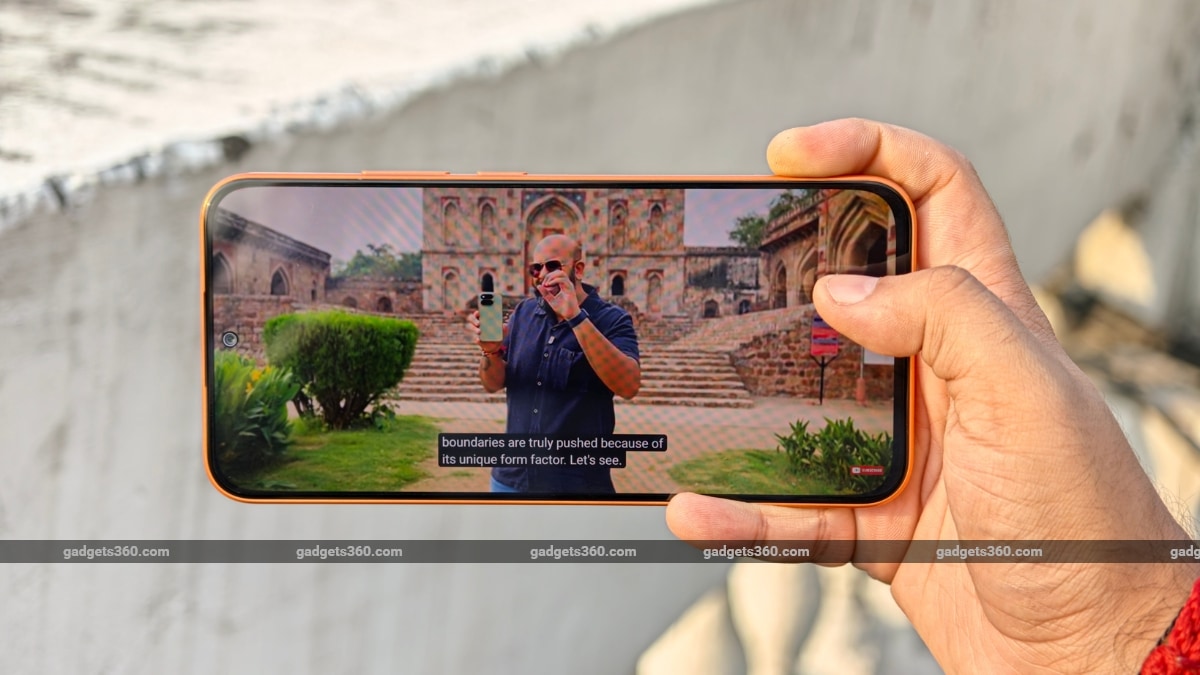
The in-display fingerprint sensor is usable and on par with other phones in its segment in terms of speed. The Poco M8 Power has a mono speaker, and while it does get loud, I don't think it is particularly impressive, especially when you're streaming content.
Poco M8 Power Performance and Software: Enough for Everyday Use
- Processor - Qualcomm Snapdragon 4 Gen 4
- RAM and Storage - Up to 8GB LPDDR4X (RAM), 128GB UFS 2.2 (Storage)
- OS - Android 16-based HyperOS 3
- Updates promised - 4 Years OS + 6 Years Security Patches
The processor choice on the Poco M8 Power is interesting, to say the least. It is among the first phones in India to use Qualcomm's new 4nm Snapdragon 4 Gen 4 SoC.
I didn't have much to complain about with the usual stuff. I ran all the same apps that I use every day: WhatsApp, YouTube, Maps, Chrome, Instagram, and X. In most cases, they ran fine without any issues. One thing I did notice was that once you quickly jump between a bunch of apps, the phone tends to slow down a bit. Apps take a bit longer to open, and fewer stay in memory.
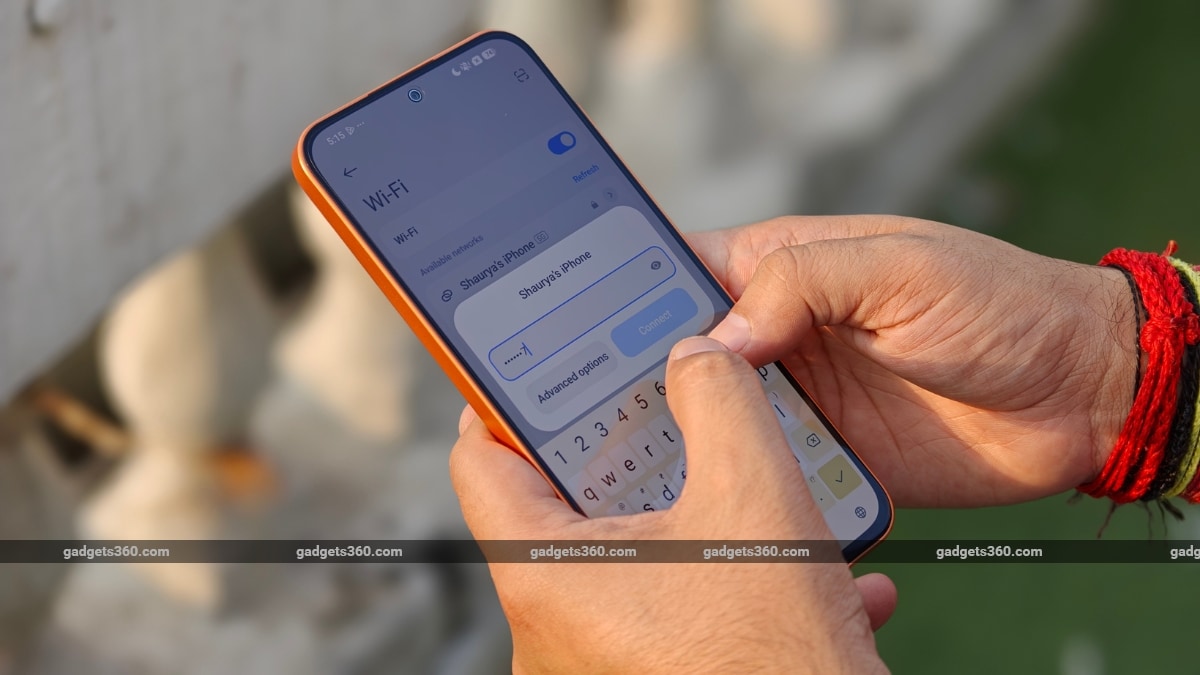
The gaming experience is similar, too. You can run lighter games like Subway Surfers 2 with no problem. However, I noticed frame skipping in BGMI when pushed to the maximum available settings, and a similar issue in Asphalt 9 Legends and Shadow Fight 4. The Snapdragon 4 Gen 4 seems geared toward efficiency and simply isn't built for this kind of workload.
On the software front, HyperOS 3 is familiar territory if you've used a recent Xiaomi or Poco phone. You get plenty of customisation options, themes, and the usual set of Xiaomi features. There is some pre-installed bloatware, like other Poco handsets, but much of it can be removed.
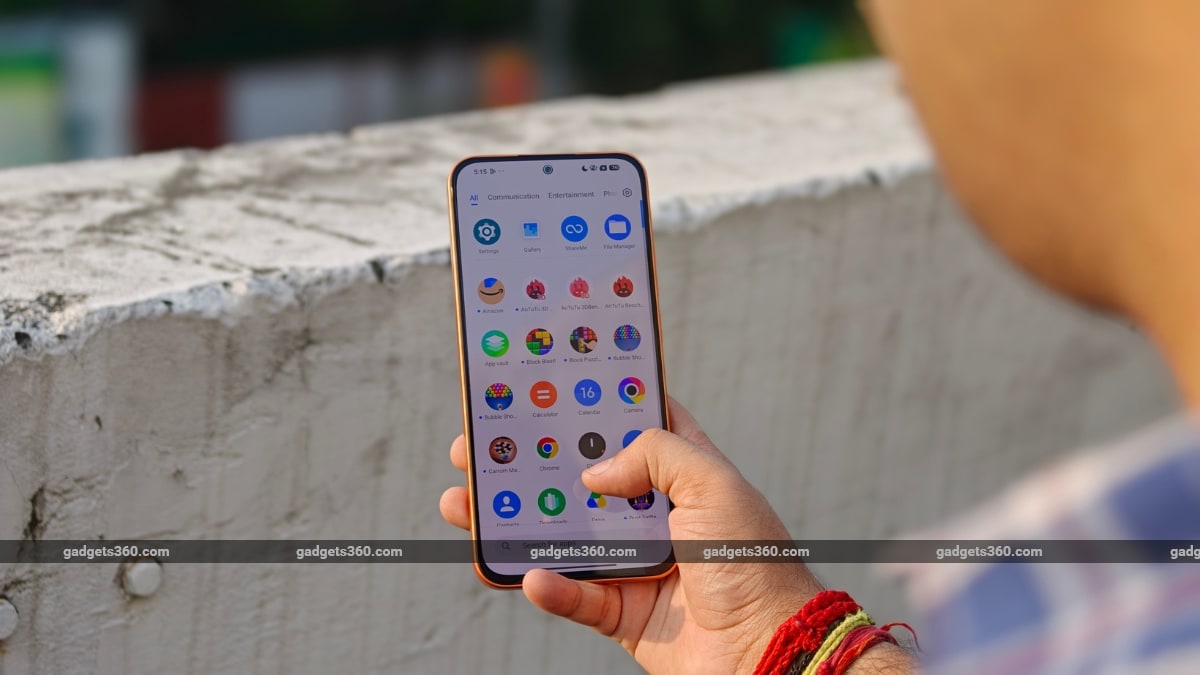
You also get Google's staple AI additions, including Circle to Search and Gemini. Being an iPhone user, I liked Xiaomi's implementation of the HyperIsland. Much like Apple's Dynamic Island, it surfaces live information. You can control music, check charging status, and more.
The update promise on the Poco M8 Power, meanwhile, is great. The company promises four Android upgrades and six years of security patches. But since the Snapdragon 4 Gen 4 is a new processor, the M8 Power will be one of the first handsets to reveal if it can stand the test of time.
Poco M8 Power Camera: Decent, But Nothing Special
- Rear - 50-megapixel
- Front - 8-megapixel
The camera is one area where Poco doesn't seem to have spent too much time creating a special experience. You get a fairly straightforward 50-megapixel primary camera on the rear, while an 8-megapixel selfie shooter occupies the front. For casual photos, the cameras are fine.
The primary shooter produces decent and usable photos in good lighting. While the processing was a bit much for me, you will have no trouble using the shots as-is for social media posts. One thing I noticed was that faces appeared a little too smooth when portrait mode was enabled.
Low-light photography isn't as pleasing as daylight shooting, though. Details tend to become softer, and noise starts to creep in. But again, since the Snapdragon 4 Gen 4 is a new SoC, it's unclear whether that is down to the ISP (Image Signal Processor) or the sensor used here.
Moving on to the selfie shooter, which I'll simply call functional. It outputs reasonably accurate skin tones in good light. Portrait shots also handle separation fairly well. However, you can only expect so much from an 8-megapixel sensor. The use of this 8-megapixel sensor is slightly disappointing, too, especially since the Poco M8 5G (review) uses a 20-megapixel shooter.
Poco M8 Power Battery Life: Lasts and Lasts
- Battery capacity - 8,000mAh
- Wired charging - 45W
- Charger in the box - Yes
And now we get to the whole reason this phone exists. The 8,000mAh cell on the Poco M8 Power is noticeable if you use your phone heavily every day. With regular use involving social media, streaming, calls, and browsing, the M8 Power will comfortably last most users two days. You can even stretch it further with lighter usage.
Even though you are not getting flagship-level performance, you also won't watch the battery percentage disappear every few hours.
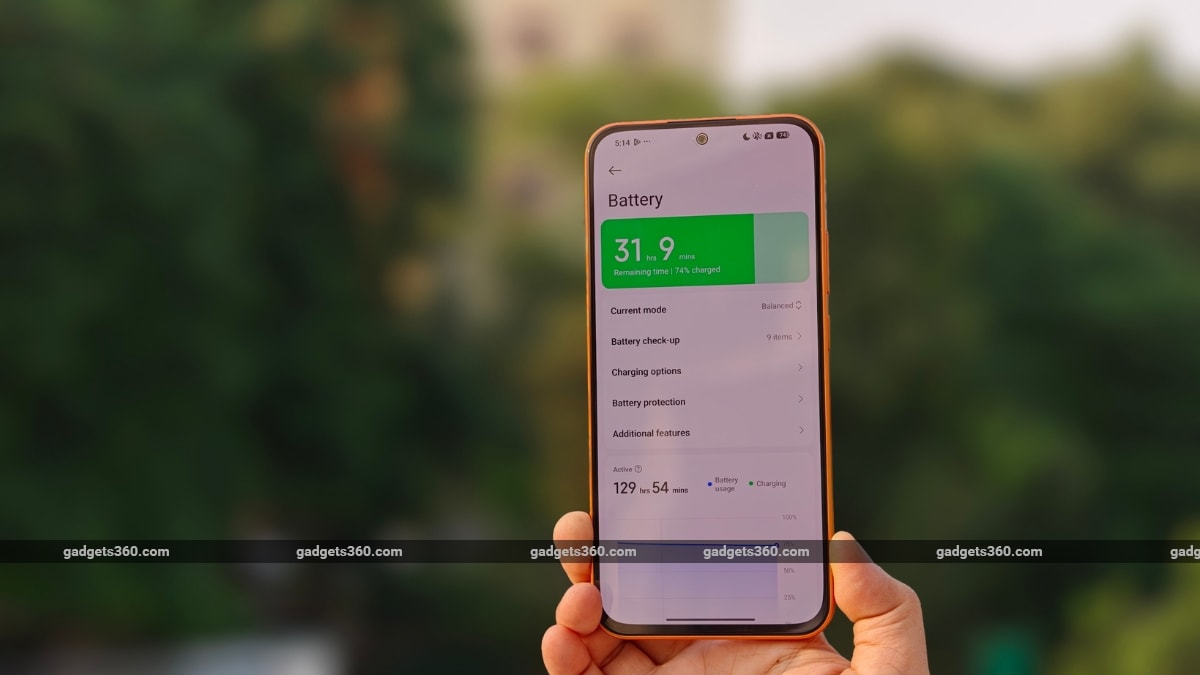
The catch here is the charging speed. The Poco M8 Power supports 45W fast charging. Now I know that it isn't particularly slow for most phones, with even Samsung's flagship Galaxy S26 supporting 25W charging. However, you have to take the large battery capacity into account. On multiple occasions, it took an hour and 50 minutes to charge the phone from 0% until the “fully charged” notification appeared.
This means you will need to be more patient than you would with some competing phones.
Poco M8 Power Verdict
The M8 Power makes a lot more sense once you look at what Poco is trying to do with it. The battery is obviously the big selling point, but I think the display deserves just as much attention. It is a good combination for anyone who spends a lot of time watching content or just wants a phone they can use without reaching for a charger. The trade-offs are pretty clear, though. Performance is only adequate, the cameras aren't anything special, and that huge battery takes its time to charge.
At Rs. 24,999, I think Poco M8 Power is not trying to be the best phone at everything. Instead, it focuses on a specific pitch: a big screen, a mammoth battery, and enough performance for everyday tasks.
As alternatives, the Motorola Edge 70 Fusion (review) stands out for its camera capabilities, while the Vivo T5x 5G offers considerably stronger performance.
- REVIEW
- KEY SPECS
- NEWS
- Good
- Great AMOLED display
- Long software support
- Excellent battery life
- Reverse-wired charging is useful
- Bad
- Heavy and bulky
- Cameras are average
- Limited performance
- Charging takes a while
Read detailed Poco M8 Power review
Display 6.90-inch
Processor Snapdragon 4 Gen 4
RAM 6GB, 8GB
Storage 128GB
Battery Capacity 8000mAh
OS Android 16
Resolution 1080x2396 pixels
Comments
Get your daily dose of tech news, reviews, and insights, in under 80 characters on Gadgets 360 Turbo. Connect with fellow tech lovers on our Forum. Follow us on X, Facebook, WhatsApp, Threads and Google News for instant updates. Catch all the action on our YouTube channel.
Further reading:
Poco M8 Power, Poco M8 Power Price in India, Poco M8 Power features, Poco M8 Power Specifications
Related Stories


Advertisement
Follow Us




-
![[Sponsored] Samsung Galaxy Z Fold8, Fold8 Ultra](https://www.gadgets360.com/static/desktop/images/spacer.png)
00:21
[Sponsored] Samsung Galaxy Z Fold8, Fold8 Ultra -
03:41
[Sponsored] Samsung Galaxy Z Fold8: How It Fits Into an Actor’s Busy Day | Camera, Multitasking & More -
09:53
iPhone 18 Goes On Sale In India: Huge Crowds, Long Queues At Apple Stores -
06:32
Google Pixel 11 Pro XL Review: The Most Exciting Pixel Yet? | 120X Zoom + Tensor G6 -
05:20
Samsung Galaxy Watch Ultra 2 Review: Is This the Best Android Smartwatch?
-
Amazon Great Indian Festival: सेल से पहले 6 मोबाइल पर Early Bird Deals
-
Vivo Y600i हुआ लॉन्च; 8000mAh बैटरी और ड्रॉप प्रोटेक्शन के साथ आया फोन
-
लैपटॉप की बैटरी हेल्थ ऐसे करें चेक, नहीं होगा नुकसान
-
Motorola Signature Flipkart सेल में ₹3 हजार सस्ता खरीदें, 50MP तीन कैमरा वाला फोन
-
iPhone 17, iPhone 15 Flipkart BBD सेल में ₹20 हजार तक सस्ते हुए!
Advertisement
Popular on Gadgets
- Samsung Galaxy S26 Ultra
- Motorola Razr Fold
- ChatGPT
- OPPO Find N6
- Mobiles Under Rs. 40,000
- Vivo X300 Ultra
- Asus Zenbook S14
- iQOO 15
- Vivo X300 Pro
- Lenovo Yoga Slim 7i Aura Edition
- iQOO 15R
- Vivo X Fold 5
- Sony PlayStation 5
- HP OmniPad 12
- OnePlus Nord CE 6 Lite
- OnePlus Pad 4
- OPPO F33 Pro 5G
- Cryptocurrency
- HP OmniBook Ultra 14 (2026)
- iPhone 17
- Eureka Forbes AP 355 Room Air Purifier
- Latest Mobile Phones
- Compare Phones
Latest Gadgets
- Vivo Y600i
- Mivi One 5G
- Xiaomi 18 Pro Max
- Motorola Signature 27
- OPPO Find X10 E
- OnePlus N6 Lite 4G
- Ai+ Nova 2 Power 5G
- Lava Virat Curve 5G
- Microsoft Surface Laptop, 13-inch (2nd Edition)
- Lenovo LOQ 15AHP11
- Microsoft Surface Pro, 12-inch (2nd Edition)
- Xiaomi Pad 9 Pro
- Amazfit T-Rex Dual Solar
- OPPO Watch S2
- Toshiba 65-Inch 4K Ultra HD Smart Mini LED QLED TV (65Z670SP)
- Haier M70 Mini LED 65-inch
- Acer Predator Atlas 8
- Asus ROG Ally
- Blue Star 1.5 Ton 5 Star Inverter Split AC (IE518ZNURS)
- Blue Star 2 Ton 3 Star Inverter Window AC (WIE324L)

- About Us
- Sitemaps
- Feedback
- Archives
- Contact Us
- RSS
- Advertise
- Career
- Privacy Policy
- Ethics
- Editorial Policy
- Terms & Conditions
- Complaint Redressal
Download Our Apps
Available in Hindi
© Copyright Red Pixels Ventures Limited 2026. All rights reserved.