-
 Xiaomi Festive Offers Announced: Xiaomi 17 Ultra, Redmi Turbo 5, Mijia Air Purifier 4 Compact and More5 October 2026
 -
Redmi Note 17 Pro Max, Note 17 Pro Launched in India With Up to 10,000mAh Battery, 50-Megapixel Camera: Price, Features15 September 2026
-
Redmi Note 17 Pro Drops in India Today: How to Watch the Launch Live15 September 2026
-
Redmi Note 17 Pro, Note 17 Pro Max Chipsets, IP Ratings Revealed Ahead of India Launch11 September 2026
-
Redmi Note 17 Pro Series Launch Date Announced; Will Debut With Up to a 10,000mAh Battery8 September 2026
- Home
- Mobiles
- Mobiles Reviews
- Redmi Note 17 Pro Max Review: A 10,000mAh Battery Beast
Redmi Note 17 Pro Max Review: A 10,000mAh Battery Beast
The Redmi Note 17 Pro Max goes all-in on battery life, but does it earn its ‘Pro Max’ moniker?
Written by Shaurya Tomer, Edited by Ketan Pratap | Updated: 5 October 2026 19:05 IST
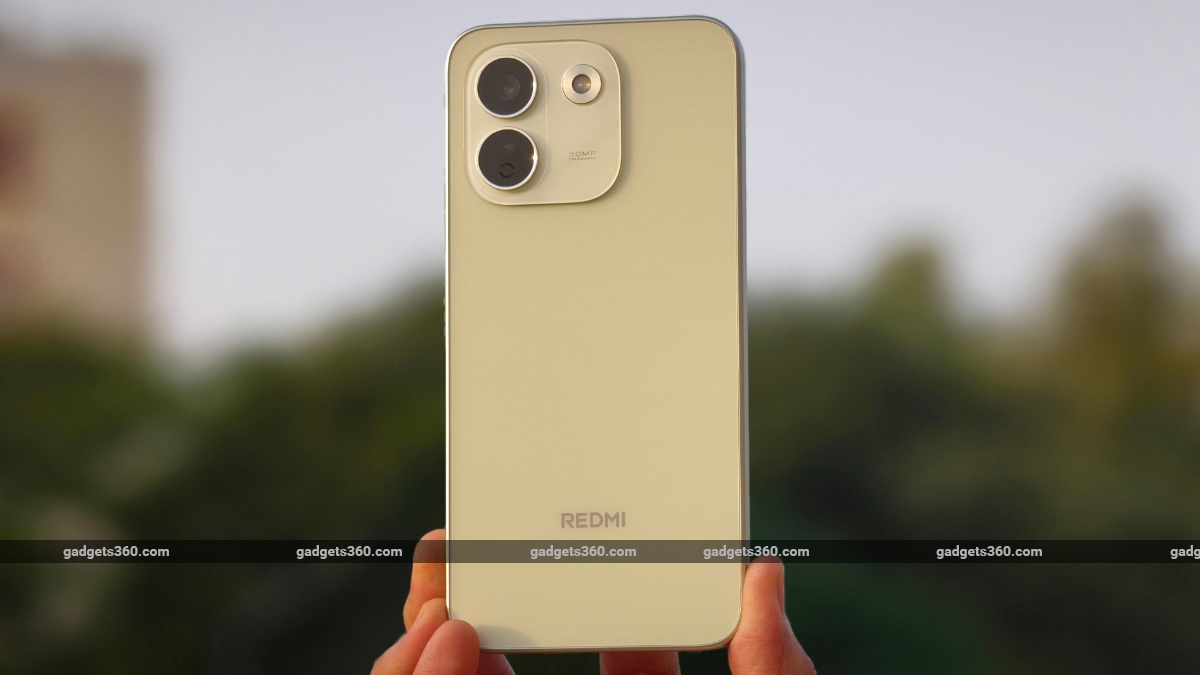
The price of the Redmi Note 17 Pro Max in India starts at Rs. 45,999
Click Here to Add Gadgets360 As A Trusted Source

Advertisement
For years, Xiaomi's Redmi Note lineup has aimed at balancing specifications with affordable prices and everyday usability. The company's recent models have picked one core strength and attempted to deliver on that specific front. The new Redmi Note 17 Pro Max follows a similar strategy. But instead of chasing high camera megapixels, as we saw with the last generation, this year's model goes big on endurance, packing in a mammoth 10,000mAh silicon-carbon battery.
At a starting price of Rs. 49,999 in India, however, the Redmi Note 17 Pro Max lands in a segment where compromises are hard to hide. Here's our review.
Redmi Note 17 Pro Max Design and Display: Built Like a Tank
- Dimensions – 163.5 x 78.3 x 8.6mm, 230g
- Colours – Matcha Green, Secret Sunrise, Stealth Black
- Display – 6.83-inch 1.5K AMOLED, 120Hz
- Protection – Gorilla Glass Victus 2, IP66 + IP68 + IP69 + IP69K
The Redmi Note 17 Pro Max is a big phone, and there is no getting around that. That makes sense, since the 10,000mAh cell has to take up space somewhere. Surprisingly, though, the phone is still easy to hold. This is largely due to its flat frame and slightly rounded edges. Its weight distribution is also decent, and the handset does not feel top-heavy.
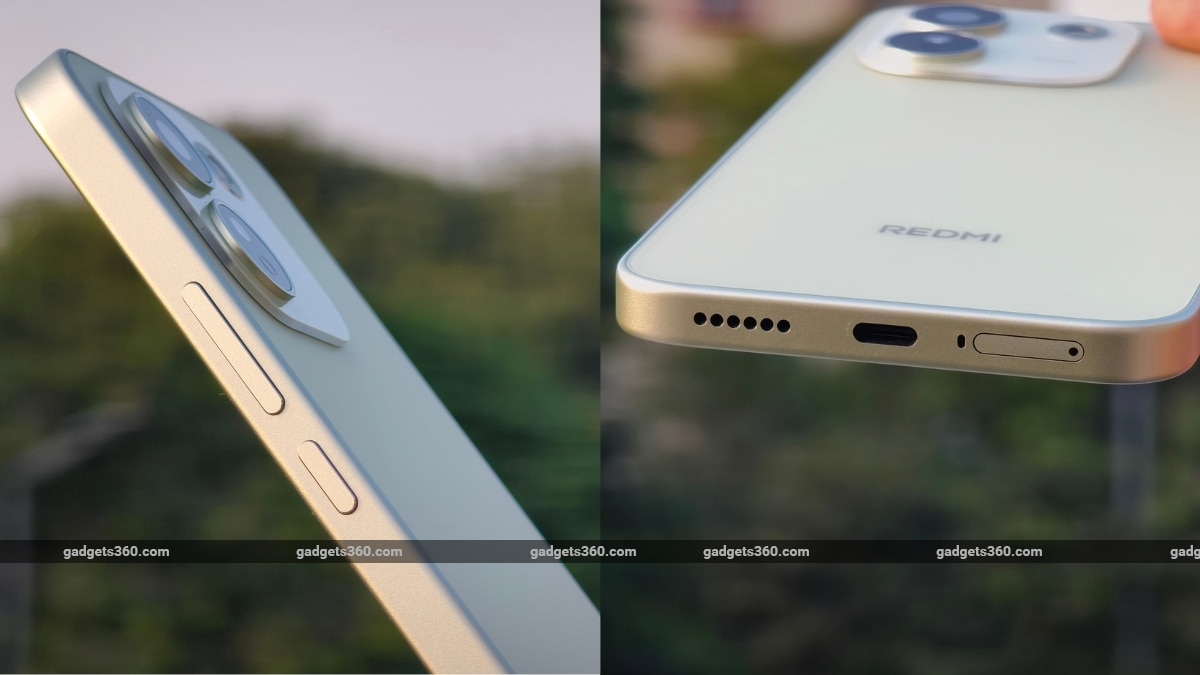
After spending some time with it, I stopped thinking about the weight as much. It is still a heavy phone, especially if you are coming from something around the 190–200g mark, but the overall shape is manageable.
I have the Matcha Green variant, and this is definitely the one I would pick of the three colour options. The green is restrained and does not scream for attention. But if you like your phone to stand out, there's the Secret Sunrise shade, which features a unique pattern on the back. It also has a matte texture. It feels nice to the touch and resists fingerprints well.
The camera module sits towards the top-left corner and has a simple arrangement. Two camera cutouts and a separate circular ring for the flash. It is not adventurous, but fits the rest of the phone.
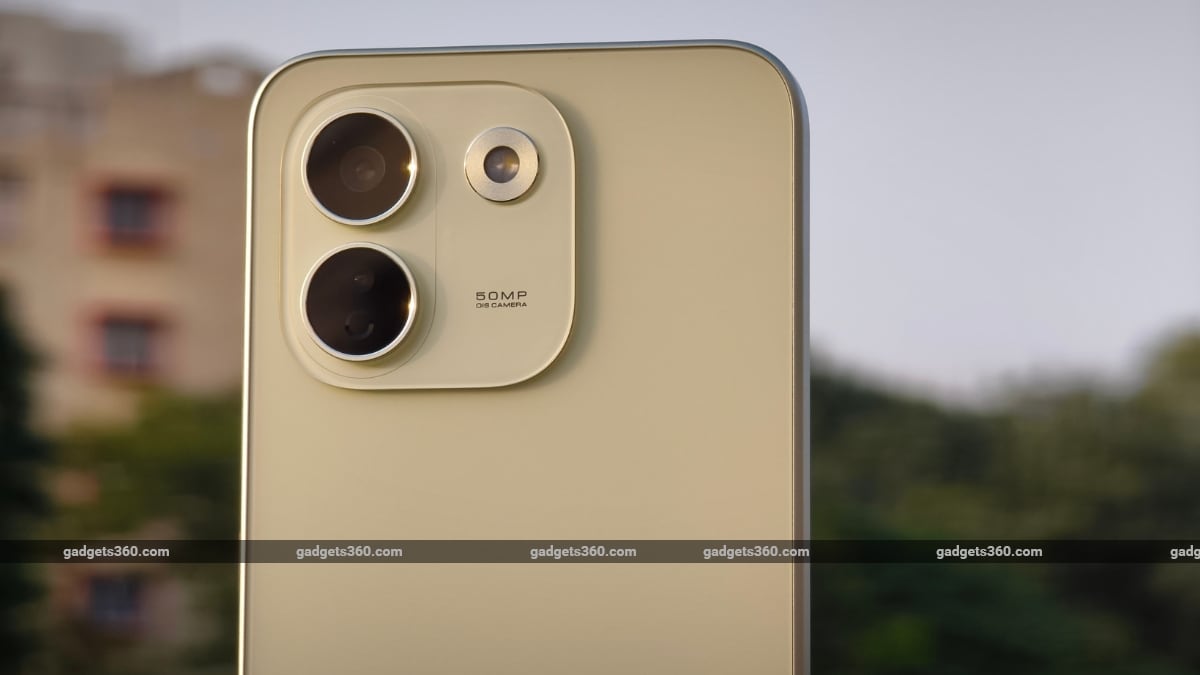
Another big talking point here is durability. Redmi's new Note 17 Pro Max comes with IP66, IP68, IP69 and IP69K ratings, alongside Gorilla Glass Victus 2 on the front. That is a great amount of protection for a phone in this price range.
Flip the Redmi Note 17 Pro Max around, and you'll notice the 6.83-inch 1.5K AMOLED screen with a 120Hz refresh rate. It is a very good display for watching videos. I watched several films and shows on the handset and found the colours to be punchy and blacks properly deep. It also supports Dolby Vision, which is a boon if you binge-watch Netflix shows.
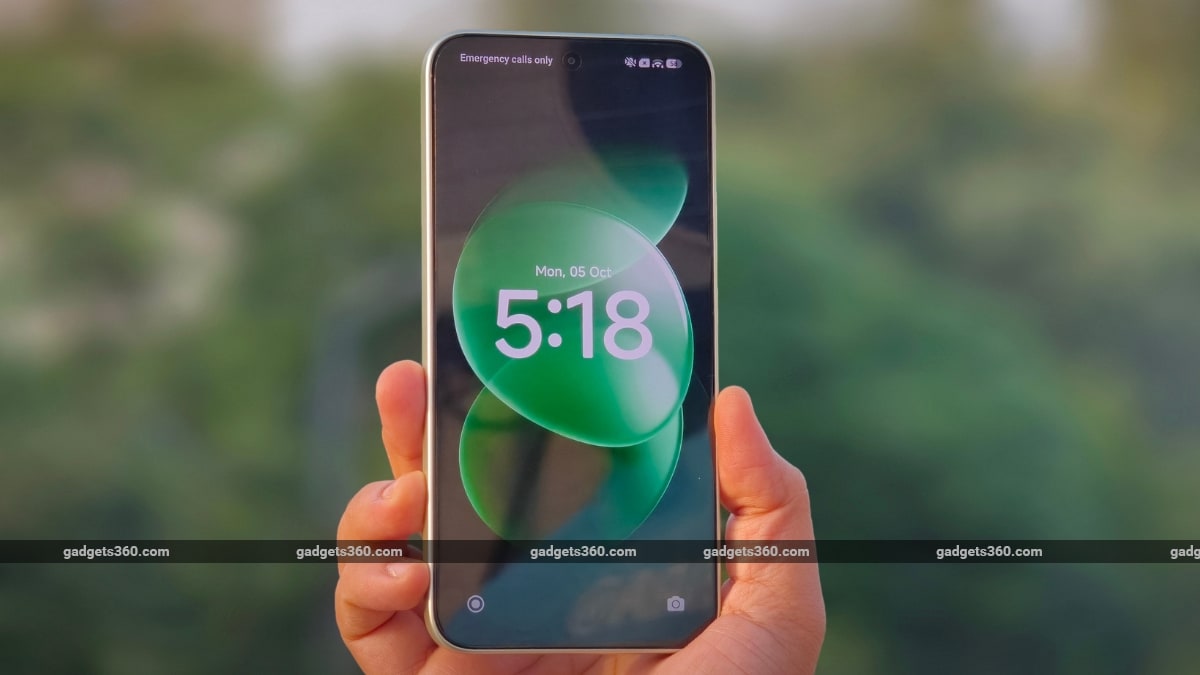
Brightness is another strong point. Xiaomi rates it at up to 3,500 nits, with a claimed 2,000-nit high-brightness mode. In bright outdoor conditions, the screen remained relatively easy to read, and I didn't notice any legibility issues.
Complementing the display are very loud stereo speakers. They're not the best-sounding speakers I have heard at this price. However, they still work well with that large AMOLED panel when you are watching something without headphones.
Redmi Note 17 Pro Max Performance and Software: Good for Everyday Use
- Processor – Qualcomm Snapdragon 6 Gen 5
- RAM and Storage – Up to 12GB LPDDR5X (RAM), Up to 512GB (Storage)
- OS – HyperOS 3 based on Android 16
- Software Updates – 4 years of Android updates + 6 years of security updates
Redmi's Note 17 Pro Max runs on Qualcomm's 4nm octa-core Snapdragon 6 Gen 5 chipset, with a peak clock speed of up to 2.6GHz. It pairs up to 12GB of LPDDR5X RAM with UFS 4.1 storage. On paper, that combination looks on par with most modern smartphones in the sub-Rs. 50,000 price range today, considering the soaring memory prices that have caused OEMs to compromise on certain parameters.
In my experience, the Redmi Note 17 Pro Max feels more like an everyday handset than a performance-focused one.
 It does all of the usual tasks well. Apps open quickly enough, scrolling through social media is smooth, and switching between my usual apps like Brave, Slack, Instagram, WhatsApp, YouTube, and other apps did not cause any trouble. You will not have anything to complain about if you use your phone for calls, texts, browsing, and doomscrolling.
Gaming, however, is where the limits of the chipset become easier to spot. I tried my hand at several games, ranging from Asphalt 9 and Real Racing 3 to Call of Duty Mobile and Grid Autosport. The Redmi Note 17 Pro Max can handle most games at medium graphics settings without much fuss. But you will begin noticing occasional drops once you start pushing the graphics and frame-rate settings.
| Benchmark | Redmi Note 17 Pro Max | Motorola Edge 70 Pro+ | OnePlus Nord 6 |
|---|---|---|---|
| Display Resolution | 1.5K | 1.5K | 1.5K |
| Chipset | Snapdragon 6 Gen 5 (4nm) | MediaTek Dimensity 8500 Extreme (4nm) | Snapdragon 8s Gen 4 (3nm) |
| AnTuTu v10/11 | 10,65,839 | 18,44,700 | 22,66,546 |
| PCMark Work Performance 3.0 | 12,153 | 16,435 | 12,132 |
| Geekbench 6 CPU Single Core | 1,091 | 1,723 | 2,083 |
| Geekbench 6 CPU Multi Core | 3,417 | 6,434 | 6,437 |
| Geekbench AI CPU (Quantized) | 2,218 | 1,510 | 3,760 |
| Geekbench AI GPU (Quantized) | 903 | 994 | 2,637 |
| 3DM Wild Life | 4,559 | Maxed Out | Maxed Out |
| 3DM Wild Life Unlimited | 4,700 | 14,301 | 17,246 |
| 3DM Steel Nomad Light | FTR | 1,501 | 1,730 |
This is something which I find strange for a phone with “Pro Max” in its moniker. The Redmi Note 17 Pro Max does not feel particularly Pro Max beyond everyday tasks.
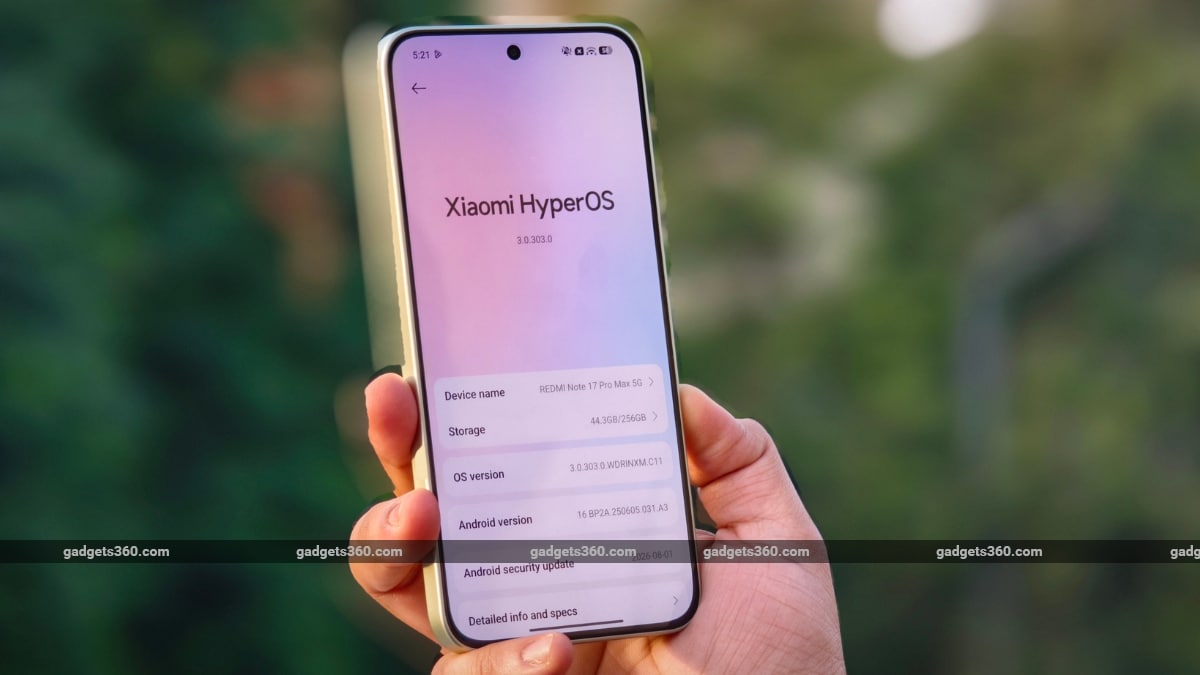
On the software front, you get Android 16-based HyperOS 3. There is a fair amount going on here, including HyperIsland and several AI-powered tools for writing, transcription, searching, and image editing. Some of these are useful, while others feel like things Xiaomi has added because it can.
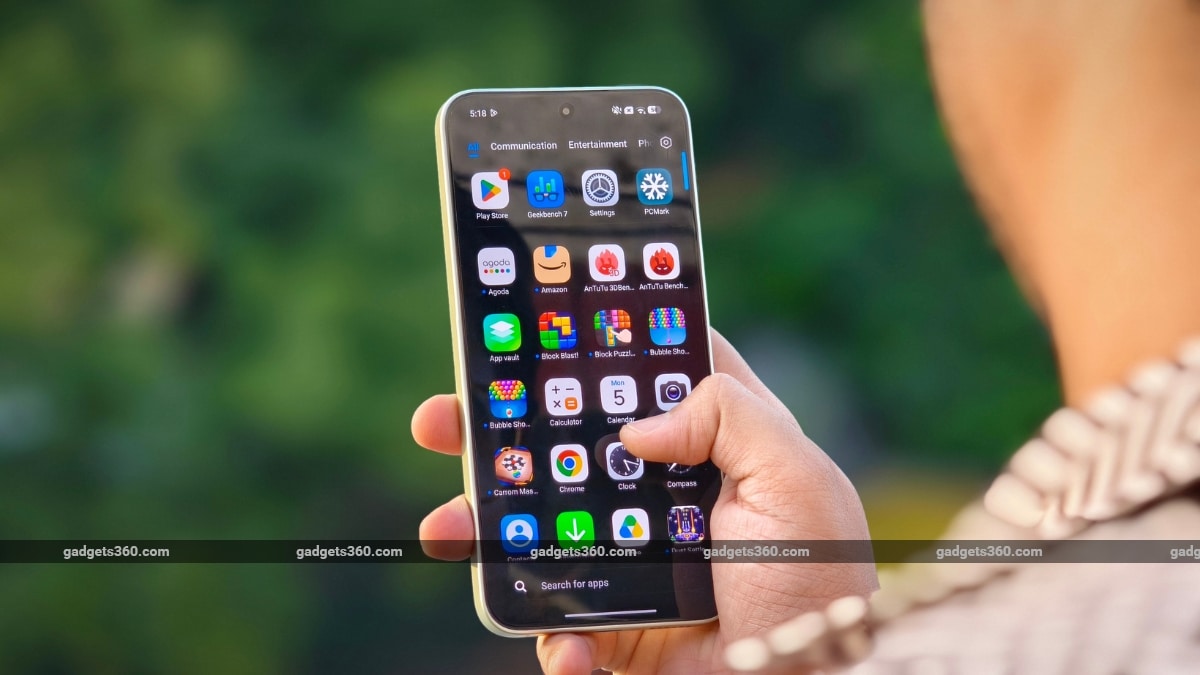
The good news is the update commitment. Xiaomi promises four Android OS upgrades and six years of security updates. This should make the phone easier to live with over the long term, although, once again, I am not too sure if the chipset will allow it to.
Redmi Note 17 Pro Max Cameras: Good Enough, Nothing More
- Rear Cameras – 50-megapixel (primary) + 8-megapixel (ultra-wide-angle)
- Front Camera – 32-megapixel
Redmi has opted for a straightforward camera setup on its Note 17 Pro Max.
The main camera is capable in good lighting. Colours looked pleasing, and skin tones came out reasonably well. Dynamic range is decent too. OIS helps in less-than-ideal conditions. Low-light shots are where things become more ordinary. I noticed some noise in extremely dark scenes, with details also beginning to look softer.



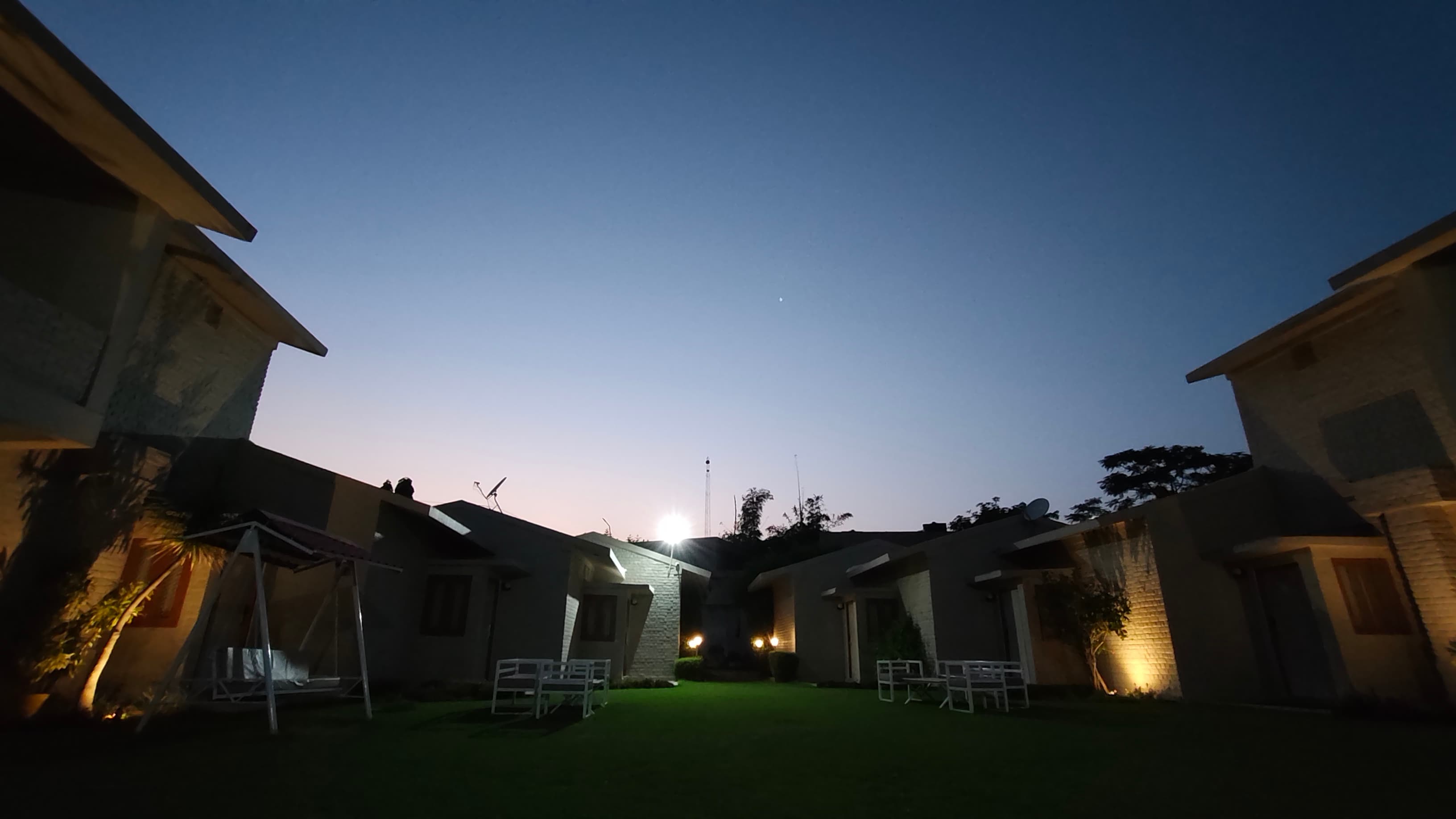

Redmi Note 17 Pro Max primary camera samples (tap to expand)
Portraits are an area where the phone does surprisingly well. You will be convinced by the subject separation in most situations, even though the processing may seem overeager at times.





Redmi Note 17 Pro Max portrait camera samples (tap to expand)
The second camera is the ultra-wide-angle shooter. Like most phones priced below Rs. 50,000, it comes in handy when you need a wider perspective. However, it is not as good as the primary sensor and cannot maintain the same level of detail or colour consistency.


Redmi Note 17 Pro Max ultra-wide-angle camera samples (tap to expand)
The 32-megapixel selfie camera does a decent job in good lighting, although Xiaomi's processing still tends to smooth skin a little.
Redmi Note 17 Pro Max Battery Life: This Is What You Are Paying For
- Battery – 10,000mAh silicon-carbon
- Wired Charging – 100W HyperCharge
- Reverse Charging – 27W
- Charger – Included in the box
Finally, we get to the reason this phone exists. Battery life is one area where Redmi has gone completely overboard, and I mean that as a compliment.
The 10,000mAh silicon-carbon battery on the Redmi Note 17 Pro Max is enormous. Xiaomi claims up to four-plus days of use under light-use conditions. Now I know that is not what most people will get in real life, but even so, the handset delivers excellent endurance. I took the phone on a three-day trip and only had to charge it once, despite capturing a boatload of photos and binge-watching the latest episodes of Lanterns on the go.
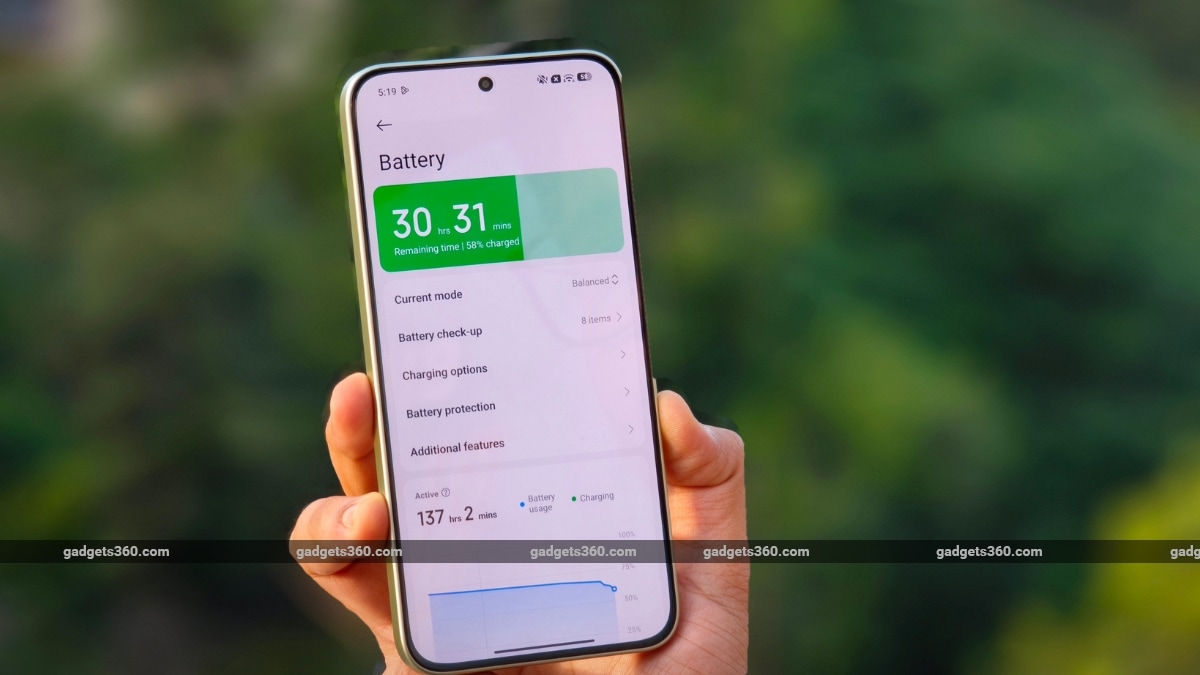
Then there is 100W HyperCharge. A battery this large obviously takes longer to fill than a typical 5,000mAh phone, but 100W charging keeps the wait reasonable. I have only charged the phone thrice since it has been with me (thanks to the excellent battery life). Most of the time, it took about one hour and 14 minutes to juice up from zero until the “fully charged” notification appeared. These are excellent figures, considering the gigantic cell it houses.
Redmi Note 17 Pro Max Verdict
The Redmi Note 17 Pro Max is an unusual phone. In my opinion, this is because Xiaomi has made a very deliberate choice about what matters. Battery life comes first, followed by a rugged build and a large-screen viewing experience. The huge 10,000mAh battery delivers stellar backup, while the AMOLED screen is great for binge-watching content. Note 17 Pro Max's multiple IP ratings also mean that it can survive raindrops, heavy splashes, and even a dip in the pool.
The problem is that Rs. 49,999 is a lot to pay for a phone with a Snapdragon 6 Gen 5 chipset and an average camera system. Other phones in this price range either deliver far better performance or capture stellar snapshots.
If your idea of a good smartphone is one you can take on a trip, use all day, forget about charging for the next couple of days, and not worry too much about water or accidental damage, the Note 17 Pro Max starts to make a lot more sense. However, I do think that a Pro Max phone should ideally feel like a top-tier option across more than two or three categories, and that is where the Redmi Note 17 Pro Max falls short. If photography is your thing, then the Motorola Edge 70 Pro+ (review) is a handset you can consider.
- REVIEW
- KEY SPECS
- NEWS
- Good
- Excellent battery life and fast charging
- Bright and vibrant 1.5K AMOLED display
- Extensive durability
- Promising update policy
- Bad
- Feels underpowered
- Cameras are average for the price
- Doesn't feel like a true Pro Max across the board
Read detailed Redmi Note 17 Pro Max 5G review
Display 6.83-inch
Processor Snapdragon 6 Gen 5
Front Camera 32-megapixel
Rear Camera 50-megapixel + 8-megapixel
RAM 8GB, 12GB
Storage 256GB
Battery Capacity 10000mAh
OS Android 16
Resolution 1280x2772 pixels
Comments
Get your daily dose of tech news, reviews, and insights, in under 80 characters on Gadgets 360 Turbo. Connect with fellow tech lovers on our Forum. Follow us on X, Facebook, WhatsApp, Threads and Google News for instant updates. Catch all the action on our YouTube channel.
Further reading:
Redmi Note 17 Pro Max, Redmi Note 17 Pro Max Price in India, Redmi Note 17 Pro Max Specifications
Related Stories





Advertisement
Follow Us




-
![[Sponsored]: CP PLUS CarKam CP-F89B: 4K Dashcam With Rear Camera, GPS & Emergency Recording](https://www.gadgets360.com/static/desktop/images/spacer.png)
04:37
[Sponsored]: CP PLUS CarKam CP-F89B: 4K Dashcam With Rear Camera, GPS & Emergency Recording -
04:23
[Partner Content] Your Phone Can Do WAY More Than You Think | OPPO ColorOS 16 -
01:59
Samsung Galaxy Z Fold8 Ultra: Unfold the Ultra Night -
03:24
Apple Pay Launches In India: Supported Devices, Cards And Payments Explained -
00:21
[Sponsored] Samsung Galaxy Z Fold8, Fold8 Ultra
-
Primebook 3 Max की सेल शुरू, स्टूडेंट्स के लिए ₹36 हजार में नया लैपटॉप
-
Flipkart Big Billion Days Sale 2026: Vivo के इन 5 स्मार्टफोन्स पर Deals
-
Lenovo Watch Fit 3 स्मार्टवॉच लॉन्च, 2.5D कर्व्ड ग्लास, 9 दिन बैटरी
-
₹1,499 में itel Care फीचर फोन आया, बुजुर्गों के लिए खास फीचर्स से लैस
-
Vivo ने लॉन्च किया 9,020mAh बैटरी वाला फोन, Snapdragon चिप और 12GB RAM के साथ आया Y600K Turbo
Advertisement
Popular on Gadgets
- Samsung Galaxy S26 Ultra
- Motorola Razr Fold
- ChatGPT
- OPPO Find N6
- Mobiles Under Rs. 40,000
- Vivo X300 Ultra
- Asus Zenbook S14
- iQOO 15
- Vivo X300 Pro
- Lenovo Yoga Slim 7i Aura Edition
- iQOO 15R
- Vivo X Fold 5
- Sony PlayStation 5
- HP OmniPad 12
- OnePlus Nord CE 6 Lite
- OnePlus Pad 4
- OPPO F33 Pro 5G
- Cryptocurrency
- HP OmniBook Ultra 14 (2026)
- iPhone 17
- Eureka Forbes AP 355 Room Air Purifier
- Latest Mobile Phones
- Compare Phones
Latest Gadgets
- Vivo Y600K Turbo
- Vivo S60t
- OPPO F35 5G
- OPPO F35 Pro 5G
- Samsung Galaxy F08
- Samsung Galaxy M08
- OPPO K15x
- OPPO K15s
- Dell 14 Plus 2-in-1 (AMD Ryzen AI 7 350, 2025)
- Microsoft Surface Laptop, 13-inch (2nd Edition)
- Samsung Galaxy Tab S12+
- Samsung Galaxy Tab S12 Ultra
- Amazfit T-Rex Dual Solar
- OPPO Watch S2
- Toshiba 65-Inch 4K Ultra HD Smart Mini LED QLED TV (65Z670SP)
- Haier M70 Mini LED 65-inch
- Acer Predator Atlas 8
- Asus ROG Ally
- Blue Star 1.5 Ton 5 Star Inverter Split AC (IE518ZNURS)
- Blue Star 2 Ton 3 Star Inverter Window AC (WIE324L)

- About Us
- Sitemaps
- Feedback
- Archives
- Contact Us
- RSS
- Advertise
- Career
- Privacy Policy
- Ethics
- Editorial Policy
- Terms & Conditions
- Complaint Redressal
Download Our Apps
Available in Hindi
© Copyright Red Pixels Ventures Limited 2026. All rights reserved.