-
 NASA’s Curiosity Rover Stalled on Mars for Six Days by Stuck Rock10 May 2026
 -
NASA’s Curiosity Rover Finds Crater Filled With Sand, Alters Drilling Plans23 April 2026
-
Curiosity Rover Reconnects After Solar Conjunction, Begins Critical Organic Search on Mars6 February 2026
-
NASA’s Curiosity Rover Sends Stunning New Panorama From High on Mount Sharp on Mars9 January 2026
-
NASA’s Curiosity Rover Sends Stunning Sunrise-and-Sunset Holiday Postcard from Mars31 December 2025
- Home
- Others
- Others News
- NASA rover finds conditions once suited to life on Mars
NASA rover finds conditions once suited to life on Mars
By Agence France-Presse | Updated: 13 March 2013 14:27 IST
Click Here to Add Gadgets360 As A Trusted Source

Advertisement
An analysis of a Mars rock sample by the Curiosity rover has unveiled minerals, including hydrogen, carbon and oxygen, that are the building blocks of life, NASA said Tuesday.
"A fundamental question for this mission is whether Mars could have supported a habitable environment," said Michael Meyer, lead scientist for NASA's Mars Exploration Program. "From what we know now, the answer is yes."
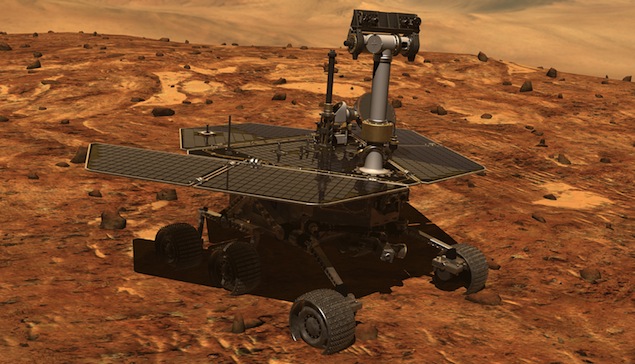
The six-wheeled robot, with 10 scientific instruments on board, is the most sophisticated ever sent to another planet.
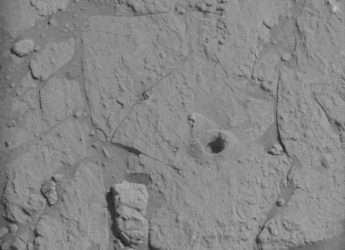
The rock sample was drilled from a sedimentary bedrock sample and found to contain clay minerals, sulfate minerals and other chemicals.
Based on the analysis of those chemicals, researchers were able to determine that the water that helped form the rocks were of a relatively neutral pH.
"We have found a habitable environment that is so benign and supportive of life, that probably if this water was around and you had been there, you would have been able to drink it," said John Grotzinger, Curiosity project scientist from the California Institute of Technology.
Comments
Get your daily dose of tech news, reviews, and insights, in under 80 characters on Gadgets 360 Turbo. Connect with fellow tech lovers on our Forum. Follow us on X, Facebook, WhatsApp, Threads and Google News for instant updates. Catch all the action on our YouTube channel.
Related Stories




Advertisement
Follow Us




-
![[Sponsored] LG NANO 4K UHD AI TV NU885: Gemini Search, Dolby Atmos & 5 Years of Updates](https://www.gadgets360.com/static/desktop/images/spacer.png)
04:17
[Sponsored] LG NANO 4K UHD AI TV NU885: Gemini Search, Dolby Atmos & 5 Years of Updates -
00:57
[Sponsored] Samsung Galaxy Z Fold8 My Fan Cam in Action: Find the Moment, Then Share It -
01:41
[Sponsored] What Do You Need To Know Before Your Next Run? | Samsung Galaxy Watch Ultra2 -
01:32
[Sponsored] Big Day Tomorrow? Prep Today | Samsung Galaxy Watch Ultra2 -
04:37
[Sponsored]: CP PLUS CarKam CP-F89B: 4K Dashcam With Rear Camera, GPS & Emergency Recording
-
आ गई हवा में उड़ने वाली Tesla Roadster कार, आखिर सच हुआ फिल्मों वाला कमाल
-
रोबोट ने की लड़की से छेड़छाड़, पीछे से पकड़ा और किए गंदे इशारे, जानें
-
PS5 कहां मिलेगा सस्ता, Flipkart या Amazon, जानें सबकुछ
-
दिवाली पर नया टू-व्हीलर खरीदने का प्लान? 1 लाख से भी कम में मिल रहे ये 5 EV, रेंज 179 किमी तक
-
Oppo के वाइड फोल्डिंग स्मार्टफोन में मिल सकता है 6.35 इंच आउटर डिस्प्ले
Advertisement
Popular on Gadgets
- Samsung Galaxy S26 Ultra
- Motorola Razr Fold
- ChatGPT
- OPPO Find N6
- Mobiles Under Rs. 40,000
- Vivo X300 Ultra
- Asus Zenbook S14
- iQOO 15
- Vivo X300 Pro
- Lenovo Yoga Slim 7i Aura Edition
- iQOO 15R
- Vivo X Fold 5
- Sony PlayStation 5
- HP OmniPad 12
- OnePlus Nord CE 6 Lite
- OnePlus Pad 4
- OPPO F33 Pro 5G
- Cryptocurrency
- HP OmniBook Ultra 14 (2026)
- iPhone 17
- Eureka Forbes AP 355 Room Air Purifier
- Latest Mobile Phones
- Compare Phones
Latest Gadgets
- Tecno Spark 50S 5G
- Vivo Y600s Pro
- Vivo Y32 (2026)
- Infinix Smart 20 HD
- Vivo V80
- Vivo S2 FE
- Vivo Y600K Turbo
- Realme P4s Lite
- HP ZBook Ultra G3a
- Dell Pro Rugged 14
- Amazon Alexa Tablet 8
- Amazon Alexa Tablet 11
- Amazfit T-Rex Dual Solar
- OPPO Watch S2
- Toshiba 65-Inch 4K Ultra HD Smart Mini LED QLED TV (65Z670SP)
- Haier M70 Mini LED 65-inch
- Acer Predator Atlas 8
- Asus ROG Ally
- Blue Star 1.5 Ton 5 Star Inverter Split AC (IE518ZNURS)
- Blue Star 2 Ton 3 Star Inverter Window AC (WIE324L)

- About Us
- Sitemaps
- Feedback
- Archives
- Contact Us
- RSS
- Advertise
- Career
- Privacy Policy
- Ethics
- Editorial Policy
- Terms & Conditions
- Complaint Redressal
Download Our Apps
Available in Hindi
© Copyright Red Pixels Ventures Limited 2026. All rights reserved.