-
 China Tests Humanoid Robots to Guide Travellers at Border Crossing28 November 2025
 -
China to Launch Empty Shenzhou-22 Lifeboat After Shenzhou-20 Damage18 November 2025
-
Galactic Energy Ceres-1 Mission Fails to Reach Orbit in Rare Setback17 November 2025
-
China’s Tianwen-1 Captures Rare Interstellar Comet From Orbit Around Mars9 November 2025
-
OpenAI Bans ChatGPT Accounts Linked to China-Backed Surveillance Efforts8 October 2025
- Home
- Science
- Science News
- China's Zhuque 3 Reaches Orbit but Booster Explodes in Failed Landing Attempt
China's Zhuque-3 Reaches Orbit but Booster Explodes in Failed Landing Attempt
LandSpace’s Zhuque-3 rocket successfully reached orbit on its maiden flight, but its first-stage booster exploded during the landing burn.
Written by Gadgets 360 Staff | Updated: 4 December 2025 22:34 IST
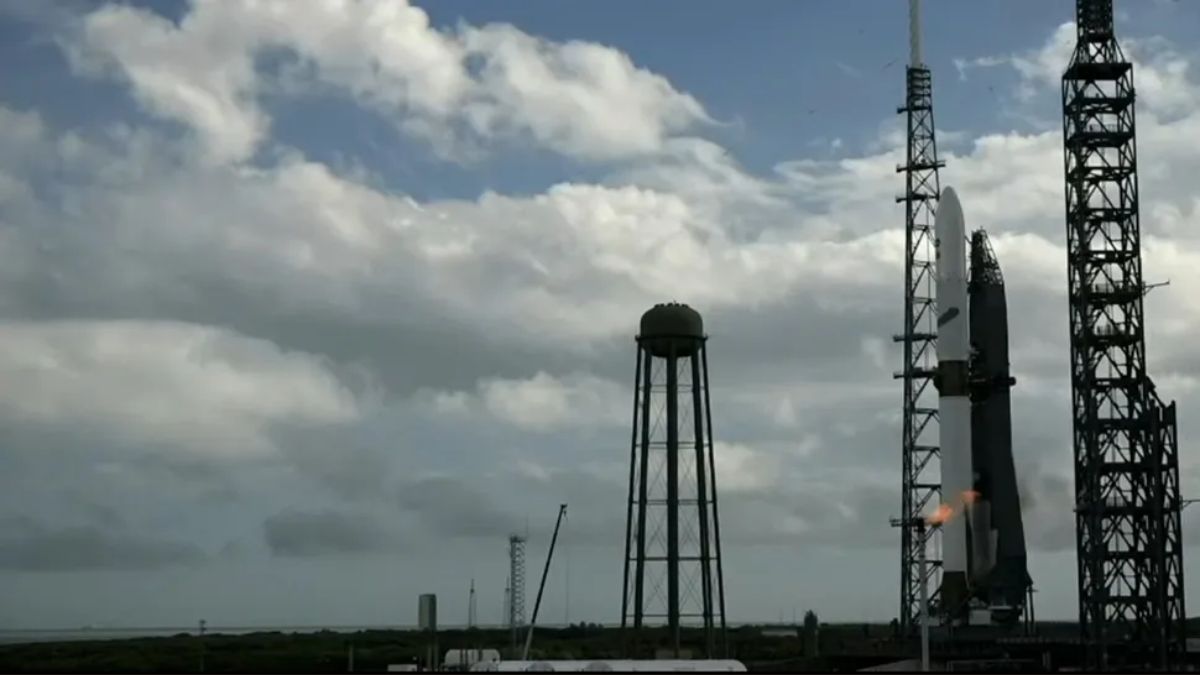
Photo Credit: Blue Origin
Landspace's Zhuque-3 rocket takes off from the Jiuquan Satellite Launch Center on Dec. 3, 2025
Click Here to Add Gadgets360 As A Trusted Source


Advertisement
In its December 2025 maiden flight, Chinese private company LandSpace launched the 66-meter Zhuque-3 rocket into low Earth orbit. Its expendable upper stage successfully delivered its payload, but trouble struck on descent. During the first stage's landing burn, one engine stalled, and the booster burst into flames, exploding just meters from its landing pad. LandSpace confirmed that an “anomaly” occurred during recovery.
Launch and Landing Attempt
According to a Space.com report, the Zhuque-3 made by LandSpace is 66 meters tall and is built using stainless steel and liquid methane and oxygen. Its payload and upper stage were safely launched into orbit. The initial one then made a vertical landing re-entry attempt.
One of the engines malfunctioned during the landing burn, and the booster exploded into flames, hurling into a blazing crash against the target. LandSpace stated that it will study the flight data in order to enhance future landings.
Implications for China's Space Program
LandSpace praised the flight as a success in system verification and payload delivery, pointing out that the booster was returned within a few meters of its target. Chinese state media (Xinhua) reported an "abnormal combustion" during the landing burn.
As a reference, Falcon 9 by SpaceX was able to make a soft landing for the first time in 2015 after several failed attempts. According to LandSpace, a single booster is capable of around 20 flights. The experiment positions China well in the competition to develop reusable rockets that can reduce launch prices and facilitate satellite constellations.
Comments
Get your daily dose of tech news, reviews, and insights, in under 80 characters on Gadgets 360 Turbo. Connect with fellow tech lovers on our Forum. Follow us on X, Facebook, WhatsApp, Threads and Google News for instant updates. Catch all the action on our YouTube channel.
Related Stories






Advertisement
Follow Us




-
04:56
Vivo X300 Review | Best Flagship of 2025? | Unbelievable Camera & Performance Test -
03:49
Lava Agni 4 Review - Best Indian 5G Phone Under Budget? -
05:23
Motorola G67 Power Review: The Real Battery Beast of 2025? -
06:14
[Partner Content] OPPO F31 Series: The Durable Champion That Stays Smooth & Powerful -
04:40
Google Pixel Buds 2a Review | Best Budget Earbuds 2025
-
आप आयुष्मान कार्ड बनवा सकते हैं या नहीं, ऐसे करें चेक, 5 लाख का इलाज फ्री
-
7000mAh बैटरी, 50MP कैमरा के साथ Realme P4x लॉन्च, जानें कीमत और फीचर्स
-
Google का गजब टूल, आपका फोन बताएगा कि कपड़े या जूते आप पर कैसे लग रहे हैं
-
Bitcoin की गैर कानूनी माइनिंग करने वालों ने मलेशिया में चुराई 1 अरब डॉलर की इलेक्ट्रिसिटी
Advertisement
Popular on Gadgets
- Samsung Galaxy Unpacked 2025
- ChatGPT
- Redmi Note 14 Pro+
- iPhone 16
- Apple Vision Pro
- Oneplus 12
- OnePlus Nord CE 3 Lite 5G
- iPhone 13
- Xiaomi 14 Pro
- Oppo Find N3
- Tecno Spark Go (2023)
- Realme V30
- Best Phones Under 25000
- Samsung Galaxy S24 Series
- Cryptocurrency
- iQoo 12
- Samsung Galaxy S24 Ultra
- Giottus
- Samsung Galaxy Z Flip 5
- Apple 'Scary Fast'
- Housefull 5
- GoPro Hero 12 Black Review
- Invincible Season 2
- JioGlass
- HD Ready TV
- Laptop Under 50000
- Smartwatch Under 10000
- Latest Mobile Phones
- Compare Phones
Latest Gadgets
- Realme P4x 5G
- OnePlus Ace 6T
- OPPO A6x 5G
- Samsung Galaxy Z TriFold
- Poco F8 Ultra
- Poco F8 Pro
- Huawei Mate 80 RS Master Edition
- Huawei Mate 80 Pro Max
- Asus ProArt P16
- MacBook Pro 14-inch (M5, 2025)
- Poco Pad M1
- Poco Pad X1
- Just Corseca Skywatch Pro
- Honor Watch X5
- Acerpure Nitro Z Series 100-inch QLED TV
- Samsung 43 Inch LED Ultra HD (4K) Smart TV (UA43UE81AFULXL)
- Asus ROG Ally
- Nintendo Switch Lite
- Haier 1.6 Ton 5 Star Inverter Split AC (HSU19G-MZAID5BN-INV)
- Haier 1.6 Ton 5 Star Inverter Split AC (HSU19G-MZAIM5BN-INV)

- About Us
- Sitemaps
- Feedback
- Archives
- Contact Us
- RSS
- Advertise
- Career
- Privacy Policy
- Ethics
- Editorial Policy
- Terms & Conditions
- Complaint Redressal
Download Our Apps
Available in Hindi
© Copyright Red Pixels Ventures Limited 2025. All rights reserved.