-
 JWST Watches HD 80606 bExoplanet Heat Up by 1,100 Degrees in Hours19 June 2026
 -
Scientists May Have Solved the Missing Sulfur Mystery in Star-Forming Clouds16 June 2026
-
Astronomers Discover Two Galaxies That Appear to Lack Dark Matter10 June 2026
-
James Webb Space Telescope Weighs Most Distant Dormant Black Hole Ever Detected9 June 2026
-
Astrophotographer Captures Giant Human-Shaped Solar Prominence8 June 2026
- Home
- Science
- Science News
- 13,000 Year Old Cosmic Airburst Triggered ‘Impact Winter’ and Mass Extinction, Research Suggests
13,000-Year-Old Cosmic Airburst Triggered ‘Impact Winter’ and Mass Extinction, Research Suggests
The deep freeze, combined with the loss of habitats, would have been disastrous for Ice Age ecosystems.
Written by Gadgets 360 Staff | Updated: 4 January 2026 09:12 IST
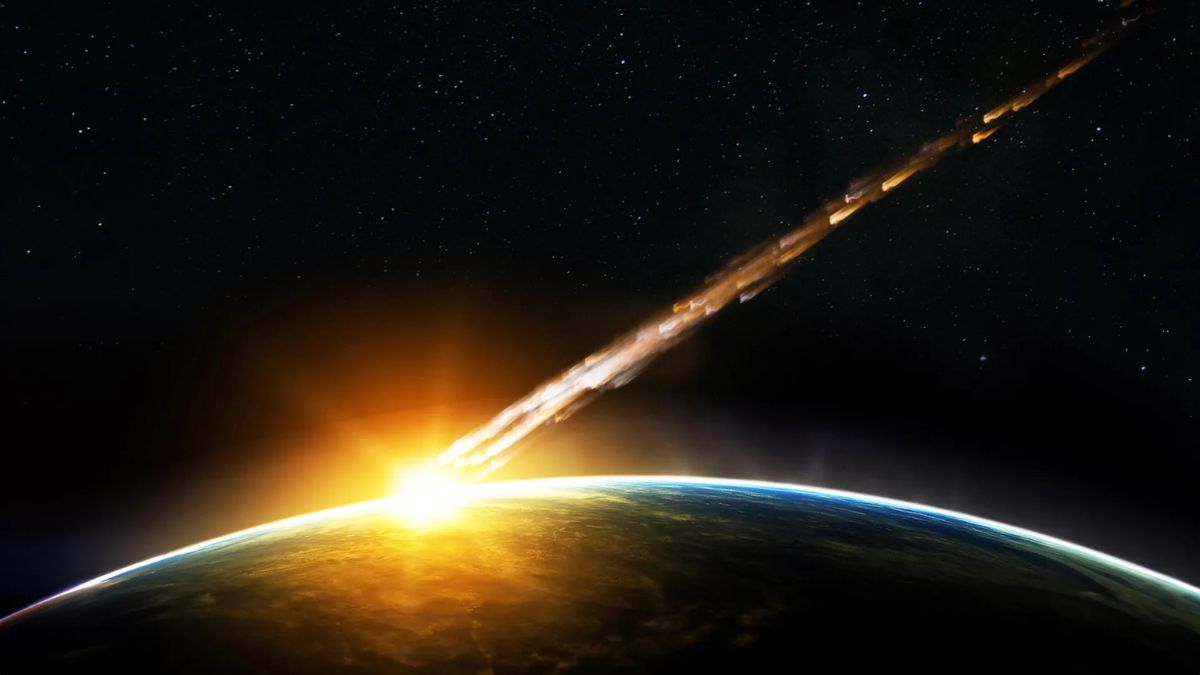
Photo Credit: Wikipedia Commons
Shocked quartz discoveries hint that a fiery comet explosion may have plunged Earth into chaos
Click Here to Add Gadgets360 As A Trusted Source


Advertisement
New research points to fragments of a comet exploding over North America approximately 13,000 years ago, sparking firestorms and rapid cooling that could have contributed to the extinction of mammoths. Scientists report finding telltale “shocked” quartz grains at classic Clovis sites dating to the Younger Dryas boundary, evidence of intense heat and pressure. This suggests a cosmic airburst triggered widespread fires and an “impact winter,” stressing Ice Age ecosystems and life.
Traces of a Cosmic Blast
According to the study, at three well-known Clovis sites, scientists discovered microscopic “shocked” quartz grains in layers dated to 12,800 years ago. Advanced imaging shows these sand grains contain multiple fractures and even molten silica – signs of extreme heat and pressure.
Such features normally form only during massive explosions. Computer models indicate that a low-altitude airburst from a comet fragment could create the observed shock patterns over a wide area without leaving a crater.
Climate Chaos and Extinctions
Approximately 12,800 years ago, the world suddenly plunged into the Younger Dryas, a 1,000-year mini ice age. One theory suggests that a comet explosion caused this chill. An explosion may have resulted in forest fires and carry soot up the air, the result being a severe form of “impact winter.” This deep freeze, combined with the loss of habitats, would have been disastrous for Ice Age ecosystems.
This may be one of the reasons why mammoths and mastodons, among other megafauna, disappeared at the Younger Dryas boundary.The comet hypothesis remains controversial, however; many scientists prefer alternative explanations, such as massive meltwater surges that disrupted ocean currents and altered the global climate.
Comments
Get your daily dose of tech news, reviews, and insights, in under 80 characters on Gadgets 360 Turbo. Connect with fellow tech lovers on our Forum. Follow us on X, Facebook, WhatsApp, Threads and Google News for instant updates. Catch all the action on our YouTube channel.
Related Stories
13,000-Year-Old Cosmic Airburst Triggered ‘Impact Winter’ and Mass Extinction, Research Suggests


Advertisement
Follow Us




-
04:37
[Sponsored]: CP PLUS CarKam CP-F89B: 4K Dashcam With Rear Camera, GPS & Emergency Recording -
04:23
[Partner Content] Your Phone Can Do WAY More Than You Think | OPPO ColorOS 16 -
01:59
Samsung Galaxy Z Fold8 Ultra: Unfold the Ultra Night -
03:24
Apple Pay Launches In India: Supported Devices, Cards And Payments Explained -
00:21
[Sponsored] Samsung Galaxy Z Fold8, Fold8 Ultra
-
Infinix लाया गजब का फोन, बिना सिम भी कर पाएंगे कॉल
-
Vivo S2 FE लॉन्च: 10000mAh बैटरी, 50 मेगापिक्सल कैमरा से लैस, जानें कीमत
-
Vivo X Fold 6 लॉन्च; 200MP कैमरा और 6900mAh बैटरी के साथ आया फोल्डेबल फोन
-
Oppo Find X10 Pro Max जल्द होगा भारत में लॉन्च, MediaTek Dimensity 9600 Pro चिपसेट
-
Redmi 17C 5G की सेल आज से शुरू, 6000mAh बैटरी के साथ 50 मेगापिक्सल कैमरा से लैस
Advertisement
Popular on Gadgets
- Samsung Galaxy S26 Ultra
- Motorola Razr Fold
- ChatGPT
- OPPO Find N6
- Mobiles Under Rs. 40,000
- Vivo X300 Ultra
- Asus Zenbook S14
- iQOO 15
- Vivo X300 Pro
- Lenovo Yoga Slim 7i Aura Edition
- iQOO 15R
- Vivo X Fold 5
- Sony PlayStation 5
- HP OmniPad 12
- OnePlus Nord CE 6 Lite
- OnePlus Pad 4
- OPPO F33 Pro 5G
- Cryptocurrency
- HP OmniBook Ultra 14 (2026)
- iPhone 17
- Eureka Forbes AP 355 Room Air Purifier
- Latest Mobile Phones
- Compare Phones
Latest Gadgets
- Infinix Smart 20 HD
- Vivo V80
- Vivo S2 FE
- Vivo Y600K Turbo
- Realme P4s Lite
- Vivo S60t
- OPPO F35 5G
- OPPO F35 Pro 5G
- Dell 14 Plus 2-in-1 (AMD Ryzen AI 7 350, 2025)
- Microsoft Surface Laptop, 13-inch (2nd Edition)
- Samsung Galaxy Tab S12+
- Samsung Galaxy Tab S12 Ultra
- Amazfit T-Rex Dual Solar
- OPPO Watch S2
- Toshiba 65-Inch 4K Ultra HD Smart Mini LED QLED TV (65Z670SP)
- Haier M70 Mini LED 65-inch
- Acer Predator Atlas 8
- Asus ROG Ally
- Blue Star 1.5 Ton 5 Star Inverter Split AC (IE518ZNURS)
- Blue Star 2 Ton 3 Star Inverter Window AC (WIE324L)

- About Us
- Sitemaps
- Feedback
- Archives
- Contact Us
- RSS
- Advertise
- Career
- Privacy Policy
- Ethics
- Editorial Policy
- Terms & Conditions
- Complaint Redressal
Download Our Apps
Available in Hindi
© Copyright Red Pixels Ventures Limited 2026. All rights reserved.