-
 SpaceX Acquires Cursor, the AI Coding Startup Competing With Claude Code and OpenAI Codex17 June 2026
 -
Starlink Constellation Crosses 10,600 Satellites After Latest SpaceX Launch12 June 2026
-
Starlink's India Launch Plans Said to Face Regulatory Hurdles Over Security Concerns Linked to Iran Conflict10 June 2026
-
Blue Origin’s New Glenn Rocket Explodes During Pre-Launch Test in Florida29 May 2026
-
SpaceX Launches 24 More Starlink Satellites, Nears 10,500 in Orbit20 May 2026
- Home
- Science
- Science News
- Elon Musk Believes He Might Be Dead Before Humans Settle on Mars, Here's Why
Elon Musk Believes He Might Be Dead Before Humans Settle on Mars, Here's Why
Elon Musk has expressed doubt about living to see Mars colonisation.
By Gadgets 360 Staff | Updated: 21 August 2024 12:42 IST

Photo Credit: Twitter/ SpaceX
Musk’s vision of a Mars colony faces significant obstacles
Click Here to Add Gadgets360 As A Trusted Source


Advertisement
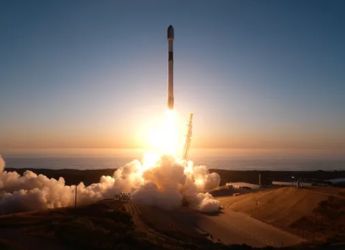
Elon Musk, the influential figure behind SpaceX, has expressed a pragmatic view on the timeline for human colonization of Mars. Speaking at the Satellite 2020 conference, Musk noted the slow pace of advancements in space exploration, he may not live to see a sustainable Martian settlement. Despite SpaceX's strides, such as successful Falcon 9 and Falcon Heavy launches, Musk remains uncertain about the feasibility of a thriving Mars colony within his lifetime.
Challenges and Costs of Mars Colonization
In the new book "SpaceX: Elon Musk and the Final Frontier" (Motorbooks), science journalist Brad Bergan highlights Musk's point of view of Mars along with other things. Musk's concerns reflect the substantial obstacles facing Mars colonization. While reaching Mars might be feasible in the coming decades, creating a self-sustaining settlement is a far more complex endeavour. Musk had previously projected that moving to Mars could eventually cost between $100,000 (roughly Rs. 84,00,000) and $500,000 (roughly Rs. 4,20,00,000) per person. However, these estimates are contingent upon major technological breakthroughs and drastic reductions in launch costs, which are currently significant barriers.
Economic and Logistical Hurdles
The financial and logistical requirements for establishing a Mars colony are immense. Musk estimated in 2017 that transporting materials to Mars would cost around $140,000 (roughly Rs. 1,20,00,000) per ton. With inflation and other considerations, this figure could rise substantially. Building a functional settlement might necessitate upwards of $100 billion (roughly Rs. 8.4 lakh crore), a figure that underscores the enormous challenge involved. The high costs, coupled with the need for significant advancements in technology, contribute to the uncertainty surrounding Mars colonization.
Focus on Immediate Space Goals
Given the formidable challenges associated with Mars, space exploration efforts may shift towards more immediate objectives. Developing a sustainable human presence on the Moon or exploring asteroids for resources could offer more achievable goals and provide valuable insights for future Mars missions. These efforts might pave the way for the eventual colonization of Mars, but they will require overcoming substantial technical and financial hurdles.
Musk's reflections serve as a sobering reminder of the complexities involved in space exploration. While the dream of colonizing Mars is compelling, the reality is that achieving it will demand significant progress and innovation. The path forward involves addressing these challenges while exploring other space-related opportunities.
Comments
Get your daily dose of tech news, reviews, and insights, in under 80 characters on Gadgets 360 Turbo. Connect with fellow tech lovers on our Forum. Follow us on X, Facebook, WhatsApp, Threads and Google News for instant updates. Catch all the action on our YouTube channel.
Related Stories



Advertisement
Follow Us




-
04:17
[Sponsored] LG NANO 4K UHD AI TV NU885: Gemini Search, Dolby Atmos & 5 Years of Updates -
00:57
[Sponsored] Samsung Galaxy Z Fold8 My Fan Cam in Action: Find the Moment, Then Share It -
01:41
[Sponsored] What Do You Need To Know Before Your Next Run? | Samsung Galaxy Watch Ultra2 -
01:32
[Sponsored] Big Day Tomorrow? Prep Today | Samsung Galaxy Watch Ultra2 -
04:37
[Sponsored]: CP PLUS CarKam CP-F89B: 4K Dashcam With Rear Camera, GPS & Emergency Recording
-
iPhone 16 आज भी Amazon सेल में मिल रहा ₹15 हजार से ज्यादा सस्ता
-
OnePlus 15 को Amazon Great Indian Festival Sale में खरीदें सस्ता
-
₹2250 सस्ता मिल रहा Motorola का 7000mAh बैटरी वाला फोन! Flipkart पर ऑफर
-
Flipkart Sale में ₹14000 सस्ता मिल रहा Vivo का 50MP कैमरा, 9020mAh बैटरी वाला फोन
-
HMD Vibe 2 Max बजट फोन लॉन्च होगा 108MP कैमरा, 6,000mAh बैटरी फीचर के साथ!
Advertisement
Popular on Gadgets
- Samsung Galaxy S26 Ultra
- Motorola Razr Fold
- ChatGPT
- OPPO Find N6
- Mobiles Under Rs. 40,000
- Vivo X300 Ultra
- Asus Zenbook S14
- iQOO 15
- Vivo X300 Pro
- Lenovo Yoga Slim 7i Aura Edition
- iQOO 15R
- Vivo X Fold 5
- Sony PlayStation 5
- HP OmniPad 12
- OnePlus Nord CE 6 Lite
- OnePlus Pad 4
- OPPO F33 Pro 5G
- Cryptocurrency
- HP OmniBook Ultra 14 (2026)
- iPhone 17
- Eureka Forbes AP 355 Room Air Purifier
- Latest Mobile Phones
- Compare Phones
Latest Gadgets
- Samsung Galaxy F70 5G
- Tecno Spark 50S 5G
- Vivo Y600s Pro
- Vivo Y32 (2026)
- Infinix Smart 20 HD
- Vivo V80
- Vivo S2 FE
- Vivo Y600K Turbo
- HP ZBook Ultra G3a
- Dell Pro Rugged 14
- Amazon Alexa Tablet 8
- Amazon Alexa Tablet 11
- Amazfit T-Rex Dual Solar
- OPPO Watch S2
- Toshiba 65-Inch 4K Ultra HD Smart Mini LED QLED TV (65Z670SP)
- Haier M70 Mini LED 65-inch
- Acer Predator Atlas 8
- Asus ROG Ally
- Blue Star 1.5 Ton 5 Star Inverter Split AC (IE518ZNURS)
- Blue Star 2 Ton 3 Star Inverter Window AC (WIE324L)

- About Us
- Sitemaps
- Feedback
- Archives
- Contact Us
- RSS
- Advertise
- Career
- Privacy Policy
- Ethics
- Editorial Policy
- Terms & Conditions
- Complaint Redressal
Download Our Apps
Available in Hindi
© Copyright Red Pixels Ventures Limited 2026. All rights reserved.