-
 Scientists Find Clue to High-Temperature Superconductivity in Quantum Materials20 January 2026
 -
Nobel Prize in Physics 2025 Awarded for Breakthroughs in Quantum Tunnelling and Energy Quantisation12 October 2025
-
Rice University Scientists Confirm Flatband Discovery in Kagome Superconductor21 August 2025
-
New Superconductors Work at Higher Temperatures, No Pressure Needed20 February 2025
-
Scientists Uncover New Form of Magnetism That Could Be the Key to Superconductivity24 January 2025
- Home
- Science
- Science News
- Physicists Push Superconducting Diodes to Higher Temperatures
Physicists Push Superconducting Diodes to Higher Temperatures
High-temperature superconducting diodes could reduce noise and improve future quantum computers.
Written by Gadgets 360 Staff | Updated: 18 December 2025 23:35 IST
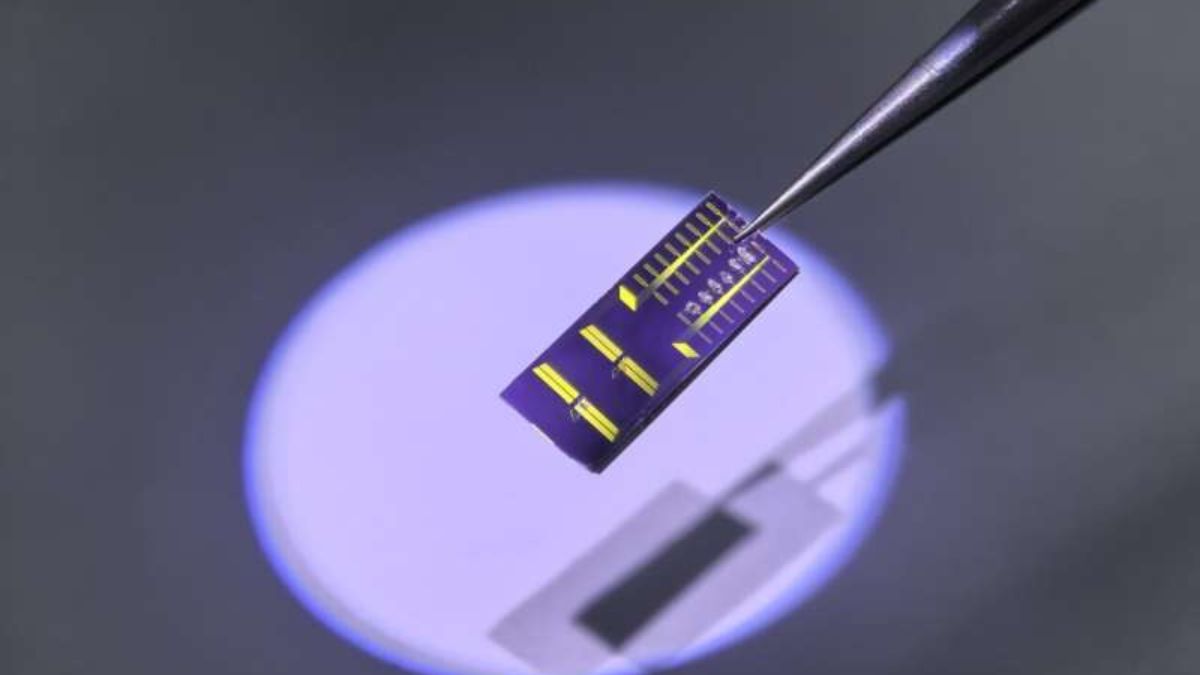
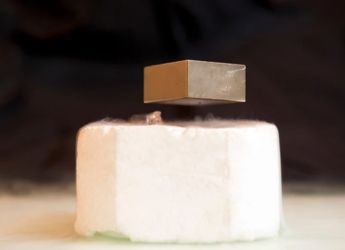
Photo Credit: Wikimedia Commons
A cuprate-based superconducting diode operates above liquid nitrogen temperature
Click Here to Add Gadgets360 As A Trusted Source


Advertisement
Physicists in China have invented a high-temperature superconducting diode for the first time, which industry insiders mentioned will decrease noise in potential quantum computers. The device makes it possible to conduct supercurrent in different ways according to its direction, even at temperatures above the level of liquid nitrogen. Unlike previous generations that only operated at extreme cold, this new technique brings the superconducting diode a step closer to real-world use, one of several obstacles for quantum technologies to become more stable, scalable , and practical beyond laboratory setups.
High-Temperature Superconducting Diode Achieved Without Magnetic Fields
According to a Nature Physics report, the research team led by Ding Zhang of Tsinghua University used cuprate superconductors to create the diode effect without applying an external magnetic field. The study describes how pre-existing superconducting diode devices had operated only at, or near 10 Kelvin, and with poor efficiency, making them impractical for widespread use. The new result shows good diode action out to temperatures above 77 Kelvin, a great leap for superconducting electronics.
Superconductors transmit electricity without resistance at temperatures below a critical temperature through the formation of Cooper pairs, although most superconductors at very low temperatures, which makes them costly and cumbersome to use in practice.
Twisted Cuprate Josephson Junction Enables Noise-Free Superconducting Diode
To make this happen, the scientists stacked two thin flakes of cuprate and twisted them at specific angles relative to each other, creating something called a Josephson junction. Applying current pulses in a controlled way and adding microwave signals created an axial electrical asymmetry, for which the device changed between on-off states of the voltage with a strong diode effect at high stability that was entirely dominated by Cooper pairs.
This advance may benefit quantum computing by avoiding electron noise; the method works with many superconductors, potentially exceeding 100 Kelvin for practical quantum circuits.
Comments
Get your daily dose of tech news, reviews, and insights, in under 80 characters on Gadgets 360 Turbo. Connect with fellow tech lovers on our Forum. Follow us on X, Facebook, WhatsApp, Threads and Google News for instant updates. Catch all the action on our YouTube channel.
Further reading:
superconductivity, superconducting diode, quantum computing, cuprate materials, physics research
Related Stories



Advertisement
Follow Us




-
06:32
Google Pixel 11 Pro XL Review: The Most Exciting Pixel Yet? | 120X Zoom + Tensor G6 -
05:20
Samsung Galaxy Watch Ultra 2 Review: Is This the Best Android Smartwatch? -
07:01
Samsung Galaxy Z Fold 8 Review: Is This the Best Foldable Phone? -
06:39
Samsung Galaxy Z Fold8 Ultra Review: Cameras, Battery, Performance Tested -
04:33
[Sponsored] JBL Live 780NC: Great Sound, Perfect Comfort, Smart ANC & 80-Hour Battery
-
₹36 हजार में लॉन्च हुआ AI सपोर्ट वाला Primebook 3 Max लैपटॉप
-
15 अक्टूबर से UPI पर बदल जाएंगे ये नियम, यहां जानें 7 बड़ी बातें
-
Redmi Note 17 Pro की सेल शुरू, ₹5000 डिस्काउंट पर खरीदने का मौका
-
India vs Afghanistan: भारत और अफगानिस्तान के बीच T-20 आज, जानें कब और कहां देखें लाइव प्रसारण
-
सेमीकंडक्टर मैन्युफैक्चरिंग का ग्लोबल हब बनेगा भारत: प्रधानमंत्री मोदी
Advertisement
Popular on Gadgets
- Samsung Galaxy S26 Ultra
- Motorola Razr Fold
- ChatGPT
- OPPO Find N6
- Mobiles Under Rs. 40,000
- Vivo X300 Ultra
- Asus Zenbook S14
- iQOO 15
- Vivo X300 Pro
- Lenovo Yoga Slim 7i Aura Edition
- iQOO 15R
- Vivo X Fold 5
- Sony PlayStation 5
- HP OmniPad 12
- OnePlus Nord CE 6 Lite
- OnePlus Pad 4
- OPPO F33 Pro 5G
- Cryptocurrency
- HP OmniBook Ultra 14 (2026)
- iPhone 17
- Eureka Forbes AP 355 Room Air Purifier
- Latest Mobile Phones
- Compare Phones
Latest Gadgets
- Samsung Galaxy A08
- Itel Muzik 450L
- OPPO K14 Lite
- Samsung Galaxy A18 4G
- iPhone Duo
- OPPO A7 Pro
- Huawei Mate XT 2 Ultimate Design
- Realme 16 Pro Harry Potter Edition
- Asus Vivobook S14 (S5452MA)
- Acer Aspire G 3D 16
- Xiaomi Pad 9 Pro
- Xiaomi Pad 9
- Apple Watch Ultra 4
- Apple Watch Series 12
- Haier M70 Mini LED 65-inch
- Xiaomi TV FX Mini LED 65
- Acer Predator Atlas 8
- Asus ROG Ally
- Blue Star 1.5 Ton 5 Star Inverter Split AC (IE518ZNURS)
- Blue Star 2 Ton 3 Star Inverter Window AC (WIE324L)

- About Us
- Sitemaps
- Feedback
- Archives
- Contact Us
- RSS
- Advertise
- Career
- Privacy Policy
- Ethics
- Editorial Policy
- Terms & Conditions
- Complaint Redressal
Download Our Apps
Available in Hindi
© Copyright Red Pixels Ventures Limited 2026. All rights reserved.