-
 Rocket Lab Successfully Launches NEONSAT-1A on Bridging the Swarm Mission1 February 2026
 -
Rocket Lab Clears Final Tests for New 'Hungry Hippo' Fairing on Neutron Rocket13 December 2025
-
NASA’s ESCAPADE Mission Will Send Twin Probes to Uncover Mars’s Atmospheric Secrets10 November 2025
-
Rocket Lab Launches Five Classified Satellites on 70th Electron Mission25 August 2025
-
Rocket Lab Launches Kushinada-I Satellite to Orbit for Japan’s iQPS5 August 2025
- Home
- Science
- Science News
- Rocket Lab Sends Up Test Satellites for Europe’s Next Gen Navigation System
Rocket Lab Sends Up Test Satellites for Europe’s Next-Gen Navigation System
Rocket Lab successfully launched two Celeste navigation satellites for the European Space Agency.
Written by Gadgets 360 Staff | Updated: 5 April 2026 20:00 IST
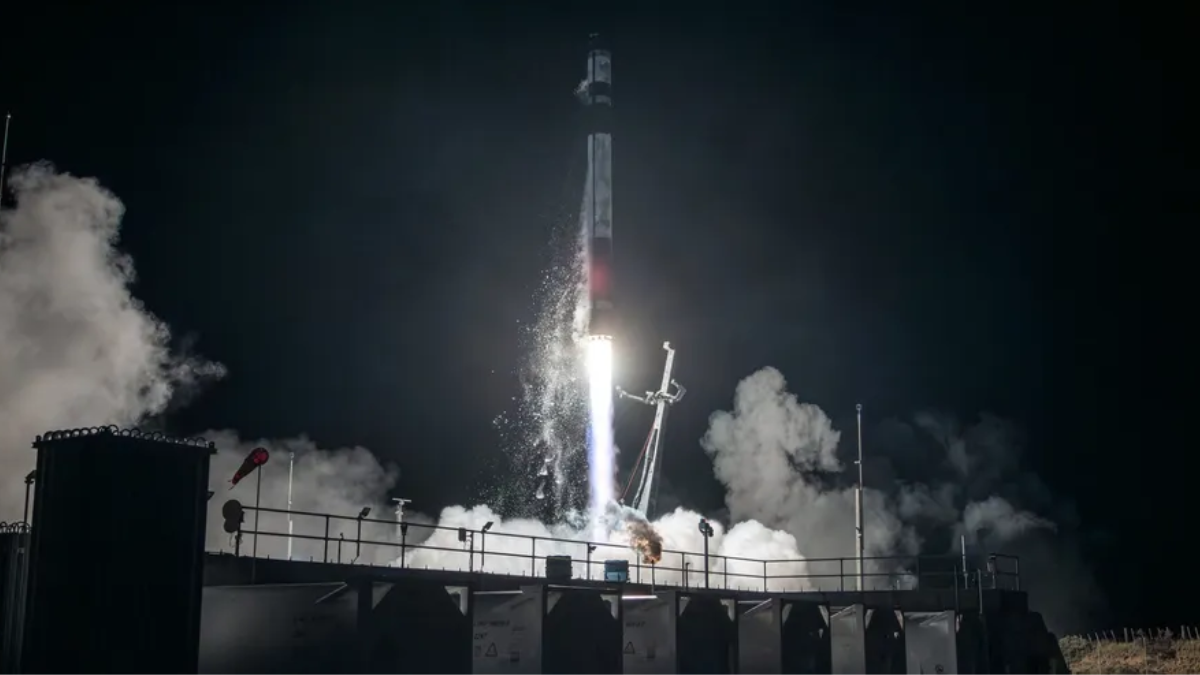
Photo Credit: Rocket Lab
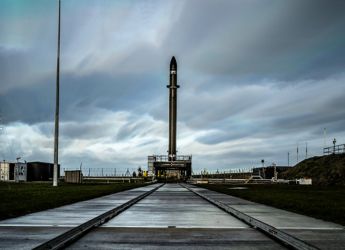
A Rocket Lab Electron rocket launches the “Daughter of the Stars” mission for the European Space. Agency
Click Here to Add Gadgets360 As A Trusted Source


Advertisement
Rocket Lab's Electron rocket successfully launched two Celeste navigation satellites from New Zealand on March 28, 2026. The launch was the first European low Earth orbit navigation demonstrator. The “Daughter of the Stars” mission put the satellites in a circular Sun-synchronous orbit at an altitude of 510 km over the Earth. The pathfinder satellites carry experimental payloads to test new signals in the L- and S-frequency bands. The Celeste satellites will test the LEO layer of the European navigation system Galileo.
Launch and Payload
According to Space.com, Rocket Lab's three-stage Electron rocket launched on March 28, 2026, at 10:14 pm NZDT (09:14 UTC) from the Mahia Peninsula in New Zealand. The payload was placed into a circular sun-synchronous orbit at an altitude of 510 km above Earth. The first satellite separated 20 minutes after launch, and the second satellite separated four minutes later. These experimental satellites are IOD-1 and IOD-2, with masses of approximately 20 kg and 30 kg, respectively. This is just the first phase of ESA's Celeste program, and there are plans for 11 LEO navigation demonstrators.
Mission Objectives and Significance
The Celeste mission is a low-orbit demonstration mission of ESA. Its satellites provide stronger signals to users because they operate at an altitude of about 510 km (compared to 23,200 km for Galileo). According to ESA, the LEO layer will enhance navigation in Europe, making it more robust and allowing new services. Nearer signals assist in bridging urban areas, edifices, and polar areas. To serve the upcoming services, such as autonomous transport, IoT, and indoor navigation, Celeste will test new multi-frequency signals. Eventually, ESA has proposed 11 Celeste satellites by 2027 to finish the demonstration.
Comments
Get your daily dose of tech news, reviews, and insights, in under 80 characters on Gadgets 360 Turbo. Connect with fellow tech lovers on our Forum. Follow us on X, Facebook, WhatsApp, Threads and Google News for instant updates. Catch all the action on our YouTube channel.
Related Stories



Advertisement
Follow Us




-
04:37
[Sponsored]: CP PLUS CarKam CP-F89B: 4K Dashcam With Rear Camera, GPS & Emergency Recording -
04:23
[Partner Content] Your Phone Can Do WAY More Than You Think | OPPO ColorOS 16 -
01:59
Samsung Galaxy Z Fold8 Ultra: Unfold the Ultra Night -
03:24
Apple Pay Launches In India: Supported Devices, Cards And Payments Explained -
00:21
[Sponsored] Samsung Galaxy Z Fold8, Fold8 Ultra
-
Flipkart Big Billion Days: Xiaomi के 5 Redmi स्मार्टफोन्स पर Deals रिवील
-
Delhi Pollution 2026: 50% Work From Home, बिना PUCC नहीं मिलेगा Fuel
-
Oppo K15x हुआ लॉन्च; 6500mAh बैटरी, 120Hz डिस्प्ले के साथ आया बजट 5G फोन
-
इलेक्ट्रिक मोटरसाइकिल्स के सेगमेंट में Oben Electric का पहला रैंक, 1,417 यूनिट्स की बिक्री
Advertisement
Popular on Gadgets
- Samsung Galaxy S26 Ultra
- Motorola Razr Fold
- ChatGPT
- OPPO Find N6
- Mobiles Under Rs. 40,000
- Vivo X300 Ultra
- Asus Zenbook S14
- iQOO 15
- Vivo X300 Pro
- Lenovo Yoga Slim 7i Aura Edition
- iQOO 15R
- Vivo X Fold 5
- Sony PlayStation 5
- HP OmniPad 12
- OnePlus Nord CE 6 Lite
- OnePlus Pad 4
- OPPO F33 Pro 5G
- Cryptocurrency
- HP OmniBook Ultra 14 (2026)
- iPhone 17
- Eureka Forbes AP 355 Room Air Purifier
- Latest Mobile Phones
- Compare Phones
Latest Gadgets
- Samsung Galaxy F08
- Samsung Galaxy M08
- OPPO K15x
- OPPO K15s
- HMD Vibe 2 Pro 5G
- OPPO K14 Plus 5G
- Lava Shark 2 Pro 5G
- Ai+ Pulse 2 FE
- Dell 14 Plus 2-in-1 (AMD Ryzen AI 7 350, 2025)
- Microsoft Surface Laptop, 13-inch (2nd Edition)
- Samsung Galaxy Tab S12+
- Samsung Galaxy Tab S12 Ultra
- Amazfit T-Rex Dual Solar
- OPPO Watch S2
- Toshiba 65-Inch 4K Ultra HD Smart Mini LED QLED TV (65Z670SP)
- Haier M70 Mini LED 65-inch
- Acer Predator Atlas 8
- Asus ROG Ally
- Blue Star 1.5 Ton 5 Star Inverter Split AC (IE518ZNURS)
- Blue Star 2 Ton 3 Star Inverter Window AC (WIE324L)

- About Us
- Sitemaps
- Feedback
- Archives
- Contact Us
- RSS
- Advertise
- Career
- Privacy Policy
- Ethics
- Editorial Policy
- Terms & Conditions
- Complaint Redressal
Download Our Apps
Available in Hindi
© Copyright Red Pixels Ventures Limited 2026. All rights reserved.