
-
 ViewSonic Google TV Series Launched in India With Up to 65-Inch Models Alongside New Pro AV Displays16 September 2026
 -
ViewSonic ViewBoard IN04V-N Series Launched in India With AI Camera, 4K Interactive Display: Price, Specifications16 July 2026
-
ViewSonic IN05 Series ViewBoard 4K Displays Launched in India With Android 16, AI Features2 June 2026
-
ViewSonic M1 Max Projector Review: Premium and Feature-Rich, but Not for Everyone13 February 2026
-
ViewSonic X1-4K Pro, X2-4K Pro and SP7 Projectors Launched in India: Price, Features22 July 2025
- Home
- Tv
- Tv Features
- LED Video Walls to Power ViewSonic India's Rs. 500 Crore Growth Ambition for 2026
LED Video Walls to Power ViewSonic India's Rs. 500 Crore Growth Ambition for 2026
With GST correction and expanding enterprise demand, ViewSonic aims to scale its presence across education, retail, and public spaces.
Written by Ankit Sharma | Updated: 1 January 2026 14:00 IST
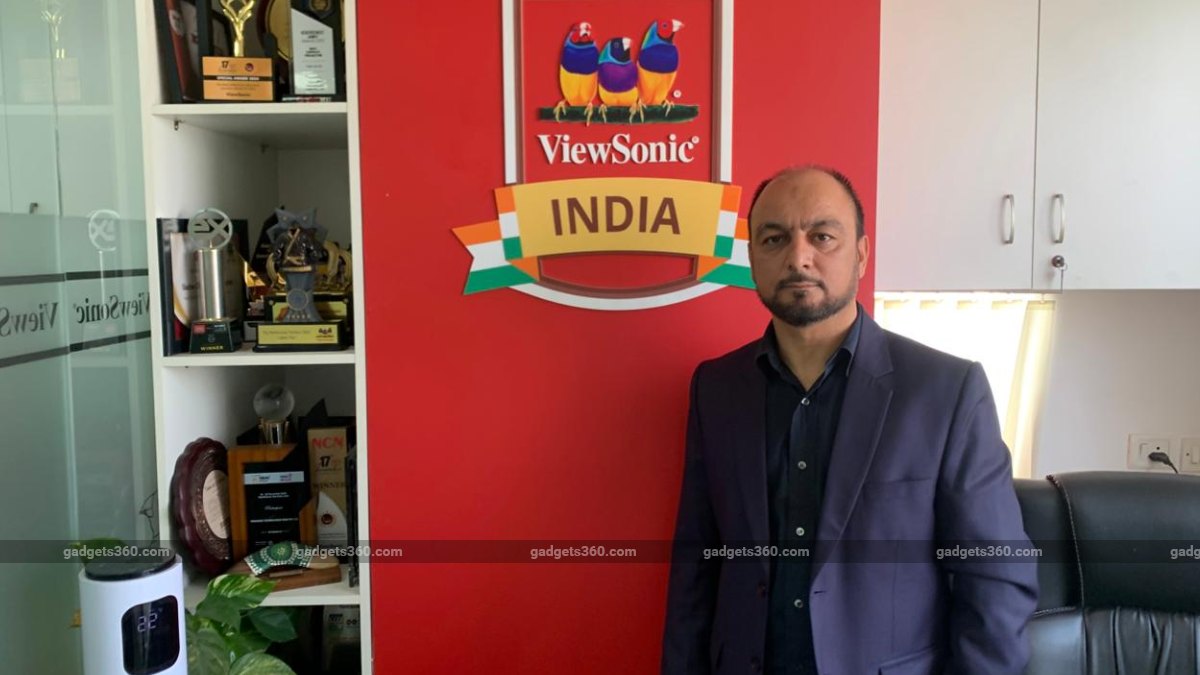
ViewSonic targets Rs. 500 crore revenue in 2026 through LED walls
Click Here to Add Gadgets360 As A Trusted Source


Advertisement
ViewSonic continues to strengthen its presence in India's rapidly growing display and education technology market. Best known for its leadership in interactive flat panels, the company has also expanded its footprint across monitors, projectors, gaming displays, and emerging LED solutions. The company has played an important role in converting schools and colleges to transition from traditional classrooms to smart, technology-enabled learning environments. As India invests in digital education, hybrid work and large-format display solutions, the market presents both opportunities and challenges for global technology brands.
Gadgets 360 had a word with Mr. Muneer Ahmad, Vice President of Sales and Marketing for Audio-Visual and EdTech Solutions of ViewSonic India, on the emerging trends in the Indian market and overall company strategy. A few of the responses have been edited and shortened for ease of understanding.
How has 2025 been for ViewSonic in terms of growth, category expansion, and market momentum in India, and what business or revenue targets have you set for 2026?
See, I would not say it was a growth period (2025) for us, but it was an okay period for us. Overall, the business has done reasonably well. We expect 2026 to be a better year for us in terms of growth. There are several reasons behind this. First, the GST on our products came back from 28 percent to 18 percent, which is good for us. This happened during Diwali, the last quarter. This has already started helping the business, and we believe the impact will be more visible across the upcoming quarters in 2026.
Talking about the revenue target, our target is 50 million USD in 2026, which is approximately 500 crores. We are No. 1 in India in terms of selling interactive flat panels. Apart from this, we have introduced a new range of non-touch panels, and we see good potential in this segment. Last year, we also added DLED products to our portfolio. In the future, we expect LED video walls to become an important growth area and open up new revenue opportunities for us.
How critical is India to ViewSonic's global strategy, and what is your growth roadmap for the next 2–3 years, especially in display, home entertainment, and hybrid work categories?
India is extremely important to ViewSonic's global strategy, and today it has also become a priority market for most global companies. The country continues to grow steadily and is already among the world's top five economies. In the coming years, we believe India's role on the global stage will be comparable to that of major economies like the US.
From a business point of view, India offers strong long-term opportunities across several segments. The government's push towards Make in India, along with increased spending in the public sector, especially in education, has created a very positive environment. Technologies such as interactive flat panels are becoming essential in modern classrooms, yet a large number of schools and colleges, particularly in Tier 2, Tier 3, and rural regions, are still in the early stages of adopting them.
India also has a young population and an education system that is evolving quickly. Many institutions are yet to be equipped with digital learning tools, which gives us confidence that demand in the education and display segments will continue to rise in the years ahead. At the same time, interest in displays for home entertainment and hybrid work setups is growing, driven by changing work habits and higher awareness among consumers. Overall, India will remain a central focus for ViewSonic, and we see it as one of our key growth drivers over the next two to three years and beyond.
Which product categories Interactive Display, monitors, projectors, EdTech solutions, or emerging technologies will drive ViewSonic's next phase of growth in the Indian market?
Our primary focus for the next phase of growth in India will be LED video walls. Monitors and specialised projectors will also be key growth drivers for ViewSonic in the Indian market in the coming years. Monitors will continue to remain our core business, and we will further strengthen our leadership in this category.
In addition, projectors, especially in the home-theatre segment, represent an important growth opportunity for us. Last year, we introduced gaming projectors, which created a new use case for gamers who were previously limited to monitors. Today, home users are increasingly adopting gaming projectors as they deliver a large-screen immersive experience while serving dual purposes-gaming as well as home entertainment. These products are Xbox-certified, which further strengthens their appeal among serious gamers.
What feedback from Indian consumers has directly shaped product upgrades or new launches, and have you implemented India-specific pricing or value-added features?
A lot of the feedback that has shaped our recent product upgrades has come directly from India, especially in the interactive flat panel category. One strong requirement from Indian customers was the need for EDLA-certified panels, so that users could access the Google Play Store and the full Google ecosystem. This demand was very specific to India initially; it did not come from the US or Europe. Based on this input, we worked closely with our headquarters to incorporate EDLA certification into our panels, and later, other regions also adopted it.
Similarly, the demand for AI features has also come from India. Markets like the US, Europe and Australia are still avoiding the use of AI in the education sector. In these countries, traditional teaching methods are still given priority for students, and they have strict standards; the process of adopting AI is slow. Institutions in India are showing increased interest in using AI as a support tool, and we've subsequently passed this feedback to our global teams. Consequently, our headquarters has integrated AI-driven features into its software based on input received in India. India is not just a consumer market for us, but it is also contributing significantly to product direction and innovation globally.
Do you think AI is ready for broad use in education, or does the system need more time to adjust?
AI is becoming a strong trend in the market, and education is also beginning to adopt it. However, the bigger question is not about using AI, but about how to use it. If AI is applied properly, it can support and improve educational outcomes. But if it is used wrongly, especially in education, it can create serious problems.
For example, when AI provides information or content, it is the teacher's responsibility to judge whether that content is correct, relevant, and suitable for students. The teacher's role in evaluation and guidance remains critical. I believe AI will take time to be integrated properly into education. At present, there is still a clear gap in understanding how to use AI effectively. To truly understand AI, educators themselves must first learn and work with it. That learning gap is one of the key challenges that technology still needs to address in India's education ecosystem.
What new products will ViewSonic introduce in 2026 that will help drive its growth?
In 2026, ViewSonic will introduce several new products that will help us grow in this market. Starting January, we are launching the 0.1-2 series (IN01-2-1N) of interactive flat panels integrated with AI, which come in 65”, 75”, 86”, and 98” models. The goal of this series is to make the classroom or boardroom more interactive and efficient.
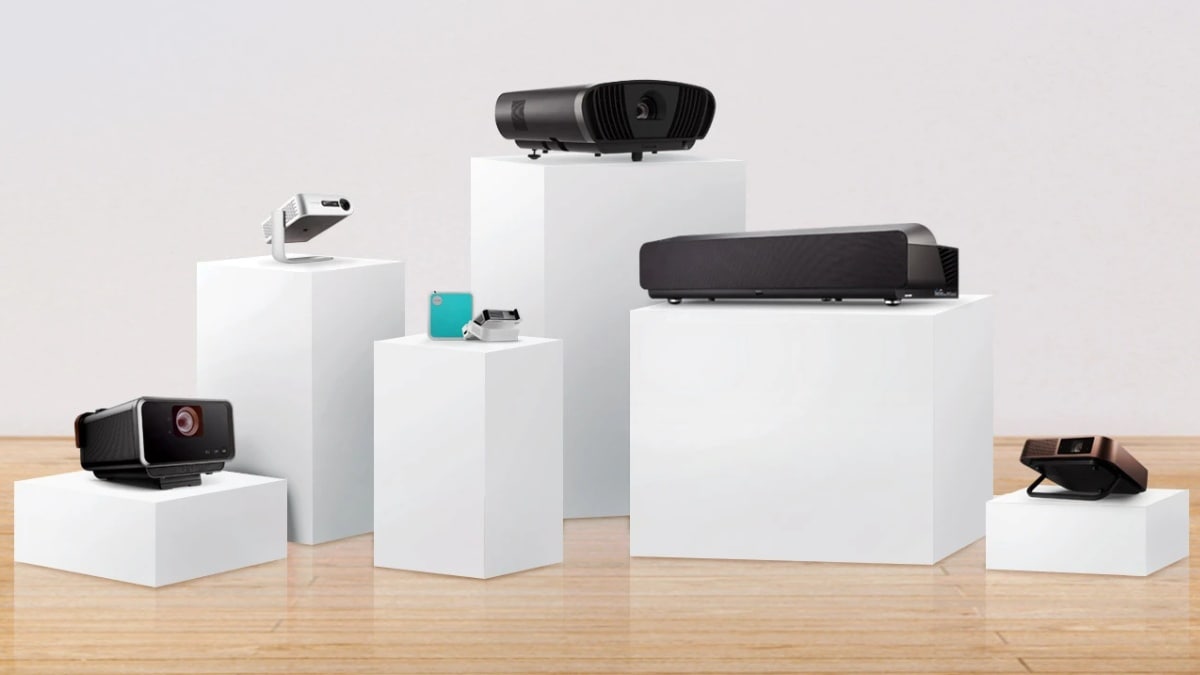
ViewSonic's existing projectors
Photo Credit: ViewSonic
In Quarter1, we will also launch interactive flat panels equipped with cameras and microphones, so that video conferencing and blended learning will be much smoother. Following this, in Q2, we will further expand our line of products by unveiling our 51 series. When it comes to the range of projectors, our key focus would be on laser projectors, particularly those with brightness of 6,000 lumens or higher, which are in high demand. Alongside, we would be launching the LSD400, which is a 4,000-lumen laser projector with LAN connectivity, in January. This will be our roadmap for the first six months of 2026, which will demonstrate our commitment to innovation and AI in India.
Comments
Get your daily dose of tech news, reviews, and insights, in under 80 characters on Gadgets 360 Turbo. Connect with fellow tech lovers on our Forum. Follow us on X, Facebook, WhatsApp, Threads and Google News for instant updates. Catch all the action on our YouTube channel.
Related Stories



Advertisement
Follow Us




-
04:37
[Sponsored]: CP PLUS CarKam CP-F89B: 4K Dashcam With Rear Camera, GPS & Emergency Recording -
04:23
[Partner Content] Your Phone Can Do WAY More Than You Think | OPPO ColorOS 16 -
01:59
Samsung Galaxy Z Fold8 Ultra: Unfold the Ultra Night -
03:24
Apple Pay Launches In India: Supported Devices, Cards And Payments Explained -
00:21
[Sponsored] Samsung Galaxy Z Fold8, Fold8 Ultra
-
Flipkart Big Billion Days: Xiaomi के 5 Redmi स्मार्टफोन्स पर Deals रिवील
-
Delhi Pollution 2026: 50% Work From Home, बिना PUCC नहीं मिलेगा Fuel
-
Oppo K15x हुआ लॉन्च; 6500mAh बैटरी, 120Hz डिस्प्ले के साथ आया बजट 5G फोन
-
Mahindra का EV मार्केट में दमदार परफॉर्मेंस, 1 लाख से ज्यादा हुई इलेक्ट्रिक SUV की सेल्स
-
₹35,000 वाला फोन अब इतने रुपये में मिल रहा, 50MP कैमरा और बड़ी बैटरी भी
Advertisement
Popular on Gadgets
- Samsung Galaxy S26 Ultra
- Motorola Razr Fold
- ChatGPT
- OPPO Find N6
- Mobiles Under Rs. 40,000
- Vivo X300 Ultra
- Asus Zenbook S14
- iQOO 15
- Vivo X300 Pro
- Lenovo Yoga Slim 7i Aura Edition
- iQOO 15R
- Vivo X Fold 5
- Sony PlayStation 5
- HP OmniPad 12
- OnePlus Nord CE 6 Lite
- OnePlus Pad 4
- OPPO F33 Pro 5G
- Cryptocurrency
- HP OmniBook Ultra 14 (2026)
- iPhone 17
- Eureka Forbes AP 355 Room Air Purifier
- Latest Mobile Phones
- Compare Phones
Latest Gadgets
- Samsung Galaxy F08
- Samsung Galaxy M08
- OPPO K15x
- OPPO K15s
- HMD Vibe 2 Pro 5G
- OPPO K14 Plus 5G
- Lava Shark 2 Pro 5G
- Ai+ Pulse 2 FE
- Dell 14 Plus 2-in-1 (AMD Ryzen AI 7 350, 2025)
- Microsoft Surface Laptop, 13-inch (2nd Edition)
- Samsung Galaxy Tab S12+
- Samsung Galaxy Tab S12 Ultra
- Amazfit T-Rex Dual Solar
- OPPO Watch S2
- Toshiba 65-Inch 4K Ultra HD Smart Mini LED QLED TV (65Z670SP)
- Haier M70 Mini LED 65-inch
- Acer Predator Atlas 8
- Asus ROG Ally
- Blue Star 1.5 Ton 5 Star Inverter Split AC (IE518ZNURS)
- Blue Star 2 Ton 3 Star Inverter Window AC (WIE324L)

- About Us
- Sitemaps
- Feedback
- Archives
- Contact Us
- RSS
- Advertise
- Career
- Privacy Policy
- Ethics
- Editorial Policy
- Terms & Conditions
- Complaint Redressal
Download Our Apps
Available in Hindi
© Copyright Red Pixels Ventures Limited 2026. All rights reserved.