-
 Hisense Announces Festive TV Offers Ahead of Amazon Great Indian Festival, Flipkart Big Billion Days Sales6 October 2026
 -
Hisense E8S 144Hz ULED Mini-LED TV Series With Dolby Vision IQ Launched in India: Price, Features19 June 2026
-
Amazon Great Summer Sale: Best Deals on Air Conditioners From Lloyd, IFB, Daikin and More13 May 2026
-
Amazon Great Summer Sale: Best Deals on Smart TVs From Samsung, TCL, Xiaomi and Other Brands Teased4 May 2026
-
Amazon Sale 2025: Best Deals on 55-inch Smart TVs Under Rs. 35,0001 October 2025
- Home
- Tv
- Tv Features
- TV Prices May Rise 3 to 5% After Diwali, Hisense CEO Reveals Best Time to Buy a New TV
TV Prices May Rise 3 to 5% After Diwali, Hisense CEO Reveals Best Time to Buy a New TV
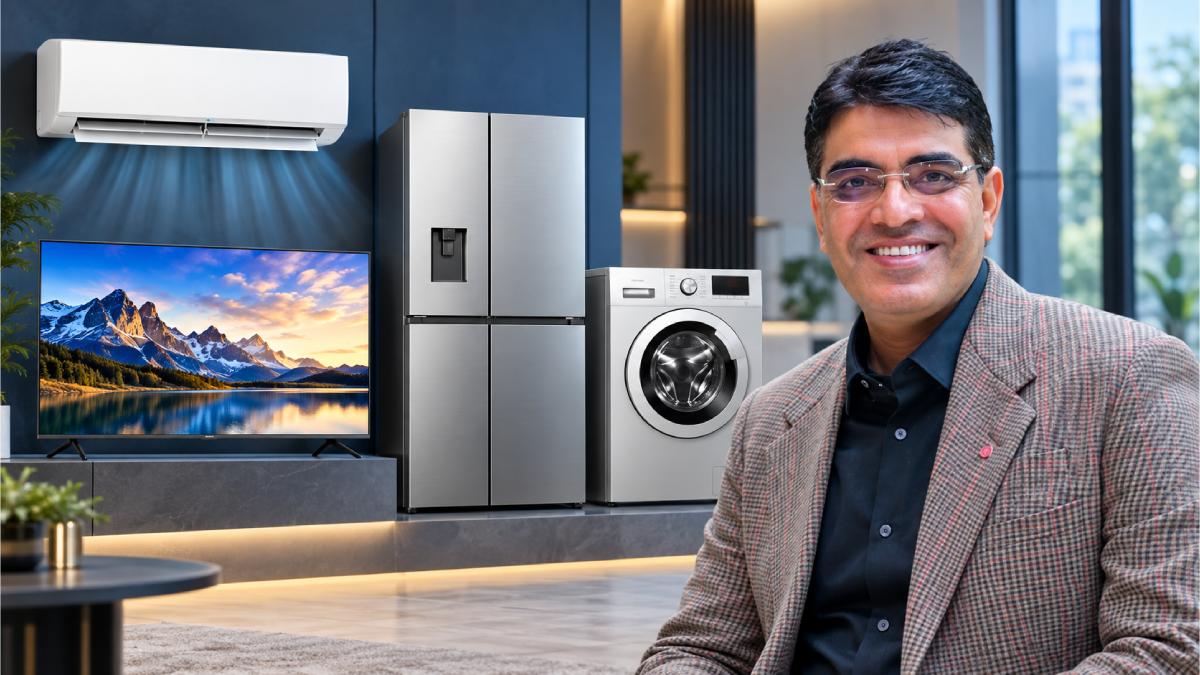
Hisense is expanding beyond TVs into air conditioners, washing machines and other home appliances in India. The company plans to strengthen its service network while targeting 8-10 exclusive service centres next year.
Written by Ankit Sharma | Updated: 8 October 2026 15:22 IST
Click Here to Add Gadgets360 As A Trusted Source


Advertisement
Hisense is now expanding its footprint in India beyond televisions and is eyeing categories like ACs, washing machines and other home appliances. The brand, which also entered the Indian market with TVs, is also banking on increasing demand for bigger screens and premium display technologies. The company is looking to grow its offline presence, distribution, and market share across categories. Hisense currently estimates its TV market share in India at around 3-4% and wants to take that to 10% within the next two to three years. It is also targeting at least 10% market share in washing machines and 5% in air conditioners over the same period.
Gadgets 360 spoke to Pankaj Rana, CEO of Hisense India, about the company's plans for India, TV price trends after Diwali, what consumers should look for when buying a TV, the growing popularity of Mini-LED and larger screens, the role of AI in TVs, after-sales service, and Hisense's expansion across home appliances. Some responses have been edited for clarity.
- I have around Rs. 70,000 set aside for a TV and Hisense has made me rethink my shortlist
- Which TV brand gives better long-term value in India: Xiaomi, TCL, or Hisense?
- Best 55-Inch TV Under Rs. 50,000 in 2026?
- Mini-LED vs. QLED, which is better for a bright living room in 2026?
- Anyone here using a QLED TV under Rs. 50,000? How’s the experience?
Diwali festival season is almost starting. TV prices have changed significantly this year due to rising component costs. So, should consumers buy TVs now during the festive sales? Or do you think prices may come down in the next six months?
If you are thinking of buying a TV, I'd say the next 45 days are the best time to buy one. We are not increasing our prices during the festive season, even though our input costs are increasing. There is pressure from several areas, including memory costs, copper and aluminium prices, container costs, and the dollar exchange rate. We are currently absorbing around 5-7 percent of the increased costs rather than passing them on to consumers. After Diwali, however, there could be another round of price increases. It could be around 3-5 percent or even higher in some categories, depending on how the overall cost environment develops. So, from a consumer point of view, Diwali is a good time to buy a TV.
If a user's budget is Rs 50,000 to buy a TV for this festival, then what kind of Hisense TV and technology can he expect at this price?
Hisense has a 55-inch Mini-LED TV priced around ₹50,000 for consumers this festive season. The exact price may vary by about 5-7 percent depending on the offers and discounts available. Our focus is not just on giving consumers a bigger screen. At that price, we want to give them a combo of screen size, picture quality, brightness, sound and performance. So I would recommend that if a consumer has a fixed budget, they look at the total value instead of just one specification.
What is Hisense's current TV market share in India, and what are your targets for this year and the next three years in all product categories? Which markets will drive this growth?
We are still relatively new to the Indian market, particularly in the offline TV segment, where we started only about a year ago. Currently, our TV market share is below 5%, around 3-4%. Our ambition is to grow more than 50% year-on-year and reach around 10% market share in TVs within the next two to three years. For washing machines, our target is to reach at least 10% market share within three years. In air conditioners, where the market is highly competitive with more than 20-25 brands, our target is to achieve at least 5% market share.
For the current financial year, our immediate focus is on building the right distribution network, expanding our product portfolio and growing our presence across key channels. We expect initial growth from metro and Tier 1 cities through major channel partners, while Tier 2, Tier 3, and Tier 4 markets will also play an important role, particularly for categories such as washing machines. We are also expanding our product range for smaller towns. For example, we are bringing more than 25 semi-automatic washing machine SKUs, as this category continues to see strong demand in Tier 3 and Tier 4 markets.
TVs are getting bigger, with 75-inch, 85-inch, and even 100-inch models becoming more visible in India. Is the Indian consumer now prioritising screen size over having the most advanced display technology?
Indian consumers definitely want a bigger screen, but they are not looking at screen size alone. They are becoming much more aware of the technology inside the TV. Today, consumers are asking about brightness, the chipset, gaming performance, AMD FreeSync, sound output, and even the number of nits. These conversations weren't as common three or four years ago. So, consumers want a bigger screen, but they also want the features and performance that come with it. It is really about getting better value from the TV.
Consumers are increasingly confused between LED, QLED, OLED, and Mini-LED. In simple terms, what should a consumer choose for movies, sports, and gaming?
Consumers are becoming much more familiar with these technologies. Mini-LED, QLED, and OLED are no longer completely unfamiliar terms for Indian buyers. What would I recommend if you asked me? I think consumers should consider Mini-LED. Our Mini-LED TVs are brighter, feature more dimming zones, and include features like AMD FreeSync that can be useful for gaming. They also provide a great overall experience for movies, sports and other types of content. The important thing is not just to look at the technology name. Consumers should understand what benefit that technology actually brings to their viewing experience.
Do you believe Mini-LED can eventually become a mainstream alternative to OLED in India?
Yes, for sure. “Mini-LED is a technology we think can be very important in the market. Consumers are already getting familiar with Mini-LED; QLED has been around for several years, and consumers also get OLED. Our aim now is to educate consumers about the real advantages of these technologies rather than just talking about specifications.
Every TV brand is talking about AI now. What does AI actually do on a Hisense TV that a normal consumer can notice today?
For me, AI should not just be a marketing term. If we are talking about AI, there should be a real benefit that the consumer can understand and use. AI can improve things like brightness, contrast and sharpness on our TVs depending on the type of content you're watching and the lighting in the room. The same is true for noise. The TV can adjust the sound experience based on the content, such as bass, treble, and surround sound. I believe AI should make the TV easier and better to use. If a consumer cannot understand the benefit or does not actually use the feature, then it becomes more of a marketing gimmick than useful technology.
Price and specifications get a lot of attention, but after-sales service is one of the biggest concerns for Indian consumers. If a ₹1 lakh Hisense TV develops a problem, how quickly can a customer realistically expect resolution?
Service will be one of the most important pillars of our growth in India. Consumers may buy a TV for its features or price, but they recommend a brand to friends and family only after a good service experience. At present, we have more than 800 service centres across India and work with service partners. However, our Hisense team handles management, monitoring, and performance metrics. More than 90 percent of our installations happen within 24 hours, and our repair service-level agreement is within 72 hours.
We also recognise that there is still room for improvement. Over the next year, we plan to establish our own exclusive service centres, starting with major cities. We are planning at least 8-10 exclusive service centres next year.
Hisense entered India primarily through TVs, but you are now expanding into washing machines, refrigerators, and other appliances. Over the next five years, does Hisense want to be known primarily as a TV brand or as a complete consumer-electronics brand in India?
Our ambition is much bigger than being only a TV brand. Globally, Hisense has a complete portfolio covering TVs, home appliances, air conditioners, and other categories. In India, we are also expanding our portfolio. This year, we have already expanded into three major categories—televisions, air conditioners, and washing machines. We are also building our presence in other home-appliance categories. Our aim is to become a complete consumer-electronics and home-appliance brand in India while continuing to strengthen our position in televisions, particularly in the large-screen segment.
Comments
Get your daily dose of tech news, reviews, and insights, in under 80 characters on Gadgets 360 Turbo. Connect with fellow tech lovers on our Forum. Follow us on X, Facebook, WhatsApp, Threads and Google News for instant updates. Catch all the action on our YouTube channel.
Related Stories


Advertisement
Follow Us




-
04:37
[Sponsored]: CP PLUS CarKam CP-F89B: 4K Dashcam With Rear Camera, GPS & Emergency Recording -
04:23
[Partner Content] Your Phone Can Do WAY More Than You Think | OPPO ColorOS 16 -
01:59
Samsung Galaxy Z Fold8 Ultra: Unfold the Ultra Night -
03:24
Apple Pay Launches In India: Supported Devices, Cards And Payments Explained -
00:21
[Sponsored] Samsung Galaxy Z Fold8, Fold8 Ultra
-
Amazon Great Indian Festival Sale 2026: ₹40 हजार वाले फोन पर जबरदस्त छूट
-
Amazon Great Indian Festival: ₹51 हजार सस्ता मिल रहा Samsung फ्लैगशिप फोन
-
Flipkart Big Billion Days Sale 2026: iPhone 15 पर बंपर डील!
-
Flipkart Big Billion Days Sale 2026 हुई शुरू, Plus और Black मेंबर्स के लिए स्मार्टफोन से इलेक्ट्रॉनिक तक 80% ड
-
Amazon Great Indian Festival Sale: 9000mAh बैटरी वाला OnePlus Nord 6 मिल रहा सबसे सस्ता, जानें ऑफर
Advertisement
Popular on Gadgets
- Samsung Galaxy S26 Ultra
- Motorola Razr Fold
- ChatGPT
- OPPO Find N6
- Mobiles Under Rs. 40,000
- Vivo X300 Ultra
- Asus Zenbook S14
- iQOO 15
- Vivo X300 Pro
- Lenovo Yoga Slim 7i Aura Edition
- iQOO 15R
- Vivo X Fold 5
- Sony PlayStation 5
- HP OmniPad 12
- OnePlus Nord CE 6 Lite
- OnePlus Pad 4
- OPPO F33 Pro 5G
- Cryptocurrency
- HP OmniBook Ultra 14 (2026)
- iPhone 17
- Eureka Forbes AP 355 Room Air Purifier
- Latest Mobile Phones
- Compare Phones
Latest Gadgets
- Vivo Y32 (2026)
- Infinix Smart 20 HD
- Vivo V80
- Vivo S2 FE
- Vivo Y600K Turbo
- Realme P4s Lite
- Vivo S60t
- OPPO F35 5G
- Lenovo ThinkBook 14x
- Dell 14 Plus 2-in-1 (AMD Ryzen AI 7 350, 2025)
- Samsung Galaxy Tab S12+
- Samsung Galaxy Tab S12 Ultra
- Amazfit T-Rex Dual Solar
- OPPO Watch S2
- Toshiba 65-Inch 4K Ultra HD Smart Mini LED QLED TV (65Z670SP)
- Haier M70 Mini LED 65-inch
- Acer Predator Atlas 8
- Asus ROG Ally
- Blue Star 1.5 Ton 5 Star Inverter Split AC (IE518ZNURS)
- Blue Star 2 Ton 3 Star Inverter Window AC (WIE324L)

- About Us
- Sitemaps
- Feedback
- Archives
- Contact Us
- RSS
- Advertise
- Career
- Privacy Policy
- Ethics
- Editorial Policy
- Terms & Conditions
- Complaint Redressal
Download Our Apps
Available in Hindi
© Copyright Red Pixels Ventures Limited 2026. All rights reserved.