-
 Xbox Games Showcase Announced for June 7, Gears of War: E-Day to Get Deep Dive1 April 2026
 -
Microsoft Pauses Automatic Rollout of Microsoft 365 Copilot App on Windows19 March 2026
-
Google, Amazon, Microsoft and Others Join Hands to Fight Online Scams and Fraud17 March 2026
-
Microsoft Reportedly Ditched Copilot Suggestions in Notifications to Reduce AI Bloat in Windows 1116 March 2026
-
Microsoft’s Gaming Copilot AI Assistant is Coming to Current-Generation Xbox Consoles in 2026: Report16 March 2026
Microsoft CEO Satya Nadella Says AI Must Evolve From Models to Systems for Real-World Impact
Microsoft CEO Satya Nadella reflected on the growth of AI in 2025 and its outlook for the year 2026.
Written by Akash Dutta, Edited by Ketan Pratap | Updated: 5 January 2026 11:08 IST
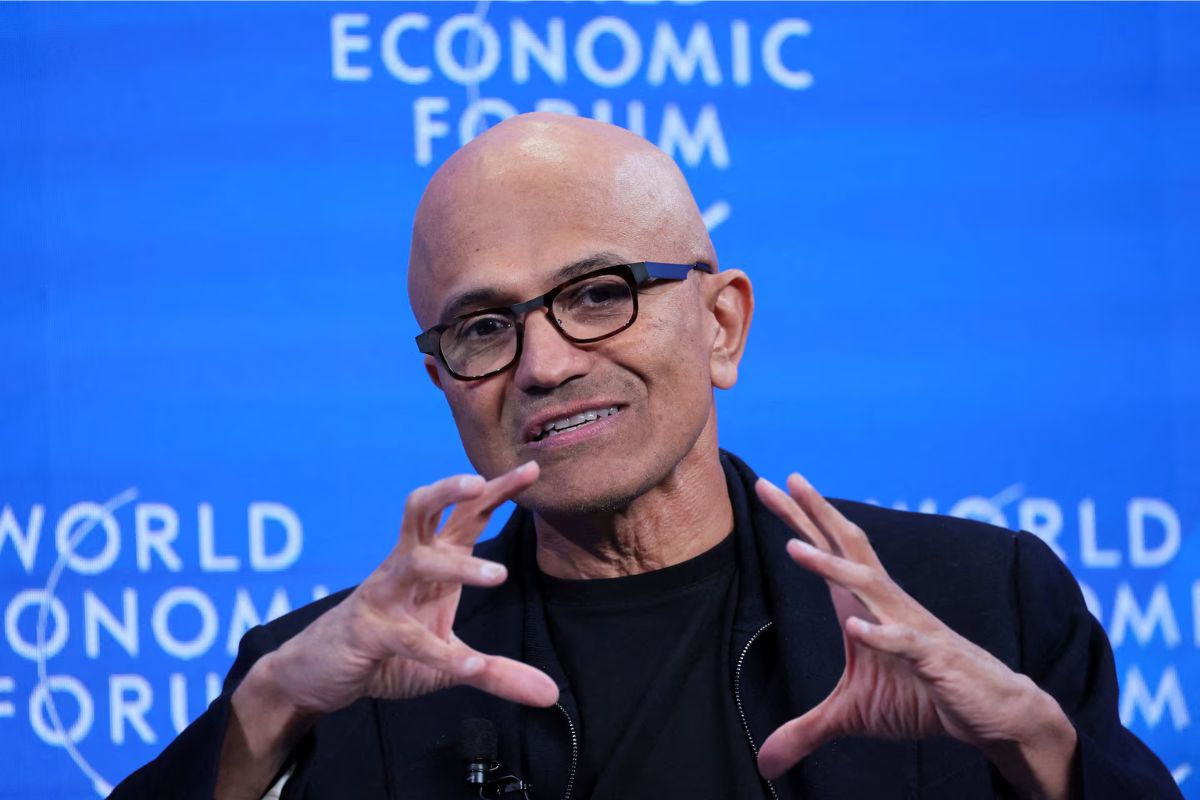
Photo Credit: Reuters
Satya Nadella believes we need to go beyond the argument of slop vs sophistication
Click Here to Add Gadgets360 As A Trusted Source


Advertisement
Microsoft Chairman and CEO Satya Nadella has outlined his vision for the artificial Intelligence (AI) landscape in 2026, highlighting a transition beyond standalone models and toward AI systems designed for real-world use and impact. In a year-end post titled “Looking Ahead to 2026,” Nadella wrote that the industry is moving past early discovery phases and into “widespread diffusion” of AI technologies. He said companies must shift focus from raw capability to meaningful outcomes and build systems that work safely and usefully outside research environments.
Satya Nadella Bets on AI Systems
In his first personal blog post on sn scratchpad, Nadella argued that the AI industry is currently going through a vibe shift. He claimed that while the narrative of 2025 was shared around the debates of “spectacle VS substance,” distinguishing between the two is becoming easier.
Instead, he suggested that the industry should focus on how AI can be purposefully integrated into everyday workflows and societal services. According to the Microsoft CEO, the debate over sheer model power must give way to engineering “rich scaffolds” that orchestrate multiple AI components into cohesive and practical systems.
In his reflections, Nadella called for a new conceptual framework that treats AI as “scaffolding for human potential,” instead of a substitute for humans. He also gave a callback to Steve Jobs' famous “bicycles for the mind” quote, highlighting that AI should play the same, but an evolved role.
A central theme of Nadella's blog is the notion that AI models alone are no longer sufficient for broad, real-world impact. He said future progress requires systems that combine multiple models, support memory and entitlements, and incorporate safe ways to use tools at scale. “We will evolve from models to systems when it comes to deploying AI for real-world impact,” he wrote, noting that engineers will need to handle the “jagged edges” of current technology as they build these systems.
This shift, as Nadella described it, involves not just technical integration but a broader evaluation of where and how AI is deployed. He argued that factors such as the allocation of scarce compute, energy and talent resources should inform decisions about AI deployment if the technology is to earn what he called “societal permission”.
The Microsoft CEO also stated that achieving real-world impact from AI will depend on consensus around these socio-technical challenges.
Comments
Get your daily dose of tech news, reviews, and insights, in under 80 characters on Gadgets 360 Turbo. Connect with fellow tech lovers on our Forum. Follow us on X, Facebook, WhatsApp, Threads and Google News for instant updates. Catch all the action on our YouTube channel.
Related Stories



Microsoft CEO Satya Nadella Says AI Must Evolve From Models to Systems for Real-World Impact


Advertisement
Follow Us




-
05:05
Goboult Mustang Racer Smartwatch Review: Should You Get This Mustang Smartwatch? -
04:58
OnePlus Nord Buds 4 Pro Review: Specs, Sound Quality, ANC, and Battery Backup Tested -
02:29
[Sponsored] Samsung Galaxy S26 Ultra First Look: AI Smartphone for Creators, Gaming & Productivity -
04:25
Vivo X200T Review - Full Camera, Gaming & Battery Test | Worth Buying? -
28:31
The Future of Productivity: Logitech's Anatoliy Polyanker On AI, Hybrid Work, And India's Tech Boom
Advertisement
Popular on Gadgets
- Samsung Galaxy Unpacked 2026
- iPhone 17 Pro Max
- ChatGPT
- iOS 26
- Laptop Under 50000
- Smartwatch Under 10000
- Apple Vision Pro
- Oneplus 12
- OnePlus Nord CE 3 Lite 5G
- iPhone 13
- Xiaomi 14 Pro
- Oppo Find N3
- Tecno Spark Go (2023)
- Realme V30
- Best Phones Under 25000
- Samsung Galaxy S24 Series
- Cryptocurrency
- iQoo 12
- Samsung Galaxy S24 Ultra
- Giottus
- Samsung Galaxy Z Flip 5
- Apple 'Scary Fast'
- Housefull 5
- GoPro Hero 12 Black Review
- Invincible Season 2
- JioGlass
- HD Ready TV
- Latest Mobile Phones
- Compare Phones
Latest Gadgets
- Nord 6
- Honor X80i
- Honor Play 80 Pro
- Redmi Note 15 SE 5G
- Redmi A7 Pro
- OPPO K15 Pro
- OPPO K15 Pro+
- Lava Bold N2 Lite
- Xiaomi Book Pro 14
- MacBook Neo
- Vivo Pad 6 Pro
- Lenovo Legion Y700 Gen 5
- boAt Valour Watch 1R
- Xiaomi Watch S5
- Xiaomi QLED TV X Pro 75
- Haier H5E Series
- Asus ROG Ally
- Nintendo Switch Lite
- Haier 1.6 Ton 5 Star Inverter Split AC (HSU19G-MZAID5BN-INV)
- Haier 1.6 Ton 5 Star Inverter Split AC (HSU19G-MZAIM5BN-INV)

- About Us
- Sitemaps
- Feedback
- Archives
- Contact Us
- RSS
- Advertise
- Career
- Privacy Policy
- Ethics
- Editorial Policy
- Terms & Conditions
- Complaint Redressal
Download Our Apps
Available in Hindi
© Copyright Red Pixels Ventures Limited 2026. All rights reserved.