-
 OpenAI Confirms Plans for a Family of AI Hardware Products30 July 2026
 -
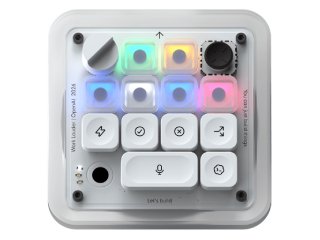
Codex Micro Launched as a Dedicated Controller for OpenAI Codex Power Users: Price, Features16 July 2026
-
SpaceX Acquires Cursor, the AI Coding Startup Competing With Claude Code and OpenAI Codex17 June 2026
-
ChatGPT Could Soon Become an AI Superapp With Coding Tools and Agents: Report10 June 2026
-
OpenAI Is Expanding Codex to ChatGPT Mobile App on iOS and Android15 May 2026
OpenAI Upgrades Codex With Computer Use, Image Generation Capabilities
Computer Use in Codex is first rolling out to macOS.
Written by Akash Dutta, Edited by Ketan Pratap | Updated: 17 April 2026 13:50 IST

Photo Credit: Unsplash/Levart_Photographer
Memory and contextual suggestions in Codex will soon roll out to Enterprise and Edu users
Click Here to Add Gadgets360 As A Trusted Source

Advertisement
OpenAI, on Thursday, released a major update to Codex, its coding-focused platform for desktop. The new update brings computer use, image generation, native access to the web, and other personalisation tools to users, significantly upgrading the usability of the tool. The new features are first arriving on macOS and will be rolled out to Windows and the integrated development environment (IDE) soon. Interestingly, the capability arrived the same day Anthropic released Claude Opus 4.7, which also focuses on bringing improvements to software engineering.
OpenAI's Codex Gets New Capabilities
In a post, the San Francisco-based artificial intelligence (AI) giant announced a new update for Codex. The developer and enterprise-focused product is now gaining several new features that will widen its use case. Making the announcement, the company also highlighted that Codex is now being used by more than three million developers who use the platform every week (weekly active users or WAU).
The most noteworthy addition is computer use. Codex can now autonomously operate the user's desktop and control a large selection of apps and tools. By using specific agents, it can see and process the content on the screen, click on icons, and type text in text boxes and documents. The feature can work in the background, meaning the user has the option to either monitor Codex or do their own work in the meantime. This capability is first coming to macOS.
Codex can now also work natively with the web using an in-app browser. Users can comment directly on pages to provide precise instructions for the AI agent. However, the feature is limited to locally accessing web applications. Alongside, the platform can also generate and edit images using the GPT-image-1.5 AI model.
OpenAI claims that these capabilities will be helpful for developers who want to use Codex for frontend tasks, testing, and iterating on projects. Image generation is also useful for creating visuals for product concepts, frontend designs, mockups, and games.
To broaden the use cases of Codex, the company has also released more than 90 additional plugins to let the agentic tool gather context and take action. Some of these include Atlassian Rovo, CircleCI, CodeRabbit, GitLab Issues, Microsoft Suite, Remotion, Render, and Superpowers.
Other improvements include support for incorporating GitHub review comments, running multiple terminal tabs, and connecting to remote devboxes over SSH in alpha. Further, OpenAI is also releasing memory in preview, which will allow Codex to remember context from previous conversations and sessions. These can be personal preferences, corrections, and researched information.
Comments
Get your daily dose of tech news, reviews, and insights, in under 80 characters on Gadgets 360 Turbo. Connect with fellow tech lovers on our Forum. Follow us on X, Facebook, WhatsApp, Threads and Google News for instant updates. Catch all the action on our YouTube channel.
Related Stories






Advertisement
Follow Us




-
![[Sponsored] LG NANO 4K UHD AI TV NU885: Gemini Search, Dolby Atmos & 5 Years of Updates](https://www.gadgets360.com/static/desktop/images/spacer.png)
04:17
[Sponsored] LG NANO 4K UHD AI TV NU885: Gemini Search, Dolby Atmos & 5 Years of Updates -
00:57
[Sponsored] Samsung Galaxy Z Fold8 My Fan Cam in Action: Find the Moment, Then Share It -
01:41
[Sponsored] What Do You Need To Know Before Your Next Run? | Samsung Galaxy Watch Ultra2 -
01:32
[Sponsored] Big Day Tomorrow? Prep Today | Samsung Galaxy Watch Ultra2 -
04:37
[Sponsored]: CP PLUS CarKam CP-F89B: 4K Dashcam With Rear Camera, GPS & Emergency Recording
-
Dell Pro Essential 14, Essential 15 लॉन्च, सिक्योरिटी के लिए गजब फीचर्स
-
Flipkart Big Billion Days Sale: ₹15 हजार में स्टूडेंट के लिए बेस्ट लैपटॉप
-
Amazon Great Indian Festival Sale: 10 हजार से सस्ते मिल रहे ये स्मार्टफोन
-
Poco X8s के जल्द लॉन्च की तैयारी, 50 मेगापिक्सल हो सकता है प्राइमरी कैमरा
-
Amazon पर Samsung Galaxy A56 5G, Flipkart पर Motorola Edge 70 Fusion की डील, ₹30 हजार में कौनसा फोन बेहतर?
Advertisement
Popular on Gadgets
- Samsung Galaxy S26 Ultra
- Motorola Razr Fold
- ChatGPT
- OPPO Find N6
- Mobiles Under Rs. 40,000
- Vivo X300 Ultra
- Asus Zenbook S14
- iQOO 15
- Vivo X300 Pro
- Lenovo Yoga Slim 7i Aura Edition
- iQOO 15R
- Vivo X Fold 5
- Sony PlayStation 5
- HP OmniPad 12
- OnePlus Nord CE 6 Lite
- OnePlus Pad 4
- OPPO F33 Pro 5G
- Cryptocurrency
- HP OmniBook Ultra 14 (2026)
- iPhone 17
- Eureka Forbes AP 355 Room Air Purifier
- Latest Mobile Phones
- Compare Phones
Latest Gadgets
- Vivo Y600s Pro
- Vivo Y32 (2026)
- Infinix Smart 20 HD
- Vivo V80
- Vivo S2 FE
- Vivo Y600K Turbo
- Realme P4s Lite
- Vivo S60t
- HP ZBook Ultra G3a
- Dell Pro Rugged 14
- Amazon Alexa Tablet 8
- Amazon Alexa Tablet 11
- Amazfit T-Rex Dual Solar
- OPPO Watch S2
- Toshiba 65-Inch 4K Ultra HD Smart Mini LED QLED TV (65Z670SP)
- Haier M70 Mini LED 65-inch
- Acer Predator Atlas 8
- Asus ROG Ally
- Blue Star 1.5 Ton 5 Star Inverter Split AC (IE518ZNURS)
- Blue Star 2 Ton 3 Star Inverter Window AC (WIE324L)

- About Us
- Sitemaps
- Feedback
- Archives
- Contact Us
- RSS
- Advertise
- Career
- Privacy Policy
- Ethics
- Editorial Policy
- Terms & Conditions
- Complaint Redressal
Download Our Apps
Available in Hindi
© Copyright Red Pixels Ventures Limited 2026. All rights reserved.