-
 Binance’s Security Chief Jimmy Su on Crypto Security, Regulation and More7 May 2025
-
Clipper Malware Poses Threat to Crypto Transactions: Binance Urges Users to Triple-Check Withdrawal Addresses16 September 2024
-
Binance Claims to Have Recovered $73 Million of Funds Stolen via Hacks, Scams in Q2 20249 August 2024
-
Binance Recovers $5.8 Million of $625 Million Stolen Funds From Axie Infinity Ronin Bridge Hack26 April 2022
-
Hacked Crypto Firm Wormhole Loses Ether Worth $322 Million, Offers Hacker $10 Million to Return Funds3 February 2022
- Home
- Cryptocurrency
- Cryptocurrency News
- Binance Faces Historic Crypto Hack as Emergency Response and Market Fallout Unfold
Binance Faces Historic Crypto Hack as Emergency Response and Market Fallout Unfold
Binance said issuers froze billions in USDT and USDC, while its SAFU fund holds around $1 billion to cover potential losses.
Written by Rahul Dhingra, Edited by Rohan Pal | Updated: 30 October 2026 17:53 IST
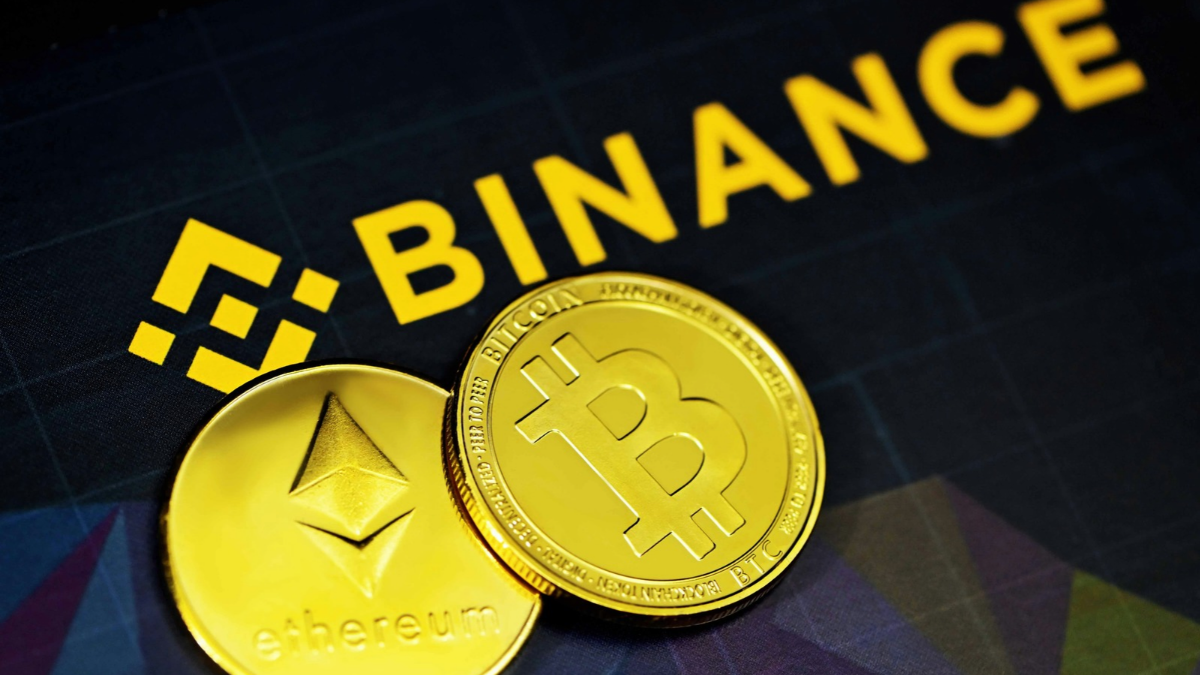
Photo Credit: Unsplash/Kanchanara
Binance’s Secure Asset Fund for Users holds around $1 billion in Bitcoin to help cover emergency losses
Click Here to Add Gadgets360 As A Trusted Source

Advertisement
On Thursday, Binance, which is the biggest cryptocurrency exchange by trading volume, was hacked for more than $6 billion (roughly Rs. 56,970 crore), making it the biggest ever cryptocurrency theft in history. Binance estimates the value of the total losses due to the attack at around $6.3 billion (roughly Rs. 59,818.50 crore). According to Binance, which updated its statement on Friday evening, about $3 billion (roughly Rs. 28,485 crore) worth of cryptoassets have been frozen, including $2.3 billion (roughly Rs. 21,838.50 crore) worth of USDT and USDC stablecoins. This implies that the token issuers have blocked any transactions from the blockchain addresses in question.
Binance Investigates Compromised Engineer Laptop as Stablecoin Issuers Freeze Funds
As per the statement, the primary cause behind this hack could be that the laptop of an engineer has become vulnerable to hacking. The wallets in possession of the hacker contained more than $5.7 billion (roughly Rs. 54,121.50 crore) in various cryptos stolen from Binance, as revealed by Arkham, including almost $1.5 billion (roughly Rs. 14,242.50 crore) in Bitcoin and around $900 million (roughly Rs. 8,545.50 crore) in Ether worth $2,220 (roughly Rs. 2.1 lakh). The wallets had approximately $1.5 billion (roughly Rs. 14,242.50 crore) in USDT and over $800 million (roughly Rs. 7,596 crore) in USDC stablecoins. According to blockchain analytics company Chainalysis, it is updating its estimate of the amount stolen, which stands at approximately $5.9 billion (roughly Rs. 56,005.50 crore).
The exchange added, “Binance's initial investigation suggests that the security incident may involve a compromised DevOps engineer's laptop, which allowed an attacker to gain access to a service container and submit unauthorized withdrawal transactions. We have found no evidence of any wallet private key leak.” In an X post, Binance's Co-CEO Yi He stated that the platform is going to pay for “all hacking losses.” The exchange has frozen all withdrawals until the security problem is solved.
Blockchain security professionals, ZachXBT, an investigator, and intelligence firms Blockaid and TRM Labs claimed that North Korea was responsible for the hack. "This is the biggest crypto hack in history,” said Ido Ben-Natan, co-founder and CEO of crypto security firm Blockaid.
CZ, founder of Binance, also responded to this matter, stating, “User funds are safe.” “It does look like a hack on Binance … I don't manage Binance anymore, but as a shareholder, I expect all user funds will be fully covered,” he added.
Bitcoin, Ether and BNB Fall as Attacker Moves Funds Through DeFi Platforms
The cryptocurrency markets reacted negatively to the incident. Bitcoin's price fell by 4.8 percent to below $78,000 (roughly Rs. 73.9 lakh), while Ether (ETH was down 5.7 percent. BNB, the token of the Binance-affiliated BNB Chain, was down by 8 percent, and AAVE was down 11 percent.
The wallet associated with the attack on Binance is making transactions on the decentralised exchange Uniswap (UNI), based on the blockchain analysis done by Arkham. The attacker managed to borrow a minimum of 20,000 wrapped ether (WETH) valued at about $44 million (roughly Rs. 417.78 crore) from the decentralised loan platform Aave as collateral with the stolen USDT tokens.
Both of the executives of Tether and Circle, who issue their stablecoins, are trying to trace the incident. According to Tether's CEO, Paolo Ardoino, the company managed to freeze about $1.57 billion USDT tokens, and according to Circle CEO Jeremy Allaire, USDC tokens worth more than $800 million (roughly Rs. 7,596 crore) have been frozen.
In case of any major crypto hack, the attackers attempt to exchange the assets that could be frozen by issuers such as centralised stablecoins, namely USDC and USDT, for the cryptocurrency that has no control of its centralised issuer. It is possible to conduct transactions through decentralised exchanges and lenders, such as Uniswap and Aave, through which it is possible to conduct transactions straight from the wallet without using a centralised exchange to process the transaction. Transfers, nevertheless, do not prove that the money has become impossible to freeze or recover.
Before the attack, Binance had about $144 billion (roughly Rs. 13,67,280 crore) worth of assets on its platform, based on DefiLlama data. The hacked amount would be around 4 percent of that. The company has some buffer to compensate for some of the losses. The Secure Asset Fund for Users (SAFU), which was launched in 2018 to safeguard users' money in case of security attacks and other emergencies, contains about $1 billion (roughly Rs. 9,495 crore) in Bitcoin. According to an earlier statement by Binance, it would compensate for all losses through the use of the SAFU fund and the company's own money, stressing that “user funds are safe.”
Comments
Get your daily dose of tech news, reviews, and insights, in under 80 characters on Gadgets 360 Turbo. Connect with fellow tech lovers on our Forum. Follow us on X, Facebook, WhatsApp, Threads and Google News for instant updates. Catch all the action on our YouTube channel.
Related Stories






Advertisement
Follow Us


-

01:24
[Sponsored] A Last-Minute Diwali Makeover With Galaxy Z Fold8 -
01:42
[Sponsored] Galaxy Watch9 for Everyday Health Insights | Smarter Wellness Choices -
01:15
[Sponsored] Galaxy Tab S10 Lite for Students: Notes, Solve Math and More -
04:17
[Sponsored] LG NANO 4K UHD AI TV NU885: Gemini Search, Dolby Atmos & 5 Years of Updates -
00:57
[Sponsored] Samsung Galaxy Z Fold8 My Fan Cam in Action: Find the Moment, Then Share It
-
Samsung Galaxy S25 Ultra 5G खरीदें 47,849 डिस्काउंट पर, Amazon पर ऑफर
-
Karbonn Rebel Pro, Rebel जल्द होंगे भारत में लॉन्च, फीचर्स आए सामने
-
शुभमन गिल ने टेस्ट किया दीपिंदर गोयल का Temple डिवाइस, जानें क्या है काम?
-
10001mAh की विशाल बैटरी और 144Hz डिस्प्ले वाला 5G फोन, फ्लिपकार्ट सेल में सीधे ₹3400 सस्ता
Advertisement
Popular on Gadgets
- Samsung Galaxy S26 Ultra
- Motorola Razr Fold
- ChatGPT
- OPPO Find N6
- Mobiles Under Rs. 40,000
- Vivo X300 Ultra
- Asus Zenbook S14
- iQOO 15
- Vivo X300 Pro
- Lenovo Yoga Slim 7i Aura Edition
- iQOO 15R
- Vivo X Fold 5
- Sony PlayStation 5
- HP OmniPad 12
- OnePlus Nord CE 6 Lite
- OnePlus Pad 4
- OPPO F33 Pro 5G
- Cryptocurrency
- HP OmniBook Ultra 14 (2026)
- iPhone 17
- Eureka Forbes AP 355 Room Air Purifier
- Latest Mobile Phones
- Compare Phones
Latest Gadgets
- OnePlus Ace 7 Pro
- OnePlus Ace 7
- Samsung W27
- Huawei Pura 90 Plus
- iQOO Neo 12
- Redmi K100
- Vivo Y600
- HMD 2660 Flip Senior Edition
- MacBook Pro With PROLED XDR (16-Inch, M5 Max)
- MacBook Pro With PROLED XDR (14-Inch, M5 Max)
- iPad mini (2026)
- Amazon Alexa Tablet 8
- Pebble Qore 2
- Amazfit T-Rex Dual Solar
- Toshiba 65-Inch 4K Ultra HD Smart Mini LED QLED TV (65Z670SP)
- Haier M70 Mini LED 65-inch
- Acer Predator Atlas 8
- Asus ROG Ally
- Blue Star 1.5 Ton 5 Star Inverter Split AC (IE518ZNURS)
- Blue Star 2 Ton 3 Star Inverter Window AC (WIE324L)

- About Us
- Sitemaps
- Feedback
- Archives
- Contact Us
- RSS
- Advertise
- Career
- Privacy Policy
- Ethics
- Editorial Policy
- Terms & Conditions
- Complaint Redressal
Download Our Apps
Available in Hindi
© Copyright Red Pixels Ventures Limited 2026. All rights reserved.