-
 South Korea Restricts Access to KuCoin, MEXC and 25 Other Crypto Platforms13 October 2026
 -
Kraken Parent Payward Gets Full Dubai Licence to Expand in UAE12 October 2026
-
Sui Commits $30 Million as DATA Network Winds Down Blockchain12 October 2026
-
Bitget Restores Bitcoin Withdrawal Services Following $388 Million Hack28 September 2026
-
BitMEX Halts Crypto Trading, but Keeps Withdrawals Open Following Closure23 September 2026
- Home
- Cryptocurrency
- Cryptocurrency News
- BitMart Exchange to Cease Trading by August 26, Full Shutdown Set for 2027
BitMart Exchange to Cease Trading by August 26, Full Shutdown Set for 2027
Crypto exchange begins phased shutdown after suspending new registrations and deposits.
Written by Rahul Dhingra, Edited by Rohan Pal | Updated: 27 July 2026 16:49 IST

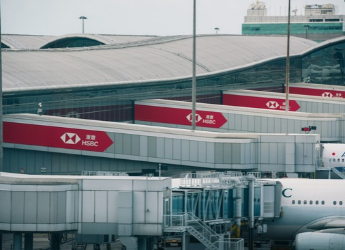
Photo Credit: Unsplash/FlyD
BitMart outlines timeline for exchange closure and user fund withdrawals
Click Here to Add Gadgets360 As A Trusted Source

Advertisement
BitMart's crypto exchange will shut down its trading facilities by August 26, and its operation will come to a close on January 31, 2027. According to the shutdown process that has been laid out, BitMart has ceased taking any new users or deposits, and futures trading has entered reduced-only mode and closed spot order books. As per the data by CoinGecko, the native token of BitMart, BMX, has witnessed a depreciation of more than 70 percent of its value amid reports of delays in the withdrawal of tokens by users of the platform. At the time of writing, BMX was valued at $0.09 (roughly Rs. 8.6 from $0.31 (roughly Rs. 29) recorded on Friday evening.
Withdrawal Delays and Leadership Exit Follow Wind-Down Announcement
Before the shutdown announcement, several users of X noted the increased duration of withdrawal time, with some noting that Tether USDT withdrawal requests were still pending for many hours. According to Arkham data, wallets associated with BitMart held about $71 million (roughly Rs. 682 crore) in crypto assets as of Sunday, down from around $102 million (roughly Rs. 978 crore) on July 6. About $41.5 million (roughly Rs. 398 crore) was in stablecoin banking platform WeFi's WFI tokens, while there was about $91,000 (roughly Rs. 87.2 lakh) worth of USDT.
- Crypto Exchanges Should Be Judged on Security, Not Just Trading Fees
- Crypto Exchanges Are Expanding Their Role Beyond Trading
- Crypto Exchanges Are Competing to Offer More Trading Pairs
- Crypto Exchanges Need Better Ways to Handle Wrong-Network Transfers
- What Happens When a Crypto Exchange Changes Its Fee Structure?
In its wind-up notice, BitMart said some withdrawal applications might require further compliance and security checks, which might lead to processing delays. Nenter Chow, who used to be BitMart's chief executive officer, posted on X that he was told on Friday that he had been fired and was no longer managing BitMart. According to Chow, he had not been consulted on BitMart's closure and only found out about it after the company issued its wind-up notice.
In recent times, we have seen plenty of crypto exchanges winding up operations. One of them was Loopring, the first zero-knowledge rollup solution from Ethereum. The DeFi protocol shut down its decentralised exchange and AMM, halted all trading operations, and instantly stopped the relayer. The Loopring team gave three main reasons for shutting down: a failure to achieve any kind of adoption, poor business development skills, and getting technologically outdated by current zkEVM solutions.
There have been plenty of DeFi protocols that have also thrown in the towel; for example, DeFi mobile “superapp” Legend, which announced its shutdown after two years of operation. Legend was a DeFi aggregator that mainly aimed to bring DeFi to its users. The TVL for the broader DeFi ecosystem has fallen close to 50 percent since October. Another protocol was Carrot, a Solana-based decentralised finance yield protocol, which was shut down not because of any operational problems, but due to the Drift Protocol exploit in early April.
Comments
Get your daily dose of tech news, reviews, and insights, in under 80 characters on Gadgets 360 Turbo. Connect with fellow tech lovers on our Forum. Follow us on X, Facebook, WhatsApp, Threads and Google News for instant updates. Catch all the action on our YouTube channel.
Related Stories






Advertisement
Follow Us




-
![[Sponsored] Galaxy Watch9 for Everyday Health Insights | Smarter Wellness Choices](https://www.gadgets360.com/static/desktop/images/spacer.png)
01:42
[Sponsored] Galaxy Watch9 for Everyday Health Insights | Smarter Wellness Choices -
01:15
[Sponsored] Galaxy Tab S10 Lite for Students: Notes, Solve Math and More -
04:17
[Sponsored] LG NANO 4K UHD AI TV NU885: Gemini Search, Dolby Atmos & 5 Years of Updates -
00:57
[Sponsored] Samsung Galaxy Z Fold8 My Fan Cam in Action: Find the Moment, Then Share It -
01:41
[Sponsored] What Do You Need To Know Before Your Next Run? | Samsung Galaxy Watch Ultra2
-
iPhone 16 Deal: ₹20 हजार सस्ता खरीदें iPhone 16, यहां मिल रहा है ऑफर
-
नया XGIMI 4K प्रोजेक्टर दीवार पर दिखाएगा IMAX स्टाइल में मूवी
-
Infinix GT 50 Pro 5G कल होगा भारत में लॉन्च, मिलेगी 6500mAh बैटरी!
-
Amazon Sale में ₹11 हजार सस्ता खरीदें Motorola का 50MP Sony कैमरा, 5500mAh बैटरी वाला 5G फोन!
-
Flipkart Sale में ₹12,249 में खरीदें Lava का 6000mAh बैटरी वाला 5G फोन!
Advertisement
Popular on Gadgets
- Samsung Galaxy S26 Ultra
- Motorola Razr Fold
- ChatGPT
- OPPO Find N6
- Mobiles Under Rs. 40,000
- Vivo X300 Ultra
- Asus Zenbook S14
- iQOO 15
- Vivo X300 Pro
- Lenovo Yoga Slim 7i Aura Edition
- iQOO 15R
- Vivo X Fold 5
- Sony PlayStation 5
- HP OmniPad 12
- OnePlus Nord CE 6 Lite
- OnePlus Pad 4
- OPPO F33 Pro 5G
- Cryptocurrency
- HP OmniBook Ultra 14 (2026)
- iPhone 17
- Eureka Forbes AP 355 Room Air Purifier
- Latest Mobile Phones
- Compare Phones
Latest Gadgets
- HMD 2660 Flip Senior Edition
- Lava Aura Curve
- Poco X8s
- Samsung Galaxy F70 5G
- Tecno Spark 50S 5G
- Vivo Y600s Pro
- Vivo Y32 (2026)
- Infinix Smart 20 HD
- Lenovo Yoga 9n 2-in-1
- Lenovo Yoga Pro 9n
- Amazon Alexa Tablet 8
- Amazon Alexa Tablet 11
- Pebble Qore 2
- Amazfit T-Rex Dual Solar
- Toshiba 65-Inch 4K Ultra HD Smart Mini LED QLED TV (65Z670SP)
- Haier M70 Mini LED 65-inch
- Acer Predator Atlas 8
- Asus ROG Ally
- Blue Star 1.5 Ton 5 Star Inverter Split AC (IE518ZNURS)
- Blue Star 2 Ton 3 Star Inverter Window AC (WIE324L)

- About Us
- Sitemaps
- Feedback
- Archives
- Contact Us
- RSS
- Advertise
- Career
- Privacy Policy
- Ethics
- Editorial Policy
- Terms & Conditions
- Complaint Redressal
Download Our Apps
Available in Hindi
© Copyright Red Pixels Ventures Limited 2026. All rights reserved.