-
 NASA’s Perseverance Records First-Ever Mini-Lightning on Mars2 December 2025
 -
NASA’s Perseverance May Have Found Its First Meteorite on Mars26 November 2025
-
NASA’s Perseverance Rover Finds Metal-Rich Rock on Mars: What You Need to Know24 November 2025
-
Mars Orbiter Tracks Interstellar Comet 3I/ATLAS With Unprecedented Precision18 November 2025
-
Blue Origin Delays NASA Mars Launch Amid Weather and FAA Restrictions17 November 2025
- Home
- Science
- Science News
- Scientists Find Clock on Mars Runs 477 Microseconds Faster Than Earth
Scientists Find Clock on Mars Runs 477 Microseconds Faster Than Earth
NIST physicists report that clocks on Mars tick 477 microseconds faster per day due to weaker gravity and orbital effects.
Written by Gadgets 360 Staff | Updated: 4 December 2025 18:49 IST
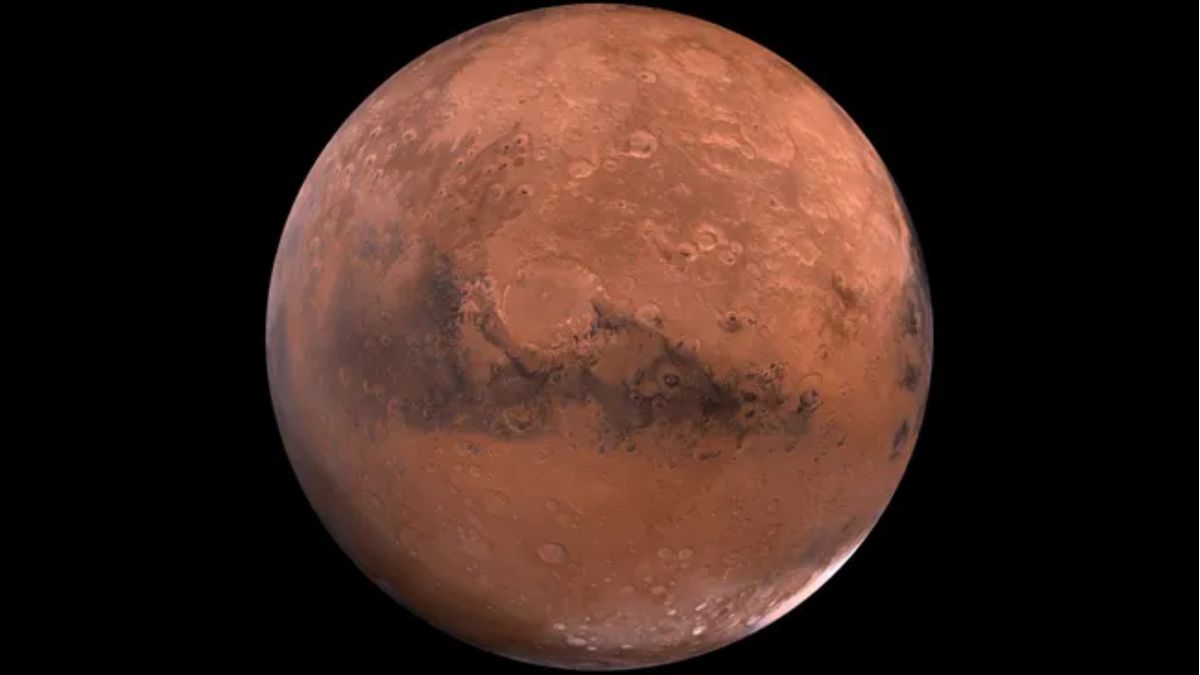
Photo Credit: NASA
Mars is racing through time 477 microseconds per day, on average, faster than Earth
Click Here to Add Gadgets360 As A Trusted Source


Advertisement
Recent research shows time literally races on Mars: clocks on the Red Planet tick roughly 477 microseconds per day faster than those on Earth. NIST physicists attribute this to Mars's weaker gravity and orbital factors, as predicted by Einstein's theory of general relativity. Though only a fraction of a second each day, the small time shift will matter as space agencies plan precise navigation and communication systems across the solar system.
Why Mars's clocks tick faster
According to a study by NIST physicists Neil Ashby and Bijunath R. Patla, clocks on Mars would run, on average, 477 microseconds per day faster than identical clocks on Earth, according to this research. This work takes into consideration the weaker surface gravity of Mars, its orbital eccentricity, and even gravitational tugs from the rest of the solar system. Nevertheless, because of its elliptical orbit, the deviation in time would exhibit variations in as much as ±226 microseconds per day, depending on its position along the orbit.
Implications for Mars exploration
A few hundred microseconds of drift can affect space navigation. Mission engineers must correct for Mars's roughly 477 microseconds a day clock lead and synchronise Earth–Mars systems (accounting for light-travel delay). Earth's 5G networks require timing accuracy to a tenth of a microsecond, and future space systems will need comparable precision.
Understanding Mars's clock offset is a step toward reliable GPS-style navigation on the Red Planet. Scientists warn that ignoring these relativistic offsets could disrupt future Martian navigation and communication. As Patla notes, knowing Mars's time difference will help synchronise networks for future Mars missions.
Comments
Get your daily dose of tech news, reviews, and insights, in under 80 characters on Gadgets 360 Turbo. Connect with fellow tech lovers on our Forum. Follow us on X, Facebook, WhatsApp, Threads and Google News for instant updates. Catch all the action on our YouTube channel.
Related Stories






Advertisement
Follow Us




-
04:56
Vivo X300 Review | Best Flagship of 2025? | Unbelievable Camera & Performance Test -
03:49
Lava Agni 4 Review - Best Indian 5G Phone Under Budget? -
05:23
Motorola G67 Power Review: The Real Battery Beast of 2025? -
06:14
[Partner Content] OPPO F31 Series: The Durable Champion That Stays Smooth & Powerful -
04:40
Google Pixel Buds 2a Review | Best Budget Earbuds 2025
-
आप आयुष्मान कार्ड बनवा सकते हैं या नहीं, ऐसे करें चेक, 5 लाख का इलाज फ्री
-
7000mAh बैटरी, 50MP कैमरा के साथ Realme P4x लॉन्च, जानें कीमत और फीचर्स
-
Google का गजब टूल, आपका फोन बताएगा कि कपड़े या जूते आप पर कैसे लग रहे हैं
-
बीच से मुड़ती है फोन की स्क्रीन! Nubia Fold, Flip3 हुए लॉन्च, 50MP कैमरा, 6500mAh बैटरी, जानें कीमत
-
बिना डिग्री के नौकरी देता है Zoho! फाउंडर श्रीधर वेम्बू ने बताया कारण
Advertisement
Popular on Gadgets
- Samsung Galaxy Unpacked 2025
- ChatGPT
- Redmi Note 14 Pro+
- iPhone 16
- Apple Vision Pro
- Oneplus 12
- OnePlus Nord CE 3 Lite 5G
- iPhone 13
- Xiaomi 14 Pro
- Oppo Find N3
- Tecno Spark Go (2023)
- Realme V30
- Best Phones Under 25000
- Samsung Galaxy S24 Series
- Cryptocurrency
- iQoo 12
- Samsung Galaxy S24 Ultra
- Giottus
- Samsung Galaxy Z Flip 5
- Apple 'Scary Fast'
- Housefull 5
- GoPro Hero 12 Black Review
- Invincible Season 2
- JioGlass
- HD Ready TV
- Laptop Under 50000
- Smartwatch Under 10000
- Latest Mobile Phones
- Compare Phones
Latest Gadgets
- Realme P4x 5G
- OnePlus Ace 6T
- OPPO A6x 5G
- Samsung Galaxy Z TriFold
- Poco F8 Ultra
- Poco F8 Pro
- Huawei Mate 80 RS Master Edition
- Huawei Mate 80 Pro Max
- Asus ProArt P16
- MacBook Pro 14-inch (M5, 2025)
- Poco Pad M1
- Poco Pad X1
- Just Corseca Skywatch Pro
- Honor Watch X5
- Acerpure Nitro Z Series 100-inch QLED TV
- Samsung 43 Inch LED Ultra HD (4K) Smart TV (UA43UE81AFULXL)
- Asus ROG Ally
- Nintendo Switch Lite
- Haier 1.6 Ton 5 Star Inverter Split AC (HSU19G-MZAID5BN-INV)
- Haier 1.6 Ton 5 Star Inverter Split AC (HSU19G-MZAIM5BN-INV)

- About Us
- Sitemaps
- Feedback
- Archives
- Contact Us
- RSS
- Advertise
- Career
- Privacy Policy
- Ethics
- Editorial Policy
- Terms & Conditions
- Complaint Redressal
Download Our Apps
Available in Hindi
© Copyright Red Pixels Ventures Limited 2025. All rights reserved.