-
 Scientists Apply Stephen Hawking's Theory to Propose Detectable ‘Black Hole Morsels’ in Space14 August 2025
 -
New Theory Challenges Black Hole Singularities, But Critics Raise Red Flags12 June 2025
-
New Black Hole Theory Challenges Singularity: What You Need to Know31 March 2025
-
Black Hole Singularities May Not Exist, Say Scientists7 March 2025
-
Physicists Discover Singularities-Free Black Holes Using Pure Gravity14 February 2025
- Home
- Science
- Science News
- Physicists Develop New Method to Detect Tiny Fluctuations in Spacetime
Physicists Develop New Method to Detect Tiny Fluctuations in Spacetime
Physicists propose a framework linking quantum gravity models to interferometers, enabling laboratory detection of tiny spacetime fluctuations, or quantum foam.
Written by Gadgets 360 Staff | Updated: 23 January 2026 22:00 IST
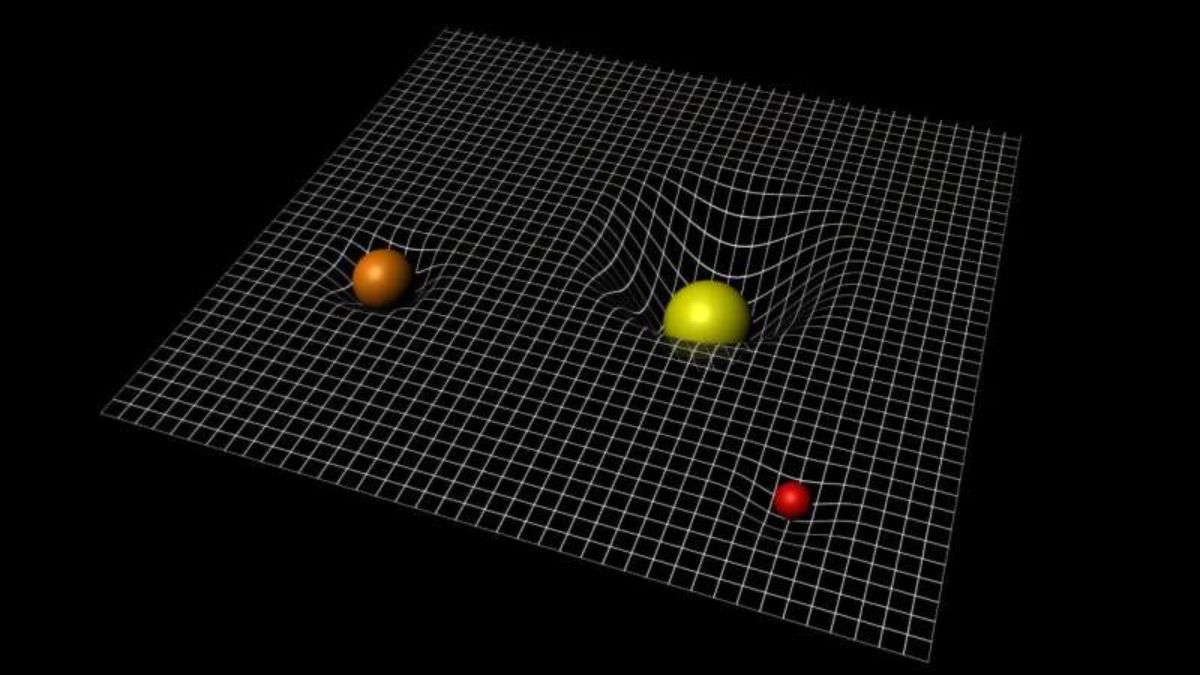
Photo Credit: ESA
Warwick framework enables interferometers to detect tiny spacetime fluctuations from quantum gravity
Click Here to Add Gadgets360 As A Trusted Source


Advertisement
Physicists now have a method to detect tiny fluctuations of spacetime, a prediction of theories attempting to merge quantum mechanics and the theory of gravity. Tiny fluctuations in spacetime are now referred to as “quantum foam” in a theory postulated by Wheeler. These tiny waves have been theorized for a number of years but never actually detected. They now have a way to be detected via a method developed at the University of Warwick.
A Unified Framework for Spacetime Ripples
The new study sorts possible spacetime distortions into three broad categories based on how their patterns vary in space and time. For each category, the authors identified a distinct interferometer signature, effectively mapping abstract theory to measurable effects. They found that small lab interferometers such as QUEST and GQuEST, despite their short arms, sweep a wide band of frequencies and can reveal detailed fluctuation patterns, while LIGO's 4-km arms are ideal for simply flagging whether any such noise exists at all. In short, the paper provides a “translation guide” from quantum-gravity predictions into actual experimental signals.
Bringing Quantum Gravity into the Lab
Different quantum gravity theories predicted various kinds of spacetime “jitter,” but until now each lacked a clear experimental plan. Previous searches – for example, looking for tiny delays in gamma-ray flashes from distant galaxies – have so far been inconclusive. These effects are expected only at the unimaginably tiny Planck length (~10^-35 m), so spotting them requires extreme precision. Now this framework is model-agnostic: it can test any theory that predicts random spacetime noise. In short, the work turns speculative “quantum foam” math into concrete experimental targets, paving the way for real measurements of spacetime's ultimate grain.
Comments
Get your daily dose of tech news, reviews, and insights, in under 80 characters on Gadgets 360 Turbo. Connect with fellow tech lovers on our Forum. Follow us on X, Facebook, WhatsApp, Threads and Google News for instant updates. Catch all the action on our YouTube channel.
Further reading:
quantum gravity, spacetime fluctuations, quantum foam, interferometers, LIGO, University of Warwick, theoretical physics
Related Stories






Advertisement
Follow Us




-
05:05
Goboult Mustang Racer Smartwatch Review: Should You Get This Mustang Smartwatch? -
04:58
OnePlus Nord Buds 4 Pro Review: Specs, Sound Quality, ANC, and Battery Backup Tested -
02:29
[Sponsored] Samsung Galaxy S26 Ultra First Look: AI Smartphone for Creators, Gaming & Productivity -
04:25
Vivo X200T Review - Full Camera, Gaming & Battery Test | Worth Buying? -
28:31
The Future of Productivity: Logitech's Anatoliy Polyanker On AI, Hybrid Work, And India's Tech Boom
Advertisement
Popular on Gadgets
- Samsung Galaxy Unpacked 2026
- iPhone 17 Pro Max
- ChatGPT
- iOS 26
- Laptop Under 50000
- Smartwatch Under 10000
- Apple Vision Pro
- Oneplus 12
- OnePlus Nord CE 3 Lite 5G
- iPhone 13
- Xiaomi 14 Pro
- Oppo Find N3
- Tecno Spark Go (2023)
- Realme V30
- Best Phones Under 25000
- Samsung Galaxy S24 Series
- Cryptocurrency
- iQoo 12
- Samsung Galaxy S24 Ultra
- Giottus
- Samsung Galaxy Z Flip 5
- Apple 'Scary Fast'
- Housefull 5
- GoPro Hero 12 Black Review
- Invincible Season 2
- JioGlass
- HD Ready TV
- Latest Mobile Phones
- Compare Phones
Latest Gadgets
- Honor Play 80
- Nord 6
- Honor X80i
- Honor Play 80 Pro
- Redmi Note 15 SE 5G
- Redmi A7 Pro
- OPPO K15 Pro
- OPPO K15 Pro+
- Xiaomi Book Pro 14
- MacBook Neo
- Vivo Pad 6 Pro
- Lenovo Legion Y700 Gen 5
- boAt Valour Watch 1R
- Xiaomi Watch S5
- Xiaomi QLED TV X Pro 75
- Haier H5E Series
- Asus ROG Ally
- Nintendo Switch Lite
- Haier 1.6 Ton 5 Star Inverter Split AC (HSU19G-MZAID5BN-INV)
- Haier 1.6 Ton 5 Star Inverter Split AC (HSU19G-MZAIM5BN-INV)

- About Us
- Sitemaps
- Feedback
- Archives
- Contact Us
- RSS
- Advertise
- Career
- Privacy Policy
- Ethics
- Editorial Policy
- Terms & Conditions
- Complaint Redressal
Download Our Apps
Available in Hindi
© Copyright Red Pixels Ventures Limited 2026. All rights reserved.