-
 Lighting Up the Season: The Ultimate Festival Gifting Guide30 September 2026
 -
Why LG NU885 Is a 4K TV to Buy if You're Not Spending Flagship Money29 September 2026
-
LG Denies Its Smart TVs Secretly Record Conversations, Explains How Voice Features Work15 September 2026
-
LG Xboom Bounce Review: Looks Like a Sci-Fi Prop, Sounds Surprisingly Good5 September 2026
-
Amazon Great Freedom Sale 2026: Best Deals on Gaming Monitors From Lenovo, BenQ, LG, and More10 August 2026
- Home
- Tv
- Tv Sponsored
- Buying a Premium 4K TV This Year? Here's What You Should Know
Sponsored Content
Buying a Premium 4K TV This Year? Here's What You Should Know
By Sponsored Content | Updated: 1 July 2026 15:28 IST
Click Here to Add Gadgets360 As A Trusted Source

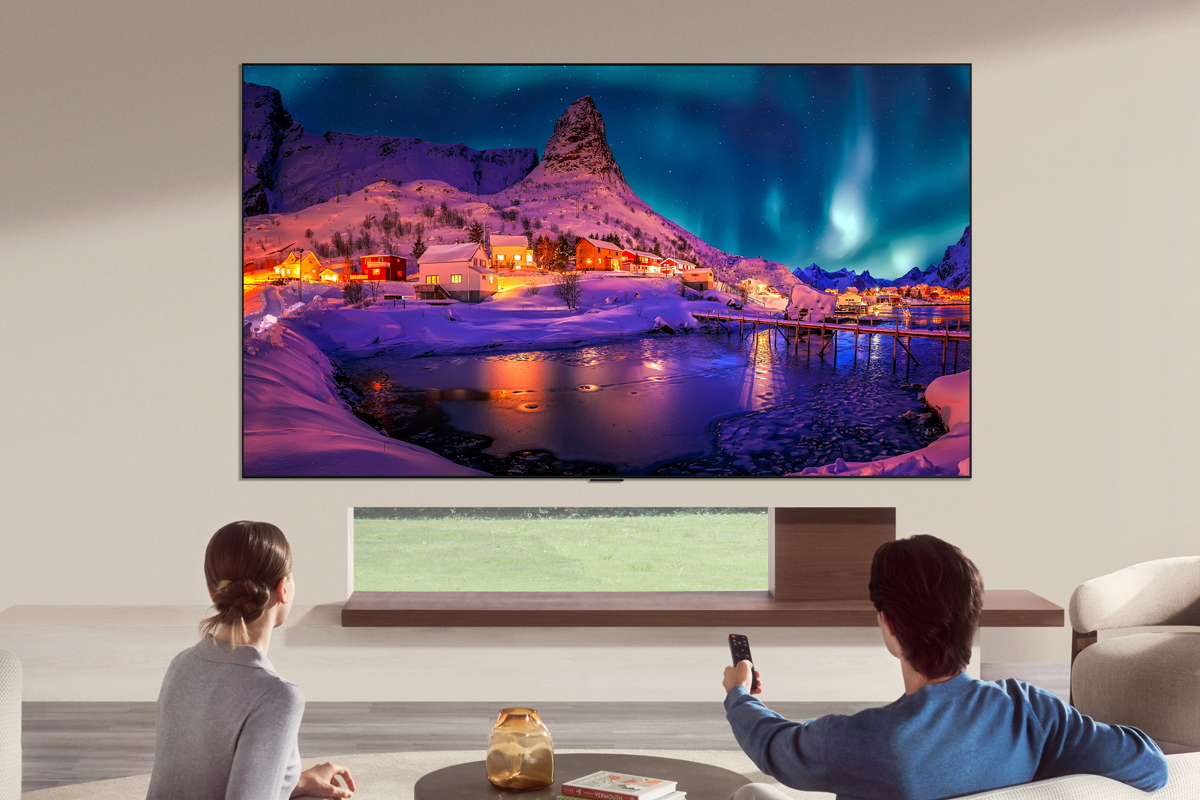
A premium 4K TV is a big purchase, and the specs sheet can get confusing fast. Brightness numbers, refresh rates, processor names, none of it means much until you know what to actually look for. Here's a simple breakdown of the things that matter most when you're shopping for a premium 4K TV, and what good options look like in each category.
Picture Quality Comes First
This is the one area where you should not compromise. Look at three things: Black levels, colour accuracy, and brightness.
OLED panels turn off individual pixels completely, which gives you true black instead of the greyish black you get on regular LED screens. That alone makes a huge difference for movies, dark scenes, and night viewing.
Colour accuracy matters just as much. A good premium TV should hold its colour consistency even in bright rooms, not just in a dark home theatre setup. LG's OLED TVs use UL-verified Perfect Black and Perfect Color, which means the panel maintains both even under daylight, not only in ideal lighting.
Brightness is where things get interesting in 2026. Older OLEDs used to dim noticeably in bright rooms. The newer panels fix this. LG's G6, for example, uses something called Hyper Radiant Color Tech, a new RGB Tandem panel that pushes brightness up to 3.9 times higher than a standard OLED on its 55- to 83-inch models. If your living room gets a lot of sunlight, this kind of brightness boost is worth checking for, whatever brand you go with.
Sound Should Not Be an Afterthought
Picture gets all the attention, but sound quality shapes how immersive your viewing feels. Look for Dolby Atmos support at minimum, since it adds height and depth to the audio instead of flat stereo sound.
Beyond that, check if the TV has any AI-based sound tuning. This usually means the TV automatically separates dialogue, music, and background noise so you can hear conversations clearly without cranking up the volume during loud scenes. LG's AI Object Remastering does exactly this, and it works across their OLED lineup, including the entry-level B6.
The Smart Platform and AI Features
Every premium TV today runs on some kind of smart platform, but they are not all built the same. A few things worth checking are how often the software gets updated, how easy the AI search actually is to use, and whether the platform supports voice control properly.
LG runs all its 2026 OLED models on webOS 26, which connects to both Google Gemini and Microsoft Copilot for AI-based search. This means you can ask your TV a question in plain language and get a relevant answer, instead of typing out a search query with a remote. The AI Hub also includes things like AI Concierge for content suggestions and AI Voice ID, which recognises who's watching and pulls up that person's saved preferences and recommendations.
Software longevity is another point people often skip. LG backs its 2026 TVs with up to 5 years of webOS upgrades through its Re:New program, so the smart features you get on day one are not the only ones you'll ever have.
Gaming Performance Matters More Than You'd Think
Even if you're not a hardcore gamer, refresh rate and response time affect how smooth everything looks, from sports to action movies. Two numbers to check are response time and VRR support.
Response time tells you how fast a pixel changes colour. A 0.1ms response time means almost no motion blur or ghosting. VRR, or variable refresh rate, keeps your picture from tearing during fast motion, and this matters a lot if you connect a gaming console or PC.
Across LG's 2026 OLED range, you'll see this play out differently depending on the model. The B6 gives you up to 144Hz at 4K, which covers most gaming needs comfortably. Step up to the C6 or G6 and you get up to 165Hz VRR on most sizes, along with G-Sync compatibility and FreeSync Premium. If you play competitive games or just want everything to feel instant, the jump to 165Hz is noticeable.
Design and Size Should Fit Your Room
A premium TV should also look good in your space and not just perform well. OLED panels are thin, which makes wall mounting cleaner and overall design less bulky.
Size range matters too. If you're shopping across multiple rooms or budgets, having more size options always helps. LG's C6, for instance, comes in six sizes, from 42 inches all the way to 83 inches, which gives you more flexibility than a lineup that only offers two or three sizes. And if you want to go really big, the G6 stretches up to 97 inches, so even the largest living rooms have an option to fill the wall.
Matching Specs to Your Budget
Once you know what to look for, the next step is figuring out how much of it you actually need. If you mainly watch in the evenings and don't need the brightest screen on the market, you can save money by skipping the flagship brightness tech. If your room is bright through the day or you game competitively, paying more for higher brightness and 165Hz support makes more sense.
LG's 2026 OLED range is built around exactly this kind of choice. The B6 covers the basics well at a lower price. The C6 adds the flagship processor and faster gaming specs across a wider range of sizes. The G6 adds the brightest panel and the largest screen options for people who want the most out of their picture.
None of these is the right choice for everyone. The right one depends on your room, your budget, and how you actually plan to use your TV. Once you know what to prioritise, picking between them gets a lot easier.
Comments
Get your daily dose of tech news, reviews, and insights, in under 80 characters on Gadgets 360 Turbo. Connect with fellow tech lovers on our Forum. Follow us on X, Facebook, WhatsApp, Threads and Google News for instant updates. Catch all the action on our YouTube channel.
Further reading:
LG
Related Stories


Follow Us




-
![[Sponsored]: CP PLUS CarKam CP-F89B: 4K Dashcam With Rear Camera, GPS & Emergency Recording](https://www.gadgets360.com/static/desktop/images/spacer.png)
04:37
[Sponsored]: CP PLUS CarKam CP-F89B: 4K Dashcam With Rear Camera, GPS & Emergency Recording -
04:23
[Partner Content] Your Phone Can Do WAY More Than You Think | OPPO ColorOS 16 -
01:59
Samsung Galaxy Z Fold8 Ultra: Unfold the Ultra Night -
03:24
Apple Pay Launches In India: Supported Devices, Cards And Payments Explained -
00:21
[Sponsored] Samsung Galaxy Z Fold8, Fold8 Ultra
-
Flipkart Big Billion Days: Xiaomi के 5 Redmi स्मार्टफोन्स पर Deals रिवील
-
Delhi Pollution 2026: 50% Work From Home, बिना PUCC नहीं मिलेगा Fuel
-
Oppo K15x हुआ लॉन्च; 6500mAh बैटरी, 120Hz डिस्प्ले के साथ आया बजट 5G फोन
-
HMD का नया सस्ता फोन Vibe 2 5G रेड वाइन कलर में आया, FBBD सेल में खरीदें ₹10,499 में!
-
Poco C95 Pro ग्लोबल मार्केट में लॉन्च, 50MP AI कैमरा, 7500mAh बैटरी!
Popular on Gadgets
- Samsung Galaxy S26 Ultra
- Motorola Razr Fold
- ChatGPT
- OPPO Find N6
- Mobiles Under Rs. 40,000
- Vivo X300 Ultra
- Asus Zenbook S14
- iQOO 15
- Vivo X300 Pro
- Lenovo Yoga Slim 7i Aura Edition
- iQOO 15R
- Vivo X Fold 5
- Sony PlayStation 5
- HP OmniPad 12
- OnePlus Nord CE 6 Lite
- OnePlus Pad 4
- OPPO F33 Pro 5G
- Cryptocurrency
- HP OmniBook Ultra 14 (2026)
- iPhone 17
- Eureka Forbes AP 355 Room Air Purifier
- Latest Mobile Phones
- Compare Phones
Latest Gadgets
- Samsung Galaxy F08
- Samsung Galaxy M08
- OPPO K15x
- OPPO K15s
- HMD Vibe 2 Pro 5G
- OPPO K14 Plus 5G
- Lava Shark 2 Pro 5G
- Ai+ Pulse 2 FE
- Dell 14 Plus 2-in-1 (AMD Ryzen AI 7 350, 2025)
- Microsoft Surface Laptop, 13-inch (2nd Edition)
- Samsung Galaxy Tab S12+
- Samsung Galaxy Tab S12 Ultra
- Amazfit T-Rex Dual Solar
- OPPO Watch S2
- Toshiba 65-Inch 4K Ultra HD Smart Mini LED QLED TV (65Z670SP)
- Haier M70 Mini LED 65-inch
- Acer Predator Atlas 8
- Asus ROG Ally
- Blue Star 1.5 Ton 5 Star Inverter Split AC (IE518ZNURS)
- Blue Star 2 Ton 3 Star Inverter Window AC (WIE324L)

- About Us
- Sitemaps
- Feedback
- Archives
- Contact Us
- RSS
- Advertise
- Career
- Privacy Policy
- Ethics
- Editorial Policy
- Terms & Conditions
- Complaint Redressal
Download Our Apps
Available in Hindi
© Copyright Red Pixels Ventures Limited 2026. All rights reserved.