- Home
- Internet
- Internet Features
- DIGIPIN Explained: What It Is, Benefits and How to Find Yours
DIGIPIN Explained: What It Is, Benefits and How to Find Yours
From information about DIGIPIN to a step-by-step guide on the process of finding yours, here's all you need to know.
Written by Shaurya Tomer, Edited by Ketan Pratap | Updated: 30 December 2025 18:05 IST
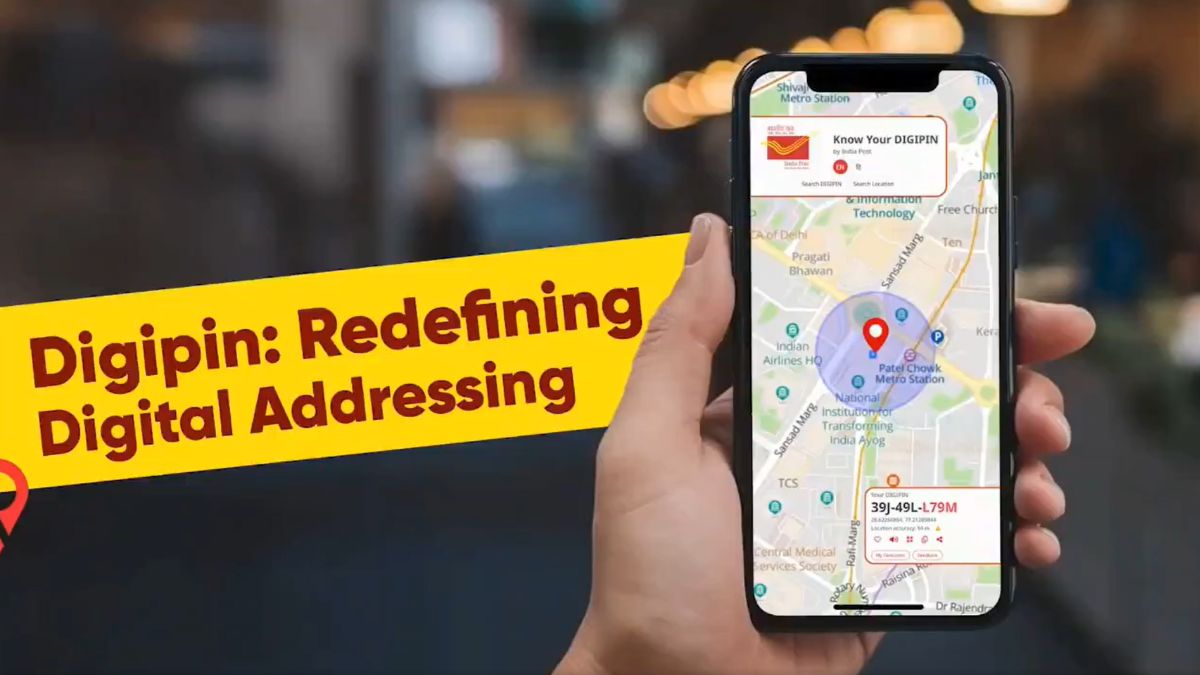
Photo Credit: India Post
While PIN codes are numeric and region-based, DIGIPINs are alphanumeric and grid-based
Click Here to Add Gadgets360 As A Trusted Source

Advertisement
DIGIPIN was introduced in India by the government in May this year for the simplification of location mapping, enhancing logistics and emergency response. The new digital platform, introduced in alignment with the National Geospatial Policy 2022, is said to ensure last-mile delivery, especially in rural areas. As per the government, the introduction of DIGIPIN marks a significant step towards the modernisation of India's addressing system and geospatial governance.
From information about DIGIPIN to a step-by-step guide on the process of finding yours, here's all you need to know.
What is DIGIPIN
DIGIPIN stands for Digital Postal Index Number. It is an open-source, interoperable, geo-coded, grid-based digital address system developed by the Department of Posts in collaboration with IIT Hyderabad and NRSC, ISRO. In simple terms, it is a location-based digital code to identify a very specific point on the map. Instead of representing an entire neighbourhood or locality, each DIGIPIN corresponds to a small geographic grid, which is roughly the size of a room, derived from latitudinal and longitudinal coordinates.
Unlike traditional addresses, DIGIPIN is not descriptive, but has been designed to work with digital maps and location systems.
With DIGIPIN, the Department of Posts aims to offer Address-as-a-Service (AaaS) for secure and efficient interactions between users, government entities, and private sector organisations. The digital platform has been reviewed and adopted by the Thematic Working Group on Address under the National Geospatial Policy 2022. As per the govt, it is available to all Ministries, State Governments, institutions for integration into their workflows, and users for their own use.
DIGIPIN Benefits
1. Higher Accuracy than PIN Codes - Unlike the traditional PIN code system which cover large postal regions, DIGIPIN provides location-level precision. Its granular approach is said to reduce navigation and delivery errors, particularly in densely populated, poorly addressed, or rural areas.
2. Precise Location Identification - Since DIGIPIN is linked to a specific location using latitudinal and longitudinal coordinates, it is capable of identifying individual properties instead of broadly defined areas, eliminating ambiguity of traditional address formats.
3. Interoperable - DIGIPIN is an open-source digital platform that is designed to work across platforms and systems. It can be integrated with GIS tools, e-commerce platforms, logistics networks, and emergency services, without any ecosystem lock-in issues.
DIGIPIN vs PIN Code
While DIGIPIN may feel like a modern replacement for India's traditional PIN code system, they serve very different purposes.
The traditional six-digit PIN code identifies a postal region serviced by a particular post office. As such, one PIN code can cover hundreds of households. While it can be useful for sorting mail, pinpoint navigation is difficult.
DIGIPIN, on the other hand, identifies an exact location, including two buildings on the same street. It is designed to complement the PIN code system, not replace it. But while PIN codes are numeric and region-based, DIGIPINs are alphanumeric and grid-based.
How to Find Your DIGIPIN
Citizens can generate their DIGIPIN through the official portal provided by India Post. The code can be saved for future use in deliveries, registrations, or navigation. Since it is tied to a fixed geographic point, it remains the same unless location selected at the time of searching for the DIGIPIN changes.
Step 1: Visit the Know Your DIGIPIN page on the official India Post website using a web browser on your phone or computer
Step 2: Allow location access when prompted, or manually search for an address or move the map to the desired location
Step 3: Zoom in and place the pin accurately on the specific property, such as your home or office
Step 4: The platform will automatically generate a 10-character alphanumeric DIGIPIN for the selected location. Copy, share, or save the DIGIPIN for future use.
Comments
Get your daily dose of tech news, reviews, and insights, in under 80 characters on Gadgets 360 Turbo. Connect with fellow tech lovers on our Forum. Follow us on X, Facebook, WhatsApp, Threads and Google News for instant updates. Catch all the action on our YouTube channel.


Advertisement
Follow Us




-
![[Sponsored] Samsung Galaxy Z Fold8, Fold8 Ultra](https://www.gadgets360.com/static/desktop/images/spacer.png)
00:21
[Sponsored] Samsung Galaxy Z Fold8, Fold8 Ultra -
03:41
[Sponsored] Samsung Galaxy Z Fold8: How It Fits Into an Actor’s Busy Day | Camera, Multitasking & More -
09:53
iPhone 18 Goes On Sale In India: Huge Crowds, Long Queues At Apple Stores -
06:32
Google Pixel 11 Pro XL Review: The Most Exciting Pixel Yet? | 120X Zoom + Tensor G6 -
05:20
Samsung Galaxy Watch Ultra 2 Review: Is This the Best Android Smartwatch?
-
Lava Virat Curve की भारत में सेल आज से, ₹19,999 में 2 डिस्प्ले वाला फोन
-
1 अक्टूबर से महंगे हो जाएंगे AC, TV, फ्रिज समेत कई सामान
-
Amazon Great Indian Festival Sale 2026: ₹4 हजार सस्ता मिल रहा है Oppo F33
-
Oppo Reno 16T हुआ लॉन्च, 200MP कैमरा और 6700mAh बैटरी के साथ मिलेगा 120Hz AMOLED डिस्प्ले
-
Vivo V40 Pro Flipkart सेल में ₹2500 सस्ता खरीदें, 50MP तीन कैमरा वाला फोन
Advertisement
Popular on Gadgets
- Samsung Galaxy S26 Ultra
- Motorola Razr Fold
- ChatGPT
- OPPO Find N6
- Mobiles Under Rs. 40,000
- Vivo X300 Ultra
- Asus Zenbook S14
- iQOO 15
- Vivo X300 Pro
- Lenovo Yoga Slim 7i Aura Edition
- iQOO 15R
- Vivo X Fold 5
- Sony PlayStation 5
- HP OmniPad 12
- OnePlus Nord CE 6 Lite
- OnePlus Pad 4
- OPPO F33 Pro 5G
- Cryptocurrency
- HP OmniBook Ultra 14 (2026)
- iPhone 17
- Eureka Forbes AP 355 Room Air Purifier
- Latest Mobile Phones
- Compare Phones
Latest Gadgets
- OPPO Reno 16t
- Itel Zeno 300
- Vivo Y600i
- Mivi One 5G
- Xiaomi 18 Pro Max
- Motorola Signature 27
- OPPO Find X10 E
- OnePlus N6 Lite 4G
- Microsoft Surface Laptop, 13-inch (2nd Edition)
- Lenovo LOQ 15AHP11
- Microsoft Surface Pro, 12-inch (2nd Edition)
- Xiaomi Pad 9 Pro
- Amazfit T-Rex Dual Solar
- OPPO Watch S2
- Toshiba 65-Inch 4K Ultra HD Smart Mini LED QLED TV (65Z670SP)
- Haier M70 Mini LED 65-inch
- Acer Predator Atlas 8
- Asus ROG Ally
- Blue Star 1.5 Ton 5 Star Inverter Split AC (IE518ZNURS)
- Blue Star 2 Ton 3 Star Inverter Window AC (WIE324L)

- About Us
- Sitemaps
- Feedback
- Archives
- Contact Us
- RSS
- Advertise
- Career
- Privacy Policy
- Ethics
- Editorial Policy
- Terms & Conditions
- Complaint Redressal
Download Our Apps
Available in Hindi
© Copyright Red Pixels Ventures Limited 2026. All rights reserved.