-
 Apple Said to Skip M6 Pro, M6 Max Processors to Prioritise Development of AI-Focused M7 Chipsets26 June 2026
 -
Apple Introduces M5 Pro, M5 Max Chips With New Fusion Architecture on 2026 MacBook Pro Models4 March 2026
-
Cyberpunk 2077: Ultimate Edition Coming to Apple Silicon-Powered Mac on July 1716 July 2025
-
Steam for Mac Now Available as Native Apple Silicon App With Latest Beta Release13 June 2025
-
Apple Silicon Chips for Upcoming Mac Models, AI Servers Reportedly in Development9 May 2025
- Home
- Laptops
- Laptops News
- Apple Silicon Powered Mac Devices Now Support eGPU, Tiny Corp Announces
Apple Silicon-Powered Mac Devices Now Support eGPU, Tiny Corp Announces
Apple launched the M1 Apple Silicon processor in November 2020.
Written by Dhruv Raghav, Edited by Ketan Pratap | Updated: 6 April 2026 11:01 IST
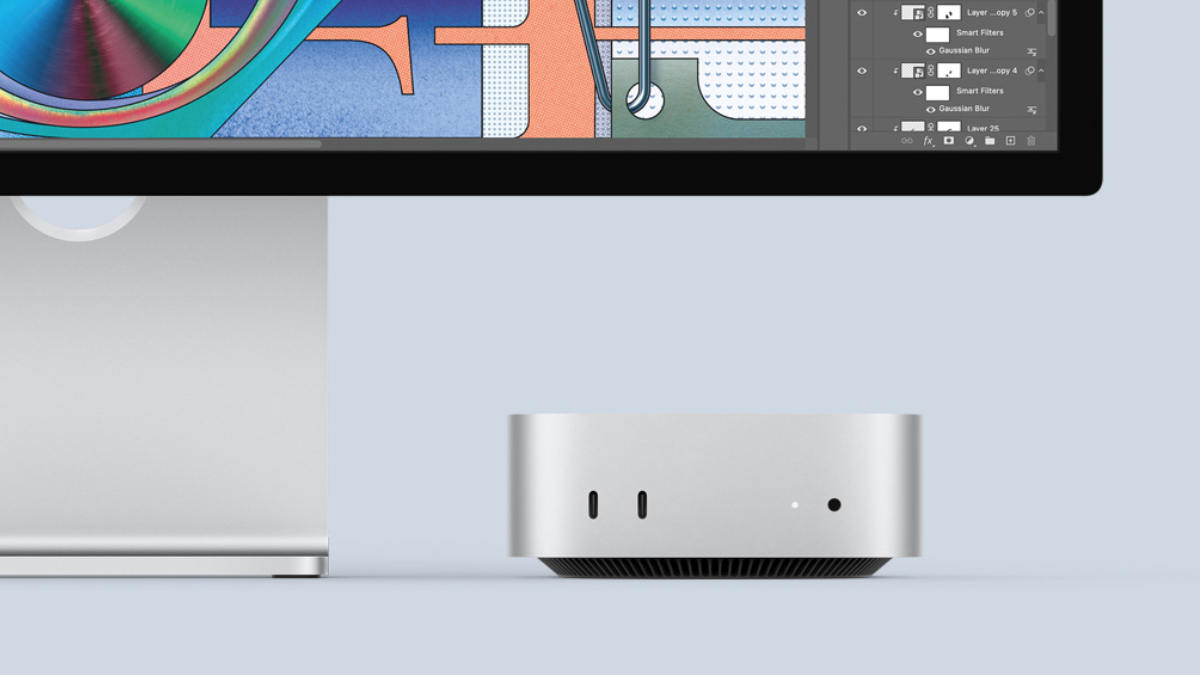
Photo Credit: Apple
Mac Mini with the M1 processor was launched in 2024
Click Here to Add Gadgets360 As A Trusted Source

Advertisement
Apple introduced its first proprietary M1 processor for Mac desktop computers and laptops more than half a decade ago, in November 2020. Until then, Apple computers were equipped with Intel processors. However, with the introduction of Apple Silicon for Mac devices, the Cupertino-based tech giant silently removed the support for external Nvidia and AMD eGPUs, which come in handy when a user requires additional graphics processing ability. Now, the functionality is returning to Apple desktop computers, as a software firm has announced that Apple has approved its drivers for AMD and Nvidia eGPUs for use on Apple Silicon-powered devices.
Mac Devices With M-Series Processors Can Now Support AMD, Nvidia eGPUs
In a post on X, tech firm Tiny Corp has announced that Apple's desktop computers, which are powered by Apple Silicon M-series processors. The company highlighted that its drivers have been approved by the Cupertino-based tech giant, which can now be used to support eGPUs on Apple Silicon-powered Mac devices. The company further added that Mac computers will now support both AMD and Nvidia eGPUs via its drivers.
If you have a Thunderbolt or USB4 eGPU and a Mac, today is the day you've been waiting for! Apple finally approved our driver for both AMD and NVIDIA. It's so easy to install now a Qwen could do it, then it can run that Qwen... pic.twitter.com/daUsyBHh1W
— the tiny corp (@__tinygrad__) April 1, 2026
Users who have a “Thunderbolt or USB 4 eGPU” from either of the US-based GPU makers, AMD and Nvidia, can now connect the externally-connected GPUs with their M-series processor-powered Mac devices. However, the eGPU support is not for graphic acceleration or gaming; rather, the eGPUs on a Mac will help in executive AI-based tasks and data processing, which also require high GPU power. “It's so easy to install now, a Qwen could do it, then it can run that Qwen,” the company highlighted.
Typically, eGPUs provide extra on-demand graphics processing when a user requires it. In recent years, AI researchers and other developers who run AI models locally also need the enhanced capabilities of eGPUs. While integrated GPUs on Apple Silicon M1, M2, M3, M4, and M5 processors, and their Ultra and Max variants, are also powerful, they might not meet everyone's demands. Hence, eGPUs become an essential component for advanced AI tasks.
Mac devices powered by Intel processors came with support for eGPUs. However, with the introduction of the Apple Silicon M1 processor in November 2020 during the ‘One More Thing' virtual event, the Cupertino-based tech giant silently removed support for the same.
Comments
Get your daily dose of tech news, reviews, and insights, in under 80 characters on Gadgets 360 Turbo. Connect with fellow tech lovers on our Forum. Follow us on X, Facebook, WhatsApp, Threads and Google News for instant updates. Catch all the action on our YouTube channel.
Related Stories




Advertisement
Follow Us




-
 Flipkart Goat Sale का आखिरी दिन, Oppo Reno 13 5G मिल रहा ₹5000 सस्ता
 -
Xiaomi SkyNomad इंटेलिजेंट लार्ज-स्पेस SUV पेश, कार बन जाएगी दूसरा घर
-
Oppo Reno16, Reno16c की पहली सेल आज से, डिस्काउंट पर खरीदने का मौका
-
इलेक्ट्रिक टू-व्हीलर्स का मार्केट 75 प्रतिशत बढ़ा, TVS Motor का पहला रैंक
-
Realme Narzo 100x 5G के भारत में लॉन्च की तैयारी, 8,000mAh की बैटरी
Advertisement
Popular on Gadgets
- Samsung Galaxy S26 Ultra
- Motorola Razr Fold
- ChatGPT
- OPPO Find N6
- Mobiles Under Rs. 40,000
- Vivo X300 Ultra
- Asus Zenbook S14
- iQOO 15
- Vivo X300 Pro
- Lenovo Yoga Slim 7i Aura Edition
- iQOO 15R
- Vivo X Fold 5
- Sony PlayStation 5
- HP OmniPad 12
- OnePlus Nord CE 6 Lite
- OnePlus Pad 4
- OPPO F33 Pro 5G
- Cryptocurrency
- HP OmniBook Ultra 14 (2026)
- iPhone 17
- Eureka Forbes AP 355 Room Air Purifier
- Latest Mobile Phones
- Compare Phones
Latest Gadgets
- Moto G77 Power
- Vivo G5z
- Vivo G5i
- Nothing Phone (4b)
- HMD Nokia 215 4G (2026)
- Vivo Y500 4G
- HMD Nokia 235 4G (2026)
- iQOO Z11i
- Asus Vivobook 15 (X1504MA)
- HP HyperX Omen 16 Valorant Limited Edition
- Red Magic Gaming Tablet 5 Pro
- Vivo Pad 5c
- Amazfit Cheetah 2 Ultra
- Amazfit Bip Max
- Sony Bravia 9 II
- Haier HQLED P7 Pro
- Acer Predator Atlas 8
- Asus ROG Ally
- IFB 1.5 Ton 3 Star Inverter Split AC (CI193GN22RGM3)
- IFB 2 Ton 3 Star Inverter Split AC (CI223GD32RGM3)

- About Us
- Sitemaps
- Feedback
- Archives
- Contact Us
- RSS
- Advertise
- Career
- Privacy Policy
- Ethics
- Editorial Policy
- Terms & Conditions
- Complaint Redressal
Download Our Apps
Available in Hindi
© Copyright Red Pixels Ventures Limited 2026. All rights reserved.