-
 Best Earbuds Under Rs 20,000 in India From JBL, Samsung, Apple, Sony and Sennheiser25 October 2026
 -
Best Smartphones with 1TB Storage in India (2026): iPhone Duo, Samsung Galaxy S26 Ultra and More25 October 2026
-
Apple Reportedly Testing iPhone Duo 2 Prototype With Under-Display Face ID, Action Button: Mark Gurman23 October 2026
-
iPhone Duo App Support Revealed: List of Apps Optimised for Apple’s First Foldable23 October 2026
-
iPhone Duo Teardown Reveals How Its Matte Film Hides the Inner Display Crease23 October 2026
- Home
- Mobiles
- Mobiles News
- India Prepares Smartphone Export Incentives in a Boost for Apple
India Prepares Smartphone Export Incentives in a Boost for Apple
The incentive overhaul underscores Apple’s growing importance to India’s electronics ambitions.
By Alisha Sachdev and Santosh Kumar, Bloomberg | Updated: 12 March 2026 18:15 IST
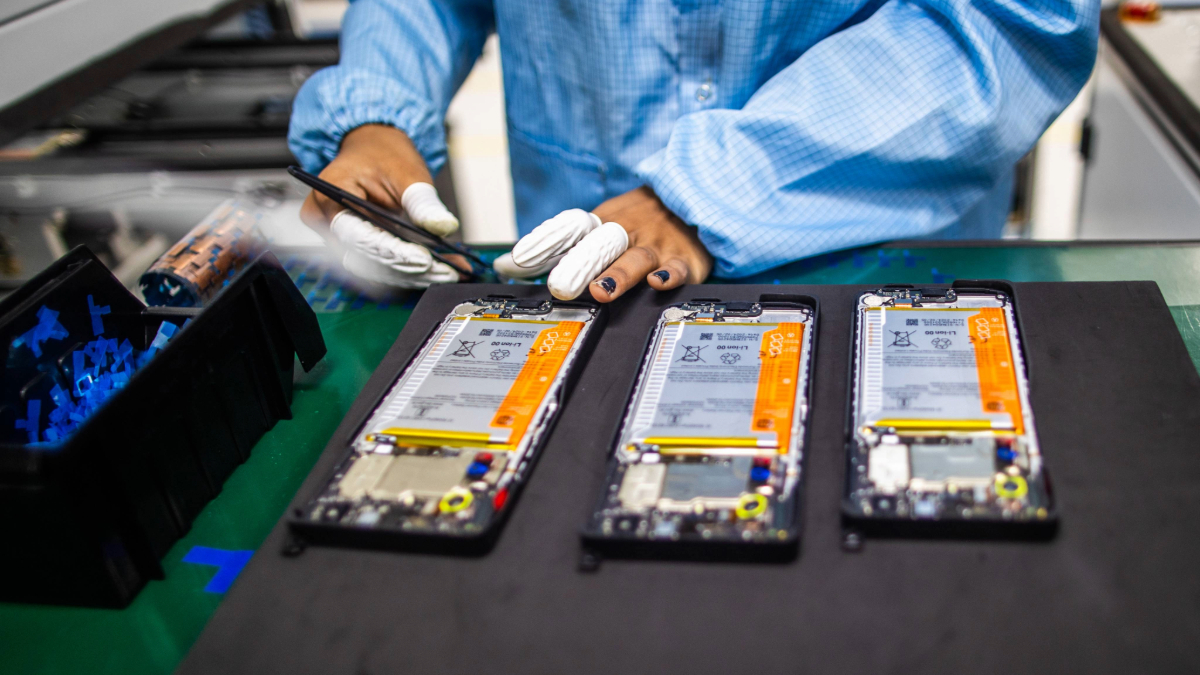
Photo Credit: Bloomberg
India's Production-Linked Incentive, or PLI, program retires March 31
Click Here to Add Gadgets360 As A Trusted Source

Advertisement
India is drafting a new round of smartphone manufacturing incentives that would link government subsidies to exports and deeper use of locally made components, in a move that will benefit Apple, Samsung Electronics and their suppliers, according to people familiar with the matter.
The proposal — effectively a second phase of New Delhi's flagship phone production program — will start rewarding companies for shipping devices overseas, the people said, asking not to be identified because the discussions are private. Unlike the current Production-Linked Incentive, or PLI, program which retires March 31 and is primarily focused on incremental domestic output, the new plan explicitly ties benefits to exports and localization.
- Apple Watch vs Garmin: which would you pick if charging every day gets on your nerves?
- Apple Watch or AirPods upgrade first?
- Apple to Introduce redesigned Apple Pencil models in 2027
- Apple to introduce a new device leasing programme, Apple Upgrade tomorrow
- Apple has increased the prices of Apple Music and Apple One Subscription plans
The policy design, size of the incentives and the overall budget are still being finalized and may change during the inter-ministerial consultations, the people said.
The incentive overhaul underscores Apple's growing importance to India's electronics ambitions. The iPhone maker's contract manufacturers account for roughly three-fourths of the country's smartphone exports, helping transform India into one of the world's fastest-growing handset export hubs. Apple aims to ship most US-bound iPhones from India by year-end, reinforcing India's position as the top maker of smartphones sold in the US.
India's Ministry of Electronics and Information Technology did not immediately respond to an email seeking comment.
With nearly every smartphone sold in India now assembled locally, officials believe the initial incentive program has largely met its goal of satisfying local demand, the people said. Policymakers are now shifting focus to higher value addition as the next stage of the strategy beyond screwdriver assembly.
The government is also seeking to nudge Chinese smartphone brands like Oppo, Vivo and Xiaomi — all of which primarily manufacture in India for the domestic market — to use the country as an export base, according to a person familiar with the government's thinking.
Tying benefits to overseas shipments in its flagship PLI policy is seen as a way to embed India more deeply into global supply chains at a time when manufacturers are recalibrating production footprints to hedge from geopolitical risks.
Make in India
A second key feature under discussion is heavy indexation to localization. Incentives are likely to be tiered based on the extent of local value addition in each device rather than simple assembly. Manufacturers could receive additional benefits for sourcing components such as camera modules, display assemblies and other sub-parts from Indian suppliers.
Devices that meet higher localization thresholds and are exported could receive the maximum subsidy, the people said.
India's hurdles, however, have extended beyond costs, underscoring that building a deep supply chain takes time. Apple's expansion has been constrained by a thin supplier base which can meet its quality standards, higher logistics costs and the challenge of matching China's scale and efficiency.
While India has successfully attracted large-scale assembly for brands including Apple and Samsung, high-value components — such as semiconductors and advanced modules — continue to be imported from countries including China, South Korea and Taiwan.
Rival China
For Prime Minister Narendra Modi, the revamp will mark a natural progression of his government's Make in India program to rival China as a global manufacturing hub — shifting from import substitution and domestic assembly toward embedding itself deeper in global supply chains.
The new incentives are expected to dovetail with New Delhi's Electronics Components Manufacturing Scheme, which aims to promote domestic production of parts and sub-assemblies.
On Monday, Dixon Technologies (India) Ltd., the country's largest homegrown contract manufacturer of electronics, said it has received government approval to form a joint venture with China's HKC Corp. to manufacture display modules in India.
Since the current PLI program for smartphone assembly ends this month, companies have been seeking clarity for months on the new version of the incentive program to draw up plans for India exports, one of the people said.
© 2026 Bloomberg LP
Comments
Get your daily dose of tech news, reviews, and insights, in under 80 characters on Gadgets 360 Turbo. Connect with fellow tech lovers on our Forum. Follow us on X, Facebook, WhatsApp, Threads and Google News for instant updates. Catch all the action on our YouTube channel.
Related Stories



Advertisement
Follow Us




-
![[Sponsored] Galaxy Watch9 for Everyday Health Insights | Smarter Wellness Choices](https://www.gadgets360.com/static/desktop/images/spacer.png)
01:42
[Sponsored] Galaxy Watch9 for Everyday Health Insights | Smarter Wellness Choices -
01:15
[Sponsored] Galaxy Tab S10 Lite for Students: Notes, Solve Math and More -
04:17
[Sponsored] LG NANO 4K UHD AI TV NU885: Gemini Search, Dolby Atmos & 5 Years of Updates -
00:57
[Sponsored] Samsung Galaxy Z Fold8 My Fan Cam in Action: Find the Moment, Then Share It -
01:41
[Sponsored] What Do You Need To Know Before Your Next Run? | Samsung Galaxy Watch Ultra2
-
NVIDIA के सीईओ ने पेश किए माइक्रोडक रोबोट, AI से चलते हैं, क्या काम आएंगे
-
iPhone Duo को बीच से खोला, फोल्डेबल डिस्प्ले से हटाया कवर, फिर क्या दिखा?
-
1 जनवरी से फोन में बिना सिम नहीं चलेगा WhatsApp, सिम बाइडिंग हुआ अनिवार्य
-
Amazon Sale में ₹6300 सस्ता खरीदें Vivo V80 5G, 50MP तीन कैमरा वाला फोन
-
Amazon Sale में ₹23 हजार से सस्ता मिल रहा ₹50 हजार एमआरपी वाला 43 इंच Xiaomi स्मार्ट TV
Advertisement
Popular on Gadgets
- Samsung Galaxy S26 Ultra
- Motorola Razr Fold
- ChatGPT
- OPPO Find N6
- Mobiles Under Rs. 40,000
- Vivo X300 Ultra
- Asus Zenbook S14
- iQOO 15
- Vivo X300 Pro
- Lenovo Yoga Slim 7i Aura Edition
- iQOO 15R
- Vivo X Fold 5
- Sony PlayStation 5
- HP OmniPad 12
- OnePlus Nord CE 6 Lite
- OnePlus Pad 4
- OPPO F33 Pro 5G
- Cryptocurrency
- HP OmniBook Ultra 14 (2026)
- iPhone 17
- Eureka Forbes AP 355 Room Air Purifier
- Latest Mobile Phones
- Compare Phones
Latest Gadgets
- HMD 2660 Flip Senior Edition
- Lava Aura Curve
- Poco X8s
- Samsung Galaxy F70 5G
- Tecno Spark 50S 5G
- Vivo Y600s Pro
- Vivo Y32 (2026)
- Infinix Smart 20 HD
- Lenovo Yoga 9n 2-in-1
- Lenovo Yoga Pro 9n
- Amazon Alexa Tablet 8
- Amazon Alexa Tablet 11
- Pebble Qore 2
- Amazfit T-Rex Dual Solar
- Toshiba 65-Inch 4K Ultra HD Smart Mini LED QLED TV (65Z670SP)
- Haier M70 Mini LED 65-inch
- Acer Predator Atlas 8
- Asus ROG Ally
- Blue Star 1.5 Ton 5 Star Inverter Split AC (IE518ZNURS)
- Blue Star 2 Ton 3 Star Inverter Window AC (WIE324L)

- About Us
- Sitemaps
- Feedback
- Archives
- Contact Us
- RSS
- Advertise
- Career
- Privacy Policy
- Ethics
- Editorial Policy
- Terms & Conditions
- Complaint Redressal
Download Our Apps
Available in Hindi
© Copyright Red Pixels Ventures Limited 2026. All rights reserved.