-
 Self-Driving Cars Could Prevent Over 1 Million Road Injuries Across the U.S. by 20356 January 2026
 -
Samsung Wallet Adds Digital Car Key Support for Mahindra EVs in India: 5 Things to Know29 October 2025
-
Subway Surfers, Stick Merge, Hill Climb: Top 10 Free Poki Games You Can Play Online for Free18 October 2025
-
BYD Unveils Battery System That Charges EVs in Five Minutes17 March 2025
-
What is Central African Republic Controversial Memecoin Experiment?10 February 2025
- Home
- Others
- Others News
- New tech to reliably detect when drivers are about to fall asleep
New tech to reliably detect when drivers are about to fall asleep
By Press Trust of India | Updated: 25 April 2014 14:43 IST
Click Here to Add Gadgets360 As A Trusted Source

Advertisement
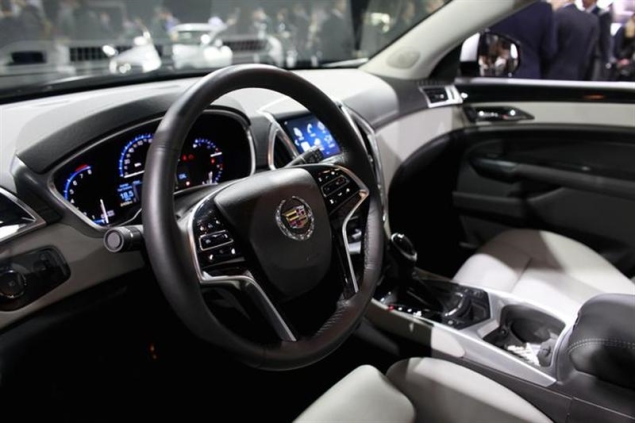
Researchers have developed a new technology that can better detect when drivers are about to nod off behind the wheel.
The technology is based on steering wheel movements - which are more variable in drowsy drivers - and is said to offer an affordable and more reliable alternative to currently available video-based driver drowsiness detection systems, researchers said.
"Video-based systems that use cameras to detect when a car is drifting out of its lane are cumbersome and expensive," said Hans Van Dongen, research professor at the Washington State University Sleep and Performance Research Center.
"They don't work well on snow-covered or curvy roads, in darkness or when lane markers are faded or missing," he added.
"Our invention provides an inexpensive and user-friendly technology that overcomes these limitations and can help catch fatigue earlier, well before accidents are likely to happen," said Van Dongen, who developed the technology with postdoctoral research fellow Pia Forsman.
In an experiment, 29 participants were on a simulated 10-day night shift schedule that caused moderate levels of fatigue, as assessed by their performance on a widely used alertness test known as the psychomotor vigilance task (PVT).
During each night shift, participants spent four 30-minute sessions on a high-fidelity driving simulator, which captured data for 87 different metrics related to speed, acceleration, steering, lane position and other factors.
Data analysis indicated that the two factors that best predicted fatigue were variability in steering wheel movements and variability in lane position.
Researchers then showed that data on steering wheel variability can be used to predict variability in lane position early on, making it possible to detect driver drowsiness before the car drifts out of its lane.
"We wanted to find out whether there may be a better technique for measuring driver drowsiness before fatigue levels are critical and a crash is imminent," Van Dongen said.
"Our invention provides a solid basis for the development of an early detection system for moderate driver drowsiness. It could also be combined with existing systems to extend their functionality in detecting severe driver drowsiness," he said.
The solution uses inexpensive, easy-to-install parts - including a sensor that measures the position of the steering wheel.
The science behind the invention was described in the journal Accident Analysis & Prevention. Comments
Get your daily dose of tech news, reviews, and insights, in under 80 characters on Gadgets 360 Turbo. Connect with fellow tech lovers on our Forum. Follow us on X, Facebook, WhatsApp, Threads and Google News for instant updates. Catch all the action on our YouTube channel.
Related Stories




Advertisement
Follow Us




-
![[Sponsored] LG NANO 4K UHD AI TV NU885: Gemini Search, Dolby Atmos & 5 Years of Updates](https://www.gadgets360.com/static/desktop/images/spacer.png)
04:17
[Sponsored] LG NANO 4K UHD AI TV NU885: Gemini Search, Dolby Atmos & 5 Years of Updates -
00:57
[Sponsored] Samsung Galaxy Z Fold8 My Fan Cam in Action: Find the Moment, Then Share It -
01:41
[Sponsored] What Do You Need To Know Before Your Next Run? | Samsung Galaxy Watch Ultra2 -
01:32
[Sponsored] Big Day Tomorrow? Prep Today | Samsung Galaxy Watch Ultra2 -
04:37
[Sponsored]: CP PLUS CarKam CP-F89B: 4K Dashcam With Rear Camera, GPS & Emergency Recording
-
आ गई हवा में उड़ने वाली Tesla Roadster कार, आखिर सच हुआ फिल्मों वाला कमाल
-
रोबोट ने की लड़की से छेड़छाड़, पीछे से पकड़ा और किए गंदे इशारे, जानें
-
PS5 कहां मिलेगा सस्ता, Flipkart या Amazon, जानें सबकुछ
-
Oppo Find X10 Pro Max होगा ट्रिपल 200 मेगापिक्सल कैमरा सिस्टम वाला पहला स्मार्टफोन
-
Samsung Galaxy A38 5G में मिल सकती है ट्रिपल रियर कैमरा यूनिट
Advertisement
Popular on Gadgets
- Samsung Galaxy S26 Ultra
- Motorola Razr Fold
- ChatGPT
- OPPO Find N6
- Mobiles Under Rs. 40,000
- Vivo X300 Ultra
- Asus Zenbook S14
- iQOO 15
- Vivo X300 Pro
- Lenovo Yoga Slim 7i Aura Edition
- iQOO 15R
- Vivo X Fold 5
- Sony PlayStation 5
- HP OmniPad 12
- OnePlus Nord CE 6 Lite
- OnePlus Pad 4
- OPPO F33 Pro 5G
- Cryptocurrency
- HP OmniBook Ultra 14 (2026)
- iPhone 17
- Eureka Forbes AP 355 Room Air Purifier
- Latest Mobile Phones
- Compare Phones
Latest Gadgets
- Tecno Spark 50S 5G
- Vivo Y600s Pro
- Vivo Y32 (2026)
- Infinix Smart 20 HD
- Vivo V80
- Vivo S2 FE
- Vivo Y600K Turbo
- Realme P4s Lite
- HP ZBook Ultra G3a
- Dell Pro Rugged 14
- Amazon Alexa Tablet 8
- Amazon Alexa Tablet 11
- Amazfit T-Rex Dual Solar
- OPPO Watch S2
- Toshiba 65-Inch 4K Ultra HD Smart Mini LED QLED TV (65Z670SP)
- Haier M70 Mini LED 65-inch
- Acer Predator Atlas 8
- Asus ROG Ally
- Blue Star 1.5 Ton 5 Star Inverter Split AC (IE518ZNURS)
- Blue Star 2 Ton 3 Star Inverter Window AC (WIE324L)

- About Us
- Sitemaps
- Feedback
- Archives
- Contact Us
- RSS
- Advertise
- Career
- Privacy Policy
- Ethics
- Editorial Policy
- Terms & Conditions
- Complaint Redressal
Download Our Apps
Available in Hindi
© Copyright Red Pixels Ventures Limited 2026. All rights reserved.