-
 SETI Scientists Searched Interstellar Comet 3I/ATLAS for Alien Signals7 June 2026
 -
A Visitor from Another Star: Interstellar Comet Reveals Alien Origins26 April 2026
-
NASA’s SPHEREx Spots Interstellar Comet Flaring With Gas and Organic Molecules9 February 2026
-
NASA’s TESS Captures First Images of Rare Interstellar Comet 3I/ATLAS29 January 2026
-
Interstellar Comet 3I/ATLAS Shows Wobbling Jets in Rare Sun-Facing Tail, Surprising Astronomers24 December 2025
- Home
- Science
- Science News
- SPHEREx Captures Dramatic Outburst of Interstellar Comet 3I/ATLAS
SPHEREx Captures Dramatic Outburst of Interstellar Comet 3I/ATLAS
NASA’s SPHEREx telescope observed a dramatic outburst from interstellar comet 3I/ATLAS after its October 2025 solar flyby. Infrared data revealed water vapor, carbon dioxide, methanol, methane, and cyanide, offering rare chemical insights into material formed in another star system.
Written by Gadgets 360 Staff | Updated: 11 February 2026 20:45 IST
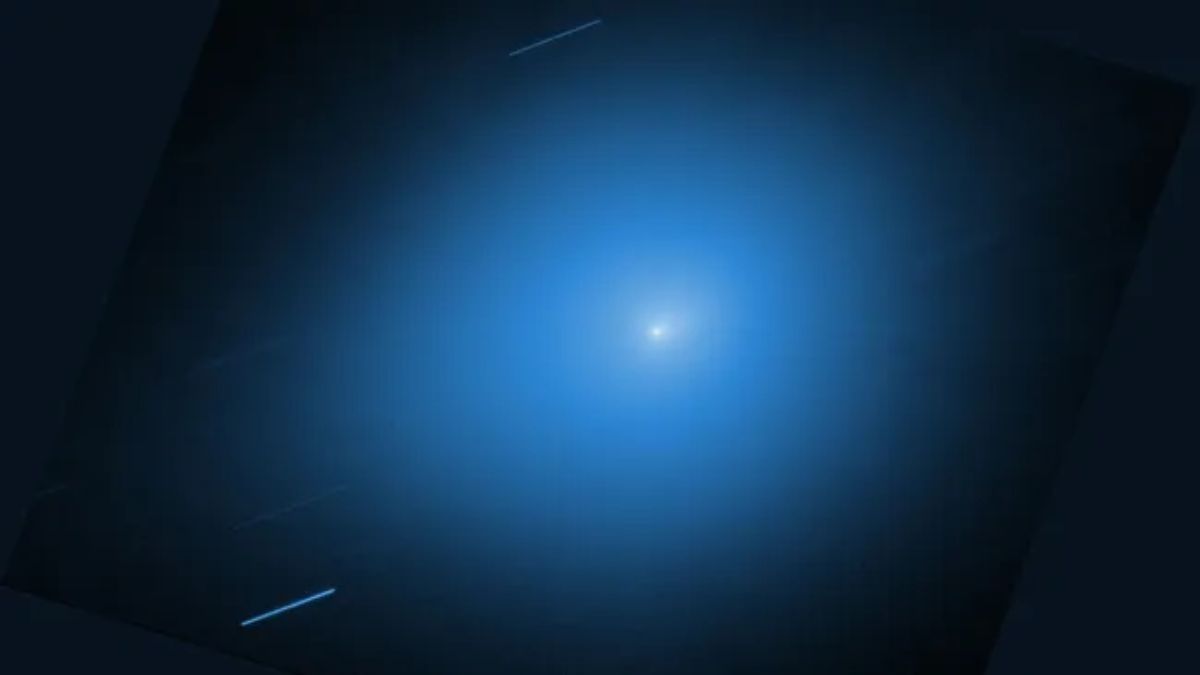
Photo Credit: NASA
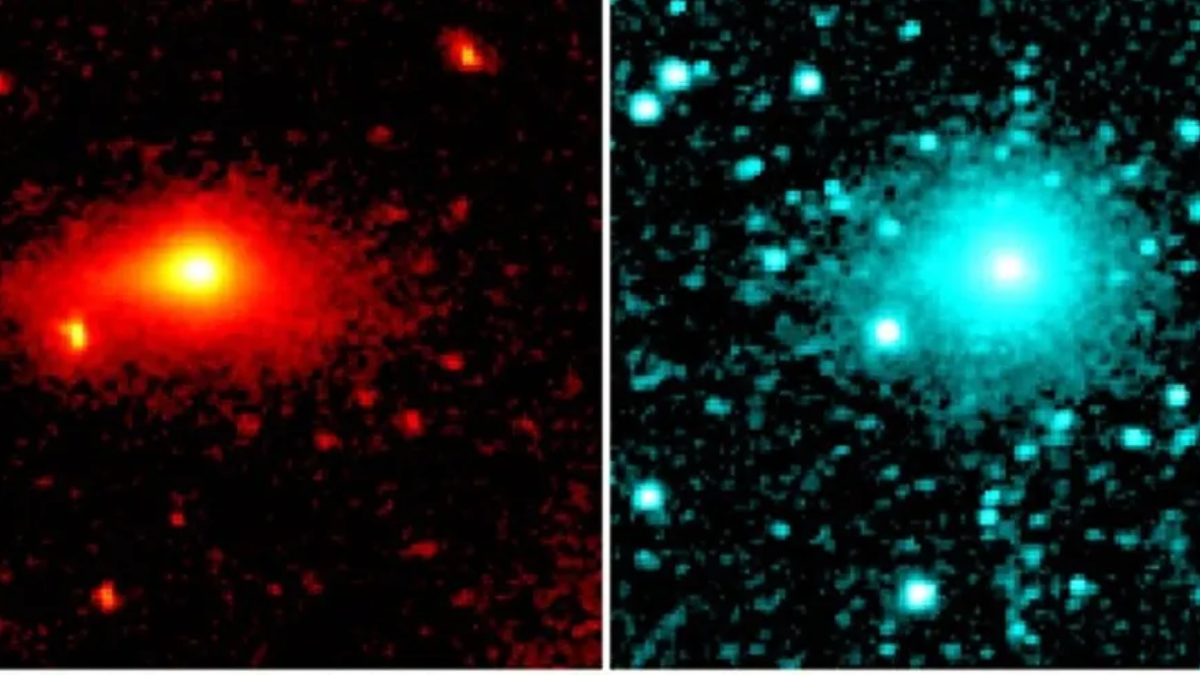
NASA’s Hubble Space Telescope re-observed the interstellar comet 3I/ATLAS on Nov. 30, 2025.
Click Here to Add Gadgets360 As A Trusted Source


Advertisement
In the summer of 2025, the appearance of the sky through surveys was attributed to the appearance of a distant travelling object from outside our solar system, referred to as a comet. Comet 3I/Atlas successfully flew by the sun in October, but later became brighter as it revealed itself for detailed study. SPHEREx was able to record the outburst of the comet, indicating the presence of water and carbon dioxide within it.
Post-Perihelion Outburst
According to NASA, after its near-sun encounter, 3I/ATLAS was observed to have experienced an unexpected outburst. The object was seen to be erupting due to new observations made by NASA's SPHEREx as part of its infrared survey carried out in December 2025. “Comet 3I/ATLAS was full-on erupting into space in December 2025… causing it to significantly brighten,” Carey Lisse of the Johns Hopkins Applied Physics Laboratory, lead author of a study, was quoted as saying. The erupting parts include water vapour, carbon dioxide, and dust.
Chemical Clues from Afar
The SPHEREx data reveal comet materials that include water ice, carbon compounds, and organic molecules. Research scientists discovered the coma contained methanol, methane, and cyanide. The gas cloud contained high levels of carbon dioxide but contained minimal carbon monoxide, which indicated that 3I/ATLAS developed in a warm environment. Lisse explained that the comet's ices had undergone extreme heat treatment, which caused their release from the comet core so they resembled the chemical structure of common solar-system comets. The astronomical evidence provides researchers with an exceptional chemical analysis of untouched extraterrestrial material that originated from a different solar system.
Comments
Get your daily dose of tech news, reviews, and insights, in under 80 characters on Gadgets 360 Turbo. Connect with fellow tech lovers on our Forum. Follow us on X, Facebook, WhatsApp, Threads and Google News for instant updates. Catch all the action on our YouTube channel.
Further reading:
Comet 3I ATLAS, interstellar comet, SPHEREx, NASA, Infrared Astronomy, Solar Flyby, Comet Outburst, organic molecules, Water ice, Carbon dioxide, Planetary Science, space exploration
Related Stories



Advertisement
Follow Us




-
00:21
[Sponsored] Samsung Galaxy Z Fold8, Fold8 Ultra -
03:41
[Sponsored] Samsung Galaxy Z Fold8: How It Fits Into an Actor’s Busy Day | Camera, Multitasking & More -
09:53
iPhone 18 Goes On Sale In India: Huge Crowds, Long Queues At Apple Stores -
06:32
Google Pixel 11 Pro XL Review: The Most Exciting Pixel Yet? | 120X Zoom + Tensor G6 -
05:20
Samsung Galaxy Watch Ultra 2 Review: Is This the Best Android Smartwatch?
-
Amazon Great Indian Festival: सेल से पहले 6 मोबाइल पर Early Bird Deals
-
Vivo Y600i हुआ लॉन्च; 8000mAh बैटरी और ड्रॉप प्रोटेक्शन के साथ आया फोन
-
लैपटॉप की बैटरी हेल्थ ऐसे करें चेक, नहीं होगा नुकसान
-
iQOO Pad Ultra में 9020mAh बैटरी कंफर्म, प्री-ऑर्डर भी शुरू
-
₹16 हजार सस्ता मिल रहा 50MP तीन कैमरा वाला Samsung 5G फोन! IP67 रेटिंग
Advertisement
Popular on Gadgets
- Samsung Galaxy S26 Ultra
- Motorola Razr Fold
- ChatGPT
- OPPO Find N6
- Mobiles Under Rs. 40,000
- Vivo X300 Ultra
- Asus Zenbook S14
- iQOO 15
- Vivo X300 Pro
- Lenovo Yoga Slim 7i Aura Edition
- iQOO 15R
- Vivo X Fold 5
- Sony PlayStation 5
- HP OmniPad 12
- OnePlus Nord CE 6 Lite
- OnePlus Pad 4
- OPPO F33 Pro 5G
- Cryptocurrency
- HP OmniBook Ultra 14 (2026)
- iPhone 17
- Eureka Forbes AP 355 Room Air Purifier
- Latest Mobile Phones
- Compare Phones
Latest Gadgets
- Vivo Y600i
- Mivi One 5G
- Xiaomi 18 Pro Max
- Motorola Signature 27
- OPPO Find X10 E
- OnePlus N6 Lite 4G
- Ai+ Nova 2 Power 5G
- Lava Virat Curve 5G
- Microsoft Surface Laptop, 13-inch (2nd Edition)
- Lenovo LOQ 15AHP11
- Microsoft Surface Pro, 12-inch (2nd Edition)
- Xiaomi Pad 9 Pro
- Amazfit T-Rex Dual Solar
- OPPO Watch S2
- Haier M70 Mini LED 65-inch
- Xiaomi TV FX Mini LED 65
- Acer Predator Atlas 8
- Asus ROG Ally
- Blue Star 1.5 Ton 5 Star Inverter Split AC (IE518ZNURS)
- Blue Star 2 Ton 3 Star Inverter Window AC (WIE324L)

- About Us
- Sitemaps
- Feedback
- Archives
- Contact Us
- RSS
- Advertise
- Career
- Privacy Policy
- Ethics
- Editorial Policy
- Terms & Conditions
- Complaint Redressal
Download Our Apps
Available in Hindi
© Copyright Red Pixels Ventures Limited 2026. All rights reserved.