
-
 Total Solar Eclipse Today: How to Watch Live Online, Timings, Safety Tips, and More12 August 2026
 -
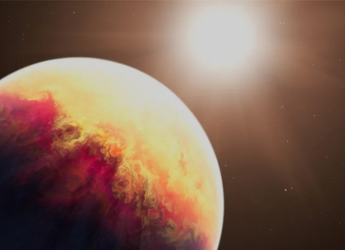
JWST Watches HD 80606 bExoplanet Heat Up by 1,100 Degrees in Hours19 June 2026
-
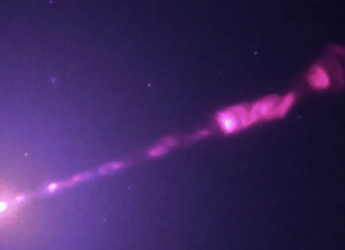
Chandra Captures Sharpest-Ever X-Ray View of M87 Black Hole Jet18 June 2026
-
Astrophotographer Captures Giant Human-Shaped Solar Prominence8 June 2026
-
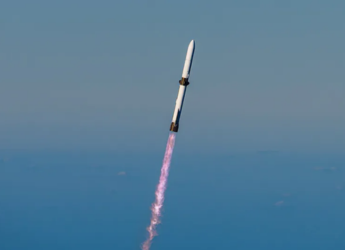
Blue Origin’s New Glenn Rocket Explodes During Pre-Launch Test in Florida29 May 2026
- Home
- Science
- Science News
- AI Takes the Wheel as Perseverance Rover Navigates Mars on Its Own
AI Takes the Wheel as Perseverance Rover Navigates Mars on Its Own
NASA’s Perseverance rover has completed its first fully autonomous drives on Mars using AI-generated routes.
Written by Gadgets 360 Staff | Updated: 4 February 2026 21:00 IST
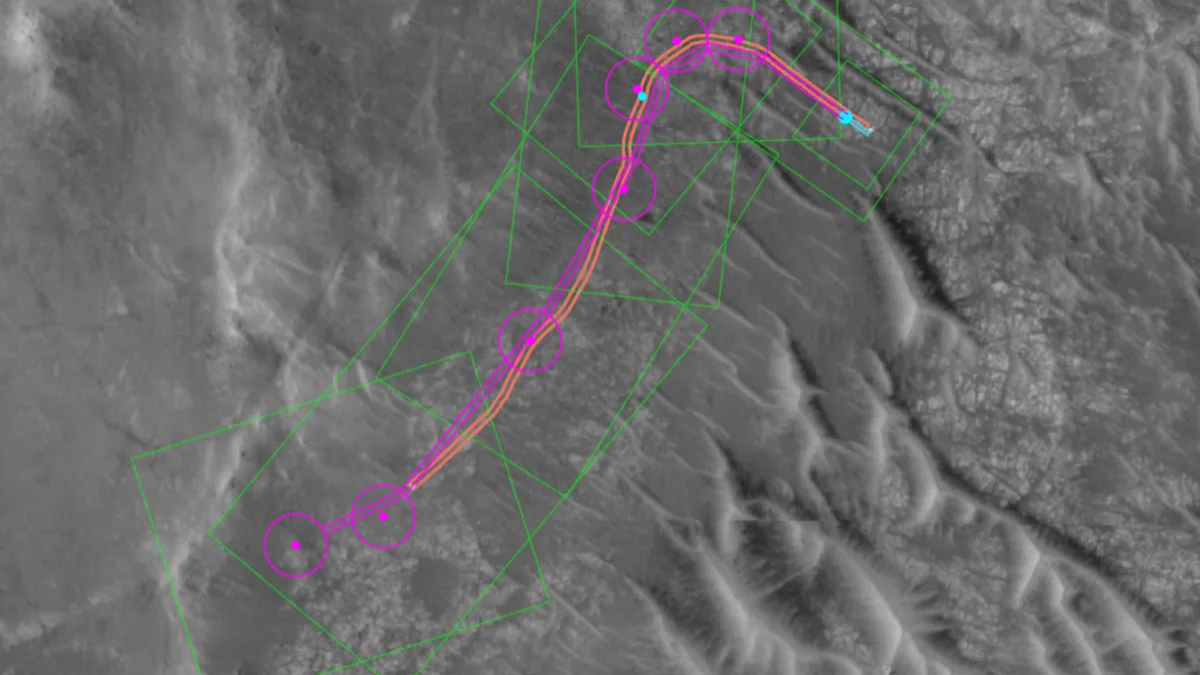
Photo Credit: NASA
NASA’s Perseverance rover now navigates Mars using AI-planned routes
Click Here to Add Gadgets360 As A Trusted Source


Advertisement
The Perseverance rover, which landed in Jezero Crater on Mars in 2021 to investigate evidence of ancient life and sample the rocks and another milestone has been achieved by NASA. In December 2025, the six-wheeled rover made its maiden drives on Mars entirely using artificial intelligence laid-out routes. A vision-capable AI examined high-resolution images and terrain data in order to map safe waypoints, enabling Perseverance to travel across Martian terrain on its own.
AI-Powered Navigation
According to reports, during an experiment by the Jet Propulsion Laboratory, engineers had to plan the Dec. 8 and Dec. 10 drives of Perseverance using generative AI. The vision-language model performed the analysis of orbital images and terrain data to detect hazards (rocks, sand ripples, steep slopes) and generate a path with safe station points to the rover. Perseverance then ran the two AI-planned routes, covering 210 meters (246) each. Engineers tested the AI-generated commands in a simulated digital twin of the rover to confirm more than 500,000 variables were correct, and that is why it was safe to deploy commands to Mars.
Implications and Future Exploration
According to NASA, Mars is 225 million kilometers away, which means that real-time joystick control is not feasible; in practice, the planning of rover missions is done by hand using a sequence of waypoints. Administrator Jared Isaacman stated that AI-based planning could help make missions more efficient and increase the returns of science over such distances. JPL engineers say that generative AI can reduce the planning process and ultimately allow rovers to drive at kilometer scales with minimal operator intervention. The development opens the door to smarter robotic systems on the Moon and Mars that will help in future exploration and human missions.
Comments
Get your daily dose of tech news, reviews, and insights, in under 80 characters on Gadgets 360 Turbo. Connect with fellow tech lovers on our Forum. Follow us on X, Facebook, WhatsApp, Threads and Google News for instant updates. Catch all the action on our YouTube channel.
Related Stories



Advertisement
Follow Us




-
09:53
iPhone 18 Goes On Sale In India: Huge Crowds, Long Queues At Apple Stores -
06:32
Google Pixel 11 Pro XL Review: The Most Exciting Pixel Yet? | 120X Zoom + Tensor G6 -
05:20
Samsung Galaxy Watch Ultra 2 Review: Is This the Best Android Smartwatch? -
07:01
Samsung Galaxy Z Fold 8 Review: Is This the Best Foldable Phone? -
06:39
Samsung Galaxy Z Fold8 Ultra Review: Cameras, Battery, Performance Tested
-
10 मिनट में घर पहुंचेंगे iPhone 18 Pro, Pro Max: सेल हुई शुरू
-
Lava ने लॉन्च किया 6000mAh बैटरी वाला Bold N4 Pro 5G
-
itel Zeno 300 भारत में होगा लॉन्च, मिलेगी 6,000mAh बैटरी और डुअल कैमरा
-
Ai+ Nova 2 Power 5G भारत में हुआ लॉन्च, 48MP दो कैमरा, 7000mAh बैटरी के साथ, IP65 रेटिंग
-
Honor 600 Elite 5G लॉन्च हुआ 8GB रैम, 108MP कैमरा, 8100mAh बैटरी के साथ, IP68, IP69K रेटिंग
Advertisement
Popular on Gadgets
- Samsung Galaxy S26 Ultra
- Motorola Razr Fold
- ChatGPT
- OPPO Find N6
- Mobiles Under Rs. 40,000
- Vivo X300 Ultra
- Asus Zenbook S14
- iQOO 15
- Vivo X300 Pro
- Lenovo Yoga Slim 7i Aura Edition
- iQOO 15R
- Vivo X Fold 5
- Sony PlayStation 5
- HP OmniPad 12
- OnePlus Nord CE 6 Lite
- OnePlus Pad 4
- OPPO F33 Pro 5G
- Cryptocurrency
- HP OmniBook Ultra 14 (2026)
- iPhone 17
- Eureka Forbes AP 355 Room Air Purifier
- Latest Mobile Phones
- Compare Phones
Latest Gadgets
- Lava Bold N4 Pro 5G
- Samsung Galaxy A08
- Itel Muzik 450L
- OPPO K14 Lite
- Samsung Galaxy A18 4G
- iPhone Duo
- OPPO A7 Pro
- Huawei Mate XT 2 Ultimate Design
- Asus Vivobook S14 (S5452MA)
- Acer Aspire G 3D 16
- Xiaomi Pad 9 Pro
- Xiaomi Pad 9
- Apple Watch Ultra 4
- Apple Watch Series 12
- Haier M70 Mini LED 65-inch
- Xiaomi TV FX Mini LED 65
- Acer Predator Atlas 8
- Asus ROG Ally
- Blue Star 1.5 Ton 5 Star Inverter Split AC (IE518ZNURS)
- Blue Star 2 Ton 3 Star Inverter Window AC (WIE324L)

- About Us
- Sitemaps
- Feedback
- Archives
- Contact Us
- RSS
- Advertise
- Career
- Privacy Policy
- Ethics
- Editorial Policy
- Terms & Conditions
- Complaint Redressal
Download Our Apps
Available in Hindi
© Copyright Red Pixels Ventures Limited 2026. All rights reserved.