-
 Russia Plans Venera-D Mission to Venus in 2036 With Lander, Orbiter, and Balloon Probe18 March 2026
 -
Venus May Hide a Vast Underground Tunnel Formed by Ancient Volcanic Eruptions, Scientists Say11 February 2026
-
Scientists Finally Identify What Drives Venus’s Fast Winds29 November 2025
-
Japan’s Akatsuki Spacecraft Declared Inoperable, Marking End of Dedicated Venus Missions3 November 2025
-
Scientists May Finally Explain Mysterious Crown-Like Features on Venus30 September 2025
- Home
- Science
- Science News
- Why Venus Is the Brightest Morning Star Visible From Earth
Why Venus Is the Brightest Morning Star Visible From Earth
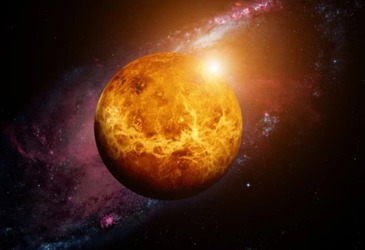
Venus’ brightness comes from reflective clouds, proximity to Earth, and optical effects like a glory.
Updated: 25 December 2025 13:00 IST
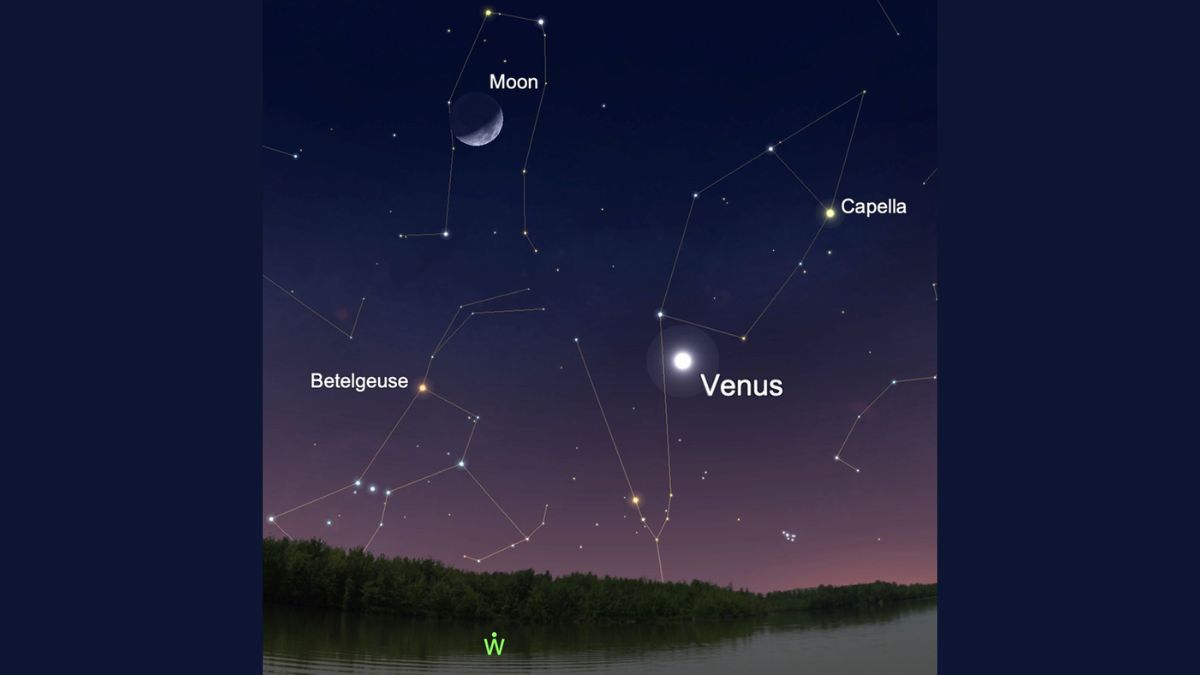
Photo Credit: NASA/JPL-Caltech
Venus shines brightly as the morning star, visible due to clouds and optical effects from Earth
Click Here to Add Gadgets360 As A Trusted Source

Advertisement
If you look at the sky during dawn or dusk, Venus immediately catches the eye. Known as the “morning star”, it shines steadily, brighter than almost any other object besides the Moon. The planet is about 100 times brighter than a first-magnitude star, according to Anthony Mallama, a researcher at the IAU's Centre for Protection of the Dark and Quiet Sky. Its reflective clouds, proximity to Earth, and unique optical phenomena make it highly luminous, allowing even urban observers to spot it most of the year.
Why Venus Outshines the Rest: Thick Clouds, Proximity, and Sunlight Scattering Create Its Stunning Brightness
According to Live Science, the surface of Venus has a high albedo, reflecting about 76% of the sunlight that reaches it, which is due to the clouds being composed mainly of sulfuric acid droplets. These clouds, which hang between 30 and 43.5 miles (48 to 70 km) above the surface, scatter sunlight well. By contrast, Earth reflects 30%, and the Moon just 7%. Although some icy moons like Enceladus reflect slightly more light, Venus appears far brighter due to receiving much more sunlight.
Venus appears brighter than Mercury due to its closer orbit, larger size, changing phases, and cloud-scattered sunlight creating a rainbow-like “glory” effect.
Venus' Stunning Glow: How Clouds, Orbit, and Sunlight Make It the Sky's Brightest Planet
Together, cloud reflectivity, distance, and phases cause Venus' brightness to vary from -4.92 to -2.98 on the astronomical scale. This is sufficient to make the planet clearly visible almost all year, even in city skies.
Even simple observations reveal that Venus' striking glow is not just a trick of the eye but a combination of atmospheric composition, solar reflection, and orbital geometry, making it the sky's most brilliant planetary beacon.
Comments
Get your daily dose of tech news, reviews, and insights, in under 80 characters on Gadgets 360 Turbo. Connect with fellow tech lovers on our Forum. Follow us on X, Facebook, WhatsApp, Threads and Google News for instant updates. Catch all the action on our YouTube channel.
Further reading:
Venus, Morning Star, Planet Brightness, Astronomy, Space Science, Solar System, Optical Phenomena, Sulfuric Acid Clouds
Related Stories



Advertisement
Follow Us




-

05:05
Goboult Mustang Racer Smartwatch Review: Should You Get This Mustang Smartwatch? -
04:58
OnePlus Nord Buds 4 Pro Review: Specs, Sound Quality, ANC, and Battery Backup Tested -
02:29
[Sponsored] Samsung Galaxy S26 Ultra First Look: AI Smartphone for Creators, Gaming & Productivity -
04:25
Vivo X200T Review - Full Camera, Gaming & Battery Test | Worth Buying? -
28:31
The Future of Productivity: Logitech's Anatoliy Polyanker On AI, Hybrid Work, And India's Tech Boom
-
200 मेगापिक्सल कैमरा, 7000mAh बैटरी के साथ Vivo V70 FE लॉन्च, जानें सबकुछ
-
Redmi Note 15 SE भारत में लेटेस्ट AI फीचर्स, 5800mAh बैटरी के साथ लॉन्च
-
5100mAh बैटरी, 50MP कैमरा वाला Pixel फोन हुआ 4700 रुपये सस्ता
-
Ola की इलेक्ट्रिक मोटरसाइकिल Roadster X+ पर भारी डिस्काउंट, प्राइस में हुई 60,000 रुपये की कमी
Advertisement
Popular on Gadgets
- Samsung Galaxy Unpacked 2026
- iPhone 17 Pro Max
- ChatGPT
- iOS 26
- Laptop Under 50000
- Smartwatch Under 10000
- Apple Vision Pro
- Oneplus 12
- OnePlus Nord CE 3 Lite 5G
- iPhone 13
- Xiaomi 14 Pro
- Oppo Find N3
- Tecno Spark Go (2023)
- Realme V30
- Best Phones Under 25000
- Samsung Galaxy S24 Series
- Cryptocurrency
- iQoo 12
- Samsung Galaxy S24 Ultra
- Giottus
- Samsung Galaxy Z Flip 5
- Apple 'Scary Fast'
- Housefull 5
- GoPro Hero 12 Black Review
- Invincible Season 2
- JioGlass
- HD Ready TV
- Latest Mobile Phones
- Compare Phones
Latest Gadgets
- Nord 6
- Honor X80i
- Honor Play 80 Pro
- Redmi Note 15 SE 5G
- Redmi A7 Pro
- OPPO K15 Pro
- OPPO K15 Pro+
- Lava Bold N2 Lite
- Xiaomi Book Pro 14
- MacBook Neo
- Vivo Pad 6 Pro
- Lenovo Legion Y700 Gen 5
- boAt Valour Watch 1R
- Xiaomi Watch S5
- Xiaomi QLED TV X Pro 75
- Haier H5E Series
- Asus ROG Ally
- Nintendo Switch Lite
- Haier 1.6 Ton 5 Star Inverter Split AC (HSU19G-MZAID5BN-INV)
- Haier 1.6 Ton 5 Star Inverter Split AC (HSU19G-MZAIM5BN-INV)

- About Us
- Sitemaps
- Feedback
- Archives
- Contact Us
- RSS
- Advertise
- Career
- Privacy Policy
- Ethics
- Editorial Policy
- Terms & Conditions
- Complaint Redressal
Download Our Apps
Available in Hindi
© Copyright Red Pixels Ventures Limited 2026. All rights reserved.