-
 Microsoft Reportedly Making Xbox 360 Games Backwards Compatible on PC and Project Helix4 August 2026
 -
Microsoft's Disc-to-Digital Feature for Xbox Games Could Reportedly Roll Out This Month4 August 2026
-
Xbox Revenue Declines 10 Percent, but Microsoft CEO Expects Gaming Division to Return to Growth by End of FY2730 July 2026
-
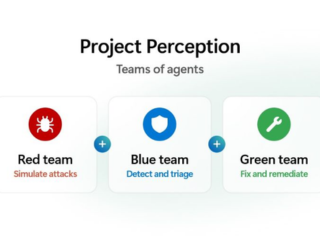
Microsoft Introduces Project Perception as a New Agentic Security System to Protect Against AI-Powered Cyberattacks28 July 2026
-
Xbox Fixes Major Outage That Prevented Users From Signing In, Launching Games28 July 2026
Microsoft's Recall Feature Faces Criticism After TotalRecall Reloaded Tool Regains Access to Data
Hagenah said he shared his findings with Microsoft in March, along with the necessary technical details and code.
Written by Sucharita Ganguly, Edited by David Delima | Updated: 16 April 2026 15:59 IST
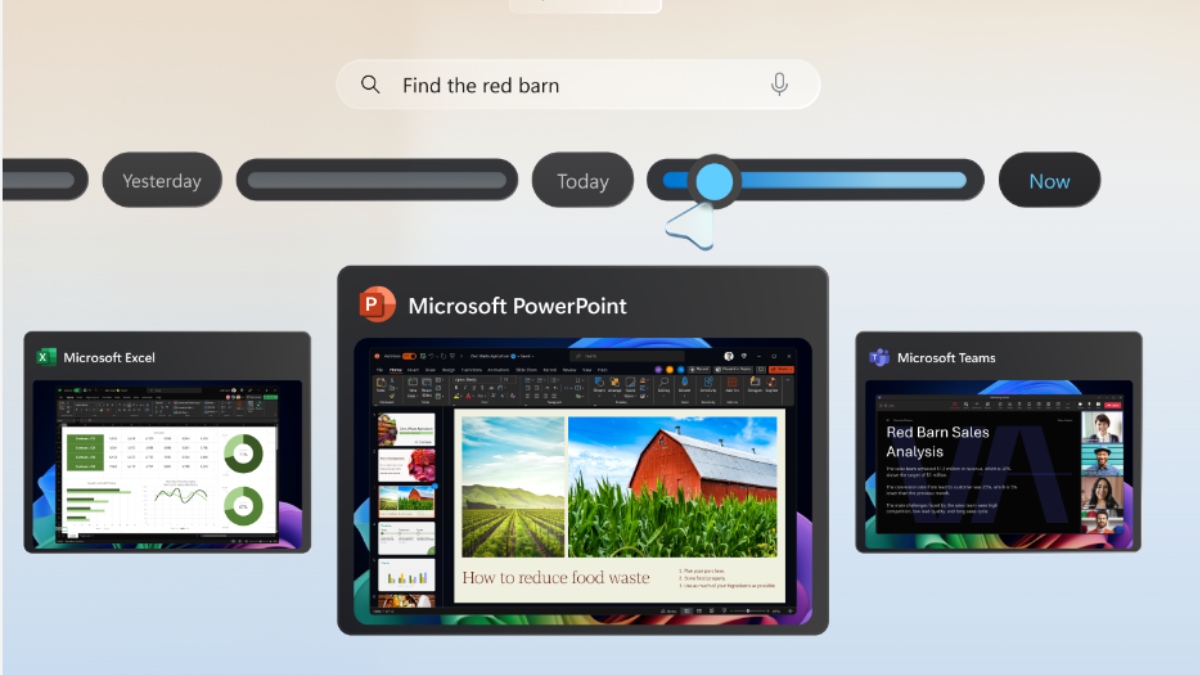
Photo Credit: Microsoft
Microsoft had reworked Recall after facing criticism earlier
Click Here to Add Gadgets360 As A Trusted Source

Advertisement
TotalRecall Reloaded, a tool developed by cybersecurity researcher Alexander Hagenah, has raised fresh concerns about Microsoft's Windows Recall feature and how it handles sensitive user data. The research points to potential issues in how information is accessed after authentication, even though Microsoft had redesigned Recall with stronger protections. The company reportedly views the behaviour as part of its existing system design, but the findings highlight ongoing concerns about whether features that record user activity can remain both useful and secure.
TotalRecall Reloaded Highlights Ongoing Windows Recall Security Concerns
The Recall tool is built to pull data from Recall, an AI feature that takes regular snapshots of what appears on your screen so you can search through your past activity. Hagenah said his updated version can quietly run in the background and access that data once a user logs in through Windows Hello.
Microsoft had reworked Recall after facing criticism earlier, adding stronger protections like encryption, secure enclaves and biometric authentication. The company had said these changes would stop malicious software from taking advantage of a user's login to access stored data.
However, Hagenah explains that the protection does not fully work as intended. He said the system's secure storage is strong, but the boundary that controls how data is accessed breaks down too early. According to him, the tool can effectively follow a user's authentication process and then retrieve stored information.
The data Recall stores go beyond simple screenshots. It can include on-screen text, messages, emails, documents, browsing activity, timestamps, and AI-generated context, building a detailed picture of how a user interacts with their device.
Hagenah said he shared his findings with Microsoft in March 2026, along with the necessary technical details and code. He claims the company reviewed the report but did not consider it a security issue, stating that the behaviour aligns with how the system is meant to work and does not break any security boundaries.
Microsoft also said that measures like time limits and protections against repeated access help reduce the risk. Hagenah, however, disagreed and argued that these safeguards can be bypassed.
The Verge reported that the issue may stem from the way Recall delivers decrypted data to other processes after authentication. While the storage system itself remains secure, the method used to present that data could expose it to misuse.
Despite the concerns, Hagenah acknowledged that several parts of Recall's redesigned security, including its encryption and authentication model, are robust, according to the aforementioned The Verge report. He suggested that further improvements are needed in how data is handled after it leaves the secure environment.
Comments
Get your daily dose of tech news, reviews, and insights, in under 80 characters on Gadgets 360 Turbo. Connect with fellow tech lovers on our Forum. Follow us on X, Facebook, WhatsApp, Threads and Google News for instant updates. Catch all the action on our YouTube channel.
Related Stories

Microsoft's Recall Feature Faces Criticism After TotalRecall Reloaded Tool Regains Access to Data


Advertisement
Follow Us




-
12:04
[Partner Content] OPPO Reno16 Series Deep Dive: Built for Creators? -
05:33
Poco M8 Power Review | 8000mAh battery phone | Best budget phone 2026? -
03:28
[Partner Content] OPPO Enco Air5, Flagship ANC for Just Rs. 3,299? -
01:02
[Sponsored] One Shot Away From the Perfect Edit | Galaxy Book6 Pro -
02:00
[Sponsored] Galaxy Book6 Pro vs Lenovo Yoga 7 2-in-1: Which Laptop Wins?
-
Amazon Great Freedom Sale: बंपर डिस्काउंट के साथ मिल रहे 1.5 Ton Split AC
-
Flipkart Freedom Sale में ₹25000 में आने वाले 43 इंच TV पर डिस्काउंट
-
Flipkart Freedom Sale: ₹5000 सस्ता मिल रहा 48MP कैमरा वाला iPhone 17
-
Motorola भारत में ला रही Moto G Max, 7000mAh बैटरी, 50MP दो कैमरा, IP64 रेटिंग, 14 अगस्त को है लॉन्च
-
14 हजार में खरीदें 20 हजार एमआरपी वाला Motorola फोन! 7000mAh बैटरी, 50MP कैमरा
Advertisement
Popular on Gadgets
- Samsung Galaxy S26 Ultra
- Motorola Razr Fold
- ChatGPT
- OPPO Find N6
- Mobiles Under Rs. 40,000
- Vivo X300 Ultra
- Asus Zenbook S14
- iQOO 15
- Vivo X300 Pro
- Lenovo Yoga Slim 7i Aura Edition
- iQOO 15R
- Vivo X Fold 5
- Sony PlayStation 5
- HP OmniPad 12
- OnePlus Nord CE 6 Lite
- OnePlus Pad 4
- OPPO F33 Pro 5G
- Cryptocurrency
- HP OmniBook Ultra 14 (2026)
- iPhone 17
- Eureka Forbes AP 355 Room Air Purifier
- Latest Mobile Phones
- Compare Phones
Latest Gadgets
- Redmi 17 5G
- Vivo S2
- Itel Ace 3 Heera
- Motorola Moto G37 Power 128GB
- OPPO A7 Pro Max
- Poco M8 Power
- OnePlus N6x
- Honor X6e
- Huawei MateBook Pro S
- Asus Chromebook CX15 (CX1505CTA)
- Moto Pad 70 Groove
- Honor Pad X9 Max
- Samsung Galaxy Watch 9 (44mm)
- Samsung Galaxy Watch 9 (44mm, LTE)
- Sony Bravia 9 II
- Haier HQLED P7 Pro
- Acer Predator Atlas 8
- Asus ROG Ally
- Blue Star 1.5 Ton 5 Star Inverter Split AC (IE518ZNURS)
- Blue Star 2 Ton 3 Star Inverter Window AC (WIE324L)

- About Us
- Sitemaps
- Feedback
- Archives
- Contact Us
- RSS
- Advertise
- Career
- Privacy Policy
- Ethics
- Editorial Policy
- Terms & Conditions
- Complaint Redressal
Download Our Apps
Available in Hindi
© Copyright Red Pixels Ventures Limited 2026. All rights reserved.