- Home
- Games
- Games Reviews
- Stalker 2: Heart of Chornobyl PS5 Review – Immersive Improvements
Stalker 2: Heart of Chornobyl PS5 Review – Immersive Improvements
Stalker 2 is now what GSC Game World intended it to be at launch: an immersive survival-horror FPS experience that isn’t marred by its own ambition.
Written by Manas Mitul, Edited by David Delima | Updated: 3 December 2025 16:53 IST

Photo Credit: GSC Game World
Stalker 2: Heart of Chornobyl launched on PS5 on November 20, 2025
Click Here to Add Gadgets360 As A Trusted Source

Advertisement
How do you make art when you're at war? GSC Game World, the Ukrainian developer best known for its Stalker series of survival horror shooters, is better equipped than most to answer that question. The studio was hard at work on Stalker 2: Heart of Chornobyl, the long-awaited follow-up to Stalker: Call of Pripyat, when Russia invaded Ukraine in 2022. Development was put on hold as two-thirds of GSC Game World's staff were displaced due to the ongoing conflict. Several employees had to evacuate out of Ukraine; some stayed back to fight on the frontlines.
After multiple delays and unfathomable hardships, Stalker 2 was released on Xbox Series S/X and PC on November 20, 2024. The game was in a rough state, plagued with technical issues, performance bottlenecks, and bugs. Exactly a year later, the first-person shooter arrives on PS5 alongside a 1.7 update that brings new gameplay features, major fixes, a new mode, reworked combat, and plenty more. The PlayStation version of Stalker 2 also gets the full suite of DualSense controller features and PS5 Pro enhancements.
And what a difference a year can make. Stalker 2 is now perhaps what GSC Game World intended it to be at launch: an immersive survival-horror FPS experience that isn't marred by its own ambition. The game runs and plays respectably on the PS5, a far cry from its console performance on Xbox in 2024. Some technical issues persist, and console performance is far from flawless. But with its latest release, combined with major fixes and features rolled out with the 1.7 update, Stalker 2: Heart of Chornobyl is finally the game it should have been at launch.
Dispatch Review: AdHoc Studio's Crowd-Pleasing Superhero Story Is a Soaring Success
Amidst a roll call of changes, what remains the same in the new PS5 version of Stalker 2 is the story. The game puts you in the shoes of Skif, a Ukrainian soldier back home after a tour, who finds himself drawn towards the Chornobyl exclusion zone after a mysterious anomaly destroys his apartment. After the destruction, Skif finds an artifact — a powerful altered object from the Zone — and decides to investigate it. Armed with the artifact and a special scanner that can recreate anomalies, he finds a way into the Zone. Things, however, go wrong, as they always do.
Skif, betrayed by the people who smuggled him in, is attacked by a group of mercenaries, robbed of his belongings and left for dead. The mysterious artifact, that perhaps holds all the answers he is looking for, is gone, too. On his quest to retrieve the rock, Skif becomes entangled in the tinderbox politics of the Zone. The region is split into fiercely tribal factions, living in begrudging acknowledgment of one another. Left to his own devices in a brutally hostile environment, Skif must carefully choose his allies and unravel the mystery of the anomaly that destroyed his home.
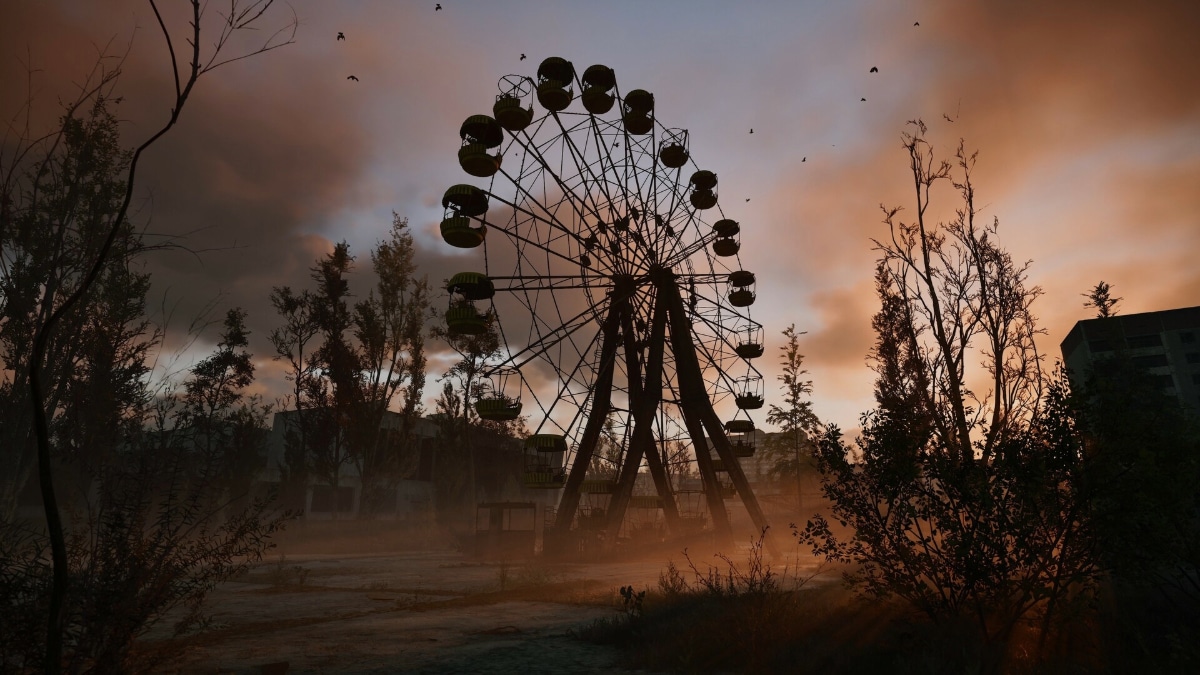
Stalker 2 takes place in the Chornobyl exclusion zone
Photo Credit: GSC Game World
The early moments of Stalker 2, when you first find yourself in the Zone, are some of the most immersive and tense opening sections I've experienced in video games in a while. It's a masterclass in setting the tone; in relaying the terms of engagement between the game and the player. Where most early sections in other games build anticipation, Stalker 2 builds tension. It is an effective introduction to the game's world, but it is also a warning — as if the developer is telling you, “One does not simply walk into the Zone.”
The guided opening gives way to larger open-world freedoms, and you soon find yourself in the first major human settlement of the game, Zalissya. The settlement, about the size of a city block, is split between free Stalkers and the Ward, a government-controlled paramilitary faction. Zalissya serves as the first respite from the dangers of the Zone and a hub for early quests, trades, and gear upgrades. Here, you can also make an early choice — the first of several in the game — to either back Stalkers or work for the Ward. Your choice guides how your personal quest unfolds, unlocking different doors that lead, ultimately, to the same room.

Zalissya is the first major human settlement you encounter in Stalker 2
Photo Credit: GSC Game World/ Screenshot – Manas Mitul
As you move on from Zalissya to other sections of the gargantuan map, you encounter other factions and slowly unravel the tightly wound regionalism within the Zone. There's Spark, a group of Stalkers that strive for a utopian idea of the Zone; the IPSF, a military force that guards the perimeter of the Zone with an iron hand; and Monolith, a quasi-religious cult that fanatically guards the deepest secrets of the Zone. Then there are scientists, mercenaries, and bandits — each with their own interests in the radioactive wasteland.
The game also creates convincing interactions between the factions with its A-Life system — lines of code that lend artificial life to Stalker 2's people and their actions. Now vastly improved with the 1.7 update, the A-Life system now makes factions compete to extend their control over new territories. A region may be attacked by a group of NPCs and change hands. As Skif, you can choose to take sides, interfere in the conflict and help one faction take over a checkpoint or a point of interest. While it isn't as complex in scope as it could have been, the improved AI system goes a long way in establishing the Zone as a tangible location and its NPCs as reactive inhabitants.
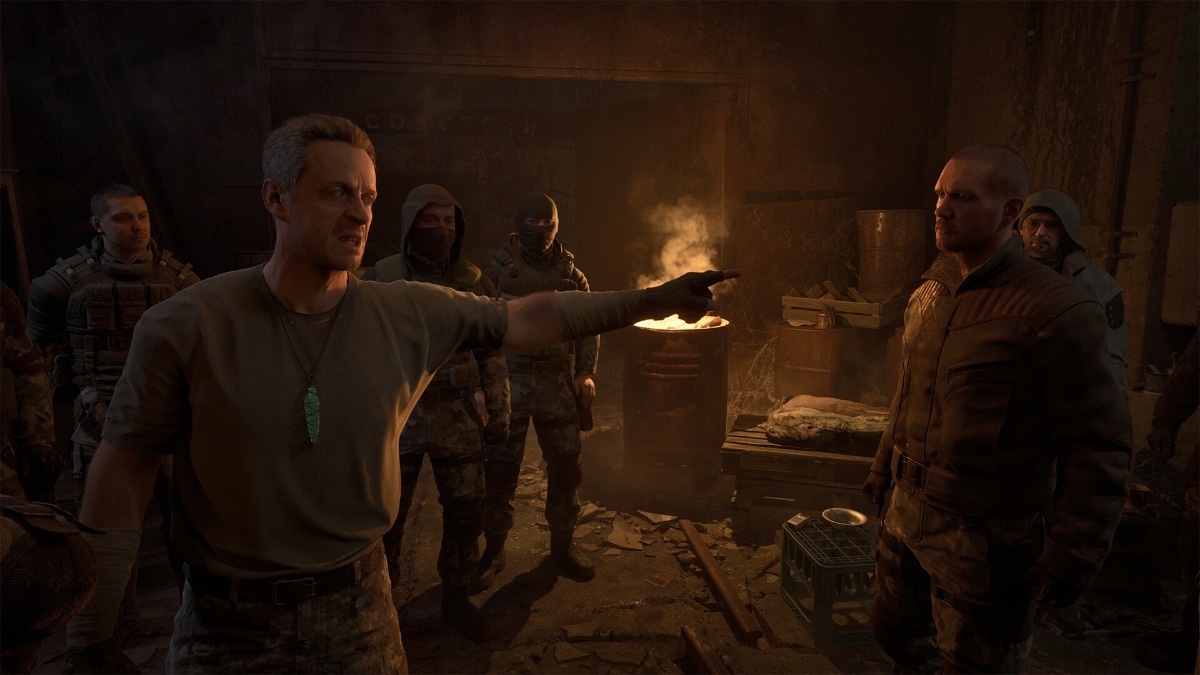
The Zone is split between several fiercely tribal factions
Photo Credit: GSC Game World
Stalker 2's story, however, loses its urgency as the game widens its scope. You meet factions and their leaders, Stalkers and survivors, and experience the best and worst of the Zone, and somewhere along the way, the story takes a back seat. Stalker 2, however, succeeds in sustaining the atmosphere. Even as the muddled narrative loses steam, the clarity of the world's oppressive and foreboding nature lingers on. The Zone's decayed environments, its abandoned facilities and scattered settlements, its anomalies and artifacts and accidents create stories of their own that supplant the written script. Part of it is also down to the real history of the Chornobyl disaster that brings a sense of truth to fiction. The rest comes from conjured horrors of the exclusion zone.
A major part of Stalker 2's immersion and tension flows from its gameplay, too. At its core, it is a first-person shooter, but it also blends aspects of an immersive sim and a survival horror game. Resources are scarce, weapons are weathered, and better loot is difficult to come by. There's no skill tree to invest in, no abilities to unlock. Instead, you get better at surviving by spending more time in the Zone and learning its ways; you identify dangerous anomalies and understand that open firefights can result in a quick death; you realise that caution goes a long way in mastering the Zone.
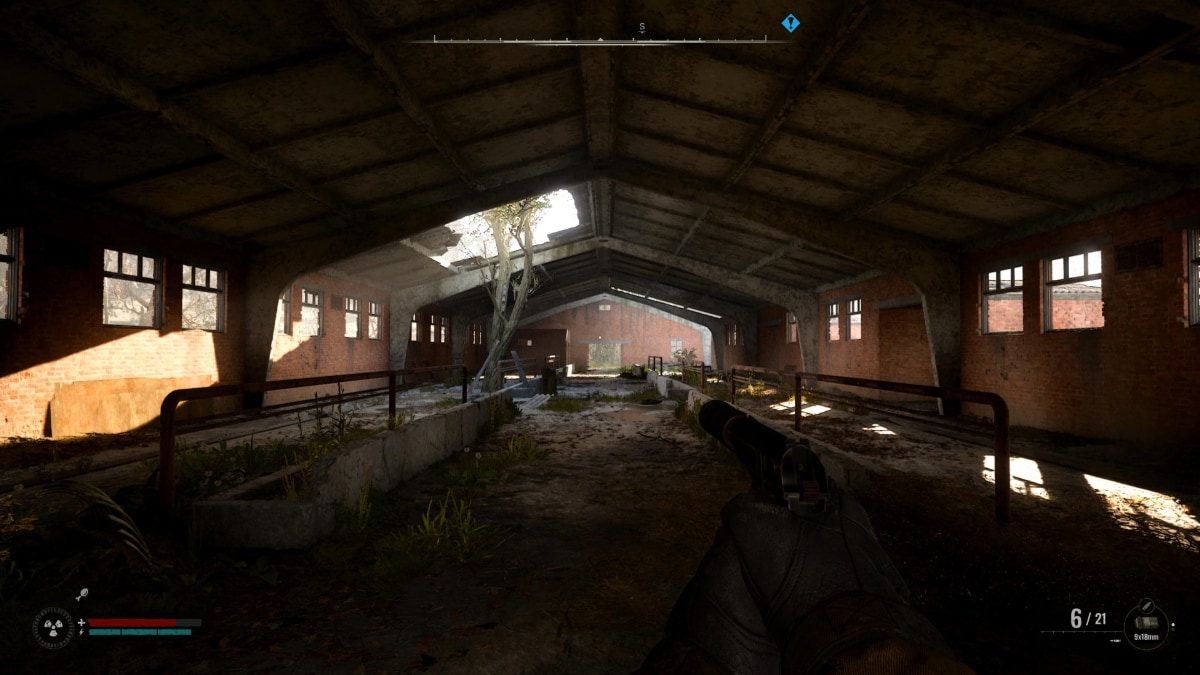
Stalker 2 succeeds in creating a foreboding, oppressive atmosphere
Photo Credit: GSC Game World/ Screenshot – Manas Mitul
Any combat situation in Stalker 2 could be deadly, whether you stumble upon a mutant while stalking through an abandoned facility, or you encounter a group of armed bandits in the wasteland. It would be foolish to dive right into a firefight. Staying in cover, staying stealthy, especially when taking on a large group of armed NPCs, is crucial. To that effect, the 1.7 update brings improvements to stealth and combat, tweaking NPC vision to better facilitate sneaking around. It's harder for enemies to spot you through tall grass and reeds. And if you're in cover behind some bushes, it'll be harder for them to take accurate shots at you.
Both mutants and NPCs are now smarter, too. They'll try and flank you more aggressively than they did when the game first launched last year; they'll engage you from a distance best suited to the type of their weapon; and they'll even retreat if you gain an upper hand. There are new combat and death animations, too, to bring more realism and variety to violence.
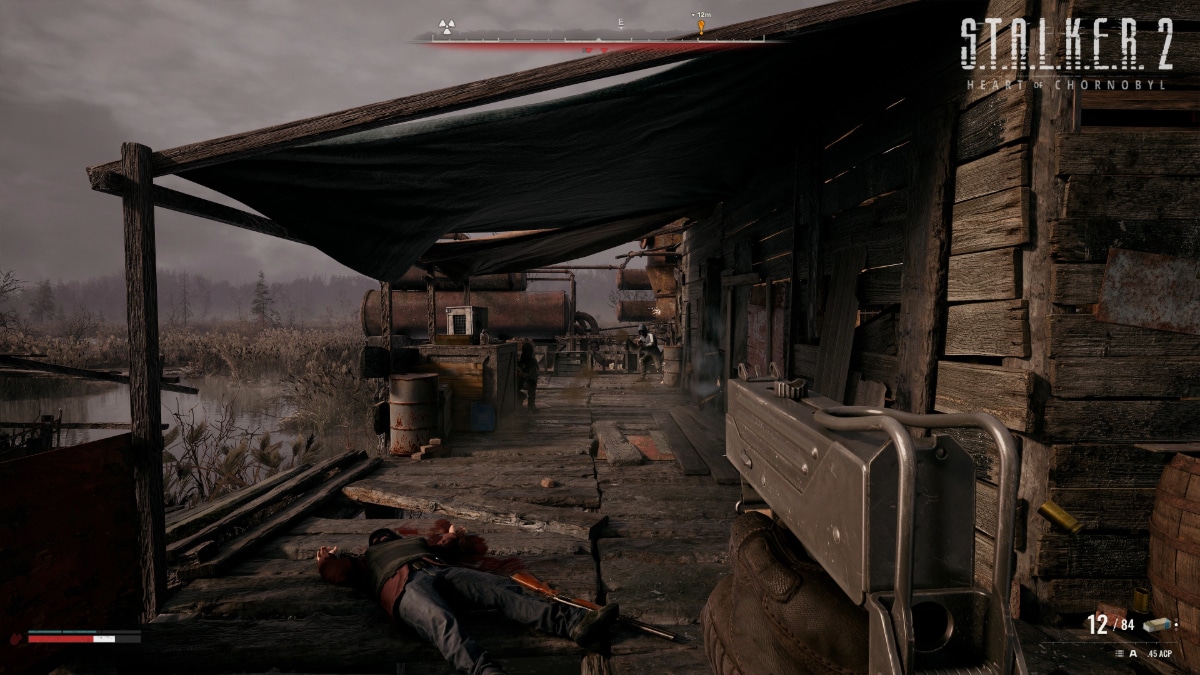
Combat in Stalker 2 is a tense affair
Photo Credit: GSC Game World
Firefights in Stalker 2 are a tense affair. If you get surrounded or flanked, and you don't have the right equipment and adequate cover, you are going to die. You can't simply shoot your way out of a situation. Going in stealthily and taking headshots from cover to whittle down enemy numbers is usually the right approach. Shooting in the game isn't snappy, but it isn't sluggish either. Stalker 2 instead bridges the gap between authenticity and accessibility, making combat encounters immersive and engaging.
Managing your inventory is a big part of the game. You need to have the right kind and amount of ammunition for the weapons you're carrying, in addition to bandages, med kits, food, and alcohol, which lowers your radiation levels. With the new update, the equipment section of the inventory gets a few quality-of-life improvements, too. Items in your backpack now have clearly labelled stats for radiation protection, along with more detailed information on consumables. But inventory management, especially watching the weight limit, dives into tedium. More often than not, I found myself overburdened in the game, my backpack overflowing with loot, ammunition, and rations.
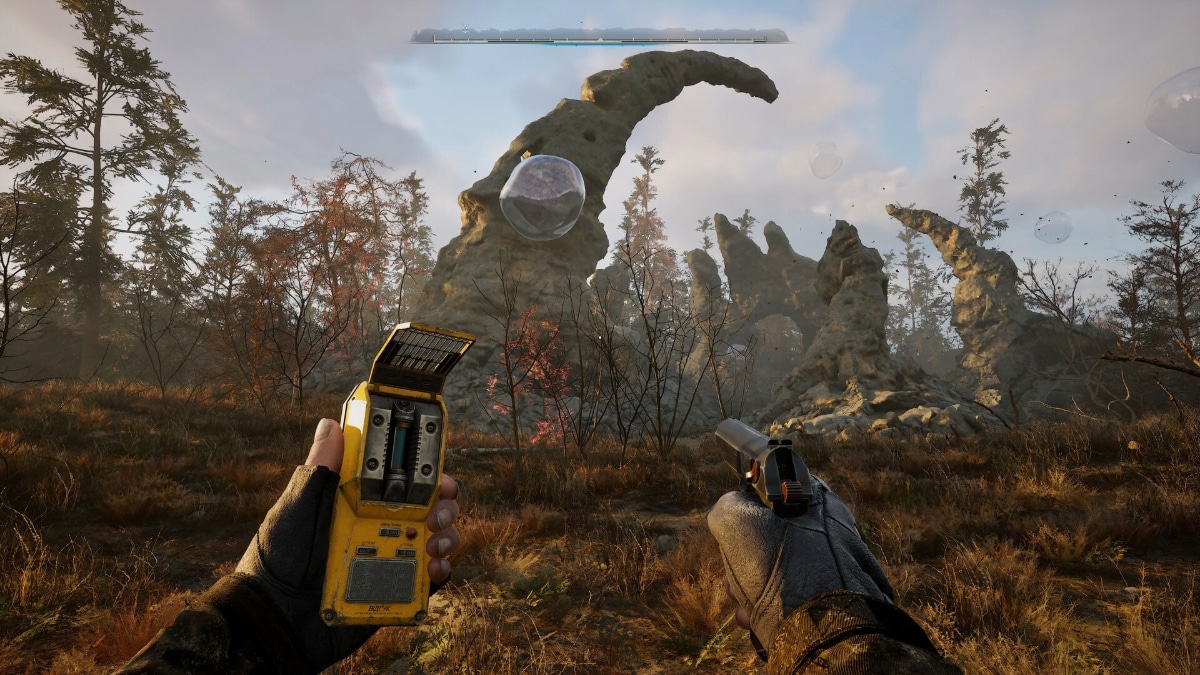
You slowly learn to recognise anomalies in the Zone
Photo Credit: GSC Game World
The 1.7 update also includes new gameplay features like a new sprint state, a Master difficulty setting, and a new Expedition mode that brings stricter game saves for an even more immersive experience in the Zone. GSC Game world has also expanded the type of anomalies you'll encounter in the game. Then, there are features specific to the PS5, including support for adaptive triggers and haptic feedback on the DualSense controller, gyro aiming, 3D audio, and touchpad gestures.
The new bells and whistles make Stalker 2: Heart of Chornobyl a better game to play than it was a year ago. The expanded game mechanics and features, added in update 1.7, also push the game closer to the developer's ambitious vision. Stalker 2 is a much more immersive, feature-complete, and more in-depth experience than it was when it launched on PC and Xbox. It is now optimised to run well on consoles, too. On PS5, on performance mode, Stalker 2 stuck to its 60 fps target much more consistently than its original console release.
There are frame drops in busier settlements, and visual quality — especially lighting — remains inconsistent. These issues, however, don't stop the game from looking good. Stalker 2 packs a significant amount of detail in both indoor and outdoor areas. And it opts for grounded realism for its visual style — a choice that makes it feel muted in comparison to other open world games on consoles, but one that also makes it stand apart.
Ghost of Yotei Review: Sucker Punch's Samurai Story Soars Despite Playing It Safe
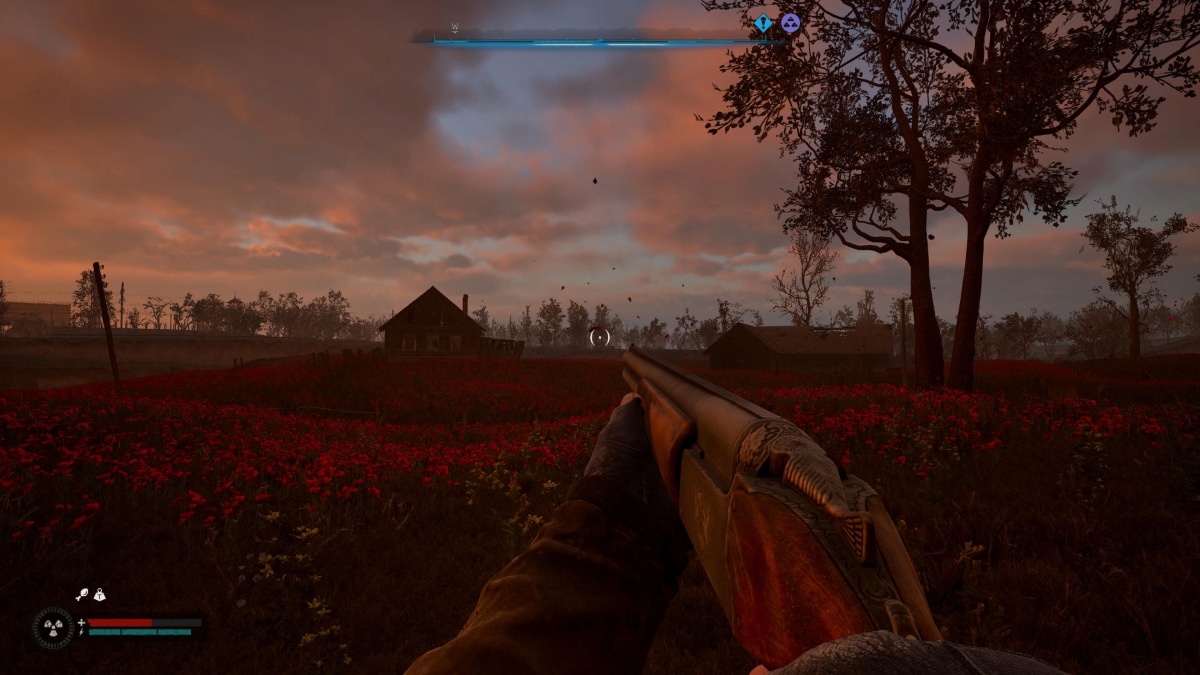
Stalker 2 favours a realistic visual style
Photo Credit: GSC Game World/ Screenshot – Manas Mitul
Stalker 2: Heart of Chornobyl was developed with unfathomable difficulties and launched in an incomplete state in 2024. A year later, with the PS5 release and the 1.7 update, GSC Game World has clearly worked hard to bring the game to a level of polish and performance it deserves. There has never been a better time to play Stalker 2. And with new features, improved performance, and a full suite of fixes and enhancements, the inherent, irrefutable quality of the game finally shines through.

- REVIEW
- KEY SPECS
- NEWS
- Good
- Immersive game world
- Tense, engaging combat
- Improved console performance
- Excellent visuals
- Update 1.7 content
- Bad
- Weak story and characters
- Tedious inventory management
- Frame drops in busy areas
Genre Shooter
Platform PlayStation 5 (PS5), Xbox Series S/X, PC: Windows
Modes Single-player
Series S.T.A.L.K.E.R.
PEGI Rating 18+
More GSC Game World Games
Comments
Get your daily dose of tech news, reviews, and insights, in under 80 characters on Gadgets 360 Turbo. Connect with fellow tech lovers on our Forum. Follow us on X, Facebook, WhatsApp, Threads and Google News for instant updates. Catch all the action on our YouTube channel.
Further reading:
Stalker 2 Heart of Chornobyl, Stalker 2 PS5 Review, Stalker 2, GSC Game World, PS5, Xbox


Advertisement
Follow Us




-
![[Sponsored] LG NANO 4K UHD AI TV NU885: Gemini Search, Dolby Atmos & 5 Years of Updates](https://www.gadgets360.com/static/desktop/images/spacer.png)
04:17
[Sponsored] LG NANO 4K UHD AI TV NU885: Gemini Search, Dolby Atmos & 5 Years of Updates -
00:57
[Sponsored] Samsung Galaxy Z Fold8 My Fan Cam in Action: Find the Moment, Then Share It -
01:41
[Sponsored] What Do You Need To Know Before Your Next Run? | Samsung Galaxy Watch Ultra2 -
01:32
[Sponsored] Big Day Tomorrow? Prep Today | Samsung Galaxy Watch Ultra2 -
04:37
[Sponsored]: CP PLUS CarKam CP-F89B: 4K Dashcam With Rear Camera, GPS & Emergency Recording
-
आ गई हवा में उड़ने वाली Tesla Roadster कार, आखिर सच हुआ फिल्मों वाला कमाल
-
रोबोट ने की लड़की से छेड़छाड़, पीछे से पकड़ा और किए गंदे इशारे, जानें
-
PS5 कहां मिलेगा सस्ता, Flipkart या Amazon, जानें सबकुछ
-
Samsung Galaxy A38 5G में मिल सकती है ट्रिपल रियर कैमरा यूनिट
-
Oppo Find X10 Pro Max होगा ट्रिपल 200 मेगापिक्सल कैमरा सिस्टम वाला पहला स्मार्टफोन
Advertisement
Popular on Gadgets
- Samsung Galaxy S26 Ultra
- Motorola Razr Fold
- ChatGPT
- OPPO Find N6
- Mobiles Under Rs. 40,000
- Vivo X300 Ultra
- Asus Zenbook S14
- iQOO 15
- Vivo X300 Pro
- Lenovo Yoga Slim 7i Aura Edition
- iQOO 15R
- Vivo X Fold 5
- Sony PlayStation 5
- HP OmniPad 12
- OnePlus Nord CE 6 Lite
- OnePlus Pad 4
- OPPO F33 Pro 5G
- Cryptocurrency
- HP OmniBook Ultra 14 (2026)
- iPhone 17
- Eureka Forbes AP 355 Room Air Purifier
- Latest Mobile Phones
- Compare Phones
Latest Gadgets
- Tecno Spark 50S 5G
- Vivo Y600s Pro
- Vivo Y32 (2026)
- Infinix Smart 20 HD
- Vivo V80
- Vivo S2 FE
- Vivo Y600K Turbo
- Realme P4s Lite
- HP ZBook Ultra G3a
- Dell Pro Rugged 14
- Amazon Alexa Tablet 8
- Amazon Alexa Tablet 11
- Amazfit T-Rex Dual Solar
- OPPO Watch S2
- Toshiba 65-Inch 4K Ultra HD Smart Mini LED QLED TV (65Z670SP)
- Haier M70 Mini LED 65-inch
- Acer Predator Atlas 8
- Asus ROG Ally
- Blue Star 1.5 Ton 5 Star Inverter Split AC (IE518ZNURS)
- Blue Star 2 Ton 3 Star Inverter Window AC (WIE324L)

- About Us
- Sitemaps
- Feedback
- Archives
- Contact Us
- RSS
- Advertise
- Career
- Privacy Policy
- Ethics
- Editorial Policy
- Terms & Conditions
- Complaint Redressal
Download Our Apps
Available in Hindi
© Copyright Red Pixels Ventures Limited 2026. All rights reserved.